Radio User December 2012
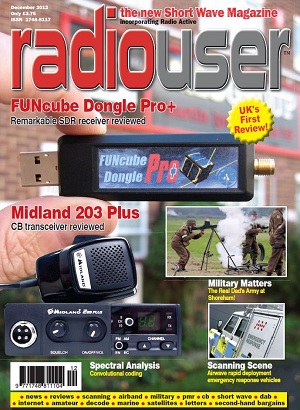
Mike Richards G4WNC was lucky enough to get serial number 0046 from the first batch of the AMSAT-UK FUNcube Dongle Pro+ LF/MF/HF/VHF/UHF Software Defined Radio.
He has written a four page review of the SDR that has just been published in the December issue of Radio User magazine on sale now from UK High Street newsagents such as W.H.Smith.
Postal copies of Radio User can be purchased using a Debit or Credit card by ringing +44 (0)1202 751611 Monday – Thursday 8.30am – 4.00pm.
The FUNcube Dongle Pro+ SDR was developed for educational outreach as part of the ground segment for the FUNcube satellite.
A proportion of the FCD-Pro+ sales goes to support the AMSAT-UK FUNcube satellite project.
You can watch the FUNcube Pro+ presentation given by Howard Long G6LVB to the 2012 AMSAT-UK International Space Colloquium in Guildford by following these steps:
• Go to http://www.batc.tv/
• Click on “Film Archive”
• Select “AMSAT 2012″ in the Category box and click on Select Category
• Select “02 – FUNcube PRO-PLUS” in the Stream box and click on Select Stream
• Click the play button in the video player window
You can join the FUNcube Yahoo Group by following these steps:
• Send a blank email to funcube-subscribe@yahoogroups.co.uk
• Yahoo will send you an email in response, you may need to check your SPAM folder
• Click on the link in the email, this will bring up a Yahoo page in your browser
• On the Yahoo page ignore the big Join link in the middle and click on the link at the bottom of the page instead, it says: “As an alternate option, you may join the mailing list instead.”
• You should then join the list.
Ordering a FUNcube Dongle Pro+ http://www.FUNcubeDongle.com/?page_id=1113
Radio User magazine http://www.pwpublishing.ltd.uk/?page_id=629
 AMSAT-UK
You must be logged in to post a comment.