AMSAT-UK International Space Colloquium Videos

Thanks to the hard work of volunteers from the British Amateur Television Club (BATC) 14 videos of the presentations given to the AMSAT-UK International Space Colloquium held in Guildford during July 30-31, 2011 are now available online.

The Chair of BATC Trevor Brown G8CJS edited over 16 hours of video to produce the final versions.

You can watch the videos online at http://www.batc.tv/
Click on the ‘Film Archive’ icon
Select ‘AMSAT 2011’ from the Category drop down menu
Click ‘Select Category’
Select the video you wish to watch
Click on ‘Select Stream’
Click the play icon ‘>’ on the player
Clicking on the icon to the left of the player volume control will give you full screen display.

You can also download a video file to your PC by clicking on the ‘Click Here’ link under the player.

Some of the PowerPoint slides are also available Here

AMSAT-UK publishes a colour A4 newsletter, OSCAR News, that is full of Amateur Satellite information. The Spring OSCAR News can be seen athttp://www.uk.amsat.org/on_193_final.pdf
Join AMSAT-UK online at http://tinyurl.com/JoinAMSAT-UK/
 

6U Canisterized Satellite Dispenser

6U Canisterized Satellite Dispenser was displayed at the recent Small Satellites conference that will allow larger CubeSats to be deployed.

Canisterized Satellite Dispensers (CSDs) are boxes that small payloads (CubeSats) are housed in during launch and dispensed from once in space. These dispensers reduce the risk that small secondary or tertiary payloads in the dispenser can damage the primary payload or be damaged by the primary.

Traditionally much smaller P-POD’s (Poly Picosatellite Orbital Deployer) have been used to deploy CubeSats. The 6U CSD standard allows CubeSats up to 12 x 24 x 36 cm weighing 12Kg to be deployed and is shown in a YouTube video.

The YouTube description reads:
A 6U Canisterized Satellite Dispenser is operated on two kinds of rideshare adapters. The CSD is designed to dispense 12 kg Cubesat type satellites. It was designed and built by PSC. It’s part of a family of cubesat dispensers we will qualify and flight validate.


Bath TOPCAT Project

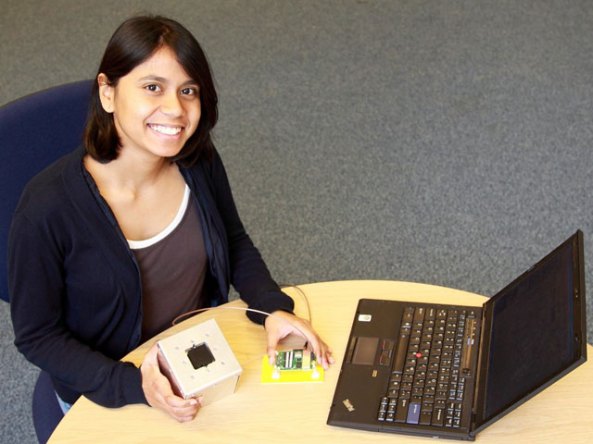
Talini holding a mockup of a cubesat (for testing antenna perfomance)

Talini holding a mockup of a cubesat (for testing antenna perfomance)

TOPCAT (TOPside ionosphere Computer Assisted Tomography) is a payload being developed at the University of Bath that will be launched on the UK’s first 3U CubeSat, UKube-1, next year.

Continue reading

ARISSat-1 BPSK Reception Challenge

ARISSat-1 was deployed from the ISS on August 3. It has a composite VHF downlink that will easily fit into the FUNcube Dongle (FCD) receive spectrum. The 145.920 MHz telemetry is 1000 bps BPSK and can, of course, also be received with a normal SSB 2 metre receiver.

The signal levels from ARISSat-1 should be similar to those we expect from the AMSAT-UK FUNcube-1 satellite (and also eventually  from UKube-1) and the AMSAT-UK team are keen to discover what will be the minimum and best type of antennas for schools to use with a FUNcube Dongle (FCD) Software Defined Radio (SDR). Therefore user experience with the ARISSat-1 signals will be very valuable in making this determination.

To encourage everyone to receive the 145.920 MHz BPSK ARISSat-1 telemetry signal AMSAT-UK are offering a FUN reward for listeners!

Continue reading

ARISSat-1 battery eclipse voltage decreasing

The ARISSat-1 Battery voltage is decreasing each eclipse period. It therefore is taking longer for the Battery to charge up to 32.5V to allow the switch from Low Power to High Power when the satellite enters an illumination period.

Kenneth Ransom, N5VHO has plotted the battery min/max for the last 8 days. We see that the battery voltage is decreasing at a faster rate than expected.  Kenneth’s graph can be found on the arissat1.org site under FAQ
http://www.arissat1.org/v3/index.php?option=com_content&view=section&layout=blog&id=13&Itemid=134

Take advantage of the High Power mode as much as possible over the next few days.

73 Gould, WA4SXM for the ARISSat-1/RadioSkaf-b team

ARISSat-1 Low Duty Cycle Mode

The new Amateur Radio satellite ARISSat-1 has been switching into low duty cycle mode even while in full sun which has suprised observers.

When the satellite is in darkness, in order to conserve battery power, it switches into a low duty cycle mode (also known as low power mode) where it transmits for 40 seconds and then shuts down for 2 minutes. On Thursday, August 11, a number of Radio Amateurs reported that ARISSat-1 was in  low duty cycle mode when the satellite appeared to be fully illuminated by the sun.

On the AMSAT bulletin board Tony AA2TX, ARISSat SDX software and hardware developer. provided an explanation:
Continue reading