Astronaut to use Amateur Radio to Talk to UK Students

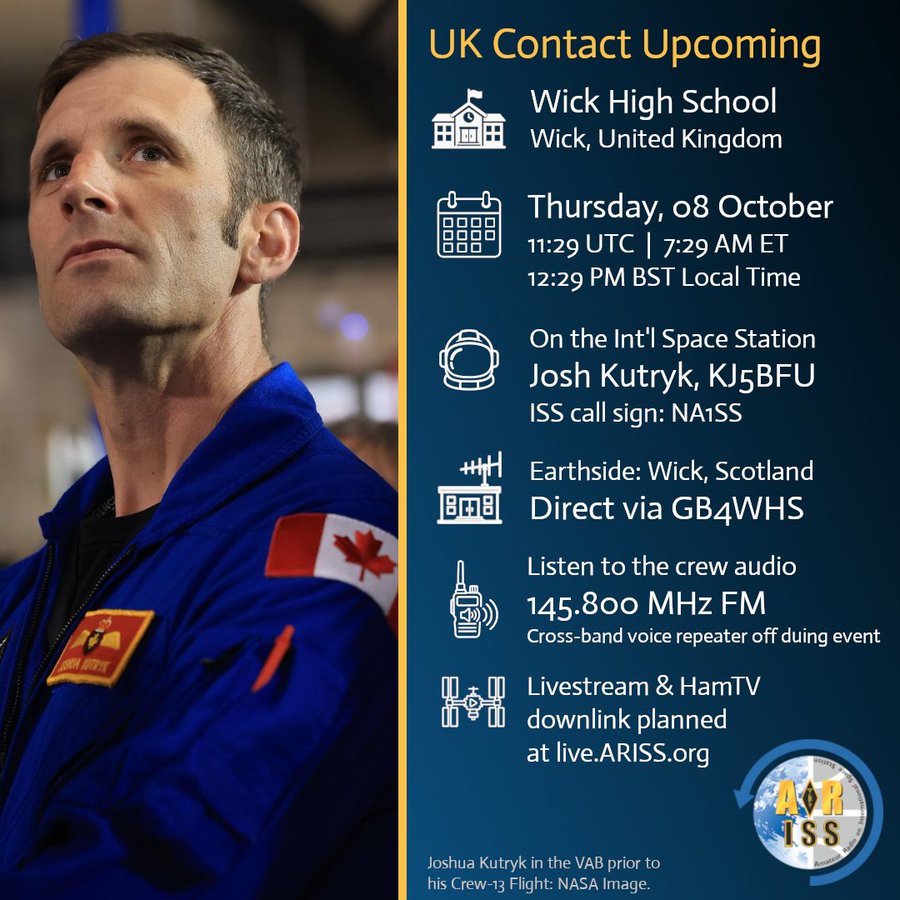
Wick High School ARISS Contact DetailsRescheduled Date: Students at Wick High School in Caithness will use amateur radio to ask astronaut Joshua Kutryk KJ5BFU questions about space.

The ARISS contact, using the call signs NA1SS on the International Space Station and GB4WHS at the school, will take place on Thursday, October 8, 2026, at 12:29 PM BST (11:29 GMT). You can listen in to the ISS downlink on 145.800 MHz (plus/minus 3 kHz Doppler shift) FM.

The event will be streamed live at https://live.ariss.org/

The space and ground teams will attempt to use the HamTV transmitter during this contact to send live Digital Amateur TV pictures of the astronaut on a frequency of 2395 MHz.

The HamTV downlink will be streamed at https://live.ariss.org/hamtv/

Wick High School is a comprehensive secondary school with 725 students aged 11-18. The school has 9 feeder primaries with around 800 children aged 5-11. The Caithness community is in the very far north of mainland Scotland. The area has a large employment focus on engineering, nuclear and renewable energy, with many of our students looking to careers in these industries. The High School encourages and supports pathways into these industries through our excellent Technologies departments.

The Wick High School Radio Club, GMØWHS, plays an important role in this programme by introducing students to amateur radio, satellite communications and wireless technology. Through practical activities, pupils develop technical knowledge alongside teamwork, problem-solving and communication skills while gaining an insight into careers in engineering, aerospace and technology, all while studying for their industry-recognised Foundation licence qualification.

For many young people living in this remote part of Scotland, opportunities to engage directly with the space sector are limited. A live conversation with an astronaut aboard the International Space Station would provide an unforgettable educational experience, raising aspirations and inspiring the next generation of scientists, engineers and explorers.
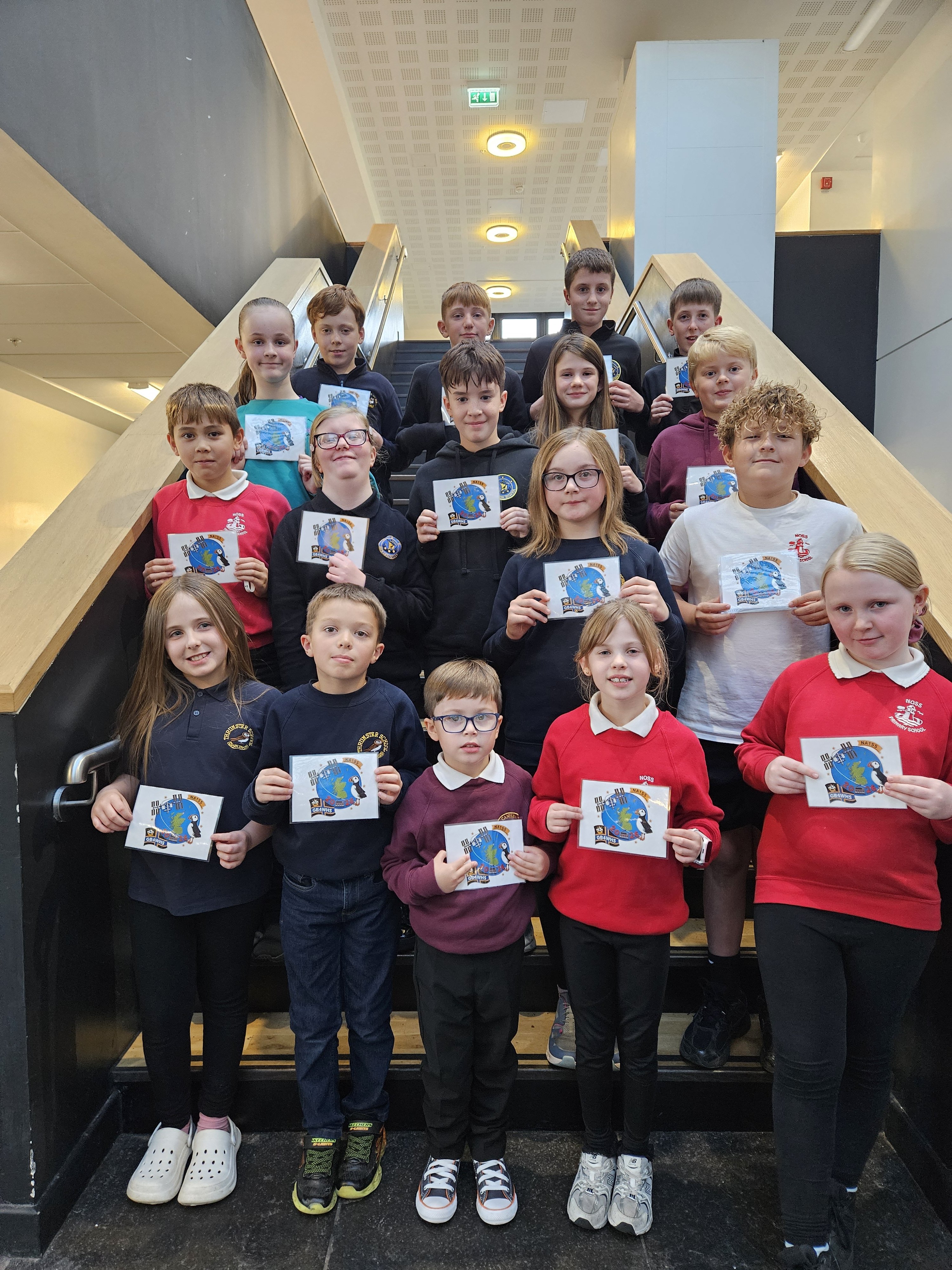
Young questioners with their practice cue cards at Wick High School

Young questioners with their practice cue cards – Credit: Wick High School

Questions (if the time of radio contact allows):
1. Which one thing do movies always get wrong about space?
2. What changed in your perspective on Earth after seeing it from outer space?
3. Why do you take the risk of going up into space?
4. What do you do if you have to go outside the ISS?
5. What do you find hard about living in the Space Station?
6. How does food taste in space compared to here on Earth?
7. How much do you use the phonetic alphabet in space?
8. What experiment were you most excited to work on?
9. Which part of your job, when you are in space, is your favourite?
10. How did you prepare your body and mind for going to space?
11. I dream of being an astronaut. What skills should I learn to become an astronaut?
12. I like to play games at home. Do astronauts play games in space?
13. Do astronauts get space sick like getting car sick?
14. Have you ever broke anything on ISS?
15. What other planets have you seen when up in space?
16. When you first went to space were you surprised by anything?
17. What do you do in your free time?
18. In what way is a spacesuit comfortable or uncomfortable?
19. How did you feel when you got chosen to go on the Space Station?
20. Can you get a power outage in space and what would happen?

In an article in the TES (Times Educational Supplement) magazine teacher Chris Aitken MM0WIC explained why he started an amateur radio club at Wick High School.
https://tes.com/magazine/teaching-learning/general/why-i-started-amateur-radio-club-my-school

Follow Wick High School Radio Club on X https://x.com/GM0WHS
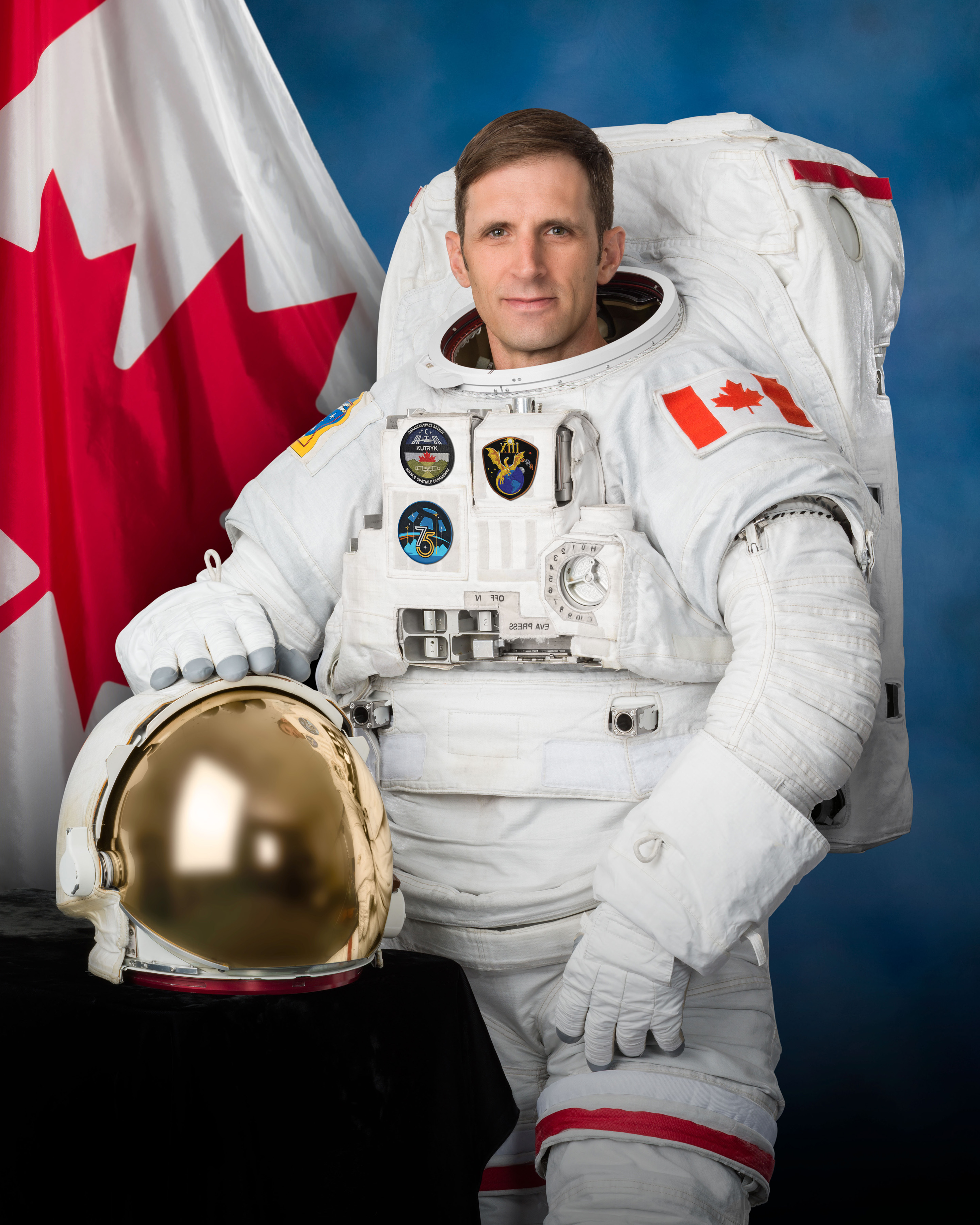
Joshua Kutryk KJ5BFU - Credit: Canadian Space Agency

Joshua Kutryk KJ5BFU – Credit: Canadian Space Agency

Follow astronaut Joshua Kutryk KJ5BFU on X https://x.com/Astro_Kutryk

The ARISS program is aimed at students and enthusiasts and aims to inspire them in the study of sciences with this amateur radio activity. The demonstration of amateur radio communication from space invites schools and universities to make use of these educational technical resources. We invite radio amateurs and space enthusiasts to tune in to this exciting moment.

The latest information on the ARISS operation mode can be found at
https://www.ariss.org/current-status-of-iss-stations.html

How to hear the ISS https://amsat-uk.org/beginners/how-to-hear-the-iss/

You can use the AMSAT-UK/BATC WebSDR to listen to the contact on your mobile device https://vhf-goonhilly.batc.org.uk/

What is Amateur Radio? http://www.essexham.co.uk/what-is-amateur-radio

Free UK amateur radio Online Training course https://essexham.co.uk/train/foundation-online/
ISS Astronaut to use Amateur Radio to Talk to UK Students

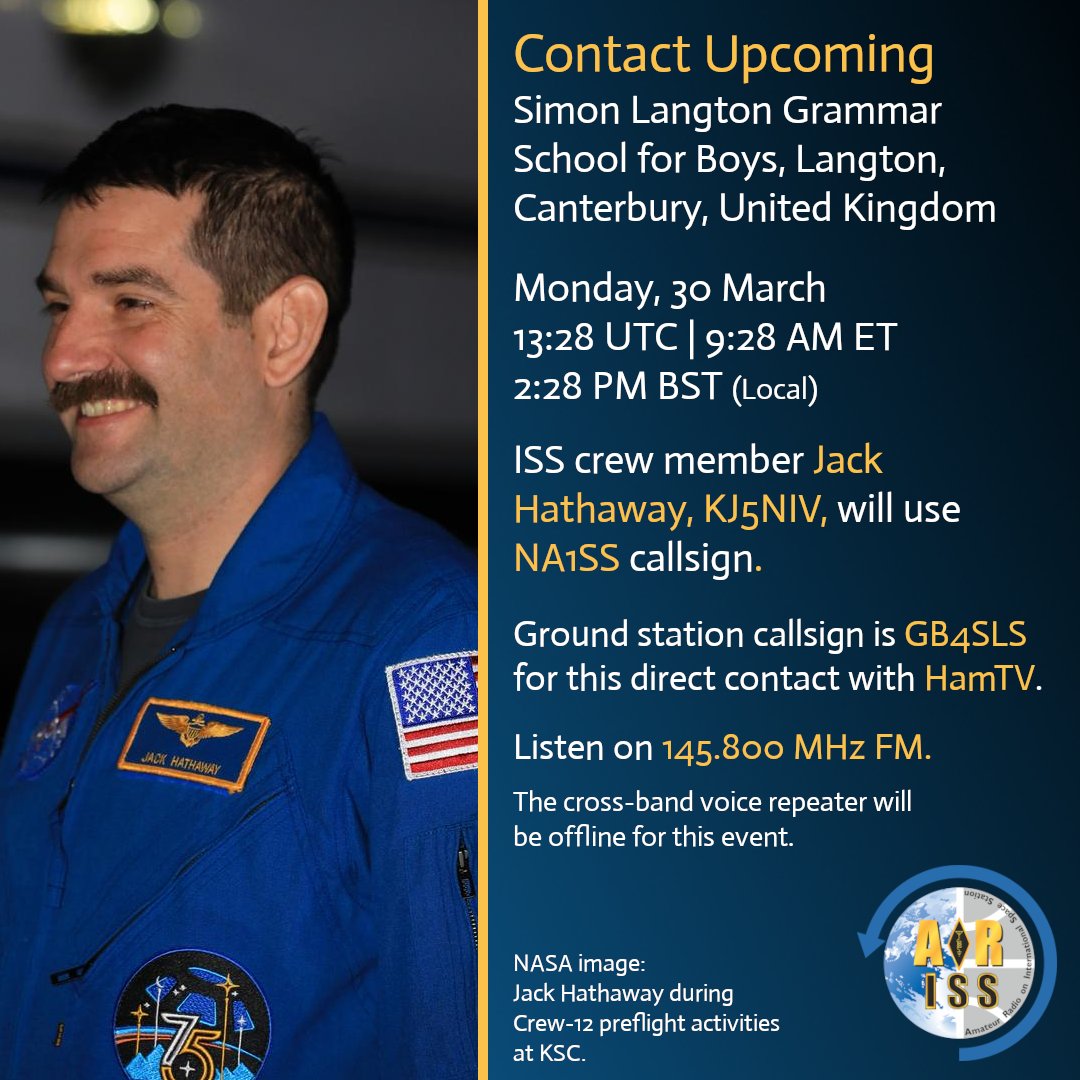
2026-03-30 ARISS UK ContactStudents at Simon Langton Grammar School for Boys will use amateur radio to speak to astronaut Jack Hathaway, KJ5NIV, on the International Space Station (ISS).  The ARISS contact, between NA1SS on the ISS and GB4SLS at the school, will take place on Monday, March 30, 2026 at 2:28 PM BST (13:28 GMT). You can listen in on 145.800 MHz (plus/minus 3 kHz Doppler shift) FM.

Astronaut Jack Hathaway, KJ5NIV, will answer questions from Simon Langton Grammar School for Boys, Canterbury, U.K.

The space and ground teams will attempt to use the HamTV transmitter during this contact. The HamTV DATV frequency is 2395 MHz.

The event will be streamed live: https://live.ariss.org/

The HamTV downlink will be streamed: https://live.ariss.org/hamtv/

Questions:
1. What are the purposes of the experiments you do in space?
2. Why do we go to space to do some experiments rather than do them on Earth?
3. How does the ISS stay in orbit around the earth?
4. How does it feel to see so many sunsets and sunrises each day from the ISS
5. What food do you eat on the ISS?
6. Why is there no air in space?
7. How does rocket fuel work when there is no air for combustion?
8. What do you do for entertainment on the ISS?
9. How hard do you have to train to go into space?
10. What is it like launching into space?
11. What is like to be in zero gravity for a long period of time?
12. Without weight pulling things down onto the ground there must be a lot less friction to help you move, how do you compensate for that?
13. Do you have any source of internet in space?
14. What is the most amazing thing that you have seen from space?
15. What ordinary daily tasks are the most difficult to do in space?
16. How does being in space affect the human body?
17. Is there a lot of noise on the ISS or is it quite quiet?
18. How do you clear up spills in space?
19. Do you ever feel lonely from the isolation in space?
20. How do you prepare for space walks?

The ARISS program is aimed at students and enthusiasts and aims to inspire them in the study of sciences with this amateur radio activity. The demonstration of amateur radio communication from space invites schools and universities to make use of these educational technical resources. We invite radio amateurs and space enthusiasts to tune in to this exciting moment.

Follow ARISS International on X

The latest information on the ARISS operation mode can be found at
https://www.ariss.org/current-status-of-iss-stations.html

How to hear the ISS https://amsat-uk.org/beginners/how-to-hear-the-iss/

What is Amateur Radio? http://www.essexham.co.uk/what-is-amateur-radio

Free UK amateur radio Online Training course https://essexham.co.uk/train/foundation-online/
Wick High School students to contact ISS

GM0WHS - Wick High School Radio Club logoStudents at Wick High School in East Caithness have been chosen by ARISS International to have an amateur radio contact with an astronaut on the International Space Station.

The Wick High School Radio Club @GM0WHS posted on X:
HUGE NEWS FROM @wickhigh
Pupils from all across East Caithness will be talking to an astronaut later this year! We’re really humbled to have been chosen by @ARISS_Intl for a scheduled contact with the Space Station.

The radio club was established in 2023 by Computing Science teacher Chris Aitken MM0WIC @skipperAitken . So far 15 students have passed the exam for their amateur radio licence.

International Space Station - Image Credit NASA

International Space Station – Image Credit NASA

The John O’Groat Journal says:

“Because of Wick’s far-north location, this contact is likely to be one of the most northerly direct educational links with the ISS ever attempted. The station will appear around 25 degrees above the southern horizon, travelling west to east, making the contact both spectacular and technically demanding.”

Read the full story in the John O’Grout Journal at
https://www.johnogroat-journal.co.uk/news/we-have-contact-wick-high-pupils-to-get-direct-line-to-i-425857/

RSGB announcement https://rsgb.org/main/blog/school-zone-stories/2026/01/30/lift-off-for-wick-high-astronaut-contact/

Follow Wick High School Radio Club on X

Follow ARISS International on X

Follow AMSAT-UK on X

New ARISS Video Premiere

2025-12-02 ARISS VideoARISS is excited to premier a new video all about Amateur Radio on the International Space Station! Thanks to Nichole Ayers KJ5GWI (@Astro_Ayers on X) who recorded this during her time on the International Space Station.

Join us Tuesday 02-December on https://YouTube.com/ARISSlive for the big reveal!

Follow ARISS International on X

Follow AMSAT-UK on X

Amateur radio payload for the Tiangong space station

Artist's impression of the Tiangong Space Station in October 2021

Artist’s impression of the Tiangong Space Station in October 2021

The IARU satellite frequency coordination panel report an application has been submitted for an amateur radio payload to be hosted on the Tiangong space station.

The coordination request says:

CSSARC is the amateur radio payload for Chinese Space Station, proposed by Chinese Radio Amateurs Club (CRAC), Aerospace System Engineering Research Institute of Shanghai (ASES) and Harbin Institute of Technology (HIT).

The first phase of the payload is capable of providing the following functions utilizing the VHF/UHF amateur radio band:
1. V/V or U/U crew voice;
2. V/U or U/V FM repeater;
3. V/V or U/U 1k2 AFSK digipeater;
4. V/V or U/U SSTV or digital image.

The payload will provide resources for radio amateurs worldwide to make contacts with onboard astronauts, or communicate with each other. It will also play a rule to inspire students to pursue interests and careers in science, technology, engineering and math, and to encourage more people to get interested in amateur radio.

Planning a launch from Wenchang in Q3 2022 to the Chinese Space Station.

Source IARU satellite frequency coordination http://www.amsat.org.uk/iaru/

ARISS contact scheduled for students in Newbury UK

International Space Station - Image Credit NASA

International Space Station – Image Credit NASA

Amateur Radio on the International Space Station (ARISS) has received schedule confirmation for an ARISS radio contact with astronauts. ARISS is the group that puts together special amateur radio contacts between students around the globe and crew members with ham radio licenses on the International Space Station (ISS).

This will be a direct contact via amateur radio between astronaut Mark Vande Hei KG5GNP onboard the International Space Station and students at the Mary Hare School, Newbury, UK.

Amateur radio station GB4MHN will be the ham radio ground station for this contact.

The downlink frequency for this contact is 145.800 MHz FM and may be heard by listeners in Europe that are within the ISS-footprint.

The ARISS radio contact is scheduled for Tuesday, October 12, 2021 at 11:12:33 UTC, which is 12:12:33 BST or 13:12:33 CEST.

A live feed from the school will be available here https://live.ariss.org/

School Information:

Mary Hare is an aural school for the deaf, we don’t use sign language, instead we teach students to develop lip reading skills and make use of technology. The contact is important for the school as not only will it help inspire students to STEM, it will hopefully demonstrate that no matter the difficulties they have with communication; there are still ways they can accomplish amazing things (“the sky is not the limit!”).

During the week the students will see some exciting chemistry demonstrations, design and fly model rockets, see some space suits, and do some astronomy (observing Jupiter and Saturn in the evening). In lessons they have researched and discussed what it might be like to live in space, done some space themed art, and looked at astronaut food. Hopefully it will be an exciting and inspiring week.

Students First Names & Questions:

1. Rosie (13 yrs): Do you have to learn a sign language to communicate if something goes wrong with the radios in your suit?

2. Jacob (18 yrs): How do you tell directions in space?

3. Harrison (11 yrs): What do the northern lights look like from space?

4. Hollie (16 yrs): How can you shower in zero gravity?

5. Jasper (13 yrs): What’s your most favourite space technology?

6. Milly (18 yrs): If there was a fire, how would you evacuate?

7. Dominika (14 yrs): Do mobile devices work in space? For example, a Smart Phone?

8. Oliver (13 yrs): If you could take one thing from home into space, to make life more fun what would you take and why?

9. Zak (17 yrs): What is it like to wake up and see the earth from space

10. Julia (15 yrs): How long have you been in space for?

Watch the That’s TV Solent interview with Alex Ayling from Mary Hare School
https://twitter.com/TTVSolent/status/1440952287883632641

Deaf pupils to talk to astronaut on the International Space Station in a world first
http://www.southgatearc.org/news/2021/september/deaf-pupils-to-talk-to-astronauts.htm

Reading Chronicle newspaper report on the planned contact
https://www.readingchronicle.co.uk/news/19582950.deaf-newbury-pupils-talk-astronauts-iss-space-station/

The latest information on the ARISS operation mode can be found at
https://www.ariss.org/current-status-of-iss-stations.html

What is Amateur Radio? http://www.essexham.co.uk/what-is-amateur-radio

Free UK amateur radio Online Training course https://essexham.co.uk/train/foundation-online/