Amateur radio to the rescue of satellite

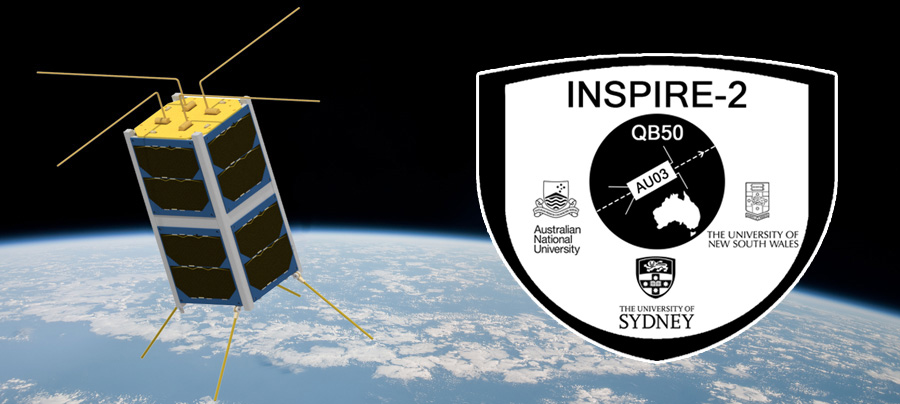
I-Inspire-2 is a 20 x 10 x 10cm CubeSat built by the University of Sydney in collaboration with the Australian National University and the University of New South Wales (Sydney)

WIA News reports:

On board the tiny spacecraft is an experiment, part of the QB50 project, designed to “explore the lower thermosphere, for re-entry research and in-orbit demonstration of technologies and miniaturised sensors”, as reported in earlier editions of the WIA broadcast.

Its operational frequency was coordinated by IARU to be in the satellite segment of the 70cm amateur band.

It was placed in orbit from the International Space Station in late May. The deployment was successful; however there were no signs of life when the ground stations started looking for it. The engineering group quickly tested various scenarios on the engineering model only to come to the conclusion that, due to the extended delay in the deployment, the satellite’s battery was likely to be depleted and the satellite was trapped in an endless loop, trying to deploy its antenna.

The engineering group suggested that the satellite is still listening albeit with its antennas in the stowed position. This meant that the satellite command receiver might have difficulty receiving any signals from ground control stations. A set of commands were devised which, if received, would instruct the satellite to wait until the battery is charged before attempting to deploy its antenna. Both UNSW and ANU ground stations transmitted the recovery command to the satellite; however after a week or so of no success it was decided that more transmitter power was required to overcome the lack of receiver sensitivity caused by the still stowed antenna. A request for assistance was passed to EME operators around the world and many responses were received.

The greatest hope for a successful recovery was thought to be PI 9 CAM using high power and a 25 m dish, normally used for radio astronomy but also EME. They were scheduled to transmit on the weekend of June 10-11.

On Sunday June 11, during the morning pass, Rob VK1KW reported a strong signal every 30 seconds on I-Inspire-2’s frequency. Dimitris VK1SV who is part of the ANU team, verified reception from home around midnight. The following morning Dimitris drove to the ANU ground station and was able to send commands to the satellite for the first time since it was deployed. Many other radio amateurs around the world also reported reception of the beacon. The satellite had come back to life!

This is a wonderful example of successful collaboration between radio amateurs and the academic community. If a frequency outside the radio amateur band had been used, it is doubtful that the satellite would have been brought back to life.

The crew of I-Inspire-2 wishes to thank all radio amateurs involved and is looking forward to a successful collection of data for the scientific experiment!

I-Inspire-2 official web site: http://sydney.edu.au/inspire-cubesat/project/index.shtml

( Dimitris Tsifakis VK1SV/VK2COW )

Source WIA News http://www.wia.org.au/members/broadcast/wianews/

Join Virtual Buildathon and build satellite antenna

Chertsey Radio Club is running a virtual build-a-thon to construct a dual-band satellite antenna for 2m/70cm using low-cost parts and it’s open to all.

They will be using WebEx so access to a PC/Tablet, webcam and Internet will be needed to take advantage of the sessions.

They will be starting the virtual buildathon with the small diplexer kit by HA8LFK, kits will no more than £20 depending on shipping and import tax, as always you pay what we pay, no additional costs.

Please email chertseyradioclub <at> hotmail.com to register your interest.

Further information at
http://chertseyradioclub.blogspot.co.uk/2017/06/virtual-buildathon-is-back.html

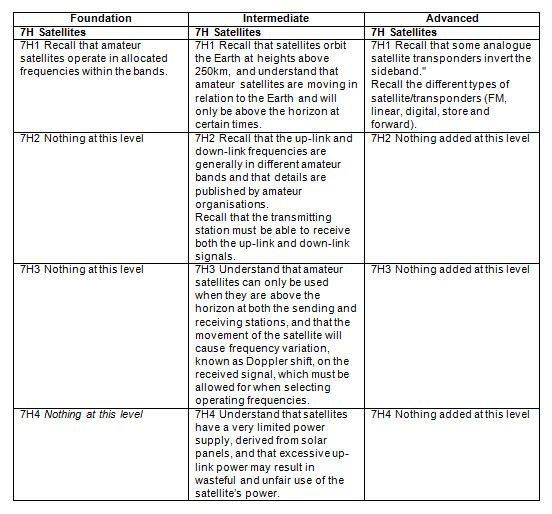
Syllabus consultation for UK amateur radio exams

A syllabus consultation is being held for the new Foundation, Intermediate and Advanced RSGB amateur radio exams.

Surprisingly 7B1 Band Plans on page 56 of the consultation document proposes not teaching Foundation candidates that “transmissions on satellite frequencies should be avoided for terrestrial contacts.”

Instead it is suggested that teaching this Basic Information is delayed until Intermediate. Fewer that half of all Foundation licence holders ever do Intermediate and even those that do may take several years to get there.

The RSGB says:

A complete review of the syllabus for all three levels of the amateur radio examinations has been completed.

The draft of the new syllabus is now available for consultation together with a survey to capture any comments you may wish to make.

Please visit http://rsgb.org/syllabus_review to access the syllabus draft document and how to make your comments.

The section of syllabus relating to the Amateur Satellite Service can be seen on page 60 of the consultation document.

CAS-4A and CAS-4B Satellites from CAMSAT Launched

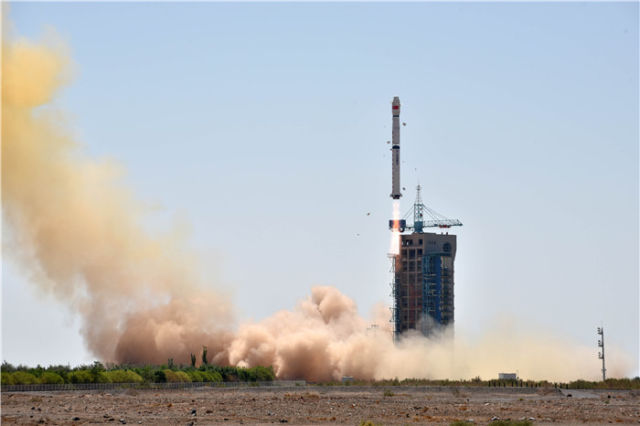
CAS-4A and CAS-4B launch on CZ-4B

CAS-4A and CAS-4B launch on CZ-4B

Two of CAMSAT’s amateur radio payloads piggybacked on the optical remote sensing micro-satellites OVS-1A and OVS-1B were launched at 0300 GMT on Thursday, June 15, 2017 from the Jiuquan Satellite Launch Center, on the CZ-4B launch vehicle. The primary payload of this launch is a hard X-ray modulation telescope satellite (HXMT).

Satellite CAS-4A/OVS-1A:
● Architecture: Micro-satellite
● Dimensions: 494Lx499Wx630H mm
● Mass: 55 kg
● Stabilization: three-axis stabilization system with its +Y surface facing the earth
● Primary Payload: optical Camera with 1.98m resolution

CAS-4A Orbit:
● Orbit type : Sun synchronization orbit
● Apogee: 524 km
● Inclination: 43°
● Period: 95.1 minutes

CAS-4A Amateur Radio Payload:
● Call sign: BJ1SK
● VHF Antenna: one 1/4λ monopole antenna with max. 0 dBi gain located at +Z side
● UHF Antenna: one 1/4λ monopole antenna with max. 0 dBi gain located at -Z side
● CW Telemetry Beacon: 145.855 MHz 17 dBm
● AX.25 4.8k Baud GMSK Telemetry: 145.835 MHz 20 dBm
● U/V Linear Transponder Downlink: 145.870 MHz 20 dBm, 20 kHz bandwidth, Inverted
● U/V Linear Transponder Uplink: 435.220 MHz

CAS-4 Satellite

CAS-4 Satellite

Satellite Name: CAS-4B/OVS-1B:
● Architecture: Micro-satellite
● Dimensions: 494Lx499Wx630H mm
● Mass: 55 kg
● Stabilization: three-axis stabilization system with its +Y surface facing the earth
● Primary Payload: optical Camera with 1.98m resolution

CAS-4B Orbit:
● Orbit type : Sun synchronization orbit
● Apogee: 524 km
● Inclination: 43°
● Period: 95.1 minutes

CAS-4B Amateur Radio Payload:
● Call sign: BJ1SL
● VHF Antenna: one 1/4λ monopole antenna with max. 0 dBi gain located at +Z side
● UHF Antenna: one 1/4λ monopole antenna with max. 0 dBi gain located at -Z side
● CW Telemetry Beacon: 145.910 MHz 17 dBm
● AX.25 4.8k Baud GMSK Telemetry: 145.890 MHz 20 dBm
● U/V Linear Transponder Downlink: 145.925 MHz 20 dBm, 20 kHz bandwidth, Inverted
● U/V Linear Transponder Uplink: 435.280 MHz

73!
Alan Kung, BA1DU

CAMSAT Press Release PDF

Keplerian Two Line Elements (TLEs) ‘Keps’ for new satellites launched in past 30 days
http://celestrak.com/NORAD/elements/tle-new.txt

CAS-4A and CAS-4B