ISS SSTV July 18-19 on 145.800 MHz FM

ISS SSTV image 1 received by Murray Hely ZL3MH January 31, 2015

ISS SSTV image received by Murray Hely ZL3MH January 31, 2015

ARISS SSTV images will be transmitted this weekend from the amateur radio station in the ISS Russian Service Module to commemorate the 40th Anniversary of the Apollo-Soyuz Mission.

40 years ago this week, the historic joint Apollo-Soyuz mission was conducted.  Apollo-Soyuz (or Soyuz-Apollo in Russia) represented the first joint USA-Soviet mission and set the stage for follow-on Russia-USA space collaboration on the Space Shuttle, Mir Space Station and the International Space Station.

The Soyuz and Apollo vehicles were docked from July 17-19, 1975, during which time joint experiments and activities were accomplished with the 3 USA astronauts and 2 Soviet Cosmonauts on-board.  Apollo-Soyuz was the final mission of the Apollo program and the last USA human spaceflight mission until the first space shuttle mission in 1981.

To commemorate the 40th anniversary of this historic international event, the ARISS team has developed a series of 12 Slow Scan Television (SSTV) images that will be sent down for reception by schools, educational organizations and ham radio operators, worldwide.  The SSTV images are planned to start sometime Saturday morning, July 18 and run through Sunday July 19.  These dates are tentative and are subject to change.  The SSTV images can be received on 145.800 MHz FM and displayed using several different SSTV computer programs that are available on the internet.

We encourage you to submit your best received SSTV images to:
http://spaceflightsoftware.com/ARISS_SSTV/submit.php

The ARISS SSTV image gallery will post the best SSTV images received from this event at:
http://spaceflightsoftware.com/ARISS_SSTV/index.php

Also, as a special treat, on Saturday July 18 the ISS Cosmonauts will take time out to conduct an ARISS contact with students attending the Moon Day/Frontiers of Flight Museum event in Dallas Texas.  This Russian Cosmonaut-USA Student contact is planned to start around 16:55 UTC through the W6SRJ ground station located in Santa Rosa, California.  ARISS will use the 145.800 MHz FM voice frequency downlink (same as the SSTV downlink) for the Moon Day contact.

For more information on ARISS, please go to our web site http://www.ariss.org/

The ARISS international team would like to thank our ARISS-Russia colleague, Sergey Samburov, RV3DR, for his leadership on this historic commemoration.

Frank H. Bauer, KA3HDO
ARISS International Chair

Previous ISS SSTV transmissions have used the SSTV mode PD180 with a 3-minute off time between each image.

ISS Slow Scan TV information and links for tracking the ISS at https://amsat-uk.org/beginners/iss-sstv/

You can receive the SSTV transmissions online using the SUWS WebSDR remote receiver located near London along with the MMSSTV software https://amsat-uk.org/2014/08/15/suws-websdr-moves-to-new-site/

School Shortlist for Tim Peake Space Station Contact

Major Tim Peake KG5BVI

Major Tim Peake KG5BVI

On Tuesday, July 14 at the UK Space Conference in Liverpool the names were announced of the UK schools which have won the opportunity to contact UK astronaut Tim Peake via amateur radio during his mission to the International Space Station. Tim holds the call sign KG5BVI and is expected to use the special call GB1SS from the amateur radio station in the Columbus module of the ISS.

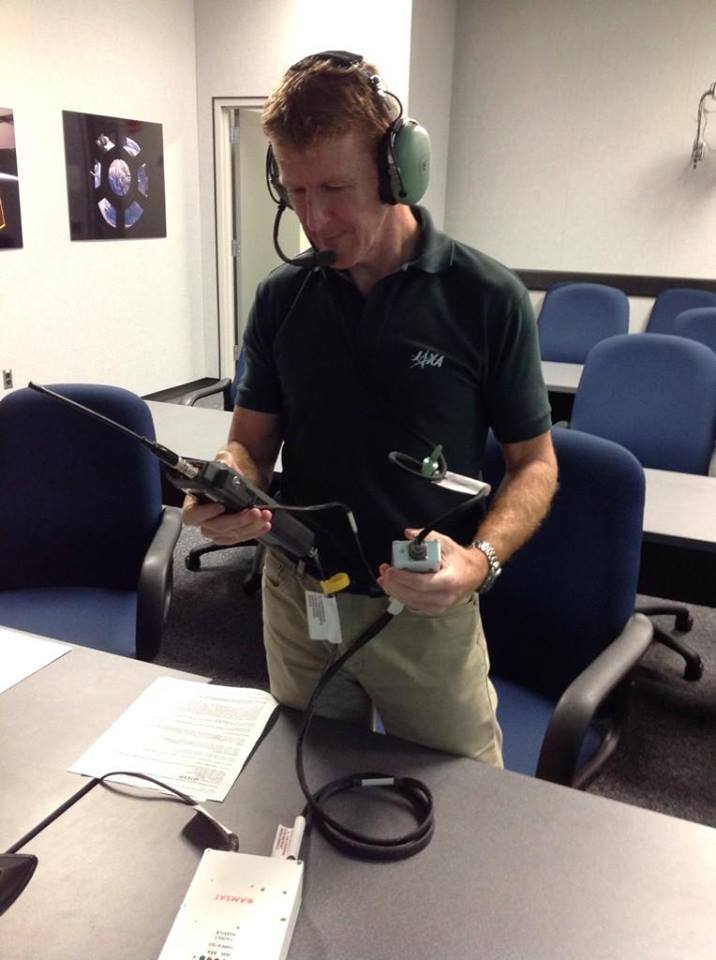
Tim Peake KG5BVI training on ISS Amateur Radio Station Equipment

Tim Peake KG5BVI training on ISS Amateur Radio Station Equipment

Tim will launch to the ISS in December of this year and will spend 6 months working and living in space. The Amateur Radio competition is a collaboration between the UK Space Agency, the Radio Society of Great Britain (RSGB) and the European Space Agency (ESA).

Selected schools will host a direct link-up with the ISS during a two-day, space related STEM workshop which will be the culmination of a large range of learning activities using space as a context for teaching throughout the curriculum.

ARISS UK (Amateur Radio on the International Space Station) will provide and set up all necessary radio equipment such as low earth orbit satellite tracking antennas and radios, to establishing a fully functional, direct radio link with the ISS from the schools’ very own premises. In a ten-minute window when the ISS will be over the UK, an amateur radio contact will be established with Tim, and students will be able to ask him questions about his life and work on board the ISS.

Owing to the nature of scheduling the links, which is dependent on geography, the exact orbit of the ISS and the crew schedules, the exact dates and times for possible links will not be known until 2 weeks before the link up is scheduled. The shortlisted schools will all be prepared for such scheduling challenges and, by having a number of schools, we can ensure that all links are used.

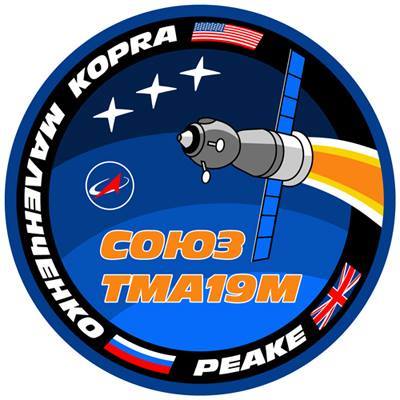
Soyuz TMA-19M Mission Patch

Soyuz TMA-19M Patch

Jeremy Curtis, Head of Education at the UK Space Agency, said:

We’re delighted with the amount of interest in this exciting project and look forward to working with the selected schools as they make a call into space.

Both Tim’s space mission and amateur radio have the power to inspire young people and encourage them into STEM subjects.

By bringing them together we can boost their reach and give young people around the UK the chance to be involved in a space mission and a hands-on project that will teach them new skills.

The following schools have been shortlisted for a possible ARISS call with Tim whilst he is in orbit on the ISS:

Principia Mission Patch

  • Ashfield Primary School, Otley, West Yorkshire
  • The Derby High School, Derby
  • The Kings School, Ottery St Mary
  • Norwich School, Norwich
  • Oasis Academy Brightstowe, Bristol
  • Powys Secondary Schools Joint, Powys
  • Royal Masonic School for Girls, Rickmansworth
  • Sandringham School, St Albans
  • St Richard’s Catholic College, Bexhill-on-Sea
  • Wellesley House School, Broadstairs

John Gould, G3WKL, President of the RSGB, said:

The Radio Society of Great Britain will be delighted to support shortlisted schools by teaching their pupils about amateur radio and helping them through their licence exams where appropriate. Members of our Youth Committee are based across the UK and will be keen to visit the chosen schools in their area and chat to the pupils.

The ARISS UK Operations team will now work with the shortlisted schools to prepare them for this exceptional opportunity during the mission of the first British ESA Astronaut.

ARISS Europe http://www.ariss-eu.org/

AMSAT-UK Colloquium Keynote Presentation

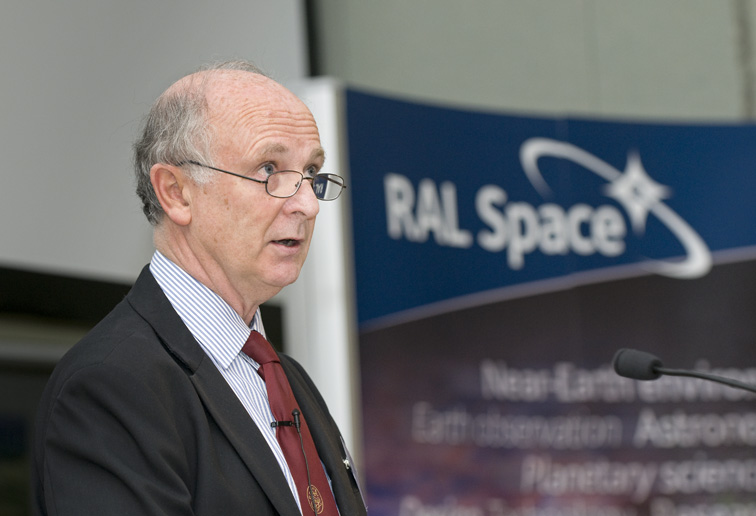
Professor Richard Holdaway - Credit RAL Space

Professor Richard Holdaway – Credit RAL Space

Professor Richard Holdaway will give the keynote presentation “What else does Space do for You!” at the AMSAT-UK International Space Colloquium at 1:30 pm on Saturday, July 25.

Professor Richard Holdaway has just retired from serving 16 years as Director of RAL Space at Harwell. He commenced his studies and obtained a Ph.D at the University of Southampton. This was followed by a period working on the design of the Harrier VTOL aircraft at Hawker Siddeley before joining the Appleton Laboratory in 1974 and RAL in 1980. He has been the Director of the establishment since 1998

RAL Space carries out an exciting range of world-class space research and technology development. They have had significant involvement in over 200 space missions and are at the forefront of UK Space Research.

They have more than 200 staff who are dedicated to supporting the programmes of the STFC and the Natural Environment Research Council as well as undertaking a large number of space projects for UK and overseas agencies, universities and industrial companies. They work alongside the UK Space Agency who co-ordinate UK civil space activities.

RAL Space undertake world-leading space research and technology development, provide space test and ground-based facilities, design and build instruments, analyse and process data and operate S- and X-band ground-station facilities, as well as lead conceptual studies for future missions. They work with space and ground-based groups around the world and have very recently opened a new test facility on their campus at Harwell. This is adjacent to the newly established  European Centre for Space Applications and Telecommunications (ECSAT) which is ESA’s newest facility and its first in the United Kingdom.

Richard Holdaway has had 40 years of experience in Space Programmes, having worked on numerous missions in Space Science and Earth Observation with NASA, ESA, China, Russia and the UK National Programme.

He was awarded a CBE – Commander of the Order of the British Empire – in the New Years Honours List 2013; in recognition of his remarkable services to Science and Technology.

The Colloquium takes place July 25-26 at the Holiday Inn, Guildford, GU2 7XZ and is open to all. Admittance on the Saturday and Sunday is £10 each day. Further information is at https://amsat-uk.org/colloquium/

Amateur Radio Geostationary Transponder and the Adventures of a Hacker Turned Radio Ham

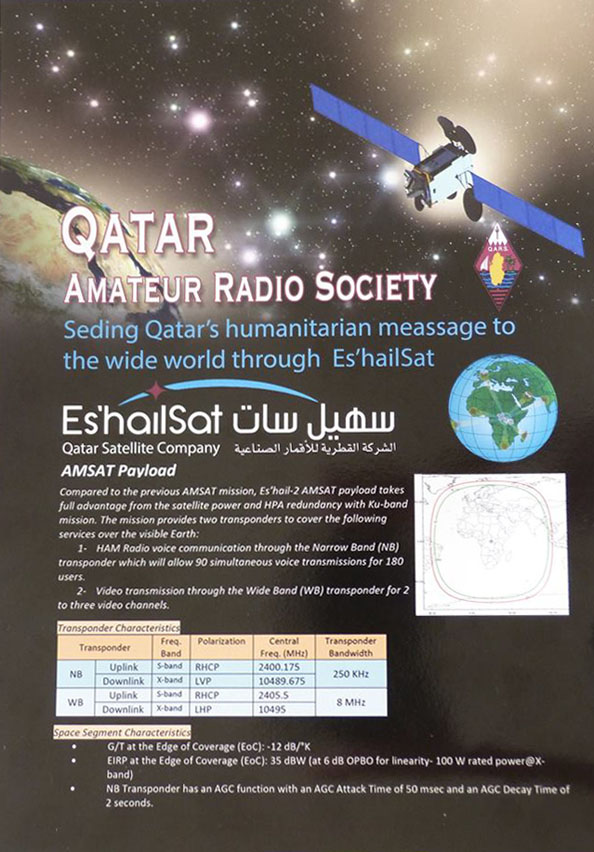
Qatar Amateur Radio Society Geostationary Transponders Leaflet Page 1

Qatar Amateur Radio Society Geostationary Transponders Leaflet Page 1

HamRadioNow episode 211 features two presentations given at the TAPR/AMSAT banquet on Friday, May 15 at the 2015 Dayton Hamvention. The first is about the Amateur Radio transponder on the geostationary satellite Es’hail 2 by Thani Ali al-Malki followed by Adventures of a Hacker Turned Ham by Michael Ossmann AD0NR. .

The night begins with a short presentation on what will be the first Amateur Radio transponder on a geostationary satellite, a project of the Qatar Amateur Radio Society, with help from AMSAT DL (Germany). The satellite, Es’HailSAT-2, is owned by the Qatar Satellite Company, and senior engineer Thani Ali al-Malki will give the details. Western Hemisphere hams will be disappointed that the satellite footprint won’t cover anything in North America or Australia, and just a bit of South America. The satellite is primarily a communications system for Qatar and the Middle East, but the ham transponder will also cover Europe, Africa and western Asia (but also missing the China coast and Japan).

Mike Ossmann AD0NR – Image Credit www.insinuator.net

Mike Ossmann AD0NR – Image Credit http://www.insinuator.net

Michael Ossmann, AD0NR, founder of Great Scott Gadgets grew up as a computer nerd embracing the hacker ethos. Eventually Michael became very interested in the security of wireless systems such as remote keyless entry, garage door openers, Wi-Fi, and Bluetooth. He designed Ubertooth One, a Bluetooth sniffer that was successfully funded on Kickstarter.

Not one to rest, Michael later designed and successfully funded HackRF One, an open source SDR platform that attracted the attention of the amateur radio community. Michael talks about his unique perspective on the community as an outsider looking in, why he resisted getting an amateur radio license for years, and why he finally decided to join. Michael shares his thoughts on what it means to be a hacker, what it means to be a ham, and what amateur radio may look like in the decades to come.

TAPR President Steve Bible N7HPR‘s introduction establishes the youth theme with an interesting survey of the crowd.

Watch HRN 211: Adventures of a Hacker Turned Ham (Michael Ossmann AD0NR) on HamRadioNow

Previous editions of HamRadioNow http://www.youtube.com/user/HamRadioNow/videos

Es’hail 2 geostationary satellite https://amsat-uk.org/satellites/geosynchronous/eshail-2/

DeorbitSail Launch Information

deorbitsail_slide2The CubeSat DeorbitSail built by researchers and radio amateurs at the Surrey Space Centre in Guildford carries a  1200 bps BPSK beacon on 145.975 MHz. It is expected to launch at 1627 UT on  Friday, July 10.

DeorbitSail is a 3U CubeSat sized satellite with a deployable sail that will demonstrate rapid deorbiting.

Chris Bridges 2E0OBC writes:

Dear AMSAT’ers, CubeSat’ers, Friends,

Please find attached exclusive details of a UK CubeSat called DeorbitSail flying out tomorrow evening on PSLV. Please feel free to distribute to other hams that can help out.

This contains all the info you should need including:
• Initial TLE
• DeorbitSail Flyer > Launch details, etc.
• Predicted first packet transmission on 145.975 MHz, 1k2 BPSK -> we predict to be over Russia in the evening.
• Beacon and Packet Formats are here: DOS Message Definitions RD+CPB

First packets sent in will get a Signed Certificate of thanks from the team!

If you have any telemetry or TLE/frequency information, please send it to me and/or to deorbitsail.messages@gmail.com so we can quickly learn our satellite state.

Any questions, don’t hesitate to ask!

73 Chris 2E0OBC

DEORBITSAIL
1 55554U 58056A   15191.72643157  .00000000  00000-0 +13828-4 0   335
2 55554  97.9842  81.0881 0007584 273.9578  86.0949 14.75593446209360

Follow @SpaceAtSurrey on Twitter

DeorbitSail website http://www.surrey.ac.uk/ssc/research/space_vehicle_control/deorbitsail/

Download DeorbitSail leaflet

Download DeorbitSail Message Definitions

ISRO PSLV-C28 / DMC3 Mission http://www.isro.gov.in/launcher/pslv-c28-dmc3-mission

International Space Colloquium at Guildford July 25-26
https://amsat-uk.org/2015/06/16/international-space-colloquium-at-guildford/

CAMSAT Launch Postponement

CAMSAT XW-2A formerly known as CAS-3A

CAMSAT XW-2A formerly known as CAS-3A

A launch postponement has been announced for Beijing’s new CZ-6 rocket which is planned to carry a constellation of amateur radio satellites.

Soon to be launched six CAMSAT satellites CAS-3A to F have now been named as XW-2 (Hope-2) amateur satellite system, and correspond to the XW-2A to F.

All the satellites have completed environmental testing, currently being burn-in tests, everything is underway. The satellites will be moved to the launch center in mid-August and launch date has been postponed to early September.

73!

Alan Kung, BA1DU

CAMSAT XW-2 satellites https://amsat-uk.org/satellites/communications/camsat-xw-2/