ISS SSTV in the Press

ISS SSTV Image 2 of 12 received by Andrew Garratt M0NRD April 11, 2015

ISS SSTV Image 2 of 12 received by Andrew Garratt M0NRD April 11, 2015

AMSAT-UK member Andrew Garratt M0NRD got some good publicity for Amateur Radio from the recent ISS Slow Scan Television transmissions.

The SSTV pictures were sent in celebration of Yuri Gagarin becoming the first human to reach space, on April 12, 1961. The Russian cosmonauts on board the station transmitted images from Gagarin’s life which were received by radio hams worldwide. Andrew said he hoped it would encourage more people to become interested in radio.

Read the full story at
https://web.archive.org/web/20160405015704/http://newarkadvertiser.co.uk/articles/news/A-message-from-space-picked-up-in-Newark

Local newspapers are generally only too glad to publish stories like this if someone takes the time to get in touch and tell them about it. Andrew made sure the newspaper was aware of his local clubs website URL and Facebook page enabling those reading the story to contact the club.

Follow M0NRD on Twitter http://twitter.com/nerdsville

ISS Slow Scan TV Active on Weekend of April 11 https://amsat-uk.org/2015/03/31/iss-sstv/

Note the ISS transmissions on 145.800 MHz FM use the 5 kHz deviation standard rather than the narrow 2.5 kHz used in Europe. If your transceiver has selectable FM filters try the wider filter.

The ISS Fan Club website will show you when the space station is in range http://www.issfanclub.com/

ISS SSTV information and links at https://amsat-uk.org/beginners/iss-sstv/

ARISS-SSTV Images http://ariss-sstv.blogspot.co.uk/

If you don’t have an amateur radio receiver you can still listen to the ISS by using an Online Radio, also known as a WebSDR. Select a Frequency of 145800.0 kHz and Mode FM:
• Farnham WebSDR when ISS is in range of London http://farnham-sdr.com/
• R4UAB WebSDR when ISS is over Russia

The RSGB produce a handy Media Guide and Template press release, see
http://rsgb.org/main/clubs/media-guide-for-affiliated-societies/

If you receive a full or partial picture from the Space Station your Local Newspaper may like to know http://www.southgatearc.org/news/2016/july/now-is-a-great-time-to-get-ham-radio-publicity.htm

Using WebSDRs Worldwide for the ISS

ISS SSTV and Packet Radio signals on the SUWS WebSDR

ISS SSTV and Packet Radio signals on the SUWS WebSDR

Martin Ehrenfried G8JNJ describes how he uses WebSDR’s to listen to ISS transmissions on 145.800 and 145.825 MHz. The SUWS SDR at Farnham can even receive the 143.625 MHz ISS comms channel.

We were treated to more Slow Scan Television (SSTV) pictures from the International Space Station (ISS) on the weekend of April 11/12.

During the Sunday evening passes a Cosmonaut suddenly decided to try some ad-hoc voice contacts between SSTV transmissions. Quite a few other stations were calling RS0ISS, but I didn’t hear any actual two-way exchanges. I made a very late, hurried and half-hearted attempt to call near the end of the pass, when my collinear antenna was most likely to be effective, but the ISS was very quickly out of range.

144 MHz G8JNJ prototype helix antenna used at SUWS WebSDR

144 MHz G8JNJ prototype helix antenna used at SUWS WebSDR

I was also monitoring the Russian VHF-2 comms frequency 143.625 MHz FM on the new extended 143 MHz band on the SUWS WebSDR in a second browser window, and heard a very short transmission from a Cosmonaut near the end of the UK pass. I suspect they were attempting to call Moscow as they started to come into range.

When the ISS dropped out on the SUWS WebSDR, I swapped over to the Russian http://sdr.22dx.ru/ WebSDR and heard some full contacts during a long pass over the Russian mainland.

With the exception of Asia (Bangkok SDR seems to be very deaf) it’s now possible to switch between WebSDR’s at different locations and catch just about all Amateur transmissions from the ISS. In fact it’s possible to set-up multiple browser tabs, one for each WebSDR and just leave them set on 145.800 MHz FM with squelch enabled, so that voice or SSTV traffic can be heard on each SDR in turn when the ISS passes into range.

These are two sound files captured on the WebSDR’s record function

SDR 22 DX recording


SUWS recording

Martin – G8JNJ
http://www.g8jnj.net/
http://www.tc2m.info/

WebSDRs which may be used to receive the ISS and some amateur satellites are:
United Kingdom Farnham IO91OF http://websdr.suws.org.uk/
Russia Ruzaevka LO24LA http://websdr.r4uab.ru/
Russia Belgorod http://websdr.radiotx.ru/
Eastern Russia Barnaul NO13TH http://sdr.22dx.ru/
Canada East coast http://ve2nnx.no-ip.org:8901/
USA West Coast http://eids.eecs.berkeley.edu:8080/
Brazil http://appr.org.br:8901/
Brazil http://sdrsp.dyndns.org:8901/
Brazil http://websdr.ddns.com.br:81/
Germany http://129.187.5.188:8901/
Germany http://websdr.ramge.de:8901/
Belgium http://websdr.khbo.be:8901/
Hungary http://www.websdr.hu/
Italy http://ik8ysw.ddns.net/
South Africa http://zr6aic.giga.co.za:8902/
Thailand Bangkok http://hs2jfw.noip.me/

Hacker at AMSAT/TAPR Dayton Banquet

Mike Ossmann AD0NR – Image Credit www.insinuator.net

Mike Ossmann AD0NR – Image Credit www.insinuator.net

Michael Ossmann, AD0NR, will give a talk “Adventures of a Hacker Turned Ham” to the AMSAT/TAPR Banquet at the Dayton Hamvention.

The ninth annual TAPR/AMSAT Banquet will be held on Friday night, May 15, at 1830 EDT. This dinner is always a highlight of the AMSAT (Radio Amateur Satellite Corp.) and TAPR (Tucson Amateur Packet Radio) activities during the Dayton Hamvention.

This year’s speaker will be Michael Ossmann, AD0NR, “Adventures of a Hacker Turned Ham”. Michael Ossmann, AD0NR, grew up as a computer nerd embracing the hacker ethos. Eventually Michael became very interested in the security of wireless systems such as remote keyless entry, garage door openers, Wi-Fi, and Bluetooth. He designed Ubertooth One, a Bluetooth sniffer that was successfully funded on Kickstarter.

Not one to rest, Michael later designed and successfully funded HackRF One, an open source SDR platform that attracted the attention of the amateur radio community. Michael will talk about his unique perspective on the community as an outsider looking in, why he resisted getting a license for years, and why he finally decided to join. Michael will also share his thoughts on what it means to be a hacker, what it means to be a ham, and what amateur radio may look like in the decades to come.

Tickets ($35 each) must be purchased online in advance on the AMSAT-NA website at http://www.amsat.org/ through the AMSAT Store tab. Tickets will not be sold at the Hamvention or at the door. Tickets purchased online may be collected at the AMSAT booth (433-435, 444-446).

The Banquet will take place at the Kohler Presidential Banquet Center, 4572 Presidential Way, Kettering, OH 45429 (just south of Dayton). The cash bar will open at 1830 EDT, with the dinner commencing around 1900 EDT.

Source ANS

Michael Ossmann AD0NR on Twitter https://twitter.com/michaelossmann

HamRadioNow: What’s a Whitebox? http://www.southgatearc.org/news/2014/june/hamradionow_whats_a_whitebox.htm

DEF CON 22 – Michael Ossmann – The NSA Playset: RF Retroreflectors https://www.youtube.com/watch?v=mAai6dRAtFo

AD0NR SDR Course videos http://www.southgatearc.org/news/2015/february/sdr_course_videos.htm

ACMA consults on removing 3400-3410 MHz

ACMA Logo 940x627The Australian regulator the ACMA is consulting on a number of changes to the amateur radio licence including removal of a key 3400 MHz allocation.

3400-3410 MHz is allocated to the Amateur Satellite Service in ITU Regions 2 and 3. It  is used by amateurs in many countries around the world for weak signal communications including moon bounce (EME).

The ACMA consultation closes on April 24.

The WIA announcement is at http://www.wia.org.au/newsevents/news/2015/20150314-2/

Consultation documents
http://www.acma.gov.au/theACMA/remaking-amateur-lcd-and-overseas-visiting-amateurs-class-licence

UK Microwave Group 3400 MHz page http://www.microwavers.org/3400mhz.htm

ISEE-3 Spacecraft on BBC World Service

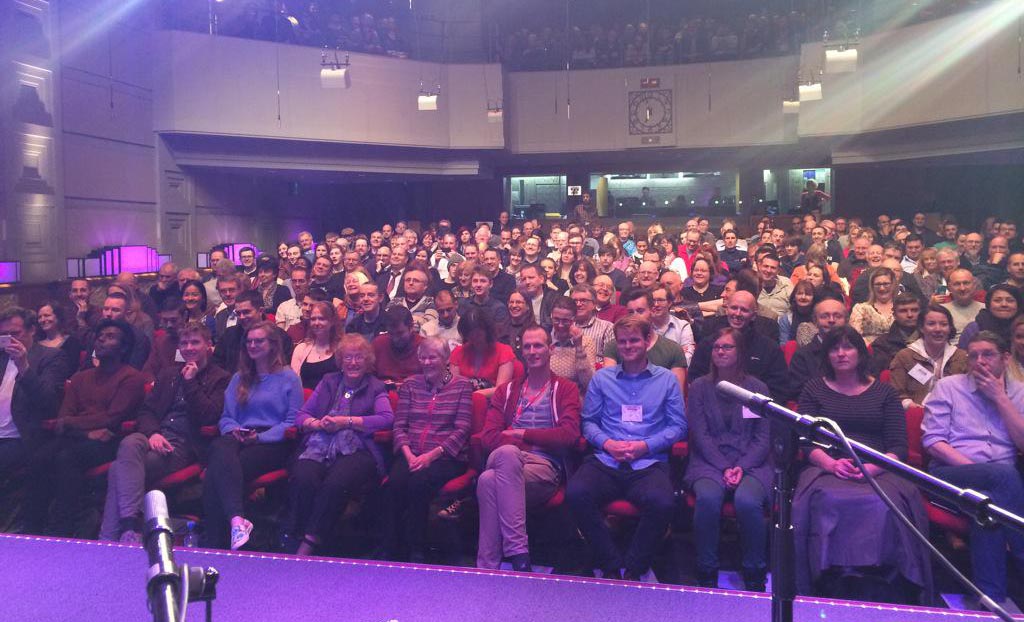
BBC World Service Click Radio Show Audience - Credit Kate Arkless Gray

BBC World Service Click Radio Show Audience – Credit Kate Arkless Gray

Radio amateur Dennis Wingo KD4ETA along with freelance science writer and broadcast journalist journalist Kate Arkless Gray were on the BBC World Service Click radio show.

The show – Space and Citizen Science – was broadcast live from the BBC Radio Theatre, London on Tuesday, March 31, 2015.

Prior to the broadcast Kate Arkless Gray, who hopes to become an astronaut, tweeted:
“Goodness. Didn’t realise #BBCClickRadio was actually going out live. No pressure, says @billt [Bill Thompson], it’s only going to a third of the world. Ah”

Dennis KD4ETA described how in 2014 radio amateurs and other volunteers gained control of of the NASA-abandoned ISEE-3/ICE spacecraft. They even succeeded in firing the spacecraft thrusters. During the show Dennis managed to squeeze in a mention of amateur radio satellites and CubeSats.

The BBC description reads:

Our excitement over space has taken on new dimensions with nations such as India showing they too have the technical expertise and energy to mount a mission to Mars. Citizen Science has also shown how ordinary people can make important contributions to the space adventure.

Myriad groups of volunteers have launched their own ambitious projects: such as the team who decided to awaken a spacecraft, more or less forgotten by NASA; and another team who plan to build the first crowd-funded moon lander. In a special edition of Click, Gareth Mitchell and Bill Thompson are joined by a panel of experts to explore our fascination with Space, and to discuss how our knowledge of life beyond earth benefits from the input of volunteers and Citizen Science.

Listen to a recording of the show at http://www.bbc.co.uk/programmes/p02mnn3c

Podcast http://downloads.bbc.co.uk/podcasts/worldservice/digitalp/digitalp_20150331-2005a.mp3

Telegraph newspaper – Meet the British woman fighting to go into space
http://www.telegraph.co.uk/women/womens-life/9937173/Meet-the-British-woman-fighting-to-go-into-space.html

ISEE-3/ICE Thrusters Fired
https://amsat-uk.org/2014/07/09/isee-3ice-spacecraft-fires-thrusters-for-a-return-to-earth/

Watch the presentation on ISEE-3/ICE given to the AMSAT-UK International Space Colloquium in July 2014 https://amsat-uk.org/colloquium/colloquium-2014/presentation-videos/

ISS Slow Scan TV Active on Weekend of April 11

ISS SSTV image 9/12 received by Frank Heritage M0AEU at 19:21 UT on Dec 18, 2014

ISS SSTV image 4/12 received by Frank Heritage M0AEU at 19:21 UT on Dec 18, 2014

The Russian Federal Space Agency (Roscosmos) has announced another round of amateur radio Slow Scan Television (SSTV) activity from the International Space Station (ISS). It will commemorate the anniversary of the first human spaceflight by Yuri Gagarin which took place on April 12, 1961.

Continuous operation, using the call sign RS0ISS, is expected to start at 1000 UT on Saturday, April 11 and continue until 2130 UT on Sunday, April 12.

ISS SSTV image 9/12 received by Martin Ehrenfried G8JNJ using the SUWS WebSDR on Dec 18, 2014

ISS SSTV image 9/12 received by Martin Ehrenfried G8JNJ using the SUWS WebSDR on Dec 18, 2014

Twelve different images will be sent on 145.800 MHz FM using the SSTV mode PD180, with a 3-minute off time between transmissions.

One of the photos shows the commemorative diploma created by PZK, the national Polish Amateur Radio society, on the occasion of the 80th anniversary of the birth of first cosmonaut Yuri Gagarin.

The equipment used will be the Kenwood D710 transceiver located in the Russian Service Module. It is thought the equipment may be producing about 25 watts output which should provide a very strong signal.

Plans are being discussed for transmitting new images from space enthusiasts around the world in the coming months. Additional details will be released.

The images received by amateurs world-wide during previous transmissions can be seen at http://www.spaceflightsoftware.com/ARISS_SSTV/ and you are invited to upload any pictures you receive during the upcoming transmissions.

In the UK newspaper the Daily Mail, Jonathan O’Callaghan wrote about how 22-year-old Radek Karwacki, an AMSAT-UK member, received pictures from the ISS using a £10 ($15) RTL-SDR dongle and a dipole antenna, see https://amsat-uk.org/2015/02/04/iss-sstv-in-uk-press/

International Space Station - Image Credit NASA

International Space Station – Image Credit NASA

All you need to do to receive SSTV pictures direct from the space station is to connect the audio output of a scanner or amateur radio transceiver via a simple interface to the soundcard on a Windows PC or an Apple iOS device, and tune in to 145.800 MHz FM. You can even receive pictures by holding an iPhone next to the radio loudspeaker.

On Windows PC’s the free application MMSSTV can be used to decode the signal, on Apple iOS devices you can use the SSTV app for compatible modes. (Note: see comments below about MMSSTV adjustments which may be needed to reduce picture slant)

The ISS puts out a strong signal on 145.800 MHz FM and a 2m handheld with a 1/4 wave antenna will be enough to receive it. The FM transmission uses 5 kHz deviation which is standard in much of the world apart from the British Isles and Europe where 2.5 kHz deviation is more common.

Many FM rigs can be switched been wide and narrow deviation FM filters. For best results you should select the wider deviation filters. Handhelds all seem to have a single wide filter fitted as standard.

The ISS Fan Club website will show you when the space station is in range.
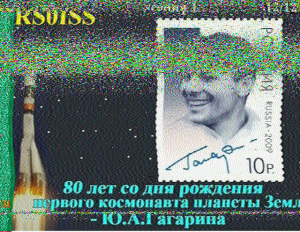
ISS SSTV image 12/12 received by Martin Ehrenfried G8JNJ using the SUWS WebSDR Dec 18, 2014

ISS SSTV image 12/12 received by Martin Ehrenfried G8JNJ using the SUWS WebSDR Dec 18, 2014

Paul Turner G4IJE, co-developer of the SSTV PD modes, says regarding the MMSSTV PD180 mode: “Don’t forget to either enable “Always show RX viewer” or use the “Picture viewer” (magnifying glass icon) to show the picture at its real resolution of 640 x 496. If you just view as normal you will only see 320 x 248 resolution, which kind of defeats the object of using a high resolution mode.”

In Option > Setup MMSSTV (O) > RX make sure Auto-slant is ticked.

On the AMSAT-BB Rick W2JAZ and Alan WA4SCA comment on the need to set the MMSSTV sound card setting to 48 kHz instead of the default 44.100 kHz
• Options
• Setup
• Misc
• Then the Clock section at the bottom of the page

The MMSSTV default setting may need to be set to 24000 (exactly half of the sound card setting). You then should get good clean images.

The sound card adjustments will vary slightly depending on the version of the OS you are running, but usually will be under the advanced properties for the device. You can probably use a higher sampling rate for the sound card so long as it is a power of 2 multiple (2,4,8, etc) of the value in MMSSTV. For instance 192k (8x) has no issues. The same applies to most similar software.

You can receive the SSTV transmissions online using the SUWS WebSDR remote receiver located near London along with the MMSSTV software https://amsat-uk.org/2014/08/15/suws-websdr-moves-to-new-site/

ISS Fan Club – Tracking / Predictions http://www.issfanclub.com/

Free MMSSTV Slow Scan TV software http://hamsoft.ca/pages/mmsstv.php

iOS SSTV App https://itunes.apple.com/gb/app/sstv/id387910013

For more on Slow Scan Television SSTV, see this article SSTV – The Basics
http://www.essexham.co.uk/sstv-the-basics

How to be successful with the ISS Slow Scan Television (SSTV) imaging system
http://www.marexmg.org/fileshtml/howtoisssstv.html

IZ8BLY Vox Recoder, enables you to record the signals from the ISS on 145.800 MHz while you’re away at work http://antoninoporcino.xoom.it/VoxRecorder/

ARISS Slow Scan TV (SSTV) Blog and Gallery http://ariss-sstv.blogspot.co.uk/

Those capturing images are encouraged to upload them to
http://www.spaceflightsoftware.com/ARISS_SSTV/submit.php

Information on the MAI-75 SSTV experiment
http://www.energia.ru/eng/iss/researches/education-26.html

Video showing reception of SSTV using the FUNcube Dongle Pro SDR and SDR-RADIO going into Virtual Audio Cable (VAC) then to MMSSTV software https://www.youtube.com/watch?v=K6MOrX9iZCk

ISS SSTV received online with SUWS WebSDR
https://amsat-uk.org/2014/09/06/iss-sstv-on-suws-websdr/

ISS SSTV 1/12 received by Martin Ehrenfried G8JNJ using the SUWS WebSDR Dec 18, 2014
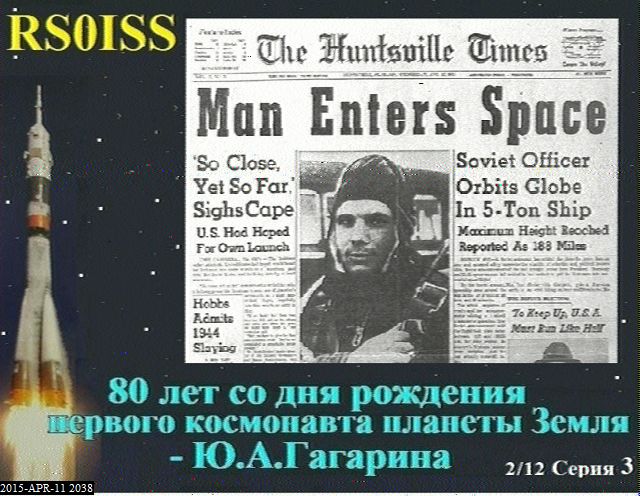
ISS SSTV 1/12 received by Martin Ehrenfried G8JNJ using the SUWS WebSDR Dec 18, 2014