Radio Amateur G3YJO in ADS Advance Magazine

ADS Advance magazine pages 32-33 March-May 2013

ADS Advance magazine pages 32-33 March-May 2013

Professor Sir Martin Sweeting G3YJO is interviewed on pages 32-34 of the March-May 2013 issue of the free UK magazine for the Aviation, Defence, Security and Space industries ADS Advance.

You can read the March-May 2013 issue online or download it as a PDF file at http://www.adsadvance.co.uk/issue1/volume3/

ADS Advance archive http://www.adsadvance.co.uk/archives.php

BBC – ESA seeks help to control robot spacecraft

Parrot AR Drone 2.0

Parrot AR Drone 2.0

BBC News report that the European Space Agency (ESA) is turning to owners of terrestrial robot aircraft to aid those that journey into space.

The agency has released an App that makes use of the cameras on the Parrot drone to simulate docking with a virtual space station.

The Parrot drone quadcopter has proved popular with many iPhone owners as it can be controlled via the 2.4 GHz WiFi signal from the handset.

Data generated by the agency’s App will be analyzed to help fine tune navigation software for its own drones.

Read the BBC story at http://www.bbc.co.uk/news/technology-21828807

ESA Smartphone App Turns Drone into Spacecraft
http://www.esa.int/Our_Activities/Technology/Smartphone_app_turns_home_drone_into_spacecraft

Middlesex Foundation Radio Hams success in UAV (Drone) competition
https://amsat-uk.org/2012/07/12/middlesex-radio-hams-success-in-uav-competition/

Nanosatellite Separation Experiment Using a P-POD Deployment Mechanism

AMSAT-UK_Bevelled_LogoThese video shows CubeSat deployment experiments carried out in a weightless environment on the “Vomit Comet” aircraft by students from the University of Texas.

The team write:

Nanosatellites are becoming increasingly common in the aerospace industry due to their reduced size, small mass, and economical cost. These small satellites will often operate in groups rather than as single satellites, and once they are clear of the carrier, separate from one another.One topic of immense interest is the characterization of the separation dynamics of such satellites.

Continue reading

LOHAN hooks up with radio ham and top-flight rocketeer G7ALW

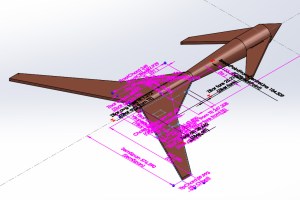
Vulture 2 Spaceplane - Image credit LOHAN

Vulture 2 Spaceplane – Image credit LOHAN

The Register reports that the Low Orbit Helium Assisted Navigator (LOHAN) team will be working with radio amateur Paul Shackleton G7ALW.

The report by Lester Haines says Paul G7ALW will be working on the Vulture 2 spaceplane.

Laying out his electronics credentials, Paul said he “designed, built and sold the TRAXA radio beacons  for several years, and there must be about 400 of them in circulation, from the USA to Oz”.

When he’s not earning a crust, Paul splits his free time between “geocaching, 4×4 green laning in my Defender, trying to build a L3 rocket, Ham Radio and watching the occasional episode of The Big Bang Theory“.

Read The Register story at http://www.theregister.co.uk/2013/03/15/lohan_rocketeer/

TRAXA 433.920 MHz radio beacons
http://www.radiometrix.com/files/additional/Traxa-Rocketry-Case-Study-Feb-05.pdf

LOHAN http://www.theregister.co.uk/Wrap/lohan/

Vulture 2 Spaceplane http://www.theregister.co.uk/2013/01/31/vulture_2/

FCC Guidance On Obtaining Licenses For Small Satellites

Image of a CubeSat in Space

Image of a CubeSat in Space

The Federal Communications Commission (FCC) released a Public Notice to provide guidance concerning FCC licensing of spectrum for use by small satellites, including satellites that fall within the categories of pico-satellites, nano-satellites and cubesats.

The advent of such small satellite designs has brought with it dramatically lower launch costs, enabling a larger range of organizations to directly launch satellites. Institutions such as universities and research organizations that previously found it cost prohibitive to launch their own satellite can now participate in the exploration of space. Many of these participants may be unfamiliar with the spectrum licensing, scheduling and other requirements attendant on satellites. This Public Notice seeks to alert affected parties of these requirements and thus aid small satellite operators in the planning necessary for a successful launch operation.

Continue reading

NASA EDGE – CubeSat Launch Initiative

NASA EDGE talks to NASA about how they’re helping students and professionals launch their own mini satellites known as CubeSats. The CubeSat Launch Initiative provides new opportunities for Science, Technology, Engineering and Mathematics by helping people design, launch and collect data.

Watch NASA EDGE CubeSat Launch Initiative