Huskysat-1 Transponder is Open

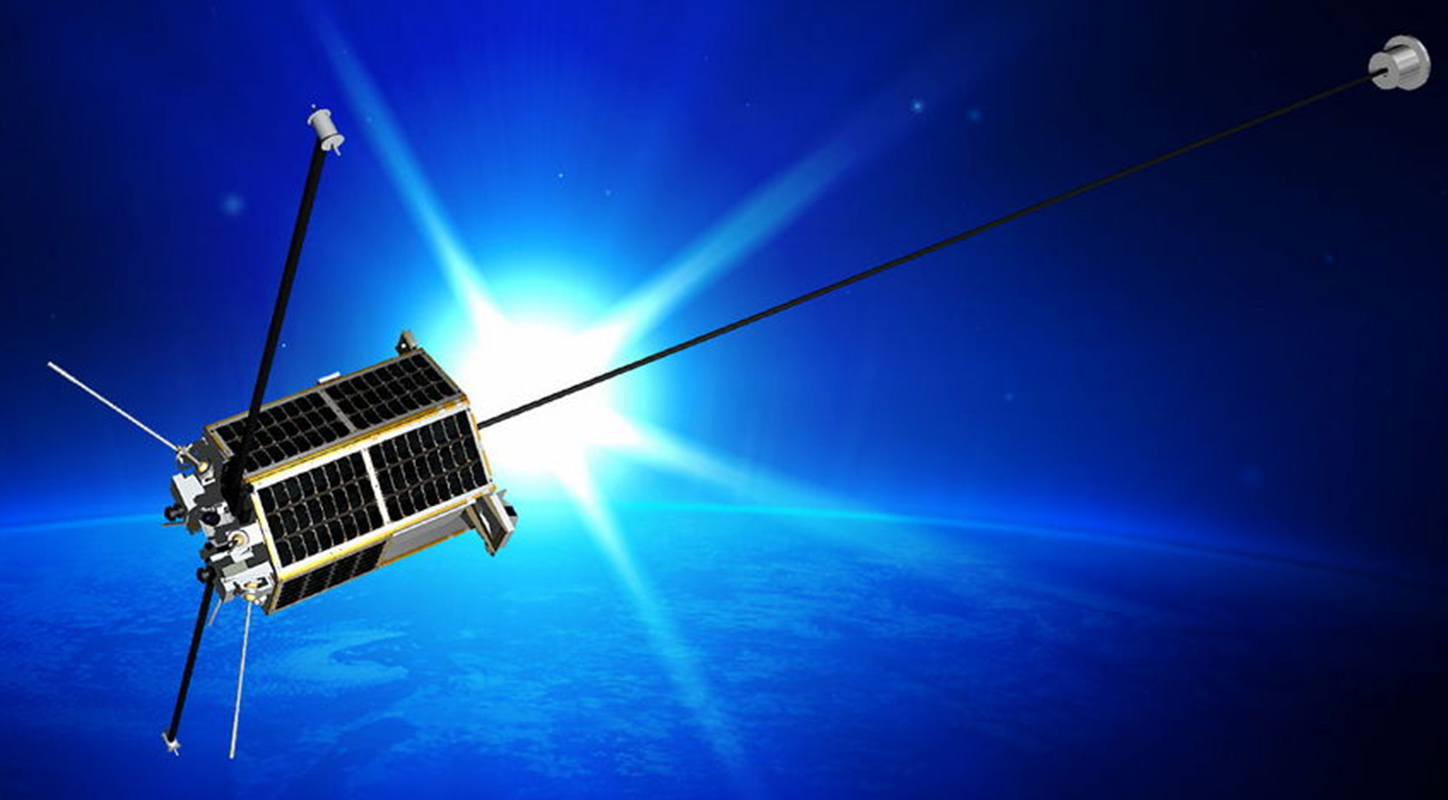
Artist's impression of HuskySat-1 flying free in space but it's still attached to Breeze K/M rocket body

Artist’s impression of HuskySat-1 flying free in space but it’s still attached to Breeze K/M rocket body

After a week of testing, the transponder on HuskySat-1 is enabled and open for use and testing. It’s fairly sensitive, and 5-10 watts is plenty most of the time. There are some fades due to satellite orientation, and some passes are definitely better than others. The operations and engineering teams are also watching a few anomalies. Please keep an eye on the beacon during transponder ops, for those with spectrum scopes. Strong signals may impact the beacon strength.
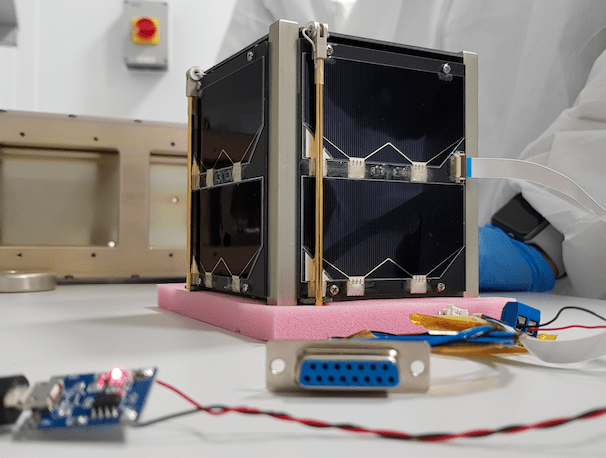
HuskySat-1 CubeSat

HuskySat-1 CubeSat

HuskySat-1 is the Husky Satellite Lab at University of Washington’s first cubesat, and the first mission with AMSAT’s linear transponder module (LTM-1), a V/u transponder and integrated telemetry beacon and command receiver. UW recently completed their Part 5 operations and have graciously let AMSAT’s Part 97 transponder operations commence. This transponder module is available for use in educational cubesat missions willing to enable the transponder for worldwide use. Contact Drew KO4MA or VP Engineering Jerry Buxton N0JY for additional details.

Reports and observations are welcome to the Amsat-BB mailing list.

Congratulations to Husky Satellite Lab, and to the entire AMSAT Engineering team for keeping amateur radio in space. Thanks to Dr. Mark Hammond, N8MH for commissioning and operations support.

73, Drew KO4MA
AMSAT VP Operations

HuskySat-1 V/u inverting transponder, 145.910 to 145.940 uplink, 435.810 to 435.840 downlink, telemetry beacon 1200 baud BPSK at 435.800
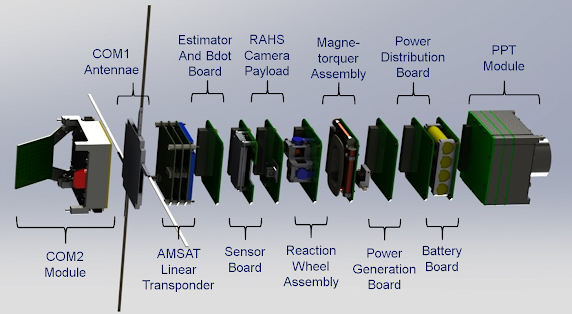
HuskySat-1 Boards

HuskySat-1 Boards

Filtered 2400 MHz Driver Amplifier Kits Now Available

2400 MHz Filtered Driver Amplifier Kits

2400 MHz Filtered Driver Amplifier Kits

This kit has been designed by David Bowman G0MRF and contains all the parts required to drive a PA on 2.4 GHz for QO-100. The completed board will have a gain of about 25 – 26 dB and for best linearity, should be kept to 200 mW output.

2400 MHz Filtered Driver Amplifier Kit

2400 MHz Filtered Driver Amplifier Kit

This kit can be assembled in a couple of hours by constructors with a medium level of experience. In addition to the kit you will need a 2.5mm drill for the mounting holes in the heatsink. You will also need a pair of SMD tweezers, a soldering iron with a fine tip and some small diameter solder e.g. 0.4 or 0.5mm. Finally, a headband magnifier or similar will help considerably with the SMD parts.

David suggests running the board from 12 or 12.6 volts. At 13.8 volts the supply current and power dissipation increase without any significant improvement in performance

The kit is available from the AMSAT-UK shop https://shop.amsat-uk.org/Filtered_S_Band_Driver_Amplifier_Kit/p3815740_20451527.aspx

The Assembly Guide PDF is available at
https://d11fdyfhxcs9cr.cloudfront.net/templates/383483/myimages/g0mrf_filtered_s_band_amp_kit_assembly_guide.pdf

Online Amateur Radio Satellite talk on Zoom

International Space Station - Image Credit NASA

International Space Station – Image Credit NASA

On Wednesday, May 13, at 1830 GMT (7:30pm BST) Robin Moseley G1MHU will give a talk on Zoom titled “Introduction to amateur satellites, meteor scatter, EME and ISS”.

The presentation is being organised by the Denby Dales Amateur Radio Society and being on Zoom it’ll be viewable on any Tablet or Smartphone with the Zoom App or from a Windows PC or Laptop.

The Zoom meeting ID is 278 609 9353 https://zoom.us/j/2786099353

A range of other talks are planned to be available on Zoom, they include:

Tuesday 5th May 7.30pm BST Martin Butler M1MRB of ICQ Podcast – Talk on the Future of radio clubs – which way forward ?

Wednesday 6th May 7.30pm BST Open club discussion on using a VNA

Wednesday 13th May 7.30pm BST Introduction to amateur satellites, meteor scatter, EME and ISS Robin Moseley G1MHU

Wednesday 20th May Don Field G3XTT Editor of Practical Wireless magazine

Denby Dales Amateur Radio Society http://www.DDARS.net/

Online Space Workshop May 2-3

Online Space Workshop 2020

Online Space Workshop 2020 #OSW2020

The Online Space Workshop #OSW2020 takes place this weekend May 2-3.

You can watch live on YouTube at https://www.youtube.com/channel/UC4SHJxCLutZRWK9uQXFVXxQ

The full schedule of presentations is on the AMSAT Nepal site. Note the times are given in Nepali Time which is 5:45 hours ahead of GMT and 4:45 ahead of BST, see
http://amsat-np.org/osw2020/

Among the speakers are:

Tom Walkinshaw, founder and CEO of UK-based Alba Orbital, on Getting PocketQubes on Orbit, cheaply, regularly and reliably

Félix Páez EA4GQS, President of AMSAT Spain (AMSAT EA), on AMSAT EA PocketQube Missions and Designs

Julián Fernández EA4HCD, Co-Founder and CEO of Fossa Systems, on FOSSASAT-1, Data from the first IOT Picosatellites in Space

Follow AMSAT Nepal on Twitter at https://twitter.com/AmsatNepal

First Guatemalan satellite deployed from the ISS

Quetzal-1 CubeSat - Credit Universidad del Valle de Guatemala

Quetzal-1 CubeSat – Credit Universidad del Valle de Guatemala

Guatemala’s first satellite, a small CubeSat called QUETZAL-1, was deployed from the International Space Station (ISS) on Tuesday, April 28, 2020.

Its primary mission is to test a sensor for remote data acquisition for natural resource management, which could be used to monitor water quality in inland water bodies.

QUETZAL-1 LogoThe satellite is part of the Japanese Kibo cubesat program, a product of the cooperation between, among others, the United Nations Office for Outer Space Affairs (UNOOSA), Universidad del Valle de Guatemala (UVG), and more institutions. The operational frequencies were chosen through cooperation from Guatemalan radio amateurs and the International Amateur Radio Union (IARU).

Downlink 4800 bps GMSK on 437.200 MHz.

The Quetzal-1 project team director is Guatemalan engineer José Bagur, TG8JAV, a graduate from mechatronics engineering at Universidad Del Valle.

Source IARU Region 2 https://iaru-r2.org/

IARU Quetzal-1 http://amsatuk.me.uk/iaru/finished_detail.php?serialnum=653

Quetzal-1 Telemetry info https://uvg.edu.gt/cubesat-en/

Quetzal-1 Telemetry decoder http://www.dk3wn.info/p/?page_id=75524

Follow Quetzal-1 on Twitter https://twitter.com/quetzal1_uvg

DOSAAF-85 (RS-44) amateur radio transponder activated

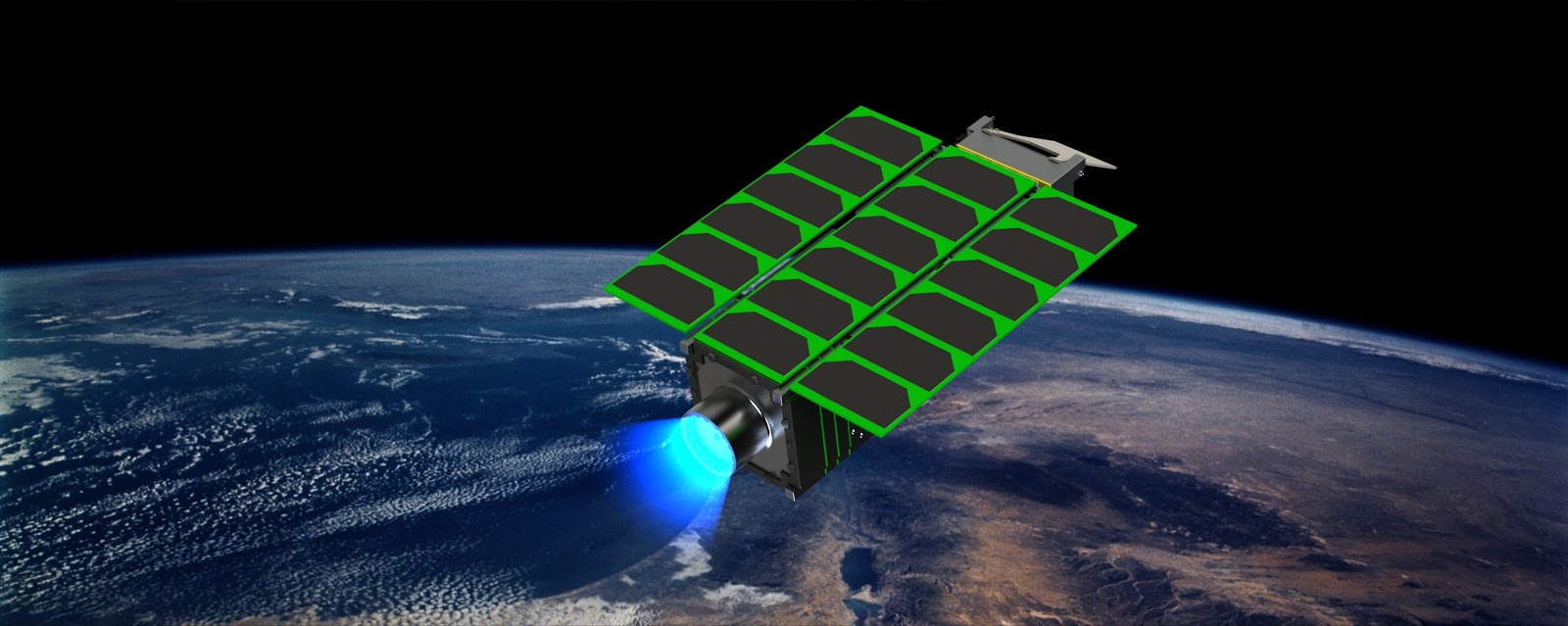
Artist impression of DOSAAF-85/RS-44 flying free but seems to be still attached to Breeze K/M rocket body

Artist impression of DOSAAF-85/RS-44 flying free but seems to be still attached to Breeze K/M rocket body

The amateur radio linear transponder (SSB/CW) payload on the Russian satellite DOSAAF-85 (RS-44) has been activated.

Dmitry Pashkov R4UAB reports:

DOSAAF-85 / RS-44 under construction

DOSAAF-85 / RS-44 under construction

DOSAAF-85 is a small scientific satellite created by specialists of the company Information Satellite Systems (ISS) Reshetnev and students of the Siberian State Aerospace University (SibSAU) Krasnoyarsk.

The satellite is named after the 85th anniversary of the Voluntary Society for the Assistance to the Army, Aviation and Navy, the organization responsible for the military training of Soviet youth.

The DOSAAF-85 satellite is designed to provide amateur radio communications, as well as to develop promising technologies. This is the third satellite that was created by specialists of ISS-Reshetnev and is based on the Yubileyniy platform, which features a hexagonal prism structure with body mounted solar cells.

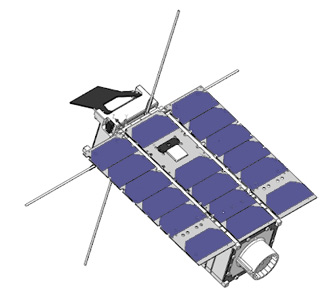
DOSAAF-95 / RS-44 Antennas, 435 MHz top 145 MHz bottom

DOSAAF-95 / RS-44 Antennas, 435 MHz top 145 MHz bottom

The satellite was launched into orbit on December 26, 2019 from the Plesetsk Cosmodrome and is in an elliptical orbit with a perigee of 1175 km, an apogee of 1511 km and an inclination of 82.5 degrees.

Transmitter power: 5 watts
Beacon: 435.605 MHz – transmits CW call sign RS44

Inverting transponder:
Earth-to-Space: 145.965 MHz +/- 30 kHz
Space-to-Earth: 435.640 MHz +/- 30 kHz

Source Dmitry Pashkov R4UAB whose page also contains the satellite’s TLE, see
https://tinyurl.com/RussiaR4UAB

Peter 2M0SQL has added RS-44 to the AMSAT Live OSCAR Satellite Status Page at
https://www.amsat.org/status/

Linear Satellite Frequency Summary https://www.amsat.org/linear-satellite-frequency-summary/

RS-44 Pass Prediction http://amsat.org.ar/pass?satx=rs-44