Unicorn-2a PocketQube Satellite

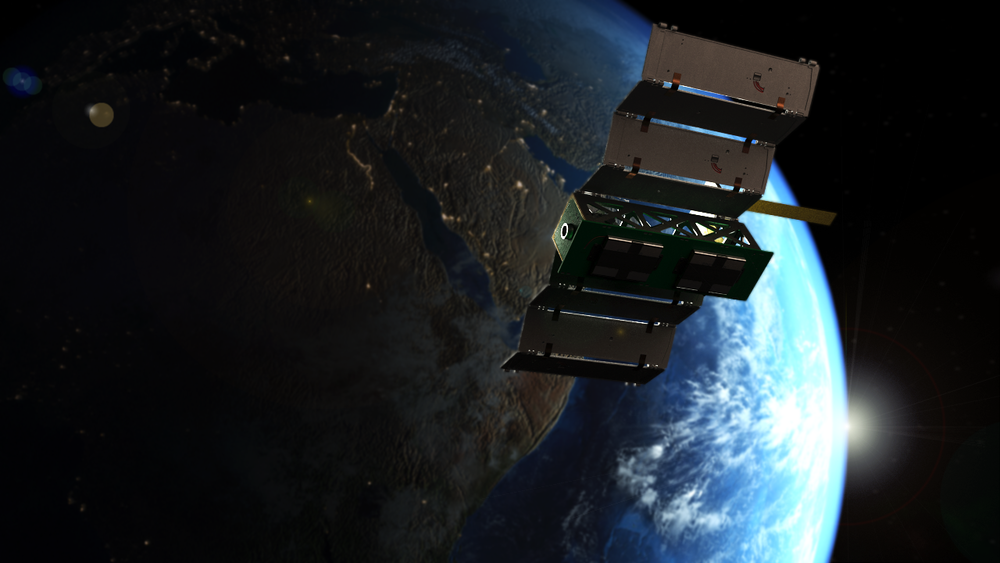
Unicorn-2a in Space - image credit Alba Orbital

Unicorn-2a in Space – image credit Alba Orbital

Glasgow-based Alba Orbital plan to launch a 3p PocketQube Unicorn-2a built by several radio amateurs including Constantin Constantinides MM6XOM, Sajimon Chacko 2M0DSY and Alejandro González Garrido EA7KDU. A 3rd quarter 2018 launch is planned on a Vector Launch Inc. rocket from Kodiak, Alaska into a 350 x 350 km 98 degree orbit. The mission will last about 45 days and Delfi-PQ is expected to be a fellow passenger on the launch.

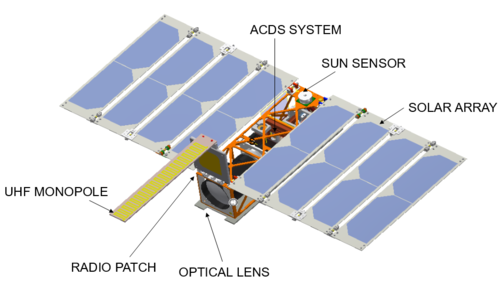
Unicorn-2a PocketQube Structure

Unicorn-2a PocketQube structure

The mission of Unicorn-2a is primarily a technological demonstration of an Optical payload with a 16m GSD (Ground Sample Distance).

When the satellite is in orbit it is planned to run challenges with the amateur radio community such as:
– 1st download of an image from the satellite
– 1st reception of text based/extended beacon
– 1st reception of the satellite in the southern hemisphere

An open source GUI for the satellite will be available to all from Alba Orbital’s web site. This GUI allows for monitoring the health status of the satellite once the beacon has been received.

Alba Orbital are collaborating with the University of Aachen and their amateur radio group DL0FHA to trial Unicorn-2a operations and act as a backup. This helps students learn about communicating with a real mission.

The team are proposing a UHF downlink using 9k6 bps GFSK and at 2.4 GHz using 200 kbps GMSK and LoRa at 38 kbps.

Watch the talk on the Unicorn-2a structure by Andrew Dunn given at PocketQube Workshop in Delft

Unicorn-2 http://www.albaorbital.com/unicorn2/

Unicorn-2 on IARU satellite frequency coordination site http://www.amsat.org.uk/iaru/

Vector to launch Unicorn-2a and Delfi-PQ PocketQube satellites on first orbital attempt
https://www.prnewswire.com/news-releases/vector-to-conduct-dedicated-launch-of-alba-orbital-pocketqube-satellites-on-first-orbital-attempt-300610673.html

Amateur radio regulatory changes in Eire

ComReg LogoComReg‘s massive allocation of low-band VHF spectrum to radio amateurs in Eire is most welcome and sets an example to other regulators but other aspects of the regulations raise questions especially regarding Amateur-Satellite Service allocations.

Unusually for an official document ComReg seem to use “AMSAT” as an abbreviation for the ITU Amateur-Satellite Service, however, they fail to define exactly what they intend it to means. AMSAT is a registered trademark of a USA Corporation, see https://www.amsat.org/notification-of-trademark-copyright-and-other-proprietary-information/

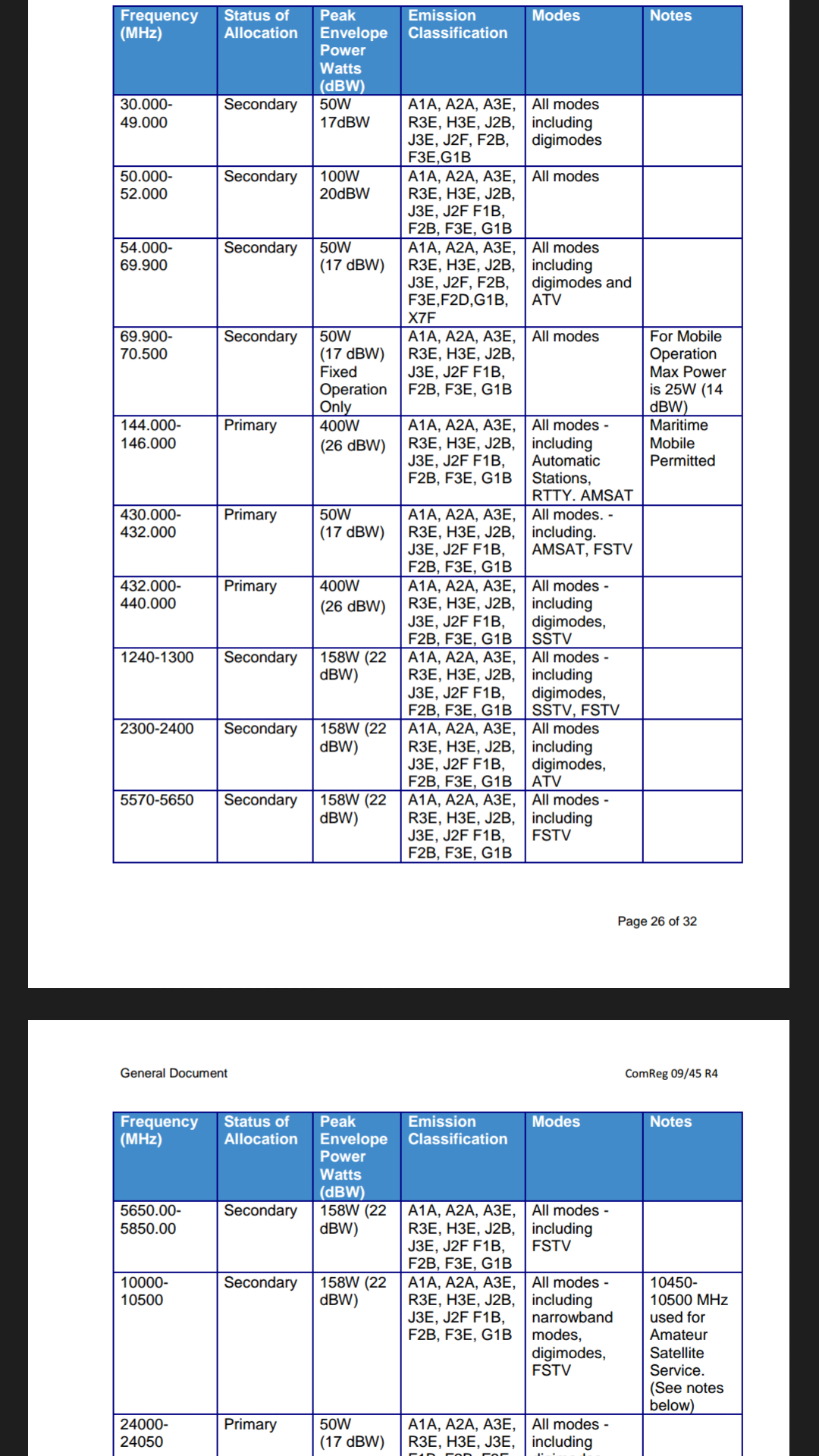
Frequency Table

Frequency Table

The low-band VHF Amateur Service allocations are now:
30.0-49.0 MHz 50 watts
50.0-52.0 MHz 100 watts
54.0-69.9 MHz 50 watts
69.9-70.5 MHz 50 watts

The national amateur radio society, IRTS, are to be congratulated on achieving amateur access to so much spectrum.

The ComReg document as written appears to mean amateur satellite operation is not permitted in these ITU Amateur-Satellite Service allocations:
435-438 MHz
1260-1270 MHz
5650-5670 MHz
5830-5850 MHz

Oddly satellite operation is permitted in 430-432 MHz but there are no amateur satellites there!

Transmitting to amateur satellites operating in 2400-2450 MHz is only allowed with a Special Permit, it’s not included as standard in the licence. Even with the Permit amateurs will be restricted to a transmitter output of just 25 watts.

ComReg limit which modes that can be used in each band by listing three-character ITU Emission Designators. For example X7F is among those permitted for the 54.0-69.9 MHz band and means Digital Amateur TV (e.g. DVB-S) can be used. Unfortunately it appears to be the only band where X7F is permitted, an unnecessary restriction.

The Emission Designators for digital voice modes such as D-STAR and DMR don’t appear to be listed anywhere suggesting they cannot be used.

In 2006 the UK regulator Ofcom adopted a Technology Neutral approach to amateur radio, they scrapped listing of specific Emission Designators and allowed all modes to be used. It is unfortunate ComReg hasn’t taken this opportunity to do the same.

The new ComReg amateur radio document can be downloaded from
http://comreg.ie/publication-download/amateur-station-license-guidelines

King’s High School ARISS contact on BBC TV

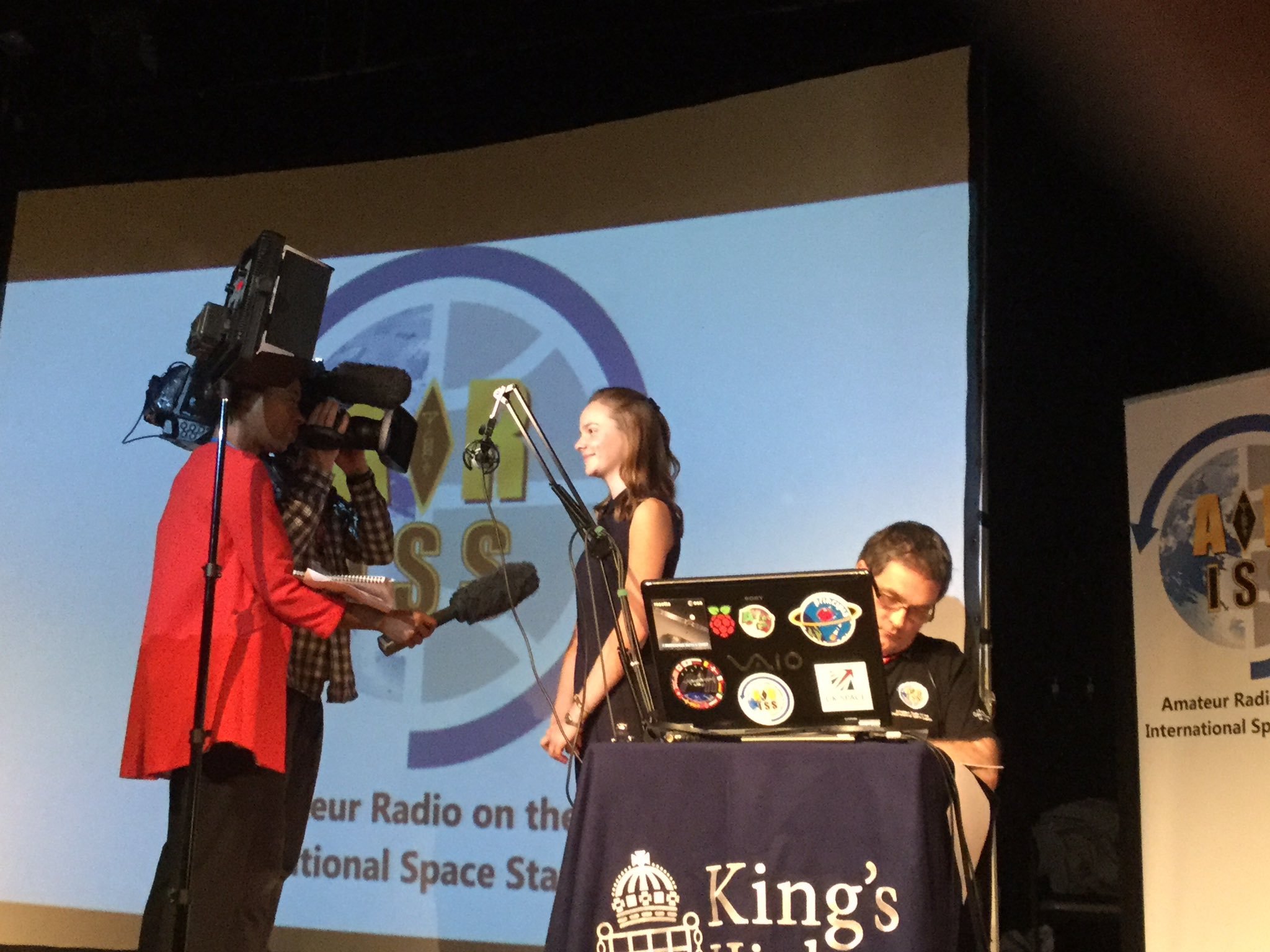
Nicola Beckford from BBC TV interviewing Eleanor Griffin before the ARISS contact - image credit KHS

Nicola Beckford from BBC TV interviewing Eleanor Griffin before the ARISS contact – image credit KHS

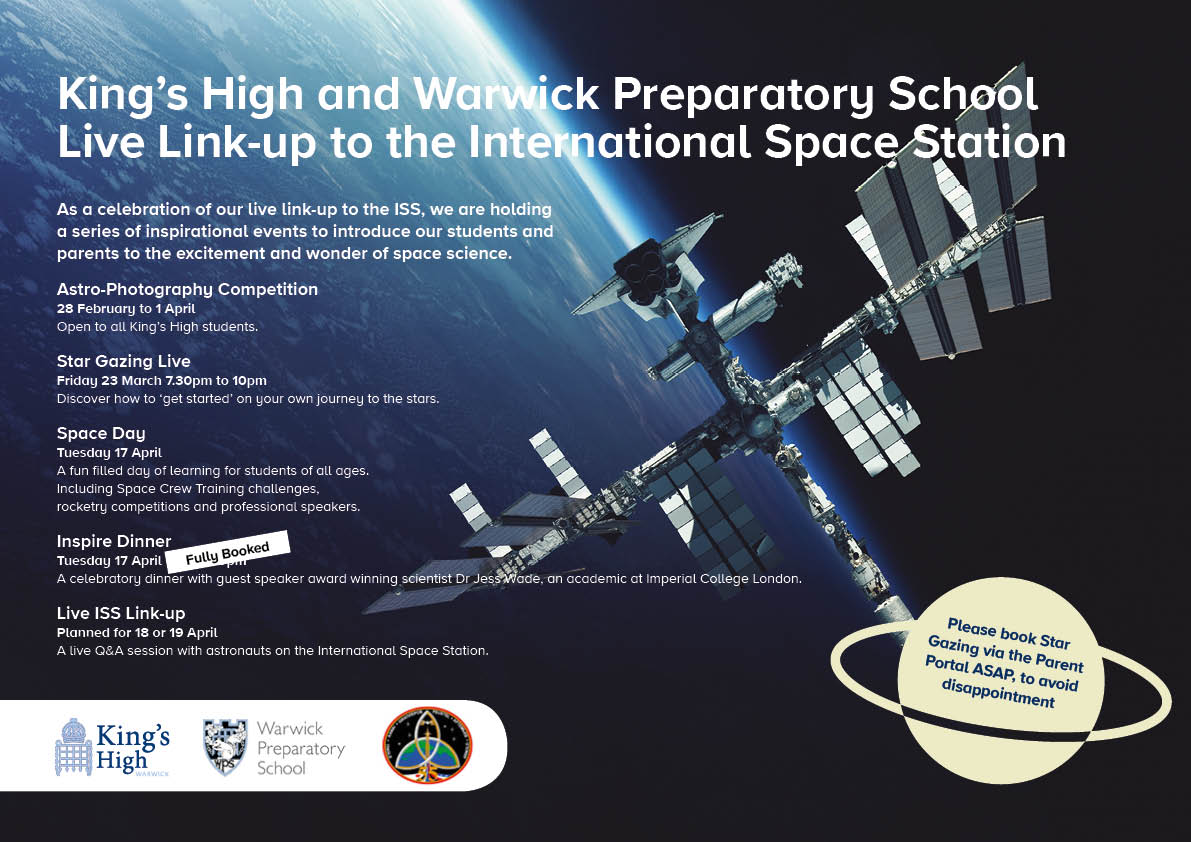
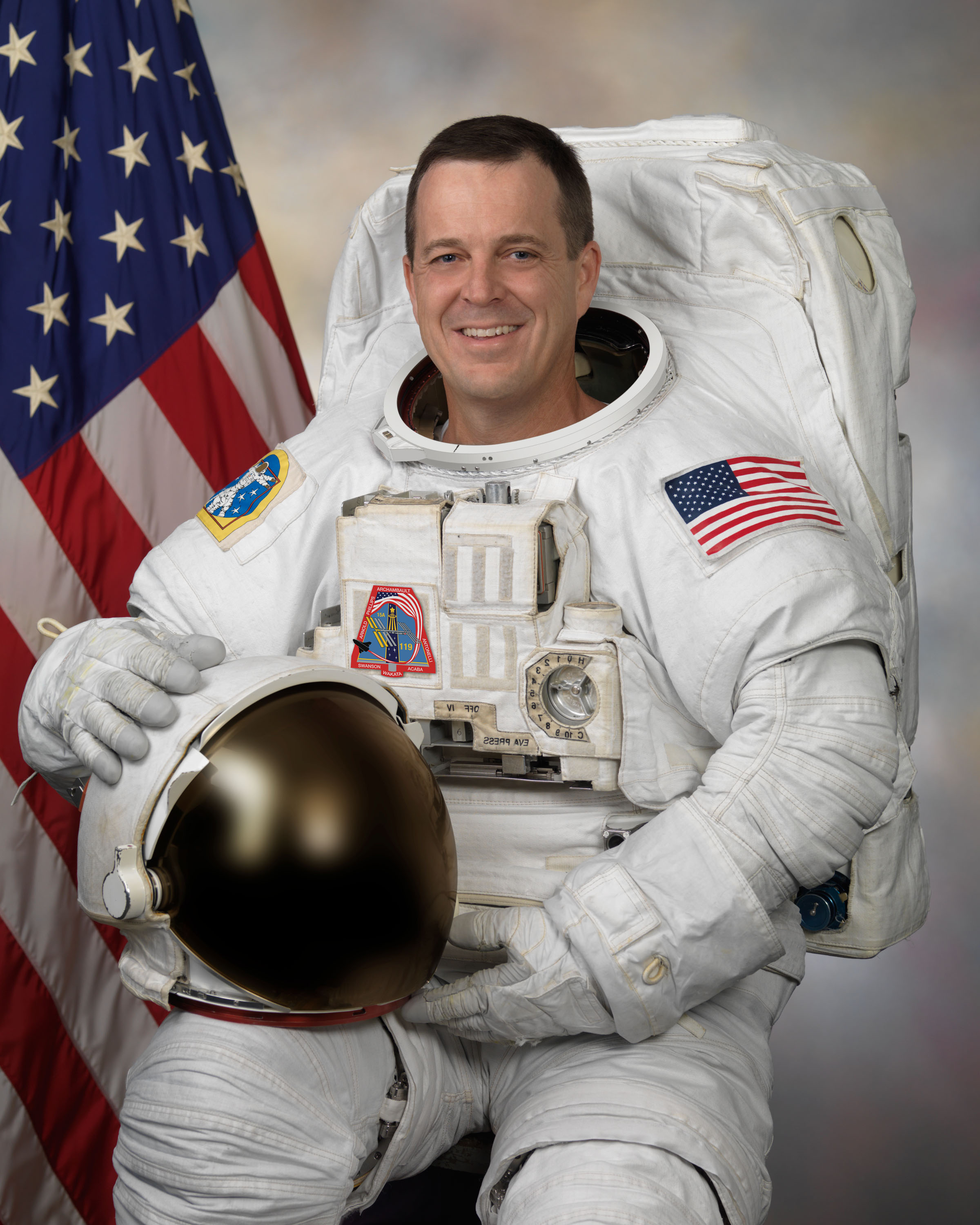
On April 19 student Eleanor Griffin led the live question and answer session between King’s High School and Warwick Preparatory School (GB4KHS) and astronaut Ricky Arnold KE5DAU on the International Space Station (NA1SS).

Nicola Beckford reporting for BBC Midlands TV on Kings High School ARISS contact - image credit KHS

Nicola Beckford reporting for BBC Midlands TV on Kings High School ARISS contact – image credit KHS

King’s High School strongly encourage their girls to develop their interests both inside and outside the classroom. This culture of empowerment led one of their girls, Eleanor Griffin, to apply to ARISS Europe (Amateur Radio on the International Space Station) for a highly prestigious link-up to the International Space Station.

When Eleanor Griffin was selected to hold a space conversation with an astronaut, she was inspired to set up the Warwick Mars Project, for students across the Warwick Independent Schools Foundation, to further interest in Space Science. Eleanor says: “The moon landings belong to the generation of our grandparents, and the International Space Station to our parents. What will happen in our generation? Will Mankind travel to another planet?”

After the ISS contact when asked what this incredible experience had taught her Eleanor replied “Just do it! No one is going to stop you, if you just go and pursue your dreams, you really can do anything.”

Watch the BBC TV news item broadcast on Midlands Today @bbcmtd. Fast forward to 18:45 into the recording at
https://www.bbc.co.uk/iplayer/episode/b09z9tw6/midlands-today-evening-news-19042018

In this video the students present their work and activities that lead up the contact, followed at 12:11 by a presentation by ARISS Operations UK team lead Ciaran Morgan M0XTD with the ISS contact commencing at 31:32 into the video
https://www.youtube.com/watch?v=HpVc1ikj4pE

Amateur Radio on the International Space Station (ARISS)
http://www.ariss.org/apply-to-host-an-ariss-contact.html
https://twitter.com/ARISS_status

King’s High School Warwick https://twitter.com/KHSWarwick

Radio hams receive Slow Scan TV from Space

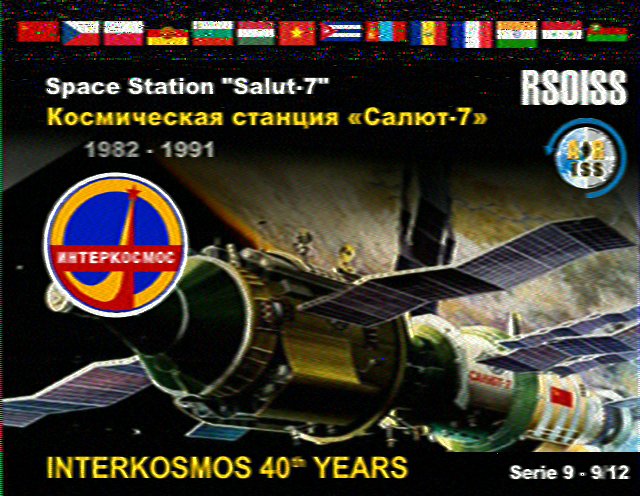
ISS SSTV 9-9 Edmund Spicer M0MNG 2018-04-11-1730z

ISS SSTV received by Edmund Spicer M0MNG

Radio amateurs around the world are receiving Slow Scan Television images on 145.800 MHz FM from the International Space Station.

The transmissions by ARISS Russia are in celebration of Cosmonautics Day and should continue until 1820 GMT on Saturday, April 14.

Pete M0PSX of Essex Ham reports receiving good pictures using a colinear antenna.

Edmund Spicer M0MNG, a regular guest on the bi-weekly ICQ Amateur Radio Podcast, received an image at 1730 GMT on Wednesday, April 11 using a 5 element ZL Special Yagi and a FT-991. He said it was probably the best quality image he’s ever received from the ISS.

Others have reported receiving images using just a $35 Baofeng UV-5R VHF/UHF FM handheld radio and 1/4 wave antenna.

Read the Essex Ham report which includes times to receive the SSTV signal over Essex
https://www.essexham.co.uk/news/iss-sstv-images-11-april-2018.html

Further information on the Russian ISS SSTV event to celebrate Cosmonautics Day
https://amsat-uk.org/2018/04/08/russian-iss-sstv-cosmonautics-day/

The SSTV can be displayed on a Windows PC using the MMSSTV App, you can even hold an iPhone or iPad next to the radio with the appropriate iOS SSTV App. Links to Apps and other information at
https://amsat-uk.org/beginners/iss-sstv/

If you receive a full or partial picture from the Space Station your Local Newspaper may like to know http://www.southgatearc.org/news/2016/july/now-is-a-great-time-to-get-ham-radio-publicity.htm

The RSGB produce a handy Media Guide and Template press release for anyone to download and adapt, see http://rsgb.org/main/clubs/media-guide-for-affiliated-societies/

An example of the publicity you can get for the hobby by telling your Local Newspaper
https://amsat-uk.org/2015/04/15/iss-sstv-in-the-press/


ISS amateur radio link-up for UK school

Kings High School Warwick ARISS ContactA contact between Kings High School for Girls in Warwick using the call sign GB4KHS and the International Space Station, call sign NA1SS, is planned for Thursday, April 19 at 1205 GMT (1305 BST). The amateur radio contact should be receivable across the British Isles and Western Europe on 145.800 MHz FM.

There will be live streaming from the school at https://live.ariss.org/
Schedule (times are given in GMT add 1 hour for BST):
1100 Introduction and school presentations
1145 ARISS Operations start
1205 ARISS Contact
1215 Review and wrap up

Kings High School say:
ISS astronaut Ricky Arnold KE5DAU

ISS astronaut Ricky Arnold KE5DAU

We strongly encourage our girls to develop their interests both inside and outside the classroom. This culture of empowerment led one of our girls to apply to ARISS Europe (Amateur Radio on the International Space Station) for a highly prestigious link-up to the International Space Station.

This student-led initiative has resulted in a whole-school focus on Space Science, both in the classroom – from Engineering to English Literature – as well as co-curricular activities, including our ‘Mars Society.’

To support this programme, we have appointed our own Space Scientist in Residence – a unique position, we believe, for any school in the country.

Excitement is building for our live link-up to the International Space Station, when pupils from King’s High and Warwick Prep will talk with the astronauts on board.

King’s High And Beyond! – Adventures in Space

John McGuire, Space Scientist in Residence, has joined forces with Stratford Astronomical Society to organise a Stargazing Live event for students and parents of King’s High and Warwick Prep next Friday night. They will enjoy an Introduction to Astronomy, Telescope Talks, and ‘Ask an Astronomer’ sessions, before viewing the skies for themselves. This follows months of Space activity, from the very youngest pupils of Warwick Prep creating Mars models, to King’s students developing their own Amateur Radio Licensing Club, to set up a link between King’s and the International Space Station.

Live Link-Up to the International Space Station
Amateur Radio on the International Space Station (ARISS) logoWhen King’s High student, Eleanor Griffin was selected to hold a space conversation with an astronaut, she was inspired to set up the Warwick Mars Project, for students across the Warwick Independent Schools Foundation, to further interest in Space Science. Eleanor says: ‘The moon landings belong to the generation of our grandparents, and the International Space Station to our parents’. What will happen in our generation? Will Mankind travel to another planet?’ She will lead students in a live Q and A session with astronauts on the International Space Station on 19 April – the actual date depends on where the ISS is in orbit at the time.

From one girl’s interests and ambitions, a generation of King’s High and Warwick Prep pupils will benefit from an extraordinary range of opportunities and life-experience. We are also delighted that pupils from other local schools will be able to share in the excitement, by joining us for a ‘Space Day’ and the link-up itself. All power to our pupils!

The exciting journey pupils take at King’s High has expanded to a whole new dimension this academic year, as we explore the wonders of Space Science, with students from across the Warwick Independent Schools Foundation. At King’s, pupils have studied Space in lessons, from Engineering to English Literature, and developed a programme of student-led activities, including Space Blogs, an Astro-Photography competition, and a Space-themed dinner.

We recently appointed our own Space Scientist in Residence – a unique position, we believe, for any school in the country. Excitement is building for our live link-up to the International Space Station in April, when pupils from Warwick Prep and King’s High will talk with the astronauts on board.

There will be a live web stream from the event at https://live.ariss.org/

If you don’t have an amateur radio receiver you can still listen to the ISS by using an Online Radio, also known as a WebSDR. Select a Frequency of 145800.0 kHz and Mode FM:
• Farnham WebSDR when ISS is in range of London http://farnham-sdr.com/

Check the ISS Fan Club site to see when the ISS is in range http://issfanclub.com/
How to hear the ISS https://amsat-uk.org/beginners/how-to-hear-the-iss/

What is Amateur Radio? http://www.essexham.co.uk/what-is-amateur-radio

Find a UK amateur radio training course near you https://thersgb.org/services/coursefinder/

AMSAT-UK: https://amsat-uk.org/
Twitter: https://twitter.com/AmsatUK
Facebook: https://facebook.com/AmsatUK
YouTube: https://youtube.com/AmsatUK

Amateur Radio on the International Space Station (ARISS)
http://ariss.org/
https://twitter.com/ARISS_status

King’s High School Warwick https://twitter.com/KHSWarwick
Russian ISS SSTV Event to Celebrate Cosmonautics Day

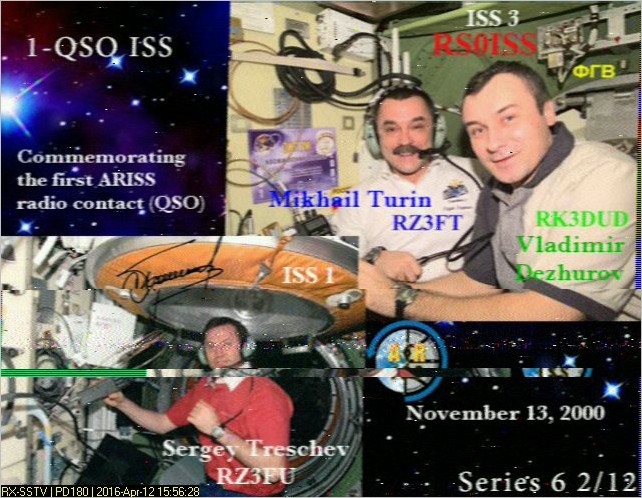
ISS SSTV image 2 received by Mike Rupprecht DK3WN April 12, 2016 at 1556 UT

ISS SSTV image received by Mike Rupprecht DK3WN April 12, 2016 at 1556 UT

ARISS Russia is planning a special Slow Scan Television (SSTV) event April 11-14 from the International Space Station in celebration of Cosmonautics Day.

The transmissions are to begin on April 11 at 11:30 UT and run through April 14 ending at 18:20 UT.

Supporting this event is a computer on the ISS Russian Segment, which stores images that are then transmitted to Earth using amateur radio, specifically the onboard Kenwood TM-D710E transceiver.

Transmitted images will be from the Interkosmos project period of the Soviet space program https://en.wikipedia.org/wiki/Interkosmos

The transmissions which were coordinated with the ARISS scheduling team, will be made on 145.800 MHz FM using the PD-120 SSTV mode.

Note the ISS transmissions use the 5 kHz deviation FM standard rather than the narrow 2.5 kHz used in Europe. If your transceiver has selectable FM filters try using the wider filter. Handheld transceivers generally have a single wide filter fitted as standard and you should get good results outdoors using just a 1/4 wave whip antenna.

The ISS Fan Club site will show you when the space station is in range http://www.issfanclub.com/

ISS SSTV information and links at https://amsat-uk.org/beginners/iss-sstv/

Post your images on the ARISS-SSTV gallery at http://www.spaceflightsoftware.com/ARISS_SSTV/

Listen to the ISS when it is over Russia with the R4UAB WebSDR

Listen to the ISS when in range of London with the SUWS WebSDR http://farnham-sdr.com/

Please note that the event is dependent on other activities, schedules and crew responsibilities on the ISS and subject to change at any time. You can check for updates regarding planned operation at:
ISS Ham https://twitter.com/RF2Space
ARISS Status https://twitter.com/ARISS_status
ARISS SSTV Blog https://ariss-sstv.blogspot.com/
AMSAT Bulletin Board http://www.amsat.org/mailman/listinfo/amsat-bb

If you receive a full or partial picture from the Space Station your Local Newspaper may like to know http://www.southgatearc.org/news/2016/july/now-is-a-great-time-to-get-ham-radio-publicity.htm

The RSGB produce a handy Media Guide and Template press release for anyone to download and adapt, see http://rsgb.org/main/clubs/media-guide-for-affiliated-societies/

An example of the publicity you can get for the hobby by telling your Local Newspaper
https://amsat-uk.org/2015/04/15/iss-sstv-in-the-press/