UKHAS Conference Cambridge

2012-07-14--14-15-29-PIE1-1B

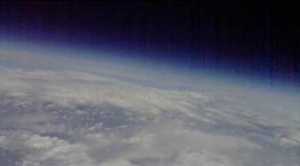
SSDV picture from a PIE balloon – Image credit Dave Akerman M0RPI

There’s an impressive line-up of radio amateurs among those giving presentations at the UK High Altitude Society (UKHAS) conference in Cambridge on Saturday, September 10, 2016.

Watch Live at http://www.ast.cam.ac.uk/ioa/streaming

YouTube https://www.youtube.com/watch?v=lsaAI_L8A1g

The conference takes place at the Institute of Astronomy, University of Cambridge and attracts those interested in learning about building and flying High Altitude Balloons or in tracking their 434 MHz signals.

Tickets can be purchased from the wiki page and cost just £10 each.

Provisional Schedule as at August 16:
09:30     Assembly – Drinks & Biscuits
10:00     Welcome & Introduction
10:10     LoRa – Dave Akerman M0RPI
10:40     Evidence that Biology is Continually Arriving to Earth from Space – Prof Milton Wainwright (Univ. of Sheffield)
11:10     Operation Outward – Steve Randall G8KHW
11:40     Break
12:00     Chase & Recovery – Dave Akerman M0RPI
12:30     VORTEX Parachute Tests – John Underwood
13:00     Lunch
14:00     CUSF’s Martlet Rockets – Adam Greig M0RND
14:30     Introducing AirCores – Dr Johannes Laube (UEA)
15:00     Scheduled Talk Subject to Official Approval
15:30     Break
15:45     500 cu m Solar Balloon Project – Sven Steudte DL7AD
16:15     Superpressure Maths & Envelope Construction – Richard Meadows M0SBU (UBSEDS)
16:45     End

UKHAS were offering the option to complete the amateur radio Foundation Practical Assessments and Exam at the conference. This was rapidly fully booked, perhaps a sign of the shortage of Foundation exams venues.

If you would like to speak or run a workshop, please do get in touch with either Daniel Saul M6DSA or Steve Randall G8KHW. Contributions don’t need to be directly linked to ballooning and they look forward to all suggestions.

Conference registration information is at
https://ukhas.org.uk/general:ukhasconference2016

Amateur Radio Space Communications at Raspberry Pi event

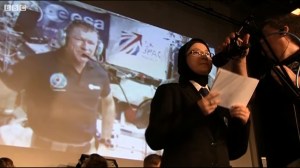
Seema Talib-Hussain talking to Tim Peake GB1SS

Seema talking to Tim Peake GB1SS

Pete Sipple M0PSX from Essex Ham will be giving a talk about the Tim Peake GB1SS amateur radio school contacts at the Southend Raspberry Jam on Saturday, August 20.

The talk about Tim Peake’s amateur radio educational outreach activity starts at 10:30. Other activities during the day include a talk on Tim Peake and the AstroPi at 11:30 and a Build a Radio Workshop at 12:00.

Southend Tech and Enterprise4Good are holding Southend Raspberry Jam #10 at the Hive Enterprise Centre in Southend, SS2 6EX. The event runs from 10am until 5pm and is free but advance booking is required, see
https://www.eventbrite.co.uk/e/southend-raspberry-jam-10-tickets-26560533270

What is Amateur Radio? http://www.essexham.co.uk/what-is-amateur-radio

Find a short Amateur Radio training course near you at https://thersgb.org/services/coursefinder/

ISS SSTV on Baofeng Handheld

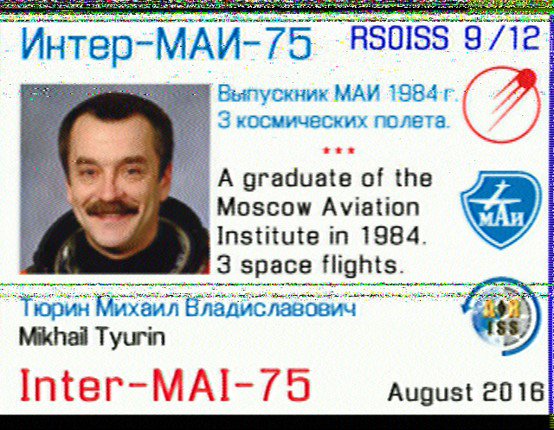
ISS SSTV MAI-75 image 9/12 received by Chertsey Radio Club on Baofeng handheld

ISS SSTV MAI-75 image 9/12 received by Chertsey Radio Club

The Chertsey Radio Club demonstrated that you can receive pictures from Space using simple low-cost equipment such a Baofeng VHF handheld radio and a Lynx-7 Tablet.

On Monday, August 15, 2016 radio amateurs from Japan, India and countries as far west as Brazil successfully copied Slow Scan Television images transmitted on 145.800 MHz FM from the Russian amateur radio station located in the ISS Service Module.

The Russian Cosmonauts were using a Kenwood TM-D710 transceiver thought to be running about 25 watts output. It gave a good signal which could easily by copied on VHF handheld transceivers such as the popular Baofengs.

It expected there will be further SSTV transmissions on Tuesday, August 16. The ISS transmits 5 kHz deviation FM, if your transceiver has selectable FM filters you should select the wider filter for best results.

Receive Pictures from Space – ISS SSTV August 15-16
https://amsat-uk.org/2016/08/10/iss-sstv-august/

Receiving an ISS picture is a newsworthy event, if you’ve received part or all of an image why not tell your local newspaper and get some positive publicity for amateur radio
http://www.southgatearc.org/news/2016/july/now-is-a-great-time-to-get-ham-radio-publicity.htm

SSTV on a Raspberry Pi 3
http://chertseyradioclub.blogspot.co.uk/2016/08/setting-up-raspberry-pi-3-and-qsstv.html

Follow the Chertsey Radio Club on Twitter at
https://twitter.com/chertseyRC

Satellite Operating in TX Factor Show

Amateur radio satellite operating featured in episode 12 of the popular TX Factor Show.

In this episode Bob McCreadie G0FGX teaches Mike Marsh G1IAR a thing or two about amateur satellite operating.

The show highlights the book – Getting Started with Amateur Satellites – which is available from the AMSAT-UK shop at http://shop.amsat-uk.org/

Watch TX Factor – Episode 12 (TXF012) Amateur Radio Satellite Operating

A popular antenna for satellite working is the Elk 2m/70cms Log Periodic available in the AMSAT-UK shop at http://shop.amsat-uk.org/ELK_2m70cms_Log_Periodic_Antenna/p3815740_15628555.aspx

Satellite tracking:
• AMSAT-LU http://amsat.org.ar/pass.htm
• Orbitron http://www.stoff.pl/
• Gpredict http://gpredict.oz9aec.net/

How to work FM satellites https://amsat-uk.org/beginners/how-to-work-fm-satellites/

Amateur Radio BIRDS-1 CubeSat Constellation

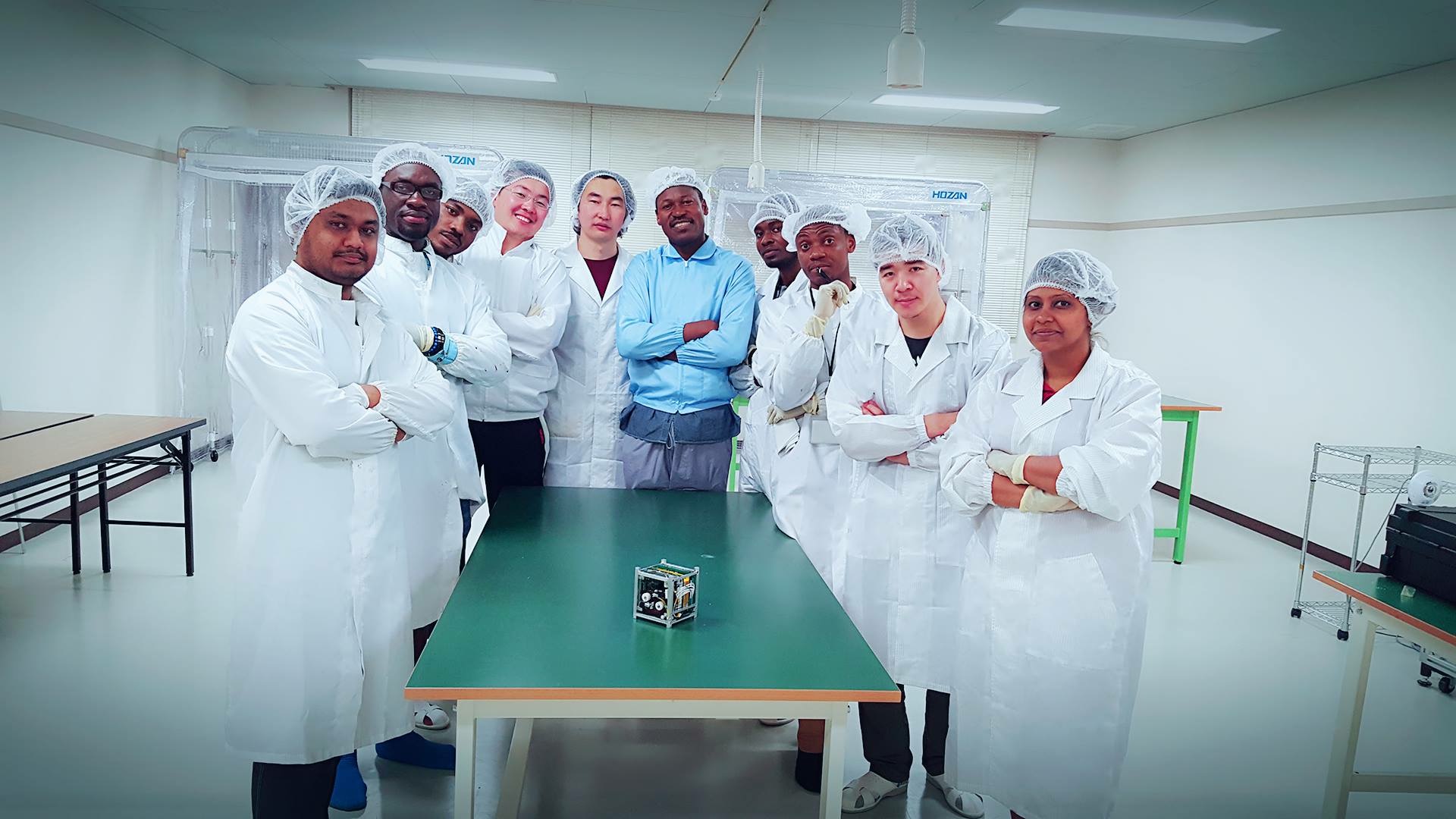
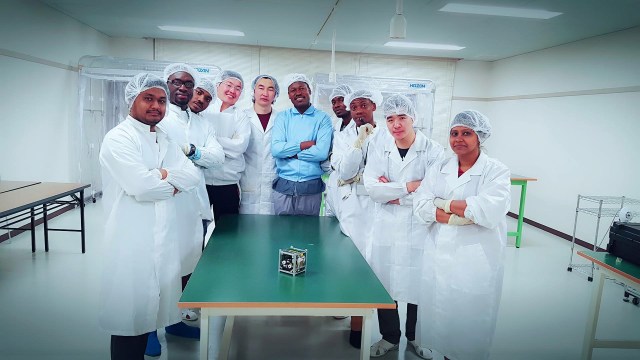
BIRDS CubeSat Engineering Model integration test

BIRDS CubeSat Engineering Model integration test

The BIRDS-1 constellation consists of five 1U CubeSats (BIRD-B, BIRD-J, BIRD-G, BIRD-M and BIRD-N). They launched to the ISS on a SpaceX Falcon 9 CRS-11 on June 3, 2017. The satellites are made of the exactly same design including the radio frequencies to be used and will be deployed from the ISS later in the year.
BIRDS CubeSat Project LogoThe main mission of the constellation is to do experiments on radio communication with a CubeSat constellation via a network of UHF/VHF amateur radio ground stations all over the world.

The challenge is to distinguish each satellite from the four satellites transmitting with the same frequency, hand over operation of a satellite from one ground station to another and assemble the satellite data, such as housekeeping telemetry, music and the Earth images, obtained at different ground stations.

Amateur radio enthusiasts are asked to join the network to assist in the data downlink and reconstruction of the patchy satellite data into one meaningful data. Orbit information and operational plan of each satellite will be made available to the amateur radio community in the world. Software to decode the satellite data will be also made available.

The respective amateur ground stations that can successfully decode the telemetry data, music and the Earth images, shall receive a QSL card from the BIRDS team. The data reconstructed by the effort of the amateur ground station network will be made public to share the sense of satisfaction and achievement.

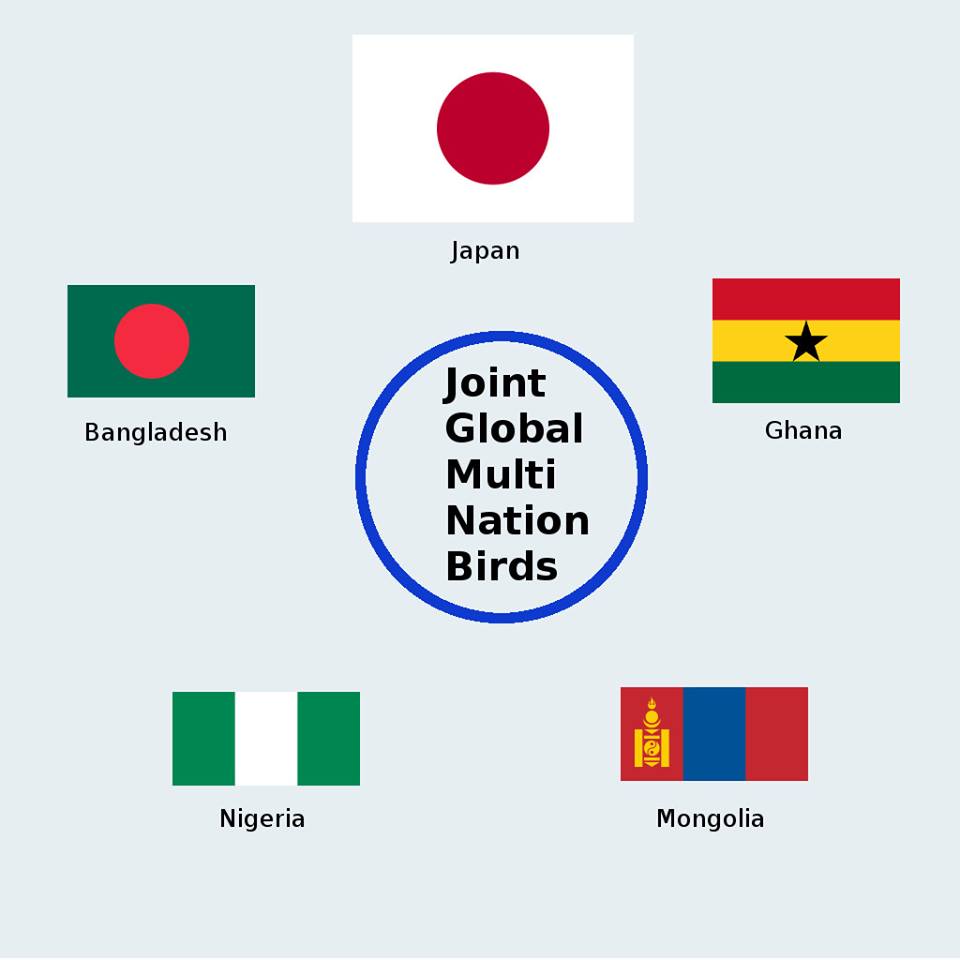
BIRDS CubeSat NationsA particularly interesting mission of BIRDS project is the SNG mission that exchanges music via a digi-singer. It is an outreach-oriented mission. First, music in MIDI format is uploaded from ground. Then the MIDI file is processed on-board using a vocal synthesizer. Finally, the processed music is sent back to Earth using UHF antenna as voice FM data.

During organized events on space utilization with schools or general public, music could be heard using a common hand-held receiver and hand-made Yagi antenna positioned to track the satellite at each given pass over the region. This has a tremendous effect on awareness of radio communication among school children and general public, especially in the countries participating in the BIRDS project, Japan, Ghana, Mongolia, Nigeria and Bangladesh.

Proposing to use CW, 1k2 AFSK FM, audio FM and 9k6 GMSK downlinks. The IARU has coordinated a downlink frequency of 437.375 MHz.

BIRDS project information:
http://birds.ele.kyutech.ac.jp/
http://birds.ele.kyutech.ac.jp/amateur.html
http://birds.ele.kyutech.ac.jp/newsletter.html
https://www.facebook.com/Joint-Global-Multi-Nation-Birds-BIRDS-project-171403156542445/

Download the Paper – IAA-CU-15-01-16 Five-nations CubeSat constellation; An inexpensive test case for learning and capacity building
https://www.researchgate.net/publication/289868265_IAA-CU-15-01-16_Five-nations_CubeSat_constellation_An_inexpensive_test_case_for_learning_and_capaci-_ty_building

The IARU Satellite Frequency Coordination pages are hosted by AMSAT-UK at
http://www.amsat.org.uk/iaru/

Receive Pictures from Space – ISS SSTV August 15-16

ISS SSTV image 2 received by Mike Rupprecht DK3WN April 12, 2016 at 1556 UT

ISS SSTV image 2 received by Mike Rupprecht DK3WN April 12, 2016 at 1556 UT

The ARRL reports Slow-scan television (SSTV) transmissions will be made from the International Space Station (ISS) on August 15-16, 2016.

The MAI-75 Experiment will transmit SSTV images on 145.800 MHz FM over the course of a few orbits as the space station passes over Moscow. Operators in Europe and South America will have the best chances to receive images. Operators along the US East Coast may have one chance on August 16.

Thanks to Kenneth Ransom, N5VHO, ISS Ham Project Coordinator

The ISS Fan Club website will show you when the space station is in range http://www.issfanclub.com/

ISS SSTV information and links at https://amsat-uk.org/beginners/iss-sstv/

ARISS-SSTV Images http://ariss-sstv.blogspot.co.uk/

Listen to the ISS when it is over Russia with the R4UAB WebSDR

Listen to the ISS when in range of London with the SUWS WebSDR http://websdr.suws.org.uk/

If you receive a full or partial picture from the Space Station your Local Newspaper may like to know http://www.southgatearc.org/news/2016/july/now-is-a-great-time-to-get-ham-radio-publicity.htm