Watch Live Video of UK STRaND-1 Smartphone Satellite Launch

The STRaND-1 build and test phase took just 3 months

The STRaND-1 build and test phase took just 3 months

The UK smartphone satellite STRaND-1 is expected to launch from India on Monday, Feb. 25 at 12:25 GMT. You can follow the launch on Twitter or watch live video.

STRaND-1 and other CubeSats carrying amateur radio payloads are planned to launch on the ISRO PSLV-C20 rocket into a 785 km orbit.

STRaND-1 carries an amateur radio 9600 bps AX.25 packet radio downlink on 437.568 MHz. It is hoping to be the first ever satellite to carry a smartphone into space and is also believed be the first satellite to use a part produced with a 3D Printer.

On Twitter the Surrey Space Centre @SpaceAtSurrey tweeted:

Official launch hashtag of STRaND-1 spacecraft is #S1Launch. Post launch we will be using #STRaND1 hashtag. Launch time:12.25 GMT 25th Feb 2013 #UniOfSurrey #SSTL

Launch Authorisation Board (LAB) for PSLV – C20 @STRaND mission has cleared the launch on Monday, Feb 25, 2013. @university of surrey #S1Launch

Live video launch feeds for Monday’s PSLV launch http://www.webcast.gov.in/live/ and http://ibnlive.in.com/livetv/

Launch times can and do change at the last minute so follow Twitter for the latest information.

Follow Surrey Nanosats https://twitter.com/SurreyNanosats

Read more about STRaND-1 at http://www.amsat-uk.org/?page_id=12196

STRaND-1 telemetry format http://www.amsat-uk.org/?page_id=12875

STRaND-1 videos http://www.amsat-uk.org/?page_id=12472

Other satellites on the same launch http://www.amsat-uk.org/?p=12180

STRaND-1 on Facebook https://www.facebook.com/nanosats
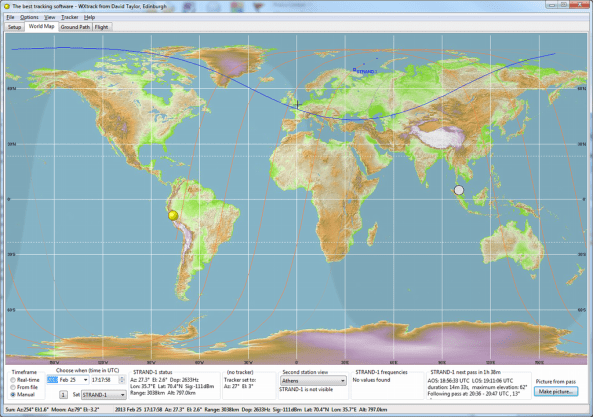
Provisional initial track of STRaND-1

Provisional initial track of STRaND-1

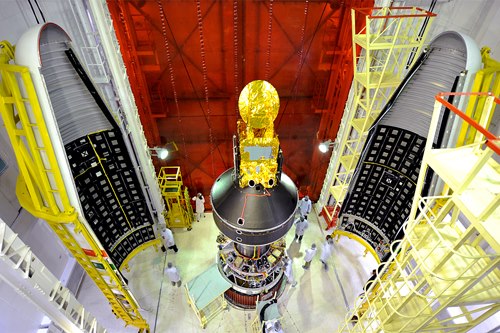
STRaND-1 smartphone CubeSat mounted on PSLV rocket

Panoramic view of SARAL and smaller satellites including STRaND-1 attached to the PSLV C20 - Image credit ISRO

Panoramic view of SARAL and smaller satellites including STRaND-1 attached to the PSLV C20 – Image credit ISRO

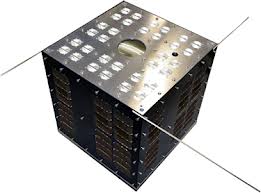
The STRaND-1 build and test phase took just 3 months

The STRaND-1 build and test phase took just 3 months

The launch rehearsal of PSLV-C20 with the primary satellite SARAL and six other satellites has been completed satisfactorily at SDSC SHAR, Sriharikota. Mission Readiness Review and meeting of Launch Authorisation Board are scheduled on Feb 22, 2013.

STRaND-1 is a joint mission between Surrey Space Centre at University of Surrey and Surrey Satellite Technology Ltd (SSTL). There will be an amateur radio AX.25 packet radio 9k6 bps downlink on 437.568 MHz and the launch is expected to take place on Feb 25.

STRaND-1 information and videos http://www.amsat-uk.org/?page_id=12196

STRaND-1 telemetry format http://www.amsat-uk.org/?page_id=12875

Other satellites on the same launch http://www.amsat-uk.org/?p=12180

ISRO PSLV-C20 status http://www.isro.org/pslv-c20/c20-status.aspx

Article on LED Optical Morse Code Spacecraft ShindaiSat

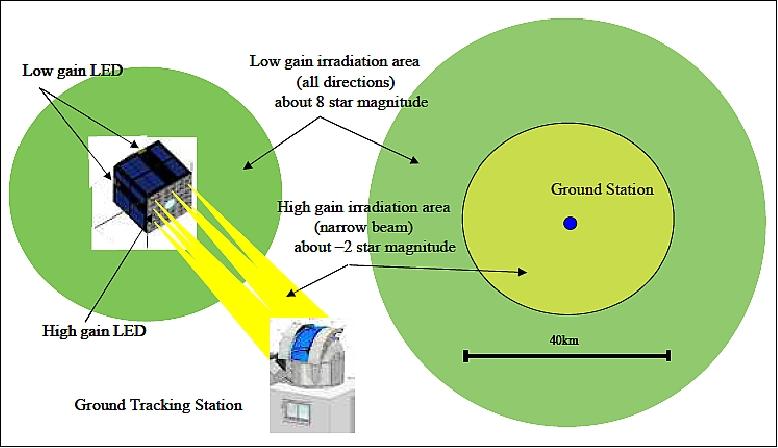
Illustration of high-gain and low-gain LED illumination scenario at the ground station - Image credit Shinshu University

Illustration of high-gain and low-gain LED illumination scenario at the ground station – Image credit Shinshu University

An English language article about ShindaiSat is available at

https://directory.eoportal.org/web/eoportal/satellite-missions/s/shindaisat

ShindaiSatShindaiSat is a 20 kg spacecraft approx 300 by 300 by 350 mm which is planning to use bright LEDs for Space to Earth optical communication using Morse code. It also carries an optical lens system for receiving modulated LED light from the ground station.

There will be an AX.25 packet radio telemetry beacon and a low power CW beacon. Downlink frequencies of 437.305 and 437.485 MHz have been coordinated by the IARU Amateur Satellite Frequency Coordination Panel.

The article says “A launch of ShindaiSat as a secondary payload is manifested for mid-2014 on the primary GPM (Global Precipitation Measurement) mission of NASA and JAXA. JAXA is providing the launch on the H2A vehicle from the Tanegashima Space Center, Japan.

Orbit: Non-sun-synchronous circular orbit, altitude = 407 km, inclination = 65º.”

ShindaiSat website in Google English

ShindaiSat to carry Optical LED Morse Code Beacon

ShindaiSatShindaiSat is a 20 kg spacecraft approx 300 by 300 by 350 mm which is planning to use bright LEDs for Space to Earth optical communication using Morse code.

There will be an AX.25 packet radio telemetry beacon and a low power CW beacon. Downlink frequencies of 437.305 and 437.485 MHz have been coordinated by the IARU Amateur Satellite Frequency Coordination Panel.

It is expected to launch into a 400km 65 degree orbit from Japan in 2013.

ShindaiSat website in Google English

Astronaut / Radio Ham Chris Hadfield premieres song from space

Sheldon Cooper of Big Bang Theory wearing a 73 T-shirt - Image Warner Bros

Sheldon Cooper of Big Bang Theory wearing a 73 T-shirt – Image Warner Bros

While on-board the International Space Station (ISS) Canadian astronaut Chris Hadfield, KC5RNJ/VA3OOG, has been creating music in space .

He has been working with Ed Robertson who created the theme song for the popular comedy show The Big Bang Theory.

CBS News report: “We’ve been pals for a long time and it just seemed like a fun thing to do,” says Robertson of the song that is part of a planned album Chris Hadfield [VA3OOG] wants to record while in space. “Chris and his brother write songs and they’re really great, so he’s going to record a bunch of stuff up there.”

The result of the collaboration has been I.S.S. , Is Somebody Singing, which was premiered on Friday, February 8.


Watch the premiere of ‘I.S.S. (Is Somebody Singing)’

Watch Chris Hadfield VA3OOG – mixtape to the moon

I.S.S. (Is Somebody Singing) music score and lyrics
http://music.cbc.ca/#/Space/blogs/2013/2/Ed-Robertson-takes-us-behind-the-writing-of-ISS-Is-Somebody-Singing

Plasma Rockets & Solar Storms

Testing Plasma Rocket ComponentsThis Cosmic Journeys video covers the work of Dr. Ben Longmier KF5KMP and his University of Michigan team in developing plasma rockets.

Dr. Ben Longmier and his team from the University of Michigan have traveled to Fairbanks, Alaska to play a small part in a much larger push to revolutionize space travel and exploration.

The team plans to use helium balloons to send components of a new type of rocket engine to an altitude of over 30 kilometers, above 99% of Earth’s atmosphere. The purpose is to test these components within the harsh environment of space. While astronauts train to live and work in zero gravity, or to move around in bulky space suits, these would-be space explorers are preparing to negotiate some of Earth’s harshest environments.

Continue reading