London Hackspace work on HackSat One

Hacksat One mission decal created by Nick Cramp

Hacksat One mission decal created by Nick Cramp

In September 2011 members of London Hackspace took an Amateur Radio Foundation course at their original Shoreditch venue. It was led by Chris Driver G6CMD of the Verulam Amateur Radio Club and all passed. It is hoped further courses will be held in the future.

The group are involved in a wide range of electronic projects, one of their latest is a tiny Amateur Radio satellite called HackSat One. This Sprite will have a downlink of 10 milliwatts on 437 MHz and is planned to be deployed into Earth orbit by KickSat in early 2014. Zac Manchester KD2BHC of the KickSat development team has said they are aiming for the Sprites to be receivable using an AMSAT-UK FUNcube Dongle SDR.
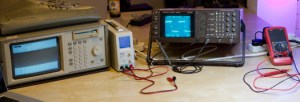
London Hackspace members build a wide range of electronic projects

London Hackspace members build a wide range of electronic projects

The Hack Space, with dedicated classrooms and workshops is in Hackney road, London, E2 9DY. It is open to members 24 hours a day. Regular free hack evenings and workshops are held which are open to everyone.

London Hackspace is a registered Amateur Radio exam centre http://www.rsgb.org/local/examcentres/region.php?id=9

Amateur Radio Training http://wiki.london.hackspace.org.uk/view/
Project:Amateur_Radio_Training

HackSat One http://wiki.london.hackspace.org.uk/view/Project:HackSat1

London Hackspace Project: Hoxton Space Centre

KickSat – a personal spacecraft of your own in space
http://www.kickstarter.com/projects/251588730/kicksat-your-personal-spacecraft-in-space

The BBC Radio 4 show Click On, broadcast November 14, visited London Hackspace. Download the Podcast at http://downloads.bbc.co.uk/podcasts/radio4/clickon/clickon_20111114-1700c.mp3

2009 BBC TV news on Hack Spaces http://www.southgatearc.org/news/june2009/diy_gadgetry.htm

There are Hack Spaces around the country where people meet up to carry out constructional projects see http://hackspace.org.uk/

UHF Station on ISS Columbus module

The amateur radio station located in the Columbus module is currently operational with the UHF Ericsson FM transceiver and AX.25 packet system using the frequency of 437.550 MHz.

To utilize the the packet system, operators need to set the UNPROTO path to ARISS (the id is RS0ISS) for digi relay or they may connect to the BBS using the callsign RS0ISS-1.  The packet beacon is set for 2 minute intervals so it may not appear to be active over many parts of the world but keep listening and mind the Doppler shift (+ or – 10 kHz).

To check when the ISS is in range see the real time tracking at  http://www.issfanclub.com/ (top left).

AMSAT-UK publishes a colour A4 newsletter, OSCAR News, which is full of Amateur Satellite information. A sample edition of the newsletter can be seen at http://www.uk.amsat.org/on_193_final.pdf
Join AMSAT-UK online here http://alturl.com/avuca

Prospero X-3 Satellite Blog

An exciting spectrogram trace is revealed in the blog about the United Kingdom’s Prospero X-3 satellite that celebrated 40 years in orbit last month.

Prospero X-3 was the UK’s first satellite to be put into orbit by a UK-built rocket, Black Arrow. The launch took place from Launch Area 5B, Woomera on October 28, 1971 and the satellite operated successfully until 1973 after which it was contacted annually until being de-activated in 1996. In September 2011 a team from the  Mullard Space Science Laboratory announced their intention to try and re-activate the satellite.

In his blog Roger J A Duthie M0RJA notes the assistance the team has received from those in the Amateur Radio community including the AMSAT-BB mailing list, Roger reports that Tony Abbey G3OVH supplied a spectrogram, with a special Doppler shift correction added, of the radio transmission he received on 137.560 MHz . The team found that in this spectrogram, there was a signal from a source with a Doppler signature exactly matching the predicted signature of Prospero!

Read the Prospero X-3 blog at http://blogs.ucl.ac.uk/prospero-satellite/

Prospero 40th Anniversary http://www.uk.amsat.org/2011/10/28/prospero-to-be-reactivated-on-137-560-mhz/

PE0SAT – Prospero http://www.pe0sat.vgnet.nl/satellite/sat-history/prospero/

AMSAT-UK publishes a colour A4 newsletter, OSCAR News, full of Amateur Satellite information. A sample edition of the newsletter can be seen at http://www.uk.amsat.org/on_193_final.pdf
Join online at http://tinyurl.com/JoinAMSAT-UK

"Awesome" Amateur Radio Space Station Contact

Students at the Donald P. Sutherland Elementary School used Ham Radio to talk to the ISS, a student said the experience “was amazing. It was awesome. It was the best experience of my life.”

Fourteen youngsters, representing grades Kindergarten through fifth grade, were lined up to ask questions of Astronaut Michael E. Fossum KF5AQG, who is on his third visit to the Space Station.

Read the WNYT story and watch the Channel 13 news report at
http://thegreenbushes.wnyt.com/news/news/93797-nassau-elementary-students-talk-astronaut

Amateur Radio on the International Space Station (ARISS) http://ariss.org/

Documents for New Satellite Users http://www.amsat.org/amsat-new/information/faqs/

PDF of RadCom article Getting Started on Amateur Radio Satellites
http://www.uk.amsat.org/archives/getting-started-on-amateur-radio-satellites

OSCAR News is published quarterly by AMSAT-UK and posted to members. To get your copy join AMSAT-UK online at http://tinyurl.com/JoinAMSAT-UK/
Free sample issue at http://www.uk.amsat.org/on_193_final.pdf

“Awesome” Amateur Radio Space Station Contact

Students at the Donald P. Sutherland Elementary School used Ham Radio to talk to the ISS, a student said the experience “was amazing. It was awesome. It was the best experience of my life.”

Fourteen youngsters, representing grades Kindergarten through fifth grade, were lined up to ask questions of Astronaut Michael E. Fossum KF5AQG, who is on his third visit to the Space Station.

Read the WNYT story and watch the Channel 13 news report at
http://thegreenbushes.wnyt.com/news/news/93797-nassau-elementary-students-talk-astronaut

Amateur Radio on the International Space Station (ARISS) http://ariss.org/

Documents for New Satellite Users http://www.amsat.org/amsat-new/information/faqs/

PDF of RadCom article Getting Started on Amateur Radio Satellites
http://www.uk.amsat.org/archives/getting-started-on-amateur-radio-satellites

OSCAR News is published quarterly by AMSAT-UK and posted to members. To get your copy join AMSAT-UK online at http://tinyurl.com/JoinAMSAT-UK/
Free sample issue at http://www.uk.amsat.org/on_193_final.pdf

How to Receive Amateur Radio Cubesat E-1P

In his blog Nader ST2NH describes how to receive the 437.505 MHz LSB data telemetry from the Explorer-1[PRIME] (E-1P) Amateur Radio CubeSat.

His step by step guide showing how to set up MiXW and the E-1P Telemetry Decoder software can be read here

Watch Nader’s video showing reception of E-1P

ST2NH Blog http://st2nh-blogger.blogspot.com/

ST2NH YouTube channel http://www.youtube.com/user/st2nh/

Amateur Radio CubeSats Launch http://www.uk.amsat.org/2011/10/28/amateur-radio-cubesats-launch/

AMSAT Bulletin Board (AMSAT-BB) http://www.amsat.org/amsat-new/tools/maillist/

OSCAR News is published quarterly by AMSAT-UK and posted to members.
To get your copy join AMSAT-UK online at http://tinyurl.com/JoinAMSAT-UK/
Free sample issue at http://www.uk.amsat.org/on_193_final.pdf