15 Canadian CubeSats to launch from 2021

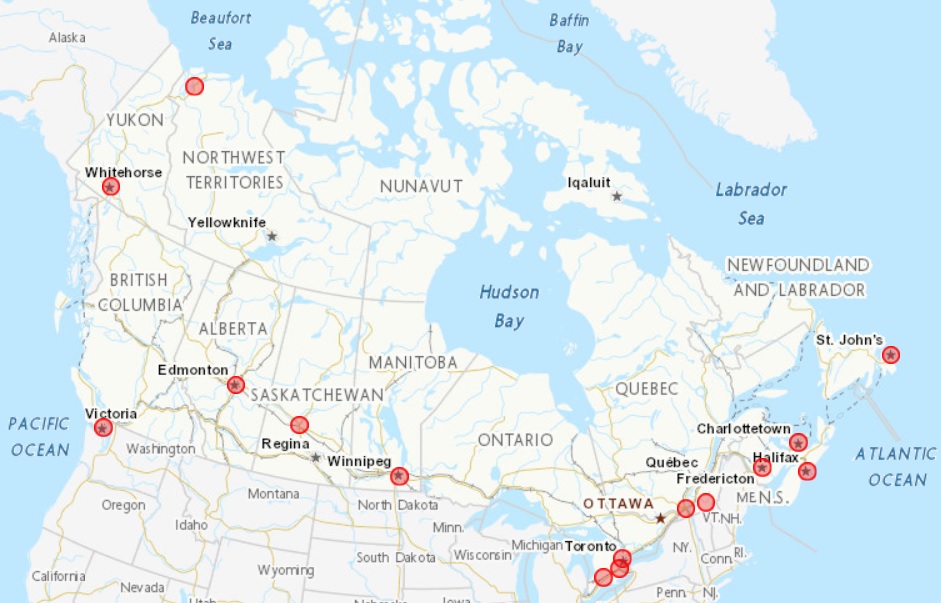
Canadian CubeSat Teams - credit Canadian Space Agency

Canadian CubeSat Teams – credit Canadian Space Agency

Radio Amateurs of Canada (RAC) report 15 CubeSat satellites are being built by students in Canada, all are expected to carry amateur radio payloads.

The RAC post says:

The Canadian Space Agency has been providing support and guidance to 15 teams of university and college students across Canada who are building satellites. These satellites are in the “CubeSat” format, based on a standardized architecture of 10 centimetre cubes. All 15 proposed satellites will be deployed from the International Space Station (ISS), possibly starting in 2021.

RAC is involved in explaining how, and under what conditions, Amateur Radio can be used for communications with these spacecraft, and a requirement of the frequency coordination process with the International Amateur Radio Union is an endorsement from RAC.

We were aware that the suspension of university classes due to the global pandemic could affect the teams’ progress, but I am pleased to report that all of the teams have chosen to use Amateur Radio communications and we continue to receive requests from them, although at a slower rate than in the past. About half of the teams have now received endorsements for their projects from RAC and have sent their proposals to the IARU for frequency coordination.

Designing and constructing CubeSats is a complicated, multi-year process. These projects will develop the students’ skills in many facets of engineering, science, technology, business and project management. Once in orbit, the satellites will also assist pure and applied scientific research and some may offer facilities that Amateurs across Canada and around the world can use.

Source RAC https://www.rac.ca/the-rac-report-june-2020/

Canadian CubeSat Project Teams https://asc-csa.gc.ca/eng/satellites/cubesat/selected-teams-map.asp

Tony Hutchison VK5ZAI in Queen’s Birthday honours list

Tony Hutchison VK5ZAI

Tony Hutchison VK5ZAI

Tony Hutchison VK5ZAI was awarded Member of the Order of Australia (AM) in the Queen’s Birthday Honours List released June 8, 2020.

The citation reads:

“For significant service to amateur radio, particularly to satellite and space communication.”

For full details see https://honours.pmc.gov.au/honours/awards/2006845

Queen’s Birthday 2020 Honours List, June 8, 2020
https://www.gg.gov.au/sites/default/files/2020-06/QB2020%20Gazette%20-%20O%20of%20A.PDF

Online Amateur Radio Satellite talk on Zoom

International Space Station - Image Credit NASA

International Space Station – Image Credit NASA

On Wednesday, May 13, at 1830 GMT (7:30pm BST) Robin Moseley G1MHU will give a talk on Zoom titled “Introduction to amateur satellites, meteor scatter, EME and ISS”.

The presentation is being organised by the Denby Dales Amateur Radio Society and being on Zoom it’ll be viewable on any Tablet or Smartphone with the Zoom App or from a Windows PC or Laptop.

The Zoom meeting ID is 278 609 9353 https://zoom.us/j/2786099353

A range of other talks are planned to be available on Zoom, they include:

Tuesday 5th May 7.30pm BST Martin Butler M1MRB of ICQ Podcast – Talk on the Future of radio clubs – which way forward ?

Wednesday 6th May 7.30pm BST Open club discussion on using a VNA

Wednesday 13th May 7.30pm BST Introduction to amateur satellites, meteor scatter, EME and ISS Robin Moseley G1MHU

Wednesday 20th May Don Field G3XTT Editor of Practical Wireless magazine

Denby Dales Amateur Radio Society http://www.DDARS.net/

First Guatemalan satellite deployed from the ISS

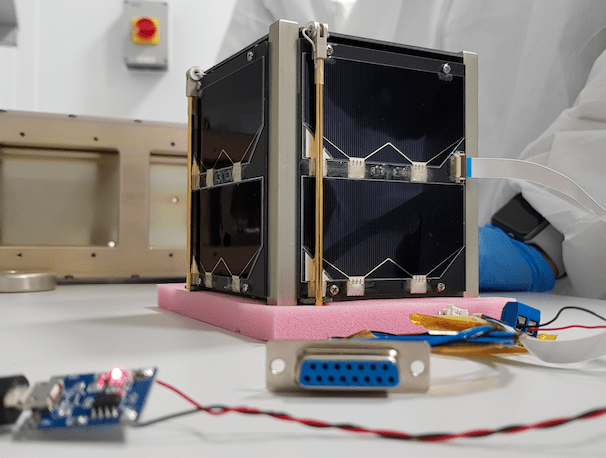
Quetzal-1 CubeSat - Credit Universidad del Valle de Guatemala

Quetzal-1 CubeSat – Credit Universidad del Valle de Guatemala

Guatemala’s first satellite, a small CubeSat called QUETZAL-1, was deployed from the International Space Station (ISS) on Tuesday, April 28, 2020.

Its primary mission is to test a sensor for remote data acquisition for natural resource management, which could be used to monitor water quality in inland water bodies.

QUETZAL-1 LogoThe satellite is part of the Japanese Kibo cubesat program, a product of the cooperation between, among others, the United Nations Office for Outer Space Affairs (UNOOSA), Universidad del Valle de Guatemala (UVG), and more institutions. The operational frequencies were chosen through cooperation from Guatemalan radio amateurs and the International Amateur Radio Union (IARU).

Downlink 4800 bps GMSK on 437.200 MHz.

The Quetzal-1 project team director is Guatemalan engineer José Bagur, TG8JAV, a graduate from mechatronics engineering at Universidad Del Valle.

Source IARU Region 2 https://iaru-r2.org/

IARU Quetzal-1 http://amsatuk.me.uk/iaru/finished_detail.php?serialnum=653

Quetzal-1 Telemetry info https://uvg.edu.gt/cubesat-en/

Quetzal-1 Telemetry decoder http://www.dk3wn.info/p/?page_id=75524

Follow Quetzal-1 on Twitter https://twitter.com/quetzal1_uvg

QARMAN and Phoenix CubeSat Deployment from ISS

Phoenix logoSarah Rogers KI7OOY reports that following the successful launch of NG-13 on Feb 15, the upcoming CubeSat deployment from the ISS is now scheduled for Wednesday, February 19.

This deployment times and frequencies for the CubeSats being deployed on this date are listed in the table below.

As a member of the Phoenix CubeSat team, it would help us greatly to have as much help as possible with tracking our spacecraft following deployment!

For more information on Phoenix’s transceiver characteristics and how you can decode packets from our spacecraft, please see our operations page:
http://phxcubesat.asu.edu/content/amateur-operations

If you have any questions regarding deployment or tracking Phoenix, please do not hesitate to reach out to me.

CubeSat Downlink (MHz) Uplink (MHz) Deployment Time (UTC)
RadSat-u 437.425 437.425 7:10
*Phoenix* *437.35* *437.35* *9:35*
QARMAN 437.35 437.35 11:20
CryoCube 2261 2082.004 12:55
AztechSat-1 437.3 437.3 12:55
SOCRATES 914.7 914.7 14:30
Argus-02 437.29 437.29 16:00
HARP 468 450 16:00
SORTIE 468 450 17:40

Cheers,
Sarah Rogers KI7OOY
Project Manager, Phoenix CubeSat

QARMAN and Phoenix CubeSat Upcoming Deployment

Phoenix logoSeveral CubeSats are expected to be deployed from the International Space Station into orbit next week, among them are QARMAN and Phoenix.

Amandine Denis ON4EYA of the QARMAN project reports that due to the delays in Cygnus launch, deployments are postponed most likely to early next week, after Cygnus docking. Qarman can’t wait to make the big jump! See https://twitter.com/AmandineOufti

QARMAN will perform experiments on stability during the the orbit phase and measurements of ablation and radiation during re-entry.

Phoenix is a 3U CubeSat developed by Arizona State University to study the effects of Urban Heat Islands through infrared remote sensing. Following deployment, the Phoenix operations team would appreciate as much help as possible with identifying the spacecraft and verifying that it is operational.

Please note that two CubeSats being deployed operate on the same frequency. Both Phoenix and QARMAN share the frequency of 437.35 MHz, and both utilize an AX.25 9600 baud protocol with GMSK modulation. Both CubeSats will also be deployed within 1.5 hours of each other, and will therefore be close to each other in orbit. Please be mindful of this situation, and if you have any doubt about the CubeSat that you are receiving, please get in touch with Sarah Rogers KI7OOY, Project Manager, Phoenix CubeSat, sroger13 [at} asu.edu with any questions or concerns.

To read more about the Phoenix CubeSat, its transmitter characteristics, and how you can decode the signal, please see the website at
http://phxcubesat.asu.edu/content/amateur-operations

Source ANS and AMSAT Bulletin Board https://www.amsat.org/pipermail/amsat-bb/