144-146 MHz WebSDR at Goonhilly

Goonhilly 144 MHz WebSDR

Goonhilly 144 MHz WebSDR

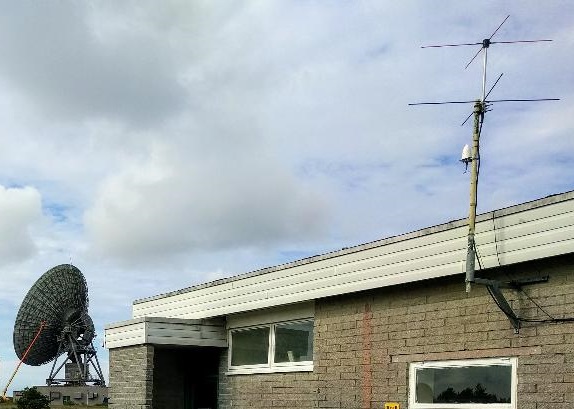
The AMSAT-UK and BATC 144-146 MHz Web-based Software Defined Radio installation at Goonhilly is now available. The WebSDR uses the standard FUNcube TLM Receive Antenna that can be purchased from the AMSAT-UK Online Store.

WebSDR Antenna top right

WebSDR Antenna top right

This is being provided in collaboration with Goonhilly Earth Station where it is kindly hosted alongside the existing receiving equipment for the amateur radio transponders on the Qatar-Oscar-100 (QO-100 / Es’hail-2) geostationary satellite.

It shares the same Turnstile antenna that is used for the reception of the AO73, EO88 & JO97 CubeSats.

Being located in the far South West of the UK, it is anticipated the SDR will be useful for early Acquisition of Signal (AOS) of 144 MHz downlinks from amateur satellites and the International Space Station (ISS). Additionally it can be used for reception of tropospheric signals from the south – the Spanish beacon ED1ZAG on 144.403 MHz has been already been heard on the system.

The new 144 MHz band WebSDR is available at https://vhf-goonhilly.batc.org.uk/

The AMSAT-UK / BATC 10 GHz WebSDR for QO-100 is still available at https://eshail.batc.org.uk/

AMSAT-UK: https://amsat-uk.org/
Twitter: https://twitter.com/AmsatUK
Facebook: https://facebook.com/AmsatUK
YouTube: https://youtube.com/AmsatUK

BATC: https://batc.org.uk/
Twitter: https://twitter.com/batconline
Live event streaming: https://batc.org.uk/live/

ARISS Next Generation Radio System Completes Critical Flight Certification Tests

ARISS 25 watt JVC Kenwood D710GA at Hamvention 2017 - Credit John Brier KG4AKV

ARISS 25 watt JVC Kenwood D710GA at Hamvention 2017 – Credit John Brier KG4AKV

The Interoperable Radio System (IORS), ARISS’ next generation radio system successfully completed a battery of stressful tests required as part of the final certification of the hardware for launch to and operation on the International Space Station.

Amateur Radio on the International Space Station (ARISS) logoDuring the week of July 8, the IORS, consisting of the JVC Kenwood D-710GA Radio and the AMSAT developed Multi-Voltage Power Supply, successfully completed a series of Electro-magnetic Interference (EMI)/Electro-Magnetic Compatibility (EMC) tests to ensure that the ARISS hardware will not interfere with the ISS systems or other payloads. Testing continued into the following week, where the IORS successfully passed power quality and acoustics testing. These tests verified that the ARISS IORS will not introduce harmful signals back into the ISS power system and is quiet enough to meet ISS acoustic requirements. ARISS Hardware Team members Lou McFadin, W5DID and Kerry Banke, N6IZW were at the NASA Johnson Space Center supporting this two week battery of tests in concert with the NASA test and certification team.

Kerry Banke states, “Since the IORS is being qualified to operate on 120VDC, 28VDC and Russian 28VDC as well as transmitting on VHF or UHF, a lot of test combinations were required to cover all cases. Each input voltage type was also tested at low, medium and high line voltage. Moreover, additional permutations were required to test the IORS under no load, medium load and full load at each voltage level. So it should not be surprising why the tests took two weeks to complete.”

Successful completion of these tests represents a key milestone in preparing the IORS for launch. ARISS can now begin final assembly of the flight safety certification in preparation for launch. ARISS is working towards launch ready status by the end of the year.

Two ISS SSTV events during July 29 – August 4

ISS SSTV image 5 received by Dave Boult G7HCE in Exeter on April 14, 2019

ISS SSTV image received by Dave Boult G7HCE in Exeter on April 14, 2019

ARISS Russia is planning Slow Scan Television (SSTV) image transmissions on 145.800 MHz FM from the International Space Station.

Below is the scheduled for the planned activation of SSTV from the ISS. The first session is the routine MAI-75 activity that is only active for a few orbits. It appears that the most of the world (except N. America) will get a shot during the two day run. Some lucky operators along the east coast of North America should get a pass on July 29.

Inter-MAI-75 activity
(July 29) GMT 210/13:15 – SSTV activate
(July 29) GMT 210/21:25 – SSTV power down

(July 30) GMT 211/13:50 – SSTV power up
(July 30) GMT 211/19:30 – SSTV shutdown

ARISS plans to celebrate the life and accomplishments of astronaut, scientist and ham radio pioneer Owen Garriott with a commemorative SSTV event featuring images from Garriott’s work with ham radio during his missions in space. This event is currently scheduled to begin on August 1 at 09:40 GMT and ends at 18:15 GMT on August 4.

Transmissions will be sent at 145.800 MHz FM in the SSTV mode PD-120. Once received, images can be posted and viewed by the public at http://www.spaceflightsoftware.com/ARISS_SSTV/index.php and you can receive a special SSTV ARISS Award for posting your image. See https://ariss.pzk.org.pl/sstv/ for details.

This event uses a computer in the ISS Russian Segment, which stores images that are then transmitted to Earth using the ARISS amateur radio station located in the Service Module which employs the Kenwood TM D710E transceiver.

Please note that SSTV events are dependent on other activities, schedules and crew responsibilities on the ISS and subject to change at any time. You can check for updates regarding planned operation at:
ISS Ham https://twitter.com/RF2Space
ARISS Status https://twitter.com/ARISS_status
ARISS SSTV Blog https://ariss-sstv.blogspot.com/
AMSAT Bulletin Board http://www.amsat.org/mailman/listinfo/amsat-bb

Read the MagPi article Pictures from space via ham radio
https://www.raspberrypi.org/magpi/pictures-from-space-via-ham-radio/

ISS SSTV info and links https://amsat-uk.org/beginners/iss-sstv/

ARISS contact planned for Rowan Preparatory School UK

International Space Station - Image Credit NASA

International Space Station – Image Credit NASA

An International Space Station school contact has been planned for astronaut Nick Hague KG5TMV with participants at Rowan Preparatory School, Claygate, Surrey, United Kingdom.

The direct contact between NA1SS and GB4RPS is planned for 1:48:55 PM BST (12:48:55 GMT) on Thursday, June 20, 2019 and the downlink signals will be audible in the UK and parts of Europe on 145.800 MHz FM.

Live streaming of the event is expected at https://live.ariss.org/

You can receive the ISS signal online from anywhere in the world by using the Farnham WebSDR at http://farnham-sdr.com/

School presentation

Rowan Preparatory School is a vibrant, friendly and nurturing community where girls are encouraged to be themselves. Our school is an independent preparatory school for girls between the ages of 2 to 11, located in the heart of Claygate (near Esher) in Surrey. A school with traditional values and a forward thinking approach to education, we seek to offer a broad and adventurous curriculum full of exciting opportunities.

School life at Rowan is inspiring and offers a breadth of experiences which develop the whole child. The warmth that is evident when you walk through the door at Rowan creates the ideal learning environment for girls to fulfil their potential. They are nurtured and allowed to grow as individuals, encouraged to take risks and have a go at new skills and interests which will enrich their lives. Science, Technology, Engineering and Maths are at the heart of the curriculum at Rowan. Girls make the most of our dedicated specialist teaching spaces and delight in practical learning opportunities in the Engineering and Technology suite. From 3D printers to our radio recording studio, the environment at Rowan is geared towards encouraging creative and exciting learning, ensuring that the girls explore, question and discover in every area of learning. We are passionate about bringing STEM subjects to life and encouraging the girls to see how these subjects translate into the world beyond school. Experiences which will foster successful and inspirational women of the future!

Rowan girls are prepared for the transition to a wide range of successful day and boarding schools and we pride ourselves on finding the right senior school environment for each and every girl. A personalised approach to learning and outstanding pastoral care in our happy environment, ensures that every girl develops a genuine love of learning.

Students Questions:

1. Sophia (Yr 1): How did the International Space Station get built when it just balances in the air?

2. Izzy (Yr 2): What are the challenges to growing food in space if astronauts are to stay in space for longer?

3. Emily (Yr 3): Does your digestion change because in space there is no gravity so your intestine will float in your body?

4. Ashley (Yr 4): Of all the experiments that you have done in space, what has given the most surprising result or has been the most exciting?

5. Alessi (Yr 5): If you spin a ball in the ISS will it keep spinning or will it stop, and if it stops, what stops it?

6. Alannah: (Yr 6): In the future, will it be possible that someone can spend their entire life in space and if so, would their life expectancy change?

7. Grace (Yr 2): If you do a handstand in space does your blood go to your head if there is no gravity?

8. Delilah (Yr 4): Is there anything you could learn about how bacteria and viruses behave in space that could help us defeat infectious bugs around the Earth?

9. Emilia (Yr 5): NASA have said that they will establish a permanent presence on the moon within the next decade, how will they do this and what is the most exciting benefit for human kind?

10. Anya (Yr 6): In all of your time spent on board the ISS, what is the most exciting and extraordinary thing that you have experienced?

11. Sophia saying Zoe’s question (Yr 1): What new information about space are you hoping to learn?

12. Izzy saying Ballie’s question (Yr 2): Can you escape from a black hole?

13. Emily saying Eloise’s question (Yr 3): We have learnt that astronauts are very busy and work long hours. So when you have free time, what do you do for fun?

14. Ashley saying Annabel’s question (Yr 4): How do you get rid of rubbish in space?

15. Alessi saying Sabine’s question (Yr 5): What are you looking forward to the most in nature when you return?

16. Alannah saying Lucy’s question (Yr 6): Our teachers and parents tell us that having a balanced diet is important. Is your diet closely monitored or do you have freedom to choose what you eat? What is your favourite meal?

17. Grace saying Olivia’s question (Yr 1): How do you sleep in space?

18. Delilah saying Amelia’s question (Yr 3): What kind of dangers might you experience in space?

19. Emilia saying Luna’s question (Yr 2): What is the most beautiful thing you can see in space?

20. Anya saying 4J’s question (Yr 4): We have heard that some people don’t believe that the Moon landing took place, what is the best evidence that we have to disprove this theory?

About ARISS:

Amateur Radio on the International Space Station (ARISS) is a cooperative venture of international amateur radio societies and the space agencies that support the International Space Station: NASA, Russian Space Agency, ESA, JAXA, and CSA. The US Center for the Advancement of Science in Space (CASIS) and the National Aeronautics and Space Administration (NASA) provide ARISS special support.

ARISS offers an opportunity for students to experience the excitement of Amateur Radio by talking directly with crew members on board the International Space Station. Teachers, parents and communities see, first hand, how Amateur Radio and crew members on ISS can energize youngsters’ interest in science, technology, and learning.

The primary goal of ARISS is to promote exploration of science, technology, engineering, and mathematics (STEM) topics by organizing scheduled contacts via amateur radio between crew members aboard the ISS and students in classrooms or informal education venues. With the help of experienced amateur radio volunteers, ISS crews speak directly with large audiences in a variety of public forums. Before and during these radio contacts, students, teachers, parents, and communities learn about space, space technologies, and amateur radio.

For more information, see http://www.ariss.org/

How to hear the ISS https://amsat-uk.org/beginners/how-to-hear-the-iss/

Rowan Preparatory School https://www.rowanprepschool.co.uk/

See Rowan Explores Space on Twitter #RowanExploresSpace

ISS Slow Scan TV June 5-6

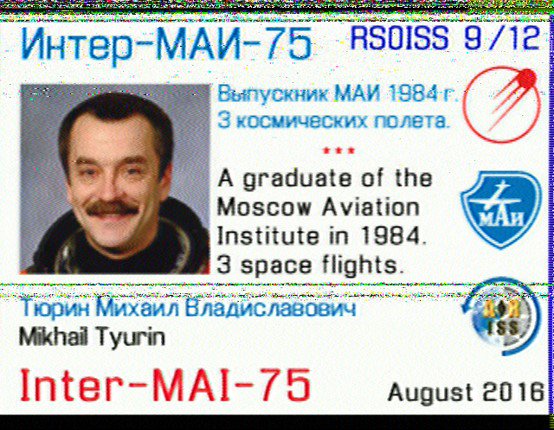
ISS SSTV MAI-75 image 9/12 received by Chertsey Radio Club on Baofeng handheld

ISS SSTV MAI-75 image 9/12 received by Chertsey Radio Club on Baofeng handheld

A Russian MAI-SSTV event is planned from the International Space Station for Wednesday, June 5 from 12:00-16:00 GMT and June 6 from 11:30-15:30 GMT.

ARISS say they expect transmissions to be at 145.800 MHz FM in SSTV mode PD120. Based on the times received, they do not expect SSTV signals over North America.

Check here for updates https://twitter.com/ARISS_status

This event uses a computer in the ISS Russian Segment, which stores images that are then transmitted to Earth using the ARISS amateur radio station located in the Service Module which employs the Kenwood TM D710E transceiver.

Once the event begins the transmissions should be transmitted on 145.800 MHz FM using the PD-120 SSTV mode.

Amateur radio operators and other radio enthusiasts are invited to post the images they receive at http://www.spaceflightsoftware.com/ARISS_SSTV/index.php

Please note that the event is dependent on other activities, schedules and crew responsibilities on the ISS and is subject to change at any time.

You can use online radios to receive signals from the International Space Station:
• SUWS WebSDR located Farnham near London http://farnham-sdr.com/
• R4UAB WebSDR located European Russia http://websdr.r4uab.ru/

ISS SSTV information and links https://amsat-uk.org/beginners/iss-sstv/

ISS SSTV at Music is Magic in Space Rehearsal

Music is Magic in Space

Music is Magic in Space

The International Space Station SSTV transmissions were received during rehearsals for the Music is Magic in Space performance that will take place at the Royal Albert Hall on Monday, April 15.

ISS SSTV image 5 received by Dave Boult G7HCE in Exeter on April 14, 2019

ISS SSTV image 5 received by Dave Boult G7HCE in Exeter on April 14, 2019

Russian cosmonauts on the ISS transmitted amateur radio SSTV on 145.800 MHz FM from April 11-14.

On Sunday, April 14, radio amateur Laura M6LHT was involved in Music Man Project UK rehearsal of Music is Magic in Space in preparation for their appearance at the Royal Albert Hall on Monday, April 15. During the rehearsal the ISS came overhead and Laura M6LHT took the opportunity to receive the SSTV pictures. She tweeted: “We are singing to space, & space is singing back!”
https://twitter.com/lhtrevail/status/1117405107564482560
https://twitter.com/lhtrevail/status/1117453101387198464

Details on the unique charity concert featuring hundreds of musicians with a learning disability from across the country at
https://www.royalalberthall.com/tickets/events/2019/music-is-magic/

Music Man Project UK
https://themusicmanproject.com/
https://twitter.com/MusicManProject

Article: Pictures from Space via Ham Radio by M6DNT page 62 Magpi magazine issue 80
https://www.raspberrypi.org/magpi/issues/80/

ISS SSTV useful info and links https://amsat-uk.org/beginners/iss-sstv/