SSTV from the ISS in July

ISS SSTV Series 28An ARISS SSTV event from the International Space Station will begin no earlier than July 14 with the expectation that the event will run through the weekend into the beginning of the following week.

This is all subject to Axiom Mission AX-4 schedule and other operational considerations. AX-4 is expected to depart from ISS on Monday, July 14 at 11:05 GMT (12:05pm BST)

The subject will be the 50th anniversary of the Apollo-Soyuz Test Project (ASTP) and the 40th anniversary of STS-51F.

STS-51F was the second SAREX flight and had the first use of SSTV in human spaceflight.

Start: Monday, July 14 1605 GMT (10:45am BST)
End: Sunday, July 20 1800 GMT (7pm BST)

Frequency: 145.800 MHz FM (+/-3.5 kHz Doppler Shift)
SSTV Mode: PD120 (Transmission cycle 2 minutes on, 2 minutes off)

You are invited to upload decoded images in the ARISS gallery, area “ARISS Series 28 Apollo Soyuz and STS-51F” at: https://ariss-usa.org/ARISS_SSTV/

Once you’ve submitted, just clicking on the dedicated button you can apply for the official ARISS SSTV award.

Also, you can request the ARISS QSL by contacting the European QSL bureau: https://www.ariss-eu.org/index.php/ariss-station/european-qsl-bureau

To support everyone interested in such events, the European Space Agency released tutorials about how to receive pictures transmitted over amateur radio by the International Space Station: you can find them on https://issfanclub.eu/2024/11/08/esa-tips-how-to-get-pictures-from-the-international-space-station-via-amateur-radio-2/

It’s always possible to receive the ISS SSTV signal by using the WebSDR at the Goonhilly Earth Station, the audio can then be fed into your PC or Smartphone SSTV App  https://vhf-goonhilly.batc.org.uk/

Follow @ARISS_intl on X for official updates, since changes can occur.

Reminder, the images are sent on a (roughly) 2 minutes on, 2 minutes off schedule. So if you don’t hear anything, give it 2 minutes!

Many FM rigs can be switched been wide and narrow deviation FM filters. For best results you should select the filter for wider deviation FM. Handhelds generally have a single wide filter fitted as standard.

You can get predictions for the ISS pass times at https://www.amsat.org/track/

Useful information on receiving the pictures and links for Apps to display the pictures can be found here:
https://amsat-uk.org/beginners/iss-sstv/

You may be able to get publicity for the amateur radio hobby if you contact your local newspaper and tell them you’ve received a picture (doesn’t have to be perfect) from the International Space Station, see
https://amsat-uk.org/2015/02/04/iss-sstv-in-uk-press/

Follow AMSAT-UK on X

Amateur Radio Satellites in TES Magazine

International Space Station - Image credit NASA

International Space Station – Image credit NASA

Amateur radio can open up a new world of opportunities for students, says teacher Chris Aitken MM0WIC, @skipperAitken on X, who shares his tips on how to start a club in the Times Educational Supplement – TES Magazine.

“In 2023 I officially started the Wick High School Radio Club, with a callsign of GM0WHS. The aim of the club was to expose our students to the wide range of activities available in amateur radio.

I remember our first activity: talking to another amateur in England via the SO-50 satellite. I stood with three students on the rugby pitch, antennas pointing to the sky and talking to another amateur, Nick M1DDD.

By the end of the contact, we had 30 students around us wondering what was going on. Their curiosity sparked, we answered questions on what we were doing and invited them to take part.”

Read the TES magazine article at
https://www.tes.com/magazine/teaching-learning/general/why-i-started-amateur-radio-club-my-school

Online Amateur Radio Foundation Course M6KFAThere is no better way to explore the fascinating world of wireless communication than by becoming a radio amateur.

This free online 3-week amateur radio course will enable you to become a radio amateur and get an Ofcom amateur radio licence and callsign, details and booking information at
https://www.essexham.co.uk/train/book-a-place/

Follow AMSAT-UK on X

ISS Slow Scan TV May 5-12

International Space Station - Image Credit NASA

International Space Station – Image Credit NASA

Slow Scan TV (SSTV) transmissions from the International Space Station are planned to take place from 1200 GMT on Monday, May 5, until 1800 GMT on Monday, May 12.

The ARISS Series 27 images will commemorate the 80th anniversary of the end of World War 2 in Europe.

Frequency: 145.800 MHz FM (+/-3.5 kHz Doppler Shift)
SSTV Mode: PD120 (Transmission cycle 2 minutes on, 2 minutes off)

You are invited to upload decoded images in the ARISS gallery, at: https://ariss-usa.org/ARISS_SSTV/

Once you’ve submitted, by just clicking on the dedicated button you can apply for the official ARISS SSTV award.

Also, you can request the ARISS QSL by contacting the European QSL bureau: https://www.ariss-eu.org/index.php/ariss-station/european-qsl-bureau

To support everyone interested in such events, the European Space Agency released tutorials about how to receive pictures transmitted over amateur radio by the International Space Station: you can find them on https://issfanclub.eu/2024/11/08/esa-tips-how-to-get-pictures-from-the-international-space-station-via-amateur-radio-2/

It’s always possible to receive the ISS SSTV signal by using the WebSDR at the Goonhilly Earth Station, the audio can then be fed into your PC or Smartphone SSTV App  https://vhf-goonhilly.batc.org.uk/

Follow @ARISS_intl on X for official updates, since changes can occur.

Reminder, the images are sent on a (roughly) 2 minutes on, 2 minutes off schedule. So if you don’t hear anything, give it 2 minutes!

Many FM rigs can be switched been wide and narrow deviation FM filters. For best results you should select the filter for wider deviation FM. Handhelds generally have a single wide filter fitted as standard.

You can get predictions for the ISS pass times at https://www.amsat.org/track/

Useful information on receiving the pictures and links for Apps to display the pictures can be found here:
https://amsat-uk.org/beginners/iss-sstv/

You may be able to get publicity for the amateur radio hobby if you contact your local newspaper and tell them you’ve received a picture (doesn’t have to be perfect) from the International Space Station, see
https://amsat-uk.org/2015/02/04/iss-sstv-in-uk-press/

ISS SSTV April 11-16 – Humans in Space

April 12 is the International Day of Human Spaceflight so, what better theme for the April 11-16 Slow Scan TV transmissions.

Start: Friday, April 11 1700 GMT (6pm BST)
End: Wed, April 16 1430 GMT (3:30pm BST)

Frequency: 145.800 MHz FM (+/-3.5 kHz Doppler Shift)
SSTV Mode: PD120 (Transmission cycle 2 minutes on, 2 minutes off)

You are invited to upload decoded images in the ARISS gallery, area “Series 26 – Humans in space” at: https://ariss-usa.org/ARISS_SSTV/

Once you’ve submitted, just clicking on the dedicated button you can apply for the official ARISS SSTV award.

Also, you can request the ARISS QSL by contacting the European QSL bureau: https://www.ariss-eu.org/index.php/ariss-station/european-qsl-bureau

To support everyone interested in such events, the European Space Agency released tutorials about how to receive pictures transmitted over amateur radio by the International Space Station: you can find them on https://issfanclub.eu/2024/11/08/esa-tips-how-to-get-pictures-from-the-international-space-station-via-amateur-radio-2/

It’s always possible to receive the ISS SSTV signal by using the WebSDR at the Goonhilly Earth Station, the audio can then be fed into your PC or Smartphone SSTV App  https://vhf-goonhilly.batc.org.uk/

Follow @ARISS_intl on X for official updates, since changes can occur.

Reminder, the images are sent on a (roughly) 2 minutes on, 2 minutes off schedule. So if you don’t hear anything, give it 2 minutes!

Many FM rigs can be switched been wide and narrow deviation FM filters. For best results you should select the filter for wider deviation FM. Handhelds generally have a single wide filter fitted as standard.

You can get predictions for the ISS pass times at https://www.amsat.org/track/

Useful information on receiving the pictures and links for Apps to display the pictures can be found here:
https://amsat-uk.org/beginners/iss-sstv/

You may be able to get publicity for the amateur radio hobby if you contact your local newspaper and tell them you’ve received a picture (doesn’t have to be perfect) from the International Space Station, see
https://amsat-uk.org/2015/02/04/iss-sstv-in-uk-press/

Space Station Slow Scan TV Transmissions

ARISS SSTV November 11, 2024ARISS is planning a Slow Scan Television (SSTV) experiment from the International Space Station (ISS) on 145.800 MHz FM. It is scheduled to start on Monday, November 11, at 11:50 GMT and end Monday, November 18, at 14:10 GMT.

There will be interruptions on 18:06 GMT on Friday, November 15 and 18:17 GMT November 16, for planned school contacts over North America.

The SSTV transmissions will be made using the amateur radio station in the ISS Service Module. The transmission frequency will be 145.800 MHz (+/- 3.5 kHz Doppler shift) FM, using SSTV mode PD120.

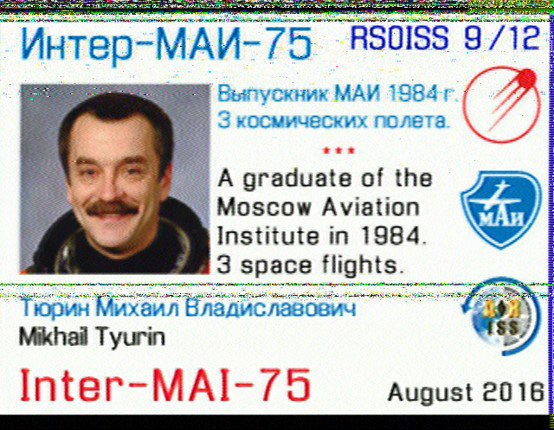
ISS SSTV MAI-75 image 9/12 received by Chertsey Radio Club on a Baofeng handheld

ISS SSTV MAI-75 image 9/12 received by Chertsey Radio Club on a Baofeng handheld

Many FM rigs can be switched been wide and narrow deviation FM filters. For best results you should select the filter for wider deviation FM. Handhelds generally have a single wide filter fitted as standard.

The ISS callsign will be RS0ISS.

Reports are requested: please send ARISS uploading your decoded pictures in the official ARISS SSTV gallery, details of award certificate on the Submission page:
https://ariss-usa.org/ARISS_SSTV/

You can get predictions for the ISS pass times at https://www.amsat.org/track/

Useful information to receive the pictures can be found here:
https://amsat-uk.org/beginners/iss-sstv/

You may be able to get publicity for the amateur radio hobby if you contact your local newspaper and tell them you’ve received a picture (doesn’t have to be perfect) from the International Space Station, see
https://amsat-uk.org/2015/02/04/iss-sstv-in-uk-press/

Follow ARISS on X for official updates during the event
https://x.com/ARISS_Intl

Telebridge ISS Contact with Essex School Students

Amateur Radio on the International Space Station (ARISS) has received schedule confirmation for an ARISS radio contact between an astronaut aboard the International Space Station (ISS) and students at the Robert Drake Primary School located in Benfleet, Essex, UK.

Update Oct 22: BBC News report on the event is at https://www.bbc.co.uk/news/articles/cp8l8lv1v1zo

ARISS conducts 60-100 of these special amateur radio contacts each year between students around the globe and crew members with ham radio licenses aboard the ISS.

The Robert Drake Primary School (with about 313 students) is located in Benfleet, Essex about 30 miles east of London along the Thames estuary.

This will be a telebridge Contact via Amateur Radio allowing students to ask their questions of astronaut Sunita Williams, amateur radio call sign KD5PLB. The downlink frequency for this contact is 145.800 MHz and may only be heard by listeners that are within the ISS-footprint that also encompasses the telebridge station which is in the east coast USA.

The ARISS amateur radio ground station (telebridge station) for this contact is in Greenbelt, Maryland, U.S. The amateur radio volunteer team at the ground station will use the callsign K6DUE, to establish and maintain the ISS connection.

The ARISS radio contact is scheduled for October 21, 2024 at 2:57 PM BST (13:57 GMT) – it was rescheduled to this new time due to Crew 8 undocking sleep shift.

Follow ARISS for updates on
X: https://x.com/ARISS_Intl
Facebook: facebook.com/ARISSIntl
_______________________________

As time allows, students will ask these questions:

1. What do I need to learn to be an astronaut?

2. What do you do to have fun in space?

3. How long has the international space station been in space?

4. Is time different in space?

5. Do you watch TV? If yes, what do you watch?

6. What do you eat and how do you eat it?

7. What advice would you give kids like me who may want to be an astronaut in the future?

8. How do people drink on the space station?

9. How do you get food and water in space?

10. What is your favourite part of Earth to fly over and why?

11. Have you ever walked in space?

12. What is your favourite part of being an astronaut on the space station?

13. Does it take long to get use to gravity back home?

14. Do you get chance to speak to family in friends and how do you do it?

15. Have you seen any shooting stars or comets whilst on the space station?

About ARISS:

Amateur Radio on the International Space Station (ARISS) is a cooperative venture of international amateur radio societies and the space agencies that support the ISS. In the United States, sponsors are the American Radio Relay League (ARRL), Amateur Radio Digital Communications (ARDC), Radio Amateur Satellite Corporation (AMSAT), NASA’s Space Communications and Navigation program (SCaN) and the ISS National Lab—Space Station Explorers.

The primary goal of ARISS is to promote exploration of science, technology, engineering, the arts, and mathematics topics. ARISS does this by organizing scheduled contacts via amateur radio between crew members aboard the ISS and students. Before and during these radio contacts, students, educators, parents, and communities take part in hands-on learning activities tied to space, space technologies, and amateur radio. For more information, see http://www.ariss.org/