Kent school students to contact ISS astronaut

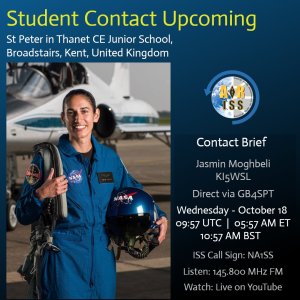
St. Peter ISS Contact with Jasmin KI5WSLAmateur Radio on the International Space Station (ARISS) has received schedule confirmation for an ARISS radio contact between an astronaut aboard the International Space Station (ISS) and students at St Peter Junior School in Broadstairs, UK. ARISS conducts 60-80 of these special amateur radio contacts each year between students around the globe and crew members with ham radio licenses aboard the ISS.

St Peter is a three form entry junior school located in Broadstairs, a small seaside town on the South East coast of England. St Peter’s students (ages 7 – 11) have been taking part in activities in ‘Mission Zero’ where they write a program to display a personalized image on an Astro Pi computer on board the ISS to remind the astronauts of home.

Students have also been taking part in the FUNcube project (tracking an active LEO Satellite – FUNcube-1/AO-73), and participating in a community stargazing event assisted by members of Ramsgate Stargazers. The school’s science club has also engaged students in space-related activities that include learning the difficulties of traveling to space, designing and launching rockets (using water and air), and living on the ISS (and designing solutions that may help overcome these difficulties). Members of the Hilderstone Radio Society (G0HRS) have been fundamental in advising and supporting the school during these activities and during this ARISS contact.

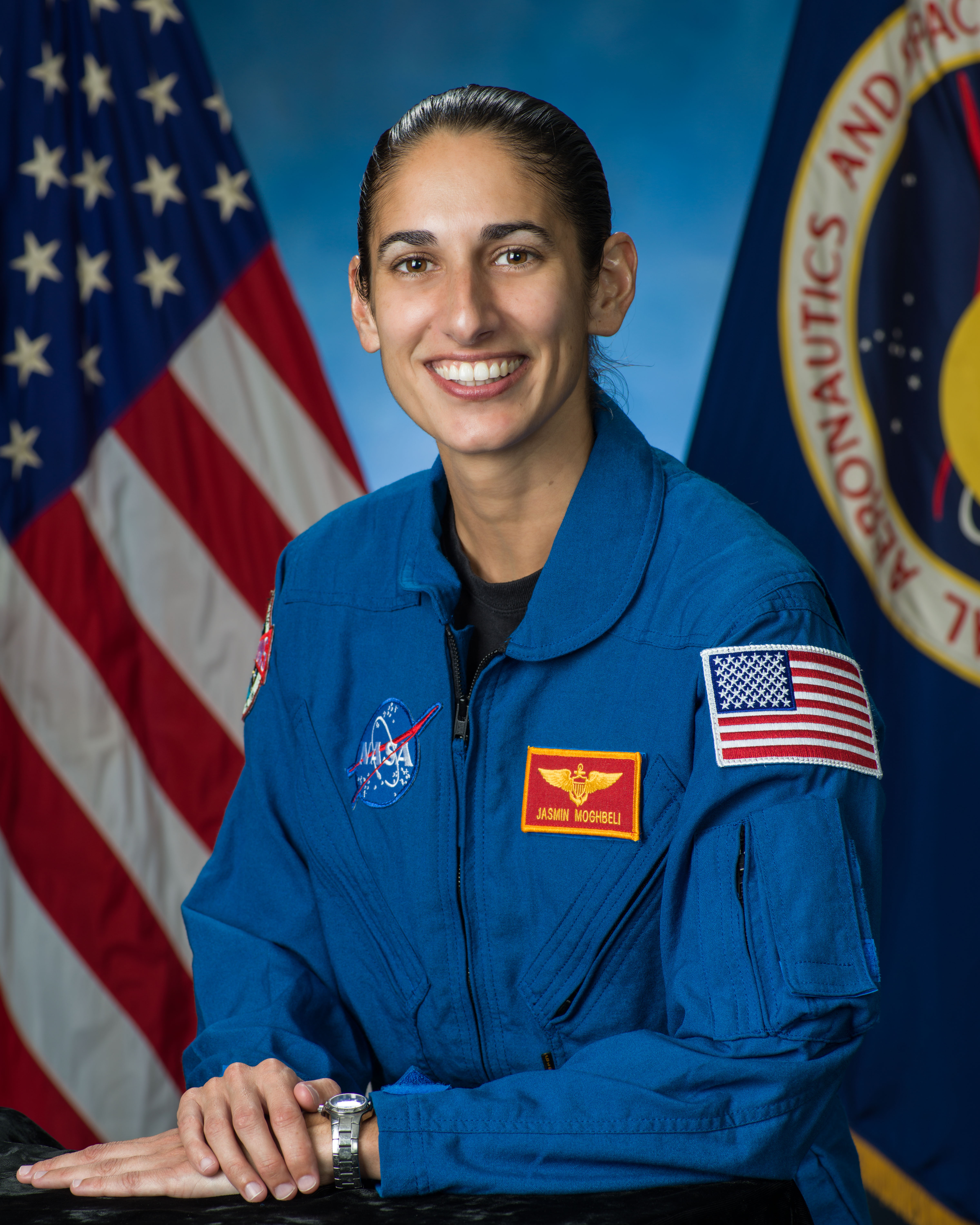
This will be a direct contact via Amateur Radio and students will take turns asking their questions of Astronaut Jasmin Moghbeli, amateur radio call sign KI5WSL. The downlink frequency for this contact is 145.800 MHz and may be heard by listeners that are within the ISS-footprint that also encompasses the relay ground station.

The amateur radio ground station for this contact is in Broadstairs, UK. Amateur radio operators using call sign GB4SPT, will operate the ground station to establish and maintain the ISS connection.

The ARISS radio contact is scheduled for October 18, 2023 at 10:57:49 am BST (UK) (9:57:49 UTC, 5:57 am EDT, 4:57 am CDT, 3:57 am MDT, 2:57 am PDT).

The public is invited to watch the live stream at: https://live.ariss.org

As time allows, students will ask these questions:
1. Is it hot or cold in space, and if it’s hot how do you keep cool and if it’s cold how do you keep warm in your spacesuit?
2. Is it really true that girls are better suited to space than boys?
3. How do you tell if it’s night or day on the international space station?
4. Would you be happy to live in space for the rest of your life if you were told to?
5. What are your thoughts about space travel in the future for mankind?
6. In the future will we be able to take holidays to the international space station?
7. Do you think living organisms will ever be found in space, and if so what could they be?
8. Do you get dizzy in space when you are not moving? Or does the lack of gravity mean that you do not get dizzy?
9. Does the ISS shake when a Soyuz spacecraft docks?
10. I know we can measure gravity, but what is gravity?
11. What is the furthest distance a human has travelled away from Planet Earth?
12. What would happen if you played on a swing in space?
13. What is the most amazing thing you have seen on earth from the space station?
14. How do fires behave in space?
15. Have you seen any comets?
16. How much work do you have to do on the space station each day, and what do you do in your spare time?
17. My brother and I love space, my brother especially loves the moon. We would love to be able to explore space one day. What advice can you give us, to help our dreams come true?
18. What did you study in school to become an astronaut?
19. How does the space station renew the oxygen inside the station?
20. What is different about growing plants in space and do you think we’ll be able to grow food for long term space missions?
21. Will there be a point soon when you can watch Netflix or use your mobile phone in Space – as you are near the satellites that operate the signals?
About ARISS:
Amateur Radio on the International Space Station (ARISS) is a cooperative venture of international amateur radio societies and the space agencies that support the International Space Station (ISS). In the United States, sponsors are the American Radio Relay League (ARRL), Amateur Radio Digital Communications (ARDC), Radio Amateur Satellite Corporation (AMSAT), NASA’s Space Communications and Navigation program (SCaN) and the ISS National Lab—Space Station Explorers. The primary goal of ARISS is to promote exploration of science, technology, engineering, the arts, and mathematics topics. ARISS does this by organizing scheduled contacts via amateur radio between crew members aboard the ISS and students. Before and during these radio contacts, students, educators, parents, and communities take part in hands-on learning activities tied to space, space technologies, and amateur radio.
For more information, see http://www.ariss.org

ISS contact with Technological University Dublin students

Jasmin Moghbeli KI5WSL

Jasmin Moghbeli KI5WSL

Amateur Radio on the International Space Station (ARISS) has received schedule confirmation for an ARISS radio contact between an astronaut aboard the International Space Station (ISS) and students at the Technological University in Dublin, Ireland. ARISS conducts 60-80 of these special amateur radio contacts each year between students around the globe and crew members with ham radio licenses aboard the ISS.

Technological University Dublin is a large technological university with more than 28,000 students across its five campuses. TU Dublin is a leader in STEM disciplines (with 18% of their students enrolled in STEM and 25% in apprenticeships) and also provides studies in business, media, culinary arts, and the creative and performing arts. In 2022, TU Dublin provided 300 students between the ages of 8 and 11 years the opportunity to participate in a special STEM program, composed of five, space-themed workshops (STEM Try Five program). The school also collaborated with Dublin Institute of Advanced Studies, the Dunsink Observatory and the Irish Rocketry Association in order to provide a series of space-centered student activities.

With this ARISS contact, the school also hopes to rejuvenate the hobby of radio experimentation, to highlight the relevance of radio communication and its very important applications in day-to-day life. Members of two amateur radio organizations, North Dublin Radio, and the Irish Radio Transmitter Society, are supporting the school for this ARISS contact by providing technical expertise, equipment, and ham radio activities.

This will be a direct contact via Amateur Radio allowing students to ask their questions of Astronaut Jasmin Moghbeli, amateur radio call sign KI5WSL. The downlink frequency for this contact is 145.800 MHz and may be heard by listeners that are within the ISS-footprint that also encompasses the relay ground station.

The amateur radio ground station for this contact is in Dublin, Ireland. Amateur radio operators using call sign EI1ISS, will operate the ground station to establish and maintain the ISS connection.

The ARISS radio contact is scheduled for October 6, 2023 at 2:11:32 pm IST (Ireland) (13:11:32 UTC, 9:11 am EDT, 8:11 am CDT, 7:11 am MDT, 6:11 am PDT).

The public is invited to watch the live stream at: https://www.youtube.com/watch?v=2E8wZd2gBoo

As time allows, students will ask these questions:

1. How long does it take to train to become an astronaut?

2. How does it feel to take off into space?

3. How do you contact your family?

4. Does the International Space Station break down often?

5. Do you feel stress or anxiety when you are in outer space?

6. How do you know when it is morning and night time?

7. Do you dream differently in space?

8. How does returning from space affect your body?

9. How do you get a haircut in space?

10. What skills do you need to go into space?

11. How do you keep your food fresh?

12. Is it difficult to move in zero gravity?

13. What is the scariest part of being an astronaut?

14. Could you bring your pet with you to the Space Station?

15. Is it difficult to wear your space suit?

16. What made you want to become an astronaut?

17. What is, in your opinion, the best and worst food on the space station?

18. What do you do in your free time?

19. During launch, where does the first stage end up?

20. How long does a typical EVA last?

About ARISS:

Amateur Radio on the International Space Station (ARISS) is a cooperative venture of international amateur radio societies and the space agencies that support the International Space Station (ISS). In the United States, sponsors are the American Radio Relay League (ARRL), Amateur Radio Digital Communications (ARDC), Radio Amateur Satellite Corporation (AMSAT), NASA’s Space Communications and Navigation program (SCaN) and the ISS National Lab—Space Station Explorers. The primary goal of ARISS is to promote exploration of science, technology, engineering, the arts, and mathematics topics. ARISS does this by organizing scheduled contacts via amateur radio between crew members aboard the ISS and students. Before and during these radio contacts, students, educators, parents, and communities take part in hands-on learning activities tied to space, space technologies, and amateur radio.
For more information, see http://www.ariss.org/


ISS SSTV Scheduled for October 3-5, 2023

ISS SSTV image 5/12 received by Murray Hely ZL3MH January 31, 2015

UPDATE: Event to be Rescheduled. R4UAB reports that from October 3, 2023 to October 5, 2023 images will be transmitted from the International Space Station via the SSTV protocol as part of the “About Gagarin from Space” experiment. The topic of the program is the first artificial Earth satellite, amateur radio satellites, school satellites.

SSTV images will be transmitted on 145.800 MHz using a Kenwood TM-D710 transceiver. They are expected to use the PD-120 SSTV format.

The scheduled start of transmission is October 03, 2023 at approximately 14:40 UTC. The end of transmission is scheduled at October 05, 2023 at approximately 18:15 UTC. The date and time may change.

The “Russia ISS SSTV” diploma is awarded to radio amateurs (observers) for receiving SSTV (slow-scan television) broadcasts from aboard the International Space Station (ISS) as part of the space experiment (SE) “About Gagarin from Space.” To receive the “Russia ISS SSTV” Diploma, one must receive and decode three images transmitted over a radio channel from on board the ISS using the SSTV protocol only on the days of the SE . Each image must be at least 90% complete and of acceptable quality. Information on earning the certificate is available at https://r4uab.ru/diplom-iss-sstv/

AMSAT Argentina is also offering a diploma for reception of ISS SSTV images. Learn more at http://amsat.org.ar/?f=9

Source AMSAT News Service https://mailman.amsat.org/postorius/lists/ans.amsat.org/

The signal should be receivable on a handheld with a 1/4 wave whip. If your rig has selectable FM filters try the wider filter for 25 kHz channel spacing.

You can get predictions for the ISS pass times at https://www.amsat.org/track/

ARISS SSTV Blog https://ariss-sstv.blogspot.com/

Useful SSTV info and links https://amsat-uk.org/beginners/iss-sstv/

Space Station contact with students in Malta

Josh Cassada KI5CRH

Josh Cassada KI5CRH

An ARISS contact between students at Stella Maris College, Gzira, Malta, callsign 9H1MRL and the International Space Station (ISS) is scheduled for 12:34 GMT on Wednesday, February 15.

Update March 26: Report on the contact in the Times of Malta newspaper https://timesofmalta.com/articles/view/ariss-mt-direct-contact-iss-via-amateur-radio.1021213

The ISS crew member will be astronaut Josh Cassada KI5CRH who will be using the ISS callsign OR4ISS. The downlink frequency is 145.800 MHz and the signal should be receivable in the British Isles and Europe.

A little bit of information about the school follows. Stella Maris College is a Lasallian school. It takes its inspiration from its founder John Baptist de la Salle. In the Christian faith, John De La Salle is venerated as the Patron Saint of Teachers.

Basically, a Lasallian School has the following characteristics:
A) respect for each student as a unique person.
B) A strong spirit of Community.
C) A school of Quality.
D) A school that embraces everyone.
E) Shows special preference for persons who are considered poor financially, morally, physically, psychologically.

Mission statement:
Our school is a place where everyone strives to create and nurture a holistic, inclusive and well-ordered learning climate thereby ensuring a high-quality, values-based academic preparation.

The school has an astronomical observatory and electronics forms part of the school curriculum.

The contact is being conducted by five local radio amateurs and we call ourselves ARISS team Malta; Dominic 9H1M, Manuel 9H1GW, Andrew 9H2AV, Trevor 9H5TS and Anthony 9H2AS. We have set up a station at the school’s auditorium and a 10 element crossed Yagi and rotator on the roof.

The whole event will be streamed live on YouTube on the following URL:

73s Manuel 9H1GW

ARISS contact with students in Malta

Astronaut Koichi Wakata KI5TMN

Astronaut Koichi Wakata KI5TMN

Update Dec 9 : Contact POSTPONED An ARISS contact between students at Stella Maris College, Gzira, Malta, callsign 9H1MRL and the International Space Station (ISS) is scheduled for TBD.

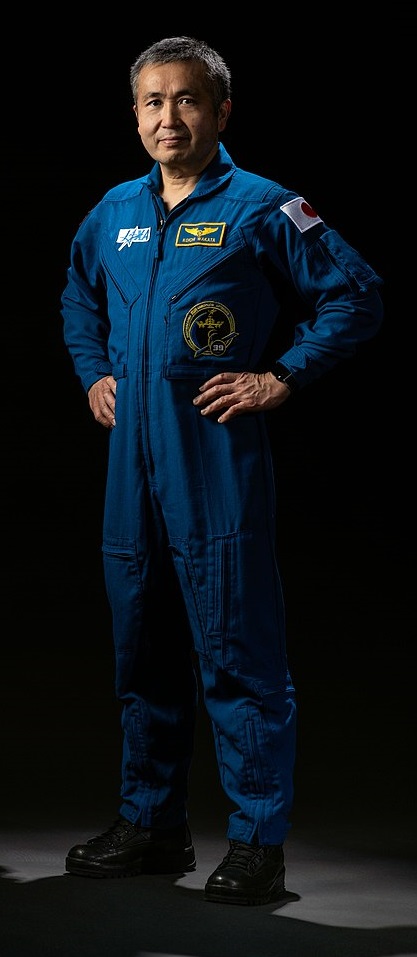
The ISS crew member will be astronaut Koichi Wakata KI5TMN who will be using the ISS callsign OR4ISS. The downlink frequency is 145.800 MHz and the signal should be receivable in the British Isles and Europe.

A little bit of information about the school follows. Stella Maris College is a Lasallian school. It takes its inspiration from its founder John Baptist de la Salle. In the Christian faith, John De La Salle is venerated as the Patron Saint of Teachers.

Basically, a Lasallian School has the following characteristics:
A) respect for each student as a unique person.
B) A strong spirit of Community.
C) A school of Quality.
D) A school that embraces everyone.
E) Shows special preference for persons who are considered poor financially, morally, physically, psychologically.

Mission statement:
Our school is a place where everyone strives to create and nurture a holistic, inclusive and well-ordered learning climate thereby ensuring a high-quality, values-based academic preparation.

The school has an astronomical observatory and electronics forms part of the school curriculum.

The contact is being conducted by five local radio amateurs and we call ourselves ARISS team Malta; Dominic 9H1M, Manuel 9H1GW, Andrew 9H2AV, Trevor 9H5TS and Anthony 9H2AS. We have set up a station at the school’s auditorium and a 10 element crossed Yagi and rotator on the roof.

The whole event will be streamed live on YouTube on the following URL:
https://www.youtube.com/@trevorsammut/streams

73s Manuel 9H1GW

Antarctica ISS school contact

Kjell Lindgren KO5MOS

Kjell Lindgren KO5MOS

On Friday, October 7, 2022, from 15:14 GMT there will be a amateur radio contact from Antarctica with the International Space Station (ISS).

Students from the #38 Raul Alfonsin school at the Esperanza Antarctic base will ask questions that will be answered by astronaut Kjell Lindgren, KO5MOS, aboard the ISS, with a telebridge link being provided by ON4ISS, AMSAT Belgium.

This event was managed before ARISS (Amateur Radio on the ISS) by CETRA (Science, Education and Technology united by Amateur Radio) subcommission of AMSAT-LU, led by Luis Funes, LU8YY/Q, NASA/ARISS Telebridge.

AMSAT thanks COCOANTAR (ANTARCTIC Joint Command) for their collaboration and commitment to make this special event possible (1st Contact of the ISS with Antarctica), and to ARISS Canada for their valuable support.

This adds to the WSPR LU1ZV beacon active in Antarctica donated by AMSAT-LU.

It can be seen on https://www.instagram.com/coconatar/?hl=es and broadcast by COCOANTAR, TN and graphic and television media.

Images on http://amsat.org.ar/?f=antartida

73, LU7AA, AMSAT Argentina
http://amsat.org.ar/
https://facebook.com/AMSAT.LU