SpinSat Deployment from ISS

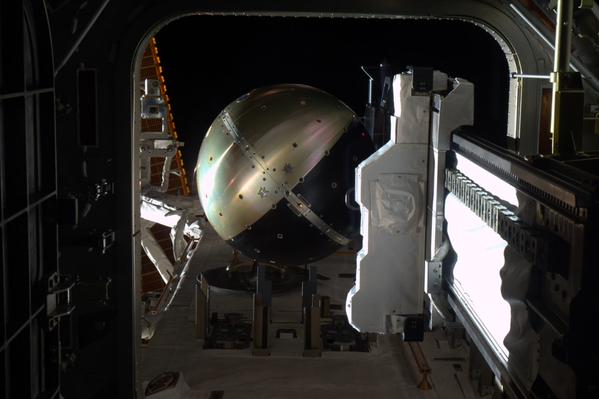
SpinSat extended from airlock

SpinSat extended from airlock

SpinSat was launched to the International Space Station (ISS) on September 21 in preparation for a subsequent deployment from the Japanese Experiment Module (JEM).

SpinSat - Credit Naval Research Laboratory

SpinSat – Credit Naval Research Laboratory

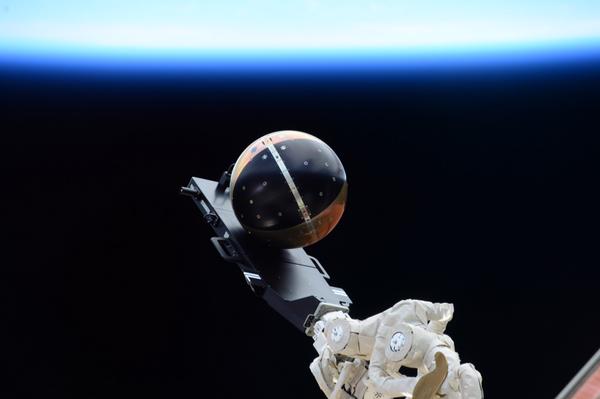
Masahiro Arai JN1GKZ reported that SpinSat would be deployed, using the Cyclops deployment system, from the airlock of the JEM. Successful deployment took place on Friday, November 28 at 14:30 UT into a 406 x 417 km x 51.65 deg orbit. SpinSat is cataloged as object number 40314.

Developed by the Naval Research Laboratory (NRL) SpinSat is a 56 cm sphere weighing 57 kg that has 12 Electronically-controlled Solid Propellant (ESP) thrusters spread in pairs throughout the surface of the satellite. They will be fired in pairs to spin the spacecraft. With just primary batteries and only 4.8 grams of fuel this phase may last between three to six months.

The spacecraft will be used to calibrate the space surveillance network. Lasers will be fired at SpinSat from the ground, the light reflected back will be measured to determine where in time and space the satellite is passing overhead. SpinSat will also model the density of the atmosphere.

The IARU Satellite Frequency Coordination Panel report that SpinSat carries a 2 watt RF output 9600 bps AX.25 packet radio store and forward system on 437.230 MHz.

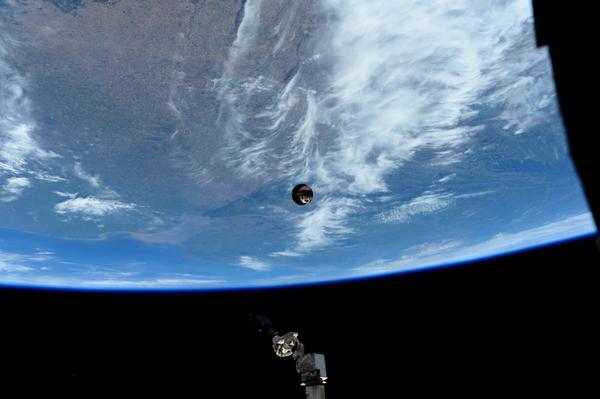
SpinSat just before deployment

SpinSat just before deployment

Listen for SpinSat on 437.230 MHz with the SUWS WebSDR located near London
https://amsat-uk.org/2014/08/15/suws-websdr-moves-to-new-site/

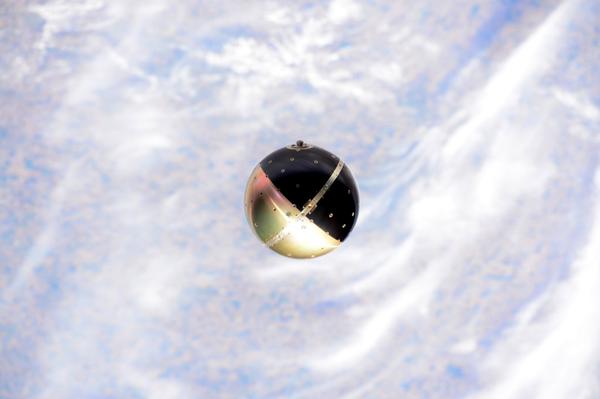
In the first few days after deployment SpinSat’s orbit will be similar to that of the International Space Station. To see when it’s in range use the ISS real-time tracker at http://issfanclub.com/

Read all about SpinSat at
http://www.nrl.navy.mil/media/news-releases/2014/with-spinsat-mission-nrl-will-spin-small-satellite-in-space-with-new-thruster-technology

SpinSat after deployment

SpinSat after deployment

NASA – SpinSat
http://www.nasa.gov/mission_pages/station/research/experiments/1019.html

Space Station Integrated Kinetic Launcher for Orbital Payload Systems (SSIKLOPS) – Cyclops
http://digitalcommons.usu.edu/smallsat/2013/all2013/76/

IARU Satellite Frequency Coordination Panel http://amsat.org.uk/iaru

SpinSat in orbit

SpinSat in orbit

IZ0UDF to lift off to ISS

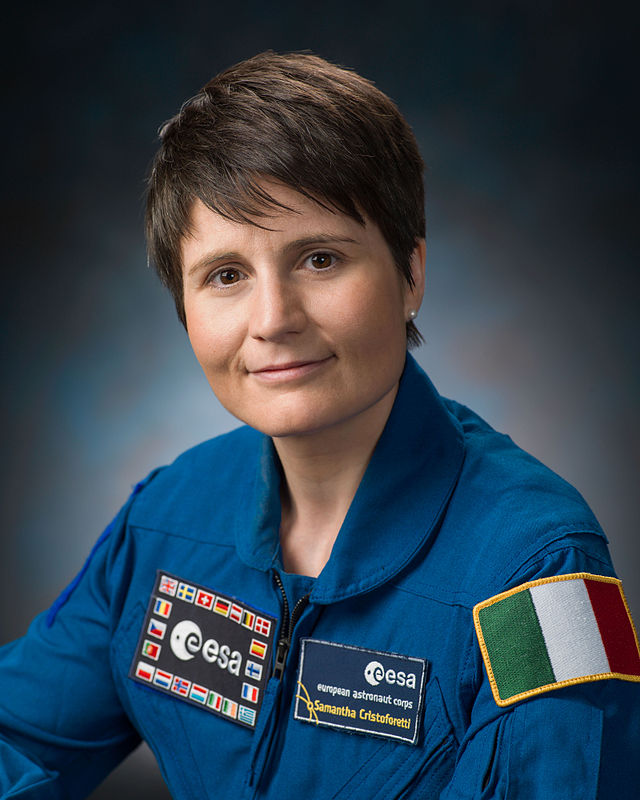
Astronaut Samantha Cristoforetti IZ0UDF - Credit NASA-Robert Markowitz

Astronaut Samantha Cristoforetti IZ0UDF – Credit NASA-Robert Markowitz

Former fighter pilot Samantha Cristoforetti IZ0UDF is all set for her mission on the International Space Station, the launch will be broadcast live.

ISS Expedition 42 official crew poster

ISS Expedition 42 official crew poster

She will be Italy’s first female astronaut and expects to leave Earth on Sunday, November 23 at 2101 UT from Baikonur in Kazakhstan, also on-board will be Terry Virts and Anton Shkaplerov. She is expected to arrive at the ISS on Monday, November 24 where she will join crew members Elena Serova, Alexander Samoukutyaev and Barry Wilmore.

Since Alexander Gerst KF5ONO and Reid Wiseman, KF5LKT returned to Earth on November 10 the ISS has been left without any radio amateurs onboard.

On November 24, the Milan based company Accurat plans to launch a website Friends in Space and what they describe as the first social network that extends beyond Earth; a 6 months-long open window to make new friends from all over the world and join astronaut Samantha Cristoforetti IZ0UDF @AstroSamantha #Futura42 in her expedition to the International Space Station.

Friends in Space
http://friendsinspace.org/
https://twitter.com/Friends_InSpace

In this video Samantha explains the story behind her mission name Futura, and recounts the journey to becoming an astronaut

Watch the launch live at
http://www.esa.int/Our_Activities/Human_Spaceflight/Futura/Watch_Futura_launch_live

Follow @AstroSamantha at https://twitter.com/AstroSamantha

Download the high resolution (57 MB) Expedition 42 poster from
http://www.nasa.gov/sites/default/files/exp_42_sfaposternw-2014-07-007_highres.pdf

It has been reported on the GEO Yahoo Group that Soyuz Telemtry/Voice is expected on 143.625 MHz and 121.500 MHz on the European passes at 02:35 and 04:10 UT on Monday, November 24.

International Space Station Briefly “Ham-less” After Crew Members Return to Earth
http://www.arrl.org/news/international-space-station-briefly-ham-less-after-crew-members-return-to-earth

Astronaut Radio Amateurs http://www.w5rrr.org/astros.html

GB1SS callsign for International Space Station

Sarah Brightman

Sarah Brightman

The RSGB report that on October 9, 2014 Ofcom confirmed that the callsign GB1SS will be made available for issue to UK astronauts who wish to operate from the ISS.

In May 1991 the first UK astronaut Helen Sharman GB1MIR talked to radio amateurs around the world from the Mir space station. After a gap of 24 years it looks as though two more UK astronauts may be flying to the International Space Station (ISS) in 2015.

One of the UK radio amateurs that Helen contacted all those years ago was Chris Lorek G4HCL he says: I remember it fondly! I and my three children all chatted with her on 2m using my club station call G4SMC (South Midlands Communications in Chandler’s Ford) on her next-but-last Mir pass over the UK before she came down. Steven (10 years old), David (8 years old) and Carolyn (5 years old) all said hello to her, each giving their name and age, with Steven asking whether there was a particular challenge she may have had. Helen replied, knowing it was very young children, that one difficult challenge she’d had was putting her socks on as she floated around the station!

In September 2015 Sarah Brightman hopes to become the 2nd UK astronaut, flying to the ISS on a 10 day mission. She is committed to encouraging young women to pursue careers in Science, Technology, Engineering, and Mathematics (STEM). In 2012 in conjunction with Virgin Galactic, she launched The Brightman STEM Scholarship program. It is not yet clear if she will operate the ISS amateur radio station during her mission.
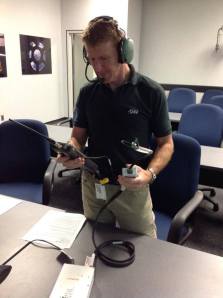
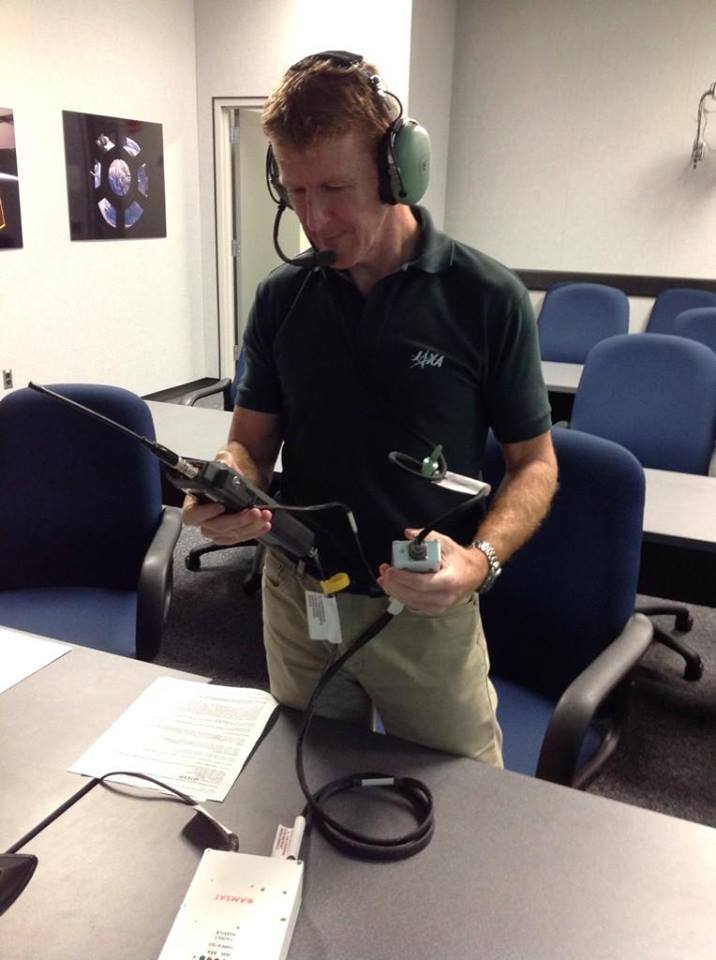
Tim Peake KG5BVI training on ISS Amateur Radio Station Equipment

Tim Peake KG5BVI training on ISS Amateur Radio Station Equipment

Tim Peake was selected to train as an astronaut in 2009 and hopes to go to the ISS in November 2015. He holds the USA callsign KG5BVI and has recently been learning to use the Ericsson 144 MHz handheld radio which is installed in the Columbus module of the ISS. On September 18 Tim said “Will be great to chat with schools next year from space using this ham radio on board the ISS.”

There are two amateur radio stations on the ISS, one in the Russian Service Module, the other in the ESA Columbus Module. Almost any 144 MHz FM rig will receive signals from the ISS, you can even use a general coverage VHF scanner with an external antenna. As far as the antenna is concerned the simpler the better. A ¼ wave ground plane is a good antenna for the ISS as it has a high angle of radiation. Large 2m colinears may not work quite as well since the radiation pattern is concentrated at the horizon.

You can receive the ISS outdoors using a 2 metre hand-held with its helical antenna but a 1/4 wave whip will give far better results.

In the UK we use narrow 2.5 kHz deviation FM but the ISS transmits using the wider 5 kHz deviation used in much of the world. Most rigs can be switched been wide and narrow deviation filters so select the wider deviation. Hand-held rigs all seem to have a single wide filter fitted as standard.

Voice contacts with astronauts usually take place using “split” frequencies. The astronauts transmit on 145.800 MHz and listen for replies on 145.200 MHz, you just need to activate your rig’s repeater shift. Recently, however, they have also been operating simplex listening on 145.800 MHz.

When astronauts are not on the air they usually leave the packet digi-peater running on 145.825 MHz so why not listen out for it.

ISS status and tracking information http://issfanclub.com/

The First UK Astronaut Helen Sharman GB1MIR
https://amsat-uk.org/about/history/first-uk-astronaut-helen-sharman-gb1mir/

Sarah Brightman to fly to ISS
https://amsat-uk.org/2014/09/04/sarah-brightman-to-start-space-flight-training-in-january/

Read the report of the Ofcom-RSGB meeting on October 9
http://rsgb.org/main/blog/news/rsgb-notices/ofcom-rsgb-forum/2014/10/22/ofcom-rsgb-forum-9-october-2014/
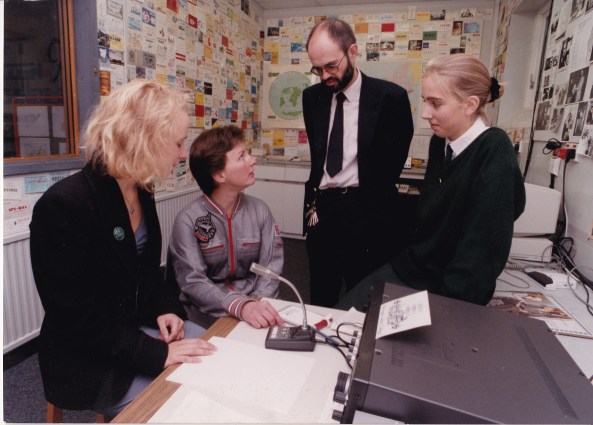
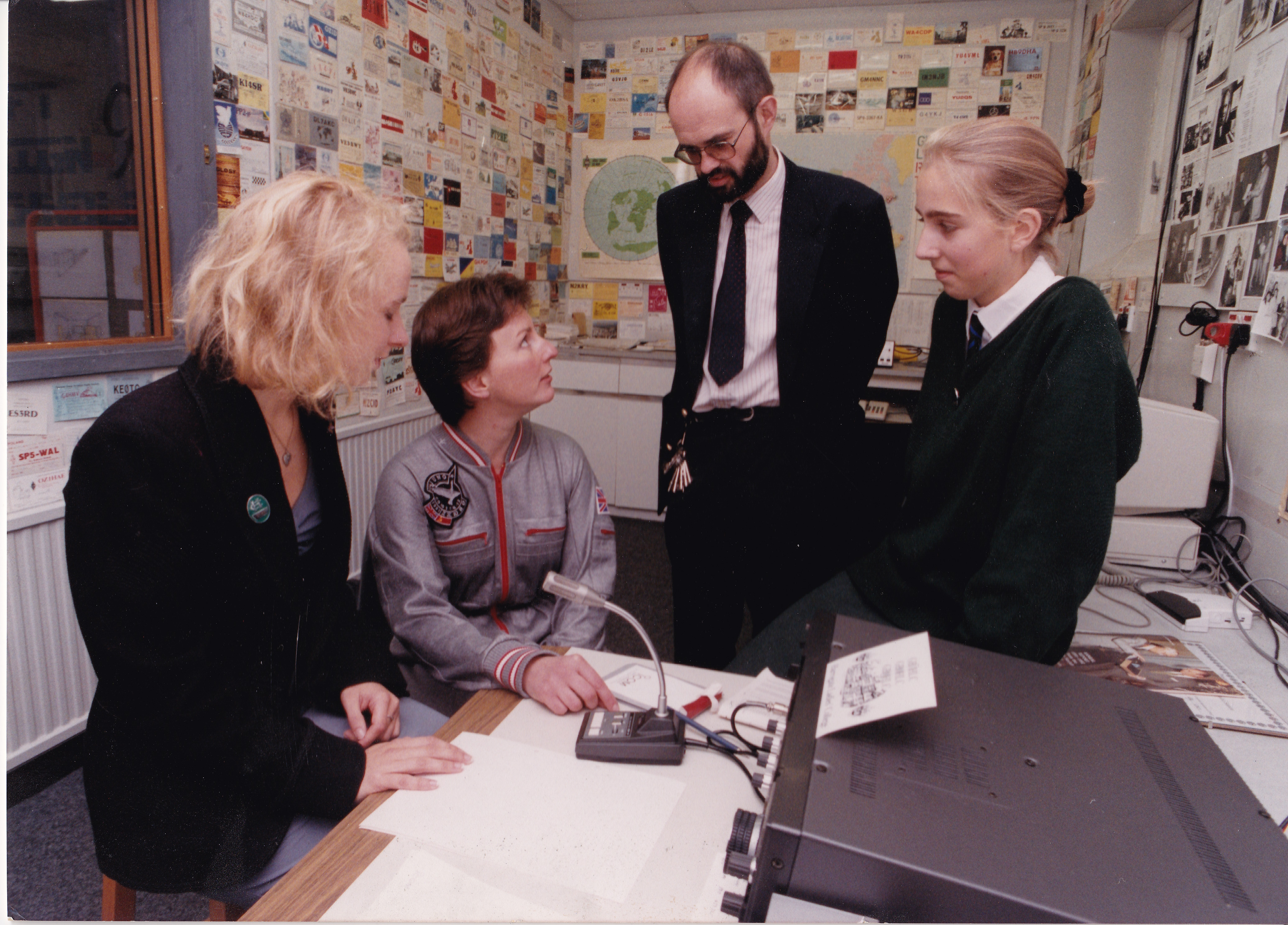
After her return to Earth the first UK astronaut Helen Sharman visited the Harrogate Ladies' College club station G0HCA From left to right are Anna-Karin G7IRR, Helen Sharman GB1MIR, Richard Horton G3XWH and Katy G7NST

After her return to Earth the first UK astronaut Helen Sharman visited the Harrogate Ladies’ College club station G0HCA
Left to right are Anna-Karin G7IRR, Helen Sharman GB1MIR, Richard Horton G3XWH and Katy G7NST
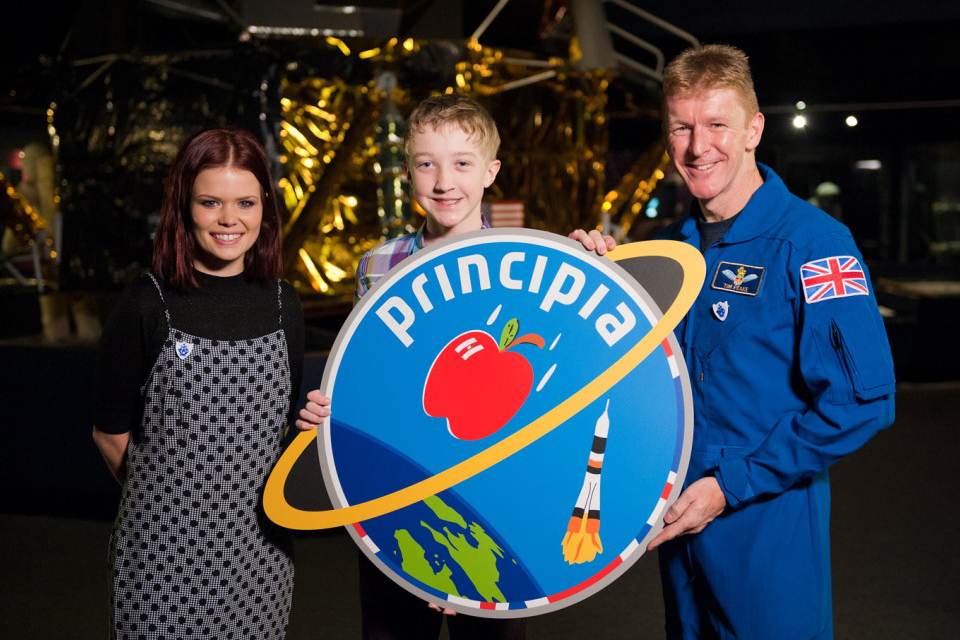
Unforgettable day schoolchildren spoke to an astronaut in space

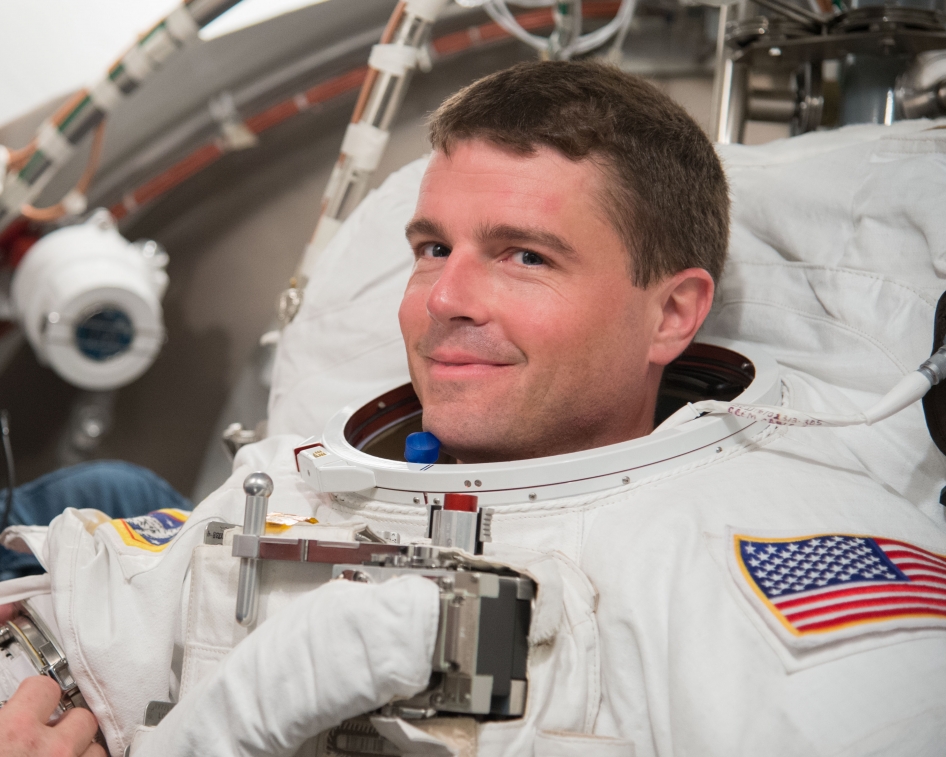
Reid Wiseman KF5LKT - Image credit NASA

Reid Wiseman KF5LKT – Image credit NASA

The Southend Echo reports on the contact between pupils at Winter Gardens Primary School in Canvey, Essex and the International Space Station.

The contact took place on October 8 having taken two years of preparation. It was organised by the South Essex Amateur Radio Society and involved a link-up with an amateur radio station in California, W6SRJ, who relayed the signal to and from the ISS while it was traveling over the USA at 27,600 km/h. The children were able to speak to astronaut Reid Wiseman KF5LKT who was using the ISS callsign NA1SS.

The newspaper article includes a picture of the school pupils with Pete sipple M0PSX, read it at
http://www.echo-news.co.uk/news/11526478.The_unforgettable_day_schoolchildren_spoke_to_an_astronaut_in_space/

Read a report on the contact at
http://www.essexham.co.uk/news/iss-winter-gardens-2014.html

Amateur Radio on the International Space Station (ARISS)
http://www.ariss.org/contact-the-iss.html

South Essex Amateur Radio Society
http://www.southessex-ars.co.uk/
https://www.facebook.com/pages/South-Essex-Amateur-Radio-Society/348979385223793

UK schools contact with International Space Station

Astronaut Alexander Gerst KF5ONO

Astronaut Alexander Gerst KF5ONO

On Wednesday, October 8 at 10:08:49 UT there will be an ARISS contact between astronaut Alexander Gerst KF5ONO on the International Space Station (ISS) and students at the Winter Gardens Primary School, Canvey, Essex and Pilton Bluecoat School, Barnstaple, Devon.

The ISS will be over the USA at the time and they will be making use of an amateur radio Telebridge Ground Station in California, W6SRJ, to actually make the link to the Space Station.

South Essex Amateur Radio Club (SEARS) http://www.southessex-ars.co.uk/

ISS Expedition 42 Poster Released

ISS Expedition 42 official crew poster

ISS Expedition 42 official crew poster

Radio amateur and astronaut Samantha Cristoforetti IZ0UDF has put the final touches to the official crew poster for the International Space Station (ISS) Expedition 42. It is now available to download

Samantha Cristoforetti IZ0UDF

Samantha Cristoforetti IZ0UDF

The poster parodies the popular The Hitchhiker’s Guide to the Galaxy by Douglas Adams and is without doubt the best ISS crew poster yet released.

USA’s Terry Virts and Russia’s Anton Shkaplerov portray the two-headed Zaphod Beeblebrox, Russia’s Alexander Samokutyaev is Humma Kavula, USA’s Butch Wilmore is Arthur Dent, Russia’s Elena Serova is Ford Prefect with Italy’s Samantha Cristoforetti as Trillian. NASA’s Robonaut 2 guest-stars as Marvin the Paranoid Android.

Samantha should launch from Baikonur in Kazakhstan on November 23, 2014 at 2059 UT (3:59pm EST) also flying with her in the Soyuz will be Anton Shkaplerov and Terry Virts. She is expected to return to Earth in May 2015.

Download the high resolution (57 MB) poster from
http://www.nasa.gov/sites/default/files/exp_42_sfaposternw-2014-07-007_highres.pdf

Samantha Cristoforetti IZ0UDF on Twitter https://twitter.com/AstroSamantha

ISS Expedition 42 http://www.nasa.gov/mission_pages/station/expeditions/expedition42/