LQSat Launched

A CZ-2D rocket launch

A CZ-2D rocket launch

LQSat was launched into a 656 km sun synchronous orbit at 0413 UT on Wednesday, October 7 from the Jiuquan Satellite Launch Center (JSLC) in Inner Mongolia on a Chang Zheng 2D (CZ-2D) rocket.

The satellite was developed by researchers and students at the Changchun Institute of Optics, Fine Mechanics and Physics (CIOMP) and carries an amateur radio payload.

LQSat is technology demonstrator measuring 40x40x60 cm with a mass of 50 kg and carries a 2 m resolution camera as the main payload.

The IARU coordinated downlink frequencies are
• 437.650 MHz at 0.5 watts (27 dBm) with either 25 WPM CW or 4800 bps MSK CSP packet data
• 2404 MHz at 1 watt (30 dBm) using 1 Mbps QPSK

Launch report http://www.nasaspaceflight.com/2015/10/china-launches-jilin-1-mission-long-march-2d/

New OSCAR Satellite Status Page

OSCAR Satellite Status Page

OSCAR Satellite Status Page

Thanks to the efforts of Joe KM1P and Peter 2E0SQL, and with the permission of David KD5QGR, we have set up a copy of the OSCAR satellite status page.

This page will be maintained by multiple volunteers, including myself, and we will be able to add and delete satellites as required, as well as keep information links current. It will take a few days to populate the database, but please begin using this page as soon as possible. In the near future the old page will point to this one for a while, until people get used to the new address.

There are still some satellites to add and delete, so this will be a work in progress for a bit. First and foremost we will delete the reentered sats, and add Fox-1A for next Thursday [Oct 8]!

73, Drew KO4MA
AMSAT VP Operations

OSCAR Satellite Status Page http://www.amsat.org/status

Online satellite orbital predictions http://www.amsat.org/amsat-new/tools/predict/

LQSat Launch Wednesday, October 7

A CZ-2D rocket launch

A CZ-2D rocket launch

Wednesday, October 7 should see the launch of LQSat which was developed by researchers and students at the Changchun Institute of Optics, Fine Mechanics and Physics (CIOMP) and carries an amateur radio payload.

The launch should take place sometime between 0405 and 0430 UT from the Jiuquan Satellite Launch Center (JSLC) in Inner Mongolia on a Chang Zheng 2D (CZ-2D) rocket.

LQSat is technology demonstrator 40x40x60 cm with a mass of 50 kg and carries a 2 m resolution camera as the main payload.

The IARU coordinated downlink frequencies are
• 437.650 MHz at 0.5 watts (27 dBm) with either 25 WPM CW or 4800 bps MSK CSP packet data
• 2404 MHz at 1 watt (30 dBm) using 1 Mbps QPSK

LAPAN-A2 FM and APRS satellite launched

LAPAN-A2 beacon - Iwan Nawi YC3BVG

LAPAN-A2 beacon – Iwan Nawi YC3BVG

The Indonesian amateur radio society ORARI report that on Monday, September 28, 2015 04:30 hours UT, the LAPAN-A2/ORARI satellite was launched from the Sriharikota Range (SHAR) of the Satish Dhawan Space Centre in India. Deployment took place  23 minutes later.
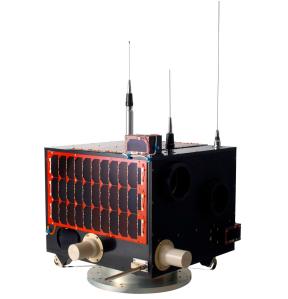
LAPAN-A2

LAPAN-A2

LAPAN-A2 is in a 650 km orbit with an inclination of 6 degrees. It takes about 110 minutes to orbit the Earth and should pass over Indonesia and other near equatorial locations 14 times a day.

The low inclination equatorial orbit means it will be receivable from about 30 degrees North to 30 degrees South. About a third of the world’s population, over 2.4 billion people, live within the coverage area of the satellite.

The ground station at the LAPAN Satellite Technology Centre in Rancabungur, Bogor has made contact with LAPAN-A2. There will now be a period of activation and testing of all the satellite systems and it is expected to be about a month before the amateur radio payload becomes available for general use.

The primary aims of the mission are Earth observation using an RGB camera and maritime traffic monitoring using AIS, both using frequencies outside the Amateur Satellite Service.

The IARU has coordinated these frequencies for LAPA-A2/ORARI:
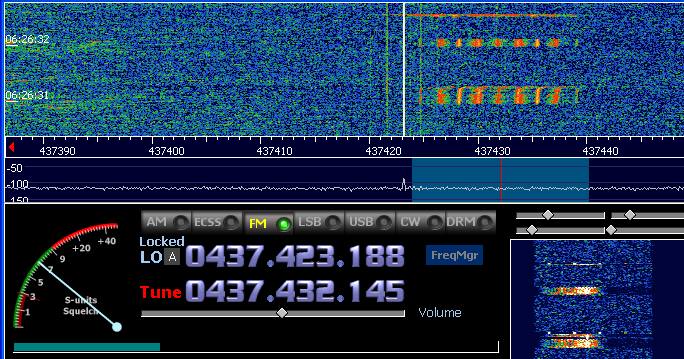
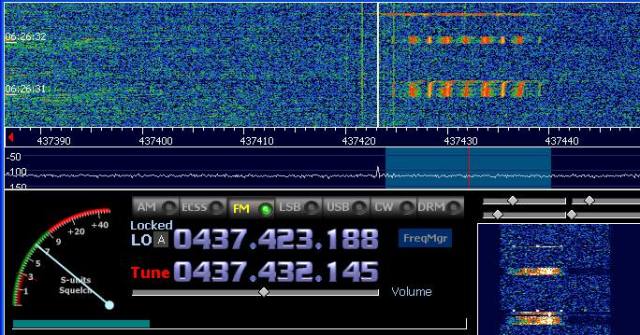
• 437.425 MHz telemetry beacon
• 435.880 MHz FM uplink
• 145.880 MHz FM downlink (5 watts)
• 145.825 APRS digipeater (5 watts)

The archipelago of Indonesia is part of the global “ring of fire” experiencing frequent natural disasters such as earthquakes, tsunamis, eruption of volcanoes, and floods. From past experience, the ground communication infrastructure is often damaged, limiting the ability to coordinate the aid effort in the stricken region. A satellite based telecommunication system is usually the only means of communication.

The LAPAN-A2 microsatellite carries the amateur radio short text message repeater (APRS) and a voice repeater. The APRS (Automatic Packet Reporting System ) and the voice communication payload is developed by LAPAN using the LAPAN-TUBSAT UHF/VHF radio heritage along with a COTS APRS modem. The primary application of APRS is intended for communications in support of disaster mitigation and relief efforts.

LAPAN-A2 on the Earth Observation Portal
https://directory.eoportal.org/web/eoportal/satellite-missions/l/lapan-a2

Listen to a recording of the 437.425 MHz telemetry signal at https://chirb.it/MrgLGy

Satellite tracking information https://amsat-uk.org/beginners/satellite-tracking/

AMSAT-ID Facebook Group https://www.facebook.com/groups/831872960241607/

Organisasi Amatir Radio Indonesia (ORARI) in Google English http://tinyurl.com/IndonesiaORARI

LAPAN-A2 paper
http://www.researchgate.net/publication/259844289_Development_of_Micro-satellite_Technology_at_the_Indonesian_National_Institute_of_Aeronautics_and_Space_%28LAPAN%29

The IARU Region 3 Conference takes place in Bali, Indonesia, October 12-16, 2015
https://amsat-uk.org/2015/08/21/iaru-region-3-act-on-band-plan-satellite/

Ofcom clarifies position on SES call signs

Ofcom-logo-col-tOfcom had said NO to Special Event Station (GB) callsigns being used in the bands above 440 MHz for Amateur Satellite or Terrestrial operation.

The RSGB intervened and Ofcom have now issued revised clarification – Operation above 440 MHz with SES (GB) calls is permitted, so is operation in the 5 MHz segments.

It appears the SES call sign application form OfW287 is rather old and doesn’t list all the available bands. Fortunately that doesn’t matter since the NoV issued for the SES call sign is not band specific.

Well done RSGB !

September 22 – Special Event Callsigns and Microwave Bands
http://www.southgatearc.org/news/2015/september/special_event_callsigns_and_microwave_bands.htm

UK Microwave Group Yahoo Reflector http://groups.yahoo.com/group/ukmicrowaves

The Radio Society of Great Britain is inviting all radio amateurs in the UK and Crown Dependencies to complete an online questionnaire. You can find the survey at http://www.rsgb.org/ar-survey

Essex Ham interviewed RSGB President John Gould G3WKL about the 2015 Amateur Radio Survey. Listen to the interview at http://www.essexham.co.uk/news/rsgb-survey-2015.html

LilacSat-2 FM Transponder Schedule

Receiving LilacSat-2, Sept 20, 2015 - Harbin Institute Of Technology Amateur Radio Club BY2HIT

Receiving LilacSat-2, Sept 20, 2015 Harbin Institute Of Technology Amateur Radio Club BY2HIT

Wei Mingchuan, BG2BHC, reports that the amateur radio FM voice transponder on the LilacSat-2 satellite should now be activated on a regular basis. LilacSat-2 is scheduled to switch on the FM transponder for 24 hours at about 2200 UT each Monday, Wednesday and Friday.

First LilacSat-2 infrared image Sept 24, 2015

First LilacSat-2 infrared image Sept 24, 2015

The FM transponder (and APRS) downlink is 437.200 MHz, remember the Doppler shift on the downlink during a pass will be about +/- 10 kHz. If your radio has selectable FM filters use the wider filter designed for 5 kHz deviation FM, sometimes referred to as a 25 kHz channel spacing filter.

LilacSat-2 was deployed into a 528 km by 551 km 97.5 degree inclination orbit. The NASA Orbital Lifetime Software indicates the satellite might remain in orbit for 18 years before reentry into the Earth’s atmosphere.

On September 24, 2015 the student team at the Harbin Institute of Technology successfully downloaded the first infrared image from the satellite.

Frequency information is given on the LilacSat-2 Radio Info page
http://lilacsat.hit.edu.cn/?page_id=257

Harbin Institute Of Technology Amateur Radio Club BY2HIT
Weibo: http://www.weibo.com/by2hit
QRZ: http://www.qrz.com/db/BY2HIT
Web in Google English: http://tinyurl.com/BY2HIT

AMSAT-UK LilacSat-2 page with tracking links https://amsat-uk.org/satellites/communications/lilacsat-2/

LilacSat-2 and some of the team

LilacSat-2 and some of the team