PocketQubes in SatMagazine

SatMagazine December 2014 PocketQube page 114The December 2014 edition of the free publication SatMagazine features an article on page 114 about PocketQubes by Tom Walkinshaw, Chief Executive Officer of the the Glasgow-based start-up PocketQube Shop.

Download the December 2014 SatMagazine from
http://www.satmagazine.com/

SatMagazine Archive
http://www.satmagazine.com/archive.php

PocketQube Shop featured in The Guardian newspaper http://www.theguardian.com/technology/2014/dec/07/tiny-space-satellite-make-at-home-pocketqube

PocketQube Shop http://www.pocketqubeshop.com/

RSGB Youth Committee Seek Input

Chair of RSGB Youth Committee Mike Jones 2E0MLJ

Chair of RSGB Youth Committee Mike Jones 2E0MLJ

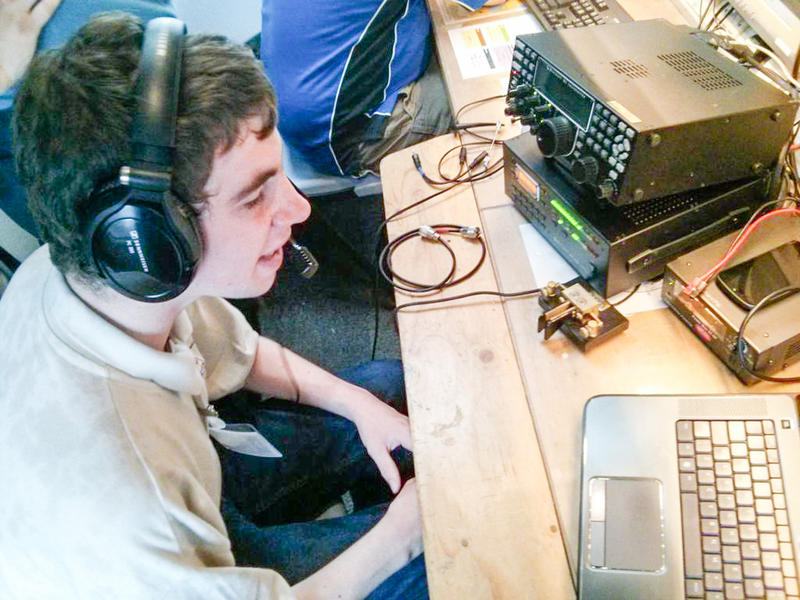
The new Chair of the RSGB Youth Committee Mike Jones 2E0MLJ seeks your opinions on some things that are planned for the forthcoming year.

The topics covered are:

• Youngsters on the Air 2015 DX (YOTA)
• Youngsters on the Air 2015 UK
• 2015 Isle of Man DXpedition – Note this is hoped to include Amateur Satellite operation

Read Mike’s message at
http://us5.campaign-archive1.com/?u=acc8d476eba710615541e5667&id=3bb3329aa2&e=5d4b3409c9

HAMSAT II – Dhruva Space and AMSAT India

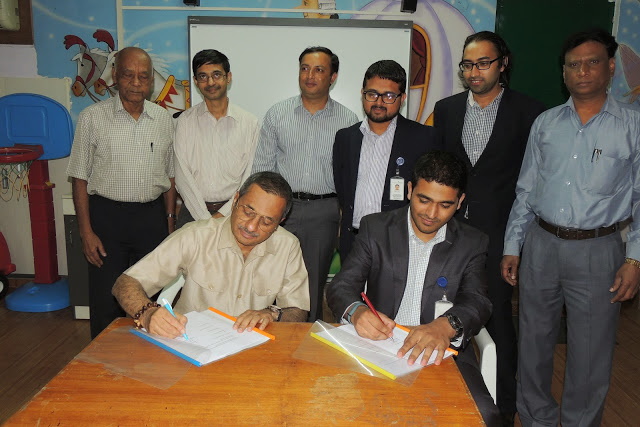
Signing of memorandum of understanding for HAMSAT II - Credit AMSAT India

Signing of memorandum of understanding for HAMSAT II – Credit AMSAT India

The Economic Times report Dhruva Space, a two-year-old start-up co-founded by space technologist and ham radio operator Sanjay Nekkanti VU3ISS/AB3OE, sealed a deal with AMSAT India on November 30, 2014 to develop HAMSAT II.
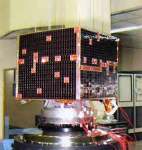
VUsat-OSCAR-52_HAMSAT

HAMSAT I – VO-52 – was a very popular amateur radio satellite

It will be the successor to HAMSAT VO-52 which went silent on July 11, 2014 due to the failure of the on-board lithium ion batteries. HAMSAT provided a valuable communications resource for the amateur radio community for over 9 years.

Dhruva’s satellites are expected to be launched on ISRO’s workhorse Polar Satellite Launch Vehicle (PSLV). Nekkanti said his team is working closely with the space organization for design approvals and testing of the satellite.

The AMSAT India Secretary Nitin Muttin, VU3TYG has released this statement:

We are pleased to announce that AMSAT India and Dhruva Space Pvt. Ltd. have signed a Memorandum of Understanding on November 30th 2014 to pursue the development of a follow up mission to HAMSAT launched in 2005 on-board the PSLV-C6. HAMSAT II is envisioned to fill the gap created by the recent end of life of HAMSAT and shall continue servicing the societal needs in disaster management, amateur/emergency radio communications and education.

Some of the contemplated payloads for HAMSAT II include:
• U/V Analog FM Transponder
• U/V Linear Transponder, 50 kHz
• APRS Digipeater
• Digitalker

Read The Economic Times article at
http://economictimes.indiatimes.com/articleshow/45354501.cms

AMSAT India http://amsatindia.org/

Thanks to Dinesh, AB3DC for the above information.
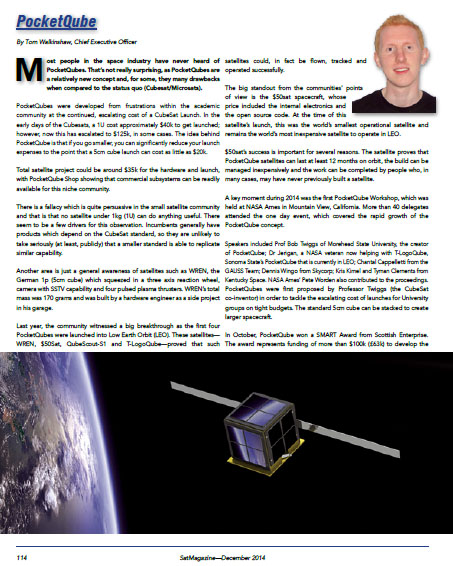
COSMOS-2491 RS-46

Dmitry Pashkov R4UAB reports that the COSMOS-2491 satellite carries RS-46 operating on 435.465 MHz and 435.565 MHz (+/- Doppler).

The satellite was launched on December 25, 2013 and is in a 1,515.8 km by 1,489.1 km 82.5 degree inclination orbit.

Watch COSMOS-2491/RS-46 (R4UAB)

Track COSMOS-2491 / RS-46 at http://www.n2yo.com/satellite/?s=39497

Listen for RS-46 online with the SUWS WebSDR located near London
https://amsat-uk.org/2014/08/15/suws-websdr-moves-to-new-site/

COSMOS-2499 Callsign RS-47 ! https://amsat-uk.org/2014/11/30/cosmos-2499-callsign-rs-47/

Dmitry Pashkov R4UAB
Web in Google English http://tinyurl.com/R4UAB-English
Twitter https://twitter.com/R4UAB

COSMOS-2499 Callsign RS-47 !

COSMOS-2499 signals received by Dmitry Pashkov R4UAB

COSMOS-2499 signals received by Dmitry Pashkov R4UAB

COSMOS-2499 (2014-028E) was launched on May 23, 2014 and is now in a 1,510.6 km by 1,158.8 km 82.4 degree orbit. Dmitry Pashkov R4UAB has received signals from the satellite on approximately 435.465 MHz and 435.565 MHz (+/- Doppler). On November 30 the satellite started identifying itself in Morse code on 435.465 MHz as RS-47.

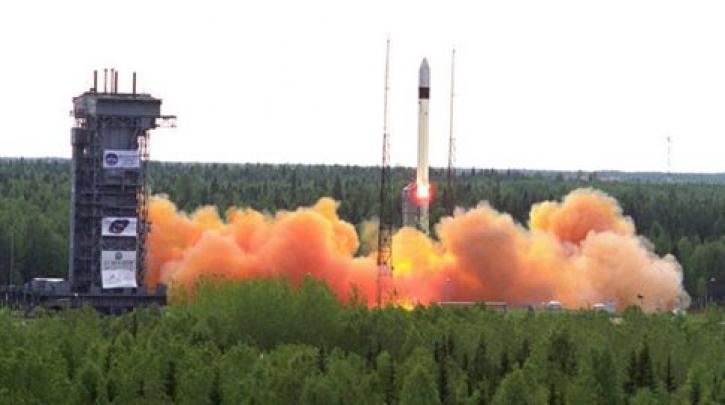
Launch of Kosmos 2499There has been some mystery concerning the purpose of COSMOS-2499. In a post updated November 20, 2014 Anatoly Zak @RussianSpaceWeb wrote: Ground observations indicated that the mystery satellite had not exceeded 0.3 meters in size. Previously, two Rockot launches with trios of Rodnik/Strela-3M launches also carried Yubileiny (a.k.a. MiR) experimental satellites with a reported mass from 48 to 100 kilograms. As with the previous launch, observers were at a complete loss about the possible purpose of the satellite.

Cosmos-2499 has made a number or orbital changes since it was first launched. For further information see http://www.russianspaceweb.com/Cosmos-2499.html

Watch RS-47 / COSMOS 2499 / 2014-028E (R4UAB)

Track COSMOS-2499 / RS-47 at http://www.n2yo.com/?s=39765

Listen for RS-47 online with the SUWS WebSDR located near London
https://amsat-uk.org/2014/08/15/suws-websdr-moves-to-new-site/

RS-47 Telemetry data http://www.dk3wn.info/p/?p=52752

Dmitry Pashkov R4UAB describes receiving the 435.465 MHz and 435.565 MHz signals at http://tinyurl.com/R4UAB-COSMOS-2499

OSCAR Locator App

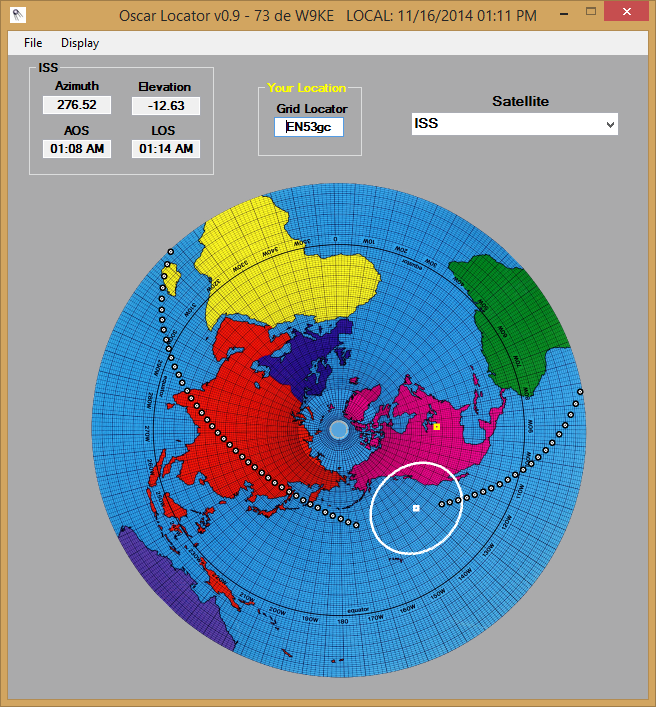
OscarLocator-1Tom Doyle W9KE has developed a Windows satellite tracking App that reproduces the graphical display of the original cardboard OSCARLOCATOR .

Most tracking programs use an equirectangular projection which is by far the easiest to program and shows the entire Earth at once. A 3D model is often used which helps visualize orbits but does not show the entire Earth at the same time.

Tom remembers having an easier time visualizing the orbits back in the day (1970’s) when amateurs used cardboard OSCAR Locators with overlays. This Windows program lets you visualize orbits OSCAR Locator style.

Download the OSCAR Locator from http://www.tomdoyle.org/OscarLocator

Other Apps by Tom can be downloaded via http://www.tomdoyle.org/

40 Years of Tracking OSCAR-7 https://amsat-uk.org/2014/11/09/40-years-tracking-oscar-7/