CubeSats: good things come in small packages

CubeSats may be small but they have big ambitions. Credit: Aalborg University

CubeSats may be small but they have big ambitions. Credit: Aalborg University

By Ben Gilliland
For the vast majority of Earth’s history it had but one satellite – the Moon – but that all changed in 1957 when, on October 4, the Soviet Union launched the first artificial satellite into Earth’s orbit.Sputnik-1 was a 58cm (23 inch) sphere that contained two 1-watt radio transmitters and three batteries (two for powering the radios and one to power a cooling fan). The 83kg aluminum sphere emitted radio signals that were transmitted back to Earth via four 2.4m-2.9m “whip” antenna.

Its radio did little more than beep at Earth, but its signal was picked up by amateur “ham radio” enthusiasts all over the world.

In many ways, Sputnik was not just the world’s first satellite, it was also the first “people’s satellite” – anyone with suitable radio equipment could listen to the plucky little satellite as, for 22 days, it whizzed around the globe at 29,000km/h (18,000mph).

Sputnik-1 kick-started the space race and the satellite industry, but was really little more than a transmitter that beeped. Credit: NASA

Sputnik-1 kick-started the space race and the satellite industry, but was really little more than a transmitter that beeped. Credit: NASA

America’s first satellite was even smaller. Launched on January 31, 1958, and weighing in at just 14kg, Explorer-1 boasted several scientific instruments including a cosmic ray detector, five temperature sensors and micrometeor detectors.But satellites didn’t stay small, simple and accessible for very long.

As they increased in complexity, so they increased in size. From the size of a beach ball, satellites were soon the size of a family cars, then buses and (in the case of the International Space Station) the size of a football field.

With increased size and complexity came increased costs.
It can take a decade and hundreds of millions of pounds to develop an Earth observation satellite – but that is just the tip of the financial iceberg. Launching a satellite weighing several tonnes into orbit can cost between £30million and £250million ($50million to $400million) and just paying for the radio bandwidth needed to get your information back to Earth can cost up to £1million ($1.6million) a year. That’s not taking into account the cost of ground operations and maintenance of the satellite.

Continue reading

TechEdSat – Challenge for Space Hackers – April 21-22

The International Space Apps Challenge is a 2 day technology development event, taking place April 21-22, during which citizens from around the world will work together to solve current challenges relevant to both space exploration and social need.

TechEdSat

TechEdSat

TechEdSat is an Amateur Radio CubeSat that will be launched on July 21, 2012 from Tanegashima, Japan aboard the HTV-3 ISS resupply mission. TechEdSat will be among the first CubeSats to be deployed from the ISS, and is investigating the use of Plug and Play software/hardware and intersatellite communication via Iridium and Orbcomm networks.

For this challenge, space hackers must implement a command and control system, utilizing both the OrbComm and Iridium modems as uplink and downlink. The software should be modular to facilitate the easy implementation of future commands, and should be fault tolerant.

A ground segment of the software should include the ability for a laptop (or bonus points for an Apple or Android phone) to issue commands to the spacecraft over Iridium/Orbcomm. The spacecraft segment should be written for a Linux environment able to listen for commands, and have the ability to send arbitrary data packages back to the ground.

Bonus points for relaying data received from the spacecraft automatically to Twitter.

Space hackers will be issued interface documentation for Iridium and OrbComm modems, and engineering development hardware for testing. This software has the potential to fly on the TechEdSat mission if completed.

Source: A New Command and Control Protocol for CubeSats
http://spaceappschallenge.org/challenge/new-command-and-control-protocol-cubesats/

International Space Apps Challenge http://spaceappschallenge.org/

TechEdSat to use ‘SatPhone’ http://www.uk.amsat.org/5018

Radio New Zealand – KiwiSpace Interview

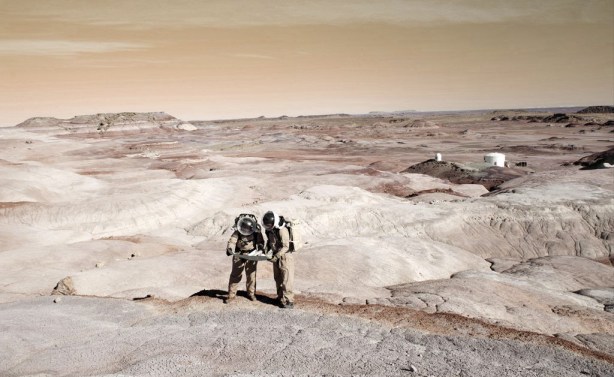
A group of New Zealanders will be taking part on an epic journey. They’re going to Mars – or at least a simulation of what a space station on Mars would be like.

Six crew-members will be heading deep into the Utah desert from April 22 to May 6, 2012,
to undertake a 2-week mission of exploration and research at the Mars Desert Research Station.

Listen to the Radio New Zealand interview at http://www.radionz.co.nz/national/programmes/afternoons/20120404

KiwiMars http://www.kiwispace.org.nz/display/MDRS/The+Science+beyond+KiwiMars+Expedition

KiwiSpace http://www.kiwispace.org.nz/

HumSAT-D CubeSat

HumSAT Mission Concept

HumSAT Mission Concept

HumSAT-D is a 1U CubeSat mission developed by the University of Vigo. It is planning to use MSK telemetry and a CW beacon on UHF. The main mission is educational: to provide a hands-on experience to the students in the complete process of developing a space mission.

The other goal is to demonstrate the validity of the concept of HumSAT. A new subsystem to collect data from sensors located on the ground, store on-board and transmit it to ground stations will be developed and validated in orbit.

Universities and amateurs are invited to develop their own sensors compatible with HumSAT.

HumSAT-D is planning a launch from Russia into a Sun Synchronous Orbit (SSO) at 700km.

HumSAT System

The main purpose of the HumSAT system is the development of a satellite-based system for connecting a set of users with a network of worldwide distributed sensors which they have previously deployed.

Sensors will be responsible for acquiring user data and for transmitting it to the satellites through an standard radio interface (SSI interface, definition of this interface is published here). Users will be able to define their own sensors, for monitoring different types of parameters; for example, water temperature or wind speed.

For retrieving data from the satellites, the GENSO network of ground stations will be one of the core components of the data distribution system. Several universities from different ESA member states, Japan and USA are coperating in this project, whose second release (R2) is expected to provide the functionalities that the HumSAT system will require. For more information about the GENSO project, please visit the www.genso.org website.

Once data has been transported by HumSAT satellites, authorized users will be able to access it through an Internet connection. Several security restrictions shall be applied for guaranteeing a correct access to the data gathered.

HumSAT http://www.humsat.org/

HumSAT: example for international cooperation in small satellite missions
http://www.oosa.unvienna.org/pdf/bst/ISU-SSP2011/Small-Sats-_v1-Graz-26-07-2011-ISU.pdf

IARU Amateur Satellite Frequency Coordination pages hosted by AMSAT-UK http://www.amsat.org.uk/iaru/

Next ISS School contact -St Anthony's Parish Primary School, Australia

Space station
Space station


03 April at 08:15 UTC

St Anthony’s Parish Primary School, Canberra, Australia – Dan Burbank, KC5ZSX

Telebridge station VK5ZAI in Australia will call NA1SS at approximately 08:15 UTC.


St Anthony’s School is located in the suburb of Wanniassa, which is part of the central region of the Tuggeranong Valley in the Australian Capital Territory. Currently the school has an enrolment of 528 students with generally three classes in each of 7 Year levels from Kindergarten (the first year of primary school in the ACT) to Year 6. Our average class size is 1 teacher to 26 students. We have a strong Integrated Unit of Inquiry programs that primarily focus on authentic experiences that the ARISS program would facilitate.


Students will ask as many of the following questions as time allows:
1. What is the most interesting thing you have ever seen out of the Space Station window?
2. What do you love most about outer space and miss about home?
3. What are the challenges you face in zero gravity?
4. If someone is injured, what do you do?
5. What is your job in outer space?
6. Is there enough light in space or do you need to use special glasses?
7. I live really close to Tidbinbilla Space Tracking Station. Is Tidbinbilla involved with this mission?
8. How long can you stay in space before it effects your health?
9. I know you can see the Great Wall of China, but can you see any other interesting landmarks on Earth?
10. What do you do in space to entertain yourself?

As always, the ISS will be audible to anyone listening in on the 145.80 MHz downlink.

*Note* – for telebridge contacts, the ground station will NOT be near the school that is contacting the ISS.

Please note, the amateur equipment on the ISS will be turned off prior to the beginning of the contact. It will be returned to service as quickly as possible.

 ARISS is an international educational outreach program partnering the participating space agencies, NASA, Russian Space Agency, ESACNESJAXA, and CSA, with the AMSAT and IARU organizations from participating countries. ARISS offers an opportunity for students to experience the excitement of Amateur Radio by talking directly with crewmembers on-board the International Space Station. Teachers, parents and communities see, first hand, how Amateur Radio and crewmembers on ISS can energize youngsters’ interest in science, technology, and learning. Further information on the ARISS programme is available on the website http://www.rac.ca/ariss (graciously hosted by the Radio Amateurs of Canada). Information about the next scheduled ARISS contact can be found at http://www.rac.ca/ariss/upcoming.htm#NextContact.


Tuesday, April 3, 2012

Next ISS School contact -St Anthony’s Parish Primary School, Australia

Space station
Space station


03 April at 08:15 UTC

St Anthony’s Parish Primary School, Canberra, Australia – Dan Burbank, KC5ZSX

Telebridge station VK5ZAI in Australia will call NA1SS at approximately 08:15 UTC.


St Anthony’s School is located in the suburb of Wanniassa, which is part of the central region of the Tuggeranong Valley in the Australian Capital Territory. Currently the school has an enrolment of 528 students with generally three classes in each of 7 Year levels from Kindergarten (the first year of primary school in the ACT) to Year 6. Our average class size is 1 teacher to 26 students. We have a strong Integrated Unit of Inquiry programs that primarily focus on authentic experiences that the ARISS program would facilitate.


Students will ask as many of the following questions as time allows:
1. What is the most interesting thing you have ever seen out of the Space Station window?
2. What do you love most about outer space and miss about home?
3. What are the challenges you face in zero gravity?
4. If someone is injured, what do you do?
5. What is your job in outer space?
6. Is there enough light in space or do you need to use special glasses?
7. I live really close to Tidbinbilla Space Tracking Station. Is Tidbinbilla involved with this mission?
8. How long can you stay in space before it effects your health?
9. I know you can see the Great Wall of China, but can you see any other interesting landmarks on Earth?
10. What do you do in space to entertain yourself?

As always, the ISS will be audible to anyone listening in on the 145.80 MHz downlink.

*Note* – for telebridge contacts, the ground station will NOT be near the school that is contacting the ISS.

Please note, the amateur equipment on the ISS will be turned off prior to the beginning of the contact. It will be returned to service as quickly as possible.

 ARISS is an international educational outreach program partnering the participating space agencies, NASA, Russian Space Agency, ESACNESJAXA, and CSA, with the AMSAT and IARU organizations from participating countries. ARISS offers an opportunity for students to experience the excitement of Amateur Radio by talking directly with crewmembers on-board the International Space Station. Teachers, parents and communities see, first hand, how Amateur Radio and crewmembers on ISS can energize youngsters’ interest in science, technology, and learning. Further information on the ARISS programme is available on the website http://www.rac.ca/ariss (graciously hosted by the Radio Amateurs of Canada). Information about the next scheduled ARISS contact can be found at http://www.rac.ca/ariss/upcoming.htm#NextContact.


Tuesday, April 3, 2012