ISS Slow Scan TV Active on Weekend of April 11

ISS SSTV image 9/12 received by Frank Heritage M0AEU at 19:21 UT on Dec 18, 2014

ISS SSTV image 4/12 received by Frank Heritage M0AEU at 19:21 UT on Dec 18, 2014

The Russian Federal Space Agency (Roscosmos) has announced another round of amateur radio Slow Scan Television (SSTV) activity from the International Space Station (ISS). It will commemorate the anniversary of the first human spaceflight by Yuri Gagarin which took place on April 12, 1961.

Continuous operation, using the call sign RS0ISS, is expected to start at 1000 UT on Saturday, April 11 and continue until 2130 UT on Sunday, April 12.

ISS SSTV image 9/12 received by Martin Ehrenfried G8JNJ using the SUWS WebSDR on Dec 18, 2014

ISS SSTV image 9/12 received by Martin Ehrenfried G8JNJ using the SUWS WebSDR on Dec 18, 2014

Twelve different images will be sent on 145.800 MHz FM using the SSTV mode PD180, with a 3-minute off time between transmissions.

One of the photos shows the commemorative diploma created by PZK, the national Polish Amateur Radio society, on the occasion of the 80th anniversary of the birth of first cosmonaut Yuri Gagarin.

The equipment used will be the Kenwood D710 transceiver located in the Russian Service Module. It is thought the equipment may be producing about 25 watts output which should provide a very strong signal.

Plans are being discussed for transmitting new images from space enthusiasts around the world in the coming months. Additional details will be released.

The images received by amateurs world-wide during previous transmissions can be seen at http://www.spaceflightsoftware.com/ARISS_SSTV/ and you are invited to upload any pictures you receive during the upcoming transmissions.

In the UK newspaper the Daily Mail, Jonathan O’Callaghan wrote about how 22-year-old Radek Karwacki, an AMSAT-UK member, received pictures from the ISS using a £10 ($15) RTL-SDR dongle and a dipole antenna, see https://amsat-uk.org/2015/02/04/iss-sstv-in-uk-press/

International Space Station - Image Credit NASA

International Space Station – Image Credit NASA

All you need to do to receive SSTV pictures direct from the space station is to connect the audio output of a scanner or amateur radio transceiver via a simple interface to the soundcard on a Windows PC or an Apple iOS device, and tune in to 145.800 MHz FM. You can even receive pictures by holding an iPhone next to the radio loudspeaker.

On Windows PC’s the free application MMSSTV can be used to decode the signal, on Apple iOS devices you can use the SSTV app for compatible modes. (Note: see comments below about MMSSTV adjustments which may be needed to reduce picture slant)

The ISS puts out a strong signal on 145.800 MHz FM and a 2m handheld with a 1/4 wave antenna will be enough to receive it. The FM transmission uses 5 kHz deviation which is standard in much of the world apart from the British Isles and Europe where 2.5 kHz deviation is more common.

Many FM rigs can be switched been wide and narrow deviation FM filters. For best results you should select the wider deviation filters. Handhelds all seem to have a single wide filter fitted as standard.

The ISS Fan Club website will show you when the space station is in range.

ISS SSTV image 12/12 received by Martin Ehrenfried G8JNJ using the SUWS WebSDR Dec 18, 2014

ISS SSTV image 12/12 received by Martin Ehrenfried G8JNJ using the SUWS WebSDR Dec 18, 2014

Paul Turner G4IJE, co-developer of the SSTV PD modes, says regarding the MMSSTV PD180 mode: “Don’t forget to either enable “Always show RX viewer” or use the “Picture viewer” (magnifying glass icon) to show the picture at its real resolution of 640 x 496. If you just view as normal you will only see 320 x 248 resolution, which kind of defeats the object of using a high resolution mode.”

In Option > Setup MMSSTV (O) > RX make sure Auto-slant is ticked.

On the AMSAT-BB Rick W2JAZ and Alan WA4SCA comment on the need to set the MMSSTV sound card setting to 48 kHz instead of the default 44.100 kHz
• Options
• Setup
• Misc
• Then the Clock section at the bottom of the page

The MMSSTV default setting may need to be set to 24000 (exactly half of the sound card setting). You then should get good clean images.

The sound card adjustments will vary slightly depending on the version of the OS you are running, but usually will be under the advanced properties for the device. You can probably use a higher sampling rate for the sound card so long as it is a power of 2 multiple (2,4,8, etc) of the value in MMSSTV. For instance 192k (8x) has no issues. The same applies to most similar software.

You can receive the SSTV transmissions online using the SUWS WebSDR remote receiver located near London along with the MMSSTV software https://amsat-uk.org/2014/08/15/suws-websdr-moves-to-new-site/

ISS Fan Club – Tracking / Predictions http://www.issfanclub.com/

Free MMSSTV Slow Scan TV software http://hamsoft.ca/pages/mmsstv.php

iOS SSTV App https://itunes.apple.com/gb/app/sstv/id387910013

For more on Slow Scan Television SSTV, see this article SSTV – The Basics
http://www.essexham.co.uk/sstv-the-basics

How to be successful with the ISS Slow Scan Television (SSTV) imaging system
http://www.marexmg.org/fileshtml/howtoisssstv.html

IZ8BLY Vox Recoder, enables you to record the signals from the ISS on 145.800 MHz while you’re away at work http://antoninoporcino.xoom.it/VoxRecorder/

ARISS Slow Scan TV (SSTV) Blog and Gallery http://ariss-sstv.blogspot.co.uk/

Those capturing images are encouraged to upload them to
http://www.spaceflightsoftware.com/ARISS_SSTV/submit.php

Information on the MAI-75 SSTV experiment
http://www.energia.ru/eng/iss/researches/education-26.html

Video showing reception of SSTV using the FUNcube Dongle Pro SDR and SDR-RADIO going into Virtual Audio Cable (VAC) then to MMSSTV software https://www.youtube.com/watch?v=K6MOrX9iZCk

ISS SSTV received online with SUWS WebSDR
https://amsat-uk.org/2014/09/06/iss-sstv-on-suws-websdr/

ISS SSTV 1/12 received by Martin Ehrenfried G8JNJ using the SUWS WebSDR Dec 18, 2014
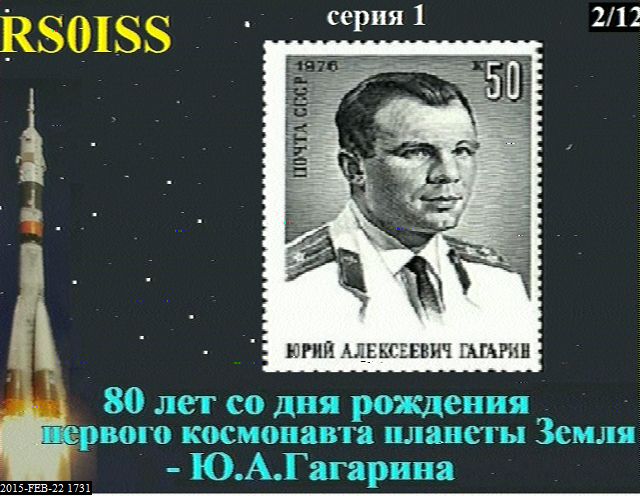
ISS SSTV 1/12 received by Martin Ehrenfried G8JNJ using the SUWS WebSDR Dec 18, 2014

Radio ham over the moon at decoding space message

International Space Station - Image Credit NASA

International Space Station – Image Credit NASA

The Kent and Sussex Courier newspaper reports a picture from space has been decoded by an over-the-moon radio amateur from Tunbridge Wells.

Colin Bowman M0NLP spoke to his local newspaper after receiving a Slow Scan TV (SSTV) picture from the International Space Station (ISS) and in doing so gained some good publicity for the hobby.

He told the Courier: “I went mad when I realised I had decoded an entire picture.”

“I had to e-mail my children straight away, though, as they are both licensed amateurs as well and my daughter has just started a new job in the space industry in Turin.”

Read the full story at
http://www.courier.co.uk/Tunbridge-Wells-radio-man-moon-decoding-space/story-26160562-detail/story.html

ISS images received by radio amateurs world-wide are at http://www.spaceflightsoftware.com/ARISS_SSTV/

Find out more about ISS SSTV and links to decoding software at
https://amsat-uk.org/2015/02/11/more-iss-slow-scan-tv/

ISS SSTV in a Brazilian School

Paulo PV8DX of AMSAT-BR turned the recent Slow Scan TV transmissions from the International Space Station (ISS) into an education outreach opportunity for amateur radio.

On Monday, February 23, 2015 at the Gonçalves Dias school he explained amateur radio to the students and demonstrated receiving an ISS SSTV picture on 145.800 MHz FM.

The ISS pass he received did not produce a strong signal and only part of the picture was captured but as can be seen from the video the students were enthusiastic and excited to be receiving a signal from space.

Paulo expressed the hope that the ISS will send images on school days more often.

Watch ISS – SSTV , By PV8DX

AMSAT-BR https://sites.google.com/site/amsatbr/

Information on receiving ISS SSTV https://amsat-uk.org/2015/02/11/more-iss-slow-scan-tv/

Stunning Results from ISS SSTV

ISS SSTV image 2 received by Andrew Garratt M0NRD Feb 22, 2015

ISS SSTV image 2 received by Andrew Garratt M0NRD February 22, 2015

The ISS Slow Scan television Transmissions have already produced some great pictures, more will be sent Monday, February 23 on 145.800 MHz FM until 2130 UT.

On the AMSAT Bulletin Board (AMSAT-BB) Clint Bradford K6LCS posted:

Receiving SSTV from the ISS really CAN be simple: For my first time ever, I simply fired up a $3 iOS app, and held my iPod touch near my Yaesu FT-60R’s speaker, and downloaded one of the images from the ISS.

I didn’t think there was too much left in the hobby to excite me – but I was WRONG!!!

Greg KO6TH said “I’ve never received a clearer SSTV picture from anywhere, let alone outer space!”

Twelve different images depicting space pioneer Yuri Gagarin – the first human to orbit Earth – are being sent on 145.800 MHz using the SSTV mode PD180, with a 3-minute off time between transmissions.

The transmitter on the ISS uses 5 kHz deviation FM. If your rig has selectable FM filters (most mobiles do) make sure you choose the wider setting designed for 20 or 25 kHz channel spacing, usually marked FM or FMW.

Images received so far by radio amateurs world-wide are at
http://www.spaceflightsoftware.com/ARISS_SSTV/

Find out more about receiving these transmissions and links to decoding software at
https://amsat-uk.org/2015/02/11/more-iss-slow-scan-tv/

More ISS Slow Scan TV Activity

ISS SSTV image 9/12 received by Frank Heritage M0AEU at 19:21 UT on Dec 18, 2014

ISS SSTV image 4/12 received by Frank Heritage M0AEU at 19:21 UT on Dec 18, 2014

The Russian Federal Space Agency (Roscosmos) has announced another round of amateur radio Slow Scan Television (SSTV) activity from the International Space Station (ISS) will take place. Continuous operation, using the call sign RS0ISS, is expected during Sunday, February 22 and Monday, February 23.

ISS SSTV image 9/12 received by Martin Ehrenfried G8JNJ using the SUWS WebSDR on Dec 18, 2014

ISS SSTV image 9/12 received by Martin Ehrenfried G8JNJ using the SUWS WebSDR on Dec 18, 2014

Twelve different images will be sent on 145.800 MHz FM using the SSTV mode PD180, with a 3-minute off time between transmissions.

One of the photos shows the commemorative diploma created by PZK, the national Polish Amateur Radio society, on the occasion of the 80th anniversary of the birth of first cosmonaut Yuri Gagarin.

The equipment used will be the Kenwood D710 transceiver located in the Russian Service Module. It is thought the equipment may be producing about 25 watts output which should provide a very strong signal.

Plans are being discussed for transmitting new images from space enthusiasts around the world in the coming months. Additional details will be released.

The images received by amateurs world-wide during previous transmissions can be seen at http://www.spaceflightsoftware.com/ARISS_SSTV/ and you are invited to upload any pictures you receive during the upcoming transmissions.

In the UK newspaper the Daily Mail, Jonathan O’Callaghan wrote about how 22-year-old Radek Karwacki, an AMSAT-UK member, received pictures from the ISS using a £10 ($15) RTL-SDR dongle and a dipole antenna, see https://amsat-uk.org/2015/02/04/iss-sstv-in-uk-press/

International Space Station - Image Credit NASA

International Space Station – Image Credit NASA

All you need to do to receive SSTV pictures direct from the space station is to connect the audio output of a scanner or amateur radio transceiver via a simple interface to the soundcard on a Windows PC or an Apple iOS device, and tune in to 145.800 MHz FM. You can even receive pictures by holding an iPhone next to the radio loudspeaker.

On Windows PC’s the free application MMSSTV can be used to decode the signal, on Apple iOS devices you can use the SSTV app for compatible modes.

The ISS puts out a strong signal on 145.800 MHz FM and a 2m handheld with a 1/4 wave antenna will be enough to receive it. The FM transmission uses 5 kHz deviation which is standard in much of the world apart from the British Isles and Europe where 2.5 kHz deviation is more common.

Many FM rigs can be switched been wide and narrow deviation FM filters. For best results you should select the wider deviation filters. Handhelds all seem to have a single wide filter fitted as standard.

The ISS Fan Club website will show you when the space station is in range.

ISS SSTV image 12/12 received by Martin Ehrenfried G8JNJ using the SUWS WebSDR Dec 18, 2014

ISS SSTV image 12/12 received by Martin Ehrenfried G8JNJ using the SUWS WebSDR Dec 18, 2014

Paul Turner G4IJE, co-developer of the SSTV PD modes, says regarding the MMSSTV PD180 mode: “Don’t forget to either enable “Always show RX viewer” or use the “Picture viewer” (magnifying glass icon) to show the picture at its real resolution of 640 x 496. If you just view as normal you will only see 320 x 248 resolution, which kind of defeats the object of using a high resolution mode.”

On the AMSAT-BB Rick W2JAZ and Alan WA4SCA comment on the need to set the MMSSTV sound card setting to 48 kHz instead of the default 44.100 kHz
• Options
• Setup
• Misc
• Then the Clock section at the bottom of the page

The MMSSTV default setting may need to be set to 24000 (exactly half of the sound card setting). You then should get good clean images.

The sound card adjustments will vary slightly depending on the version of the OS you are running, but usually will be under the advanced properties for the device. You can probably use a higher sampling rate for the sound card so long as it is a power of 2 multiple (2,4,8, etc) of the value in MMSSTV. For instance 192k (8x) has no issues. The same applies to most similar software.

You can receive the SSTV transmissions online using the SUWS WebSDR remote receiver located near London along with the MMSSTV software https://amsat-uk.org/2014/08/15/suws-websdr-moves-to-new-site/

ISS Fan Club – Tracking / Predictions http://www.issfanclub.com/

Free MMSSTV Slow Scan TV software http://hamsoft.ca/pages/mmsstv.php

iOS SSTV App https://itunes.apple.com/gb/app/sstv/id387910013

For more on Slow Scan Television SSTV, see this article SSTV – The Basics
http://www.essexham.co.uk/sstv-the-basics

How to be successful with the ISS Slow Scan Television (SSTV) imaging system
http://www.marexmg.org/fileshtml/howtoisssstv.html

IZ8BLY Vox Recoder, enables you to record the signals from the ISS on 145.800 MHz while you’re away at work http://antoninoporcino.xoom.it/VoxRecorder/

ARISS Slow Scan TV (SSTV) Blog and Gallery http://ariss-sstv.blogspot.co.uk/

Information on the MAI-75 SSTV experiment
http://www.energia.ru/eng/iss/researches/education-26.html

Video showing reception of SSTV using the FUNcube Dongle Pro SDR and SDR-RADIO going into Virtual Audio Cable (VAC) then to MMSSTV software https://www.youtube.com/watch?v=K6MOrX9iZCk

ISS SSTV received online with SUWS WebSDR
https://amsat-uk.org/2014/09/06/iss-sstv-on-suws-websdr/

ISS SSTV 1/12 received by Martin Ehrenfried G8JNJ using the SUWS WebSDR Dec 18, 2014

ISS SSTV 1/12 received by Martin Ehrenfried G8JNJ using the SUWS WebSDR Dec 18, 2014

ISS ham radio SSTV in UK press

International Space Station - Image Credit NASA

International Space Station – Image Credit NASA

The Daily Mail reports that 22-year-old Radoslaw Karwacki received the recent amateur radio Slow Scan Television (SSTV) transmissions from the ISS

ISS SSTV image 9/12 received by Radek Karwacki on February 1, 2015

ISS SSTV image 9/12 received by Radek Karwacki on February 1, 2015

Radoslaw (Radek) used an RTL-SDR dongle costing about £10 ($15) to receive the SSTV signal on 145.800 MHz FM during the weekend of January 31 to February 1. The antenna was a simple dipole and he used the free SDRSharp and MMSSTV software to receive and display the image.

‘These images are not transmitted regularly. I was really lucky to receive them, because it was my first experience with this kind of equipment,’ he told MailOnline.

‘I blindly tuned in on that frequency during ISS flyby and happened to receive the signal.’

Read the article by Daily Mail Science and Technology reporter Jonathan O’Callaghan at
http://www.dailymail.co.uk/sciencetech/article-2939725/How-chat-astronauts-aboard-ISS-USB-dongle-antenna-lets-Polish-man-receive-images-cosmonauts.html

Radoslaw Karwacki’s original Reddit post and comments
http://www.reddit.com/r/RTLSDR/comments/2uibm1/i_received_these_images_from_the_iss_on_145800mhz/

ISS SSTV https://amsat-uk.org/2015/01/31/iss-sstv-operational/

How to receive ISS SSTV https://amsat-uk.org/2015/01/29/iss-sstv-this-weekend/

What is Amateur Radio ? http://www.essexham.co.uk/what-is-amateur-radio