Fram2 Mission Launched

Rabea Rogge LB9NJ / KD3AID - Photo credit DLR

Rabea Rogge LB9NJ / KD3AID – Photo credit DLR

A SpaceX rocket carrying radio amateur Rabea Rogge LB9NJ / KD3AID and three other astronauts launched from Pad 39A at the Kennedy Space Center on April 1 at 0146 GMT on the Fram2 mission. It is the first polar-orbit human spaceflight mission to explore Earth.

During the mission Rabea will be transmitting amateur radio Robot 36 Slow Scan TV (SSTV) images on 437.550 MHz (+/- 10 kHz Doppler shift) starting April 2. Operation will be 36 seconds on and 36 seconds off.

The images are transmitted as part of a competition for students. Please do not post your SSTV images on Social Media or share with others until 72 hours after the completion of the Fram2 mission.

ARISS will provide special commemorative certificates for those who upload their Fram2 SSTV images to the ARISS SSTV Gallery. Certificates will be delivered after the completion of the Fram2 mission.

If possible record all your passes. You can always generate an image later with the recording. Particularly if you have an issue with your audio into your SSTV software.

There are several challenges in receiving the images,  the low transmit power, variations of antenna orientation, and a short, 3-day mission duration, with only a limited time assigned for the SSTV operation. Are you up for the challenge? 📡

Watch a recording made by Robbie Ei2iP of the amateur radio downlink during the contact on April 1 at 0728 GMT between Fram2 astronaut Rabea Rogge LB9NJ / KD3AID and students at the Technical University Berlin (note unexpected frequency change).

Watch the Technical University Berlin video of the contact

Operations Frequency: 437.550 MHz FM (+/- 10 kHz Doppler shift).

SSTV Mode: Robot 36

ARISS are livestreaming orbital predictions for the Fram2 mission at http://live.ariss.org/

Orbital predictions, select Fram2Ham https://www.amsat.org/track/

Fram2 TLEs (also known as Keplerian, or Orbital Elements) https://www.ariss.org/keps.html

See the pictures received in the ARISS SSTV Gallery at https/ariss-usa.org/ARISS_SSTV/

Fram2Ham https://fram2ham.com/

First human Spaceflight to Earth’s polar regions https://f2.com/

Fram2Ham on Discord https://discord.com/invite/GYQzmSh5sp

Student competition details https://fram2ham.com/wp-content/uploads/2025/02/amapay_user_manual-ver-2-7-2025.pdf

Follow Rabea on X https://x.com/rprogge

Follow Chun Wang on X https://x.com/satofishi

Follow ARISS on X https://x.com/ARISS_Intl

Follow AMSAT-UK on X https://x.com/amsatuk

Space Station Slow Scan TV Transmissions

ISS SSTV image received by Jutahariadi Soesilo YD9CKH, December 25, 2024

ISS SSTV image received by Jutahariadi Soesilo YD9CKH, December 25, 2024

Just in time for the holidays and New Year, ARISS is planning an Slow Scan Television (SSTV) event from December 25 to January 5.

2024-12-25 ARISS SSTVSeries 23 will consist in 12 pictures celebrating ARISS memories of 2024.
Starting time of transmsissions will be tentatively December 25 at 14.55 UTC; ending time will be tentatively January 5 at 14: 20 UTC.

On the ISS, the amateur radio station in the Service Module will be used with the callsign RS0ISS; images will be transmitted on 145.800 MHz FM, the SSTV mode will be PD120.

Public is invited to upload decoded images in the ARISS gallery, area “Series 23 Holiday 2025” at: https://ariss-usa.org/ARISS_SSTV/; once you’ve submitted, just clicking on the dedicated button you can apply for the official ARISS SSTV award.

Also, you can request the ARISS QSL by contacting the European QSL bureau: https://www.ariss-eu.org/index.php/ariss-station/european-qsl-bureau

To support everyone interested in such events, the European Space Agency released tutorials about how to receive pictures transmitted over amateur radio by the International Space Station: you can find them on https://issfanclub.eu/2024/11/08/esa-tips-how-to-get-pictures-from-the-international-space-station-via-amateur-radio-2/

More, it’s always possible to decode the audio signals coming from the WebSDR at Goonhilly Earth Station https://vhf-goonhilly.batc.org.uk/

Follow @ARISS_intl on X for official updates, since changes can occur.

Reminder, the images are sent on a (roughly) 2 minutes on, 2 minutes off schedule. So if you don’t hear anything, give it 2 minutes!

Many FM rigs can be switched been wide and narrow deviation FM filters. For best results you should select the filter for wider deviation FM. Handhelds generally have a single wide filter fitted as standard.

You can get predictions for the ISS pass times at https://www.amsat.org/track/

Useful information to receive the pictures can be found here:
https://amsat-uk.org/beginners/iss-sstv/

You may be able to get publicity for the amateur radio hobby if you contact your local newspaper and tell them you’ve received a picture (doesn’t have to be perfect) from the International Space Station, see
https://amsat-uk.org/2015/02/04/iss-sstv-in-uk-press/

Space Station Slow Scan TV Transmissions

ARISS SSTV November 11, 2024ARISS is planning a Slow Scan Television (SSTV) experiment from the International Space Station (ISS) on 145.800 MHz FM. It is scheduled to start on Monday, November 11, at 11:50 GMT and end Monday, November 18, at 14:10 GMT.

There will be interruptions on 18:06 GMT on Friday, November 15 and 18:17 GMT November 16, for planned school contacts over North America.

The SSTV transmissions will be made using the amateur radio station in the ISS Service Module. The transmission frequency will be 145.800 MHz (+/- 3.5 kHz Doppler shift) FM, using SSTV mode PD120.

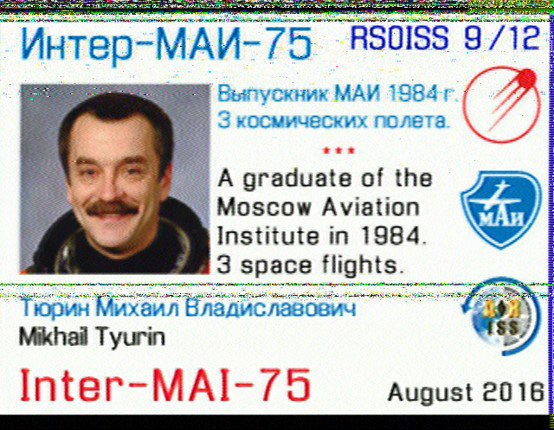
ISS SSTV MAI-75 image 9/12 received by Chertsey Radio Club on a Baofeng handheld

ISS SSTV MAI-75 image 9/12 received by Chertsey Radio Club on a Baofeng handheld

Many FM rigs can be switched been wide and narrow deviation FM filters. For best results you should select the filter for wider deviation FM. Handhelds generally have a single wide filter fitted as standard.

The ISS callsign will be RS0ISS.

Reports are requested: please send ARISS uploading your decoded pictures in the official ARISS SSTV gallery, details of award certificate on the Submission page:
https://ariss-usa.org/ARISS_SSTV/

You can get predictions for the ISS pass times at https://www.amsat.org/track/

Useful information to receive the pictures can be found here:
https://amsat-uk.org/beginners/iss-sstv/

You may be able to get publicity for the amateur radio hobby if you contact your local newspaper and tell them you’ve received a picture (doesn’t have to be perfect) from the International Space Station, see
https://amsat-uk.org/2015/02/04/iss-sstv-in-uk-press/

Follow ARISS on X for official updates during the event
https://x.com/ARISS_Intl

Space Station Slow Scan TV Transmissions

2024-10-08 ARISS SSTV ExperimentARISS is planning a Slow Scan Television (SSTV) experiment from the International Space Station, scheduled to start on Tuesday, October 8, at 16:00 GMT and running until Monday, October 14, at 14:10 GMT.

There will be an interruption on Friday, October 11, for planned school contacts over Europe.

The SSTV transmissions will be made using the amateur radio station in the ISS Service Module. The transmission frequency will be 145.800 MHz (+/- 3.5 kHz Doppler shift) FM, using SSTV mode PD120.

Many FM rigs can be switched been wide and narrow deviation FM filters. For best results you should select the filter for wider deviation FM. Handhelds generally have a single wide filter fitted as standard.

2024-10-08 SSTV Experiment NotesThe ISS callsign will be RS0ISS.

Reports are requested: please send ARISS uploading your decoded pictures in the official ARISS SSTV gallery: https://www.spaceflightsoftware.com/ARISS_SSTV/

Useful information to receive the pictures can be found here: https://amsat-uk.org/beginners/iss-sstv/

Follow ARISS on X for official updates during the event https://x.com/ARISS_Intl

ISS SSTV 40th Anniversary of Ham Radio in Human Spaceflight

ARISS SSTV Event Dec-16 to Dec19 2023An ARISS Slow Scan TV (SSTV) event is scheduled from the International Space Station (ISS) December 16-19, 2023, on 145.800 MHz FM to celebrate the 40th anniversary of amateur radio in human spaceflight.

The event is slated to begin on Saturday, December 16, at 10:15 GMT for setup and operation and continue until Tuesday, December 19, ending at 18:00 GMT. These times are tentative and are subject to change due to crew availability.

Images will be downlinked at 145.800 MHz +/- 3 kHz for Doppler shift and the expected SSTV mode of operation is PD-120.

Radio enthusiasts participating in the event can post and view images on the ARISS SSTV Gallery at https://www.spaceflightsoftware.com/ARISS_SSTV/

The signal should be receivable even on a handheld with a 1/4 wave whip. If your rig has selectable FM filters try the wider filter for 25 kHz channel spacing.

You can get predictions for the ISS pass times at https://www.amsat.org/track/

ARISS SSTV Blog https://ariss-sstv.blogspot.com/

Useful SSTV info and links https://amsat-uk.org/beginners/iss-sstv/

ISS SSTV Verification Test – Oct 27-Nov 1

ISS SSTV image 5/12 received by Murray Hely ZL3MH January 31, 2015

The SSTV system in the Service Module will be activated to attempt to verify a replacement piece of hardware during the period of Oct 27 until Nov 01.

The system will be off around the required period of no transmissions during the planned EVA on Oct 31. Images will be transmitted on 145.800 MHz and in the typical PD120 format.

There are 2 windows for testing, separated by an EVA:
Fri Oct 27 at 12:15 GMT – Sun Oct 29 at 18:50 GMT
Tue Oct 31 at 10:05 GMT – Wed Nov 01 at 18:10 GMT

Your images can be posted to the Gallery at https://www.spaceflightsoftware.com/ARISS_SSTV/index.php

Since this is a test of replacement components of the system, there still may be unexpected outages or issues.

The signal should be receivable on a handheld with a 1/4 wave whip. If your rig has selectable FM filters try the wider filter for 25 kHz channel spacing.

You can get predictions for the ISS pass times at https://www.amsat.org/track/

ARISS SSTV Blog https://ariss-sstv.blogspot.com/

Useful SSTV info and links https://amsat-uk.org/beginners/iss-sstv/