Autumn OSCAR News

The autumn edition of the colour A4 newsletter OSCAR News is being posted to AMSAT-UK members this week

As usual it’s packed with Amateur Satellite articles:

– Haven’t Got A Callsign – regular column by Clive Wallis G3CWV
– Memories of working Astronaut Helen Sharman GB1MIR by Chris Lorek G4HCL
– Louis Varney Cup Presentation to Paul Robinson 2E1EUB
– ARISSat-1 Reception
– USA NTIA WRC proposal for an ITU “Educational” Satellite Service
– ARISSat Update
– FUNcube Testing at RAL
– Syncart geostationary transponder
– Report on First UK National Space Conference 2011
– FUNcube Project Report
– KiwiSAT Current Status
– IARU Region 1 Sun City Report
– 2011 AMSAT-UK Colloquium Report
– QB50 Latest News

To receive this copy of OSCAR News join AMSAT-UK online at
http://tinyurl.com/JoinAMSAT-UK/

If you’ve never seen OSCAR News before you can get an idea of what it’s like by downloading a sample issue from http://www.uk.amsat.org/on_193_final.pdf
UK space students graduate from International Space University

UK space students graduate from International Space University

6 UK graduates have just had their first taste of working in the space sector with the successful completion of the International Space University’s two-month Space Studies Programme (SSP).

With funding assistance from the UK Space Agency’s ISU Scholarship scheme, they were exposed to a wide range of disciplines related to space programmes and enterprises.

An additional grant winner has just started a 1 year MSc at the ISU and one of the students from the two month SSP will be joining him. This years SSP was held at the Graz University of Technology in Austria.

The ISU provides graduate-level training to the future leaders of the emerging global space community. In its two-month Space Studies Programme and one-year Masters Programme, ISU offers its students a unique core curriculum including study areas such as space science, space engineering, systems engineering, space policy and law, business and management, and space and society. Both courses also involve an intense student research team project providing international graduate students and young space professionals with the opportunity to solve complex problems by working together in an intercultural environment. Continue reading

Experiments on the Prospero Satellite

October 28, 2011 will be the 40th anniversary of the historic launch of Prospero the UK’s first satellite to be launched on the Black Arrow rocket.

A description of the Prospero satellite and its experiments written in 1975 can be downloaded here

Pictures of the Prospero ground station can be downloaded here

Attempts are underway to reactivate Propero, beacon frequency 137.560 MHz see 1970s UK Satellite To Be Revived

Picture of Black Arrow Rocket on Display in Australia

1970s UK Satellite To Be Revived

40 years ago the United Kingdom’s first satellite launched on a UK built rocket went into space and now a team from the Mullard Space Science Laboratory in Surrey are attempting to revive it.

The Prospero spacecraft was launched by a Black Arrow rocket on October 28, 1971 from Launch Area 5B, Woomera carrying a series of experiments to investigate the effects of the space environment. The satellite operated successfully until 1973 and was contacted annually until 1996. Its beacon on 137.560 MHz was heard by Amateurs in 2006.

Audio recordings of the 0.3 watt phase modulated signal with 2048 bit/s PCM from Prospero on 137.560 MHz can be heard on the Sounds from Space site of Matthias Bopp DD1US http://www.dd1us.de/spacesounds%204.html

Prospero real-time oribtal tracking page http://www.vk3ukf.com/Space/GadgetSatProspero.htm

BBC Prospero story and pics at http://www.bbc.co.uk/news/science-environment-14783135

Bernhard VA6BMJ says that there’s an item about Prospero in the Space Boffins podcast :
http://audioboo.fm/boos/431009-space-boffins-podcast2

Britain in Space http://www.britain-in-space.co.uk/1960/blackarrow.html

Bath TOPCAT Project

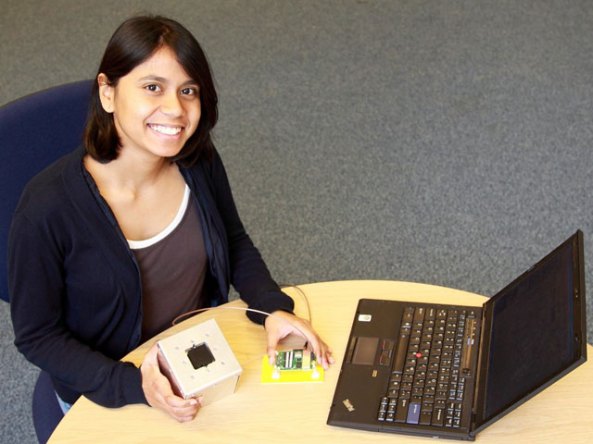
Talini holding a mockup of a cubesat (for testing antenna perfomance)

Talini holding a mockup of a cubesat (for testing antenna perfomance)

TOPCAT (TOPside ionosphere Computer Assisted Tomography) is a payload being developed at the University of Bath that will be launched on the UK’s first 3U CubeSat, UKube-1, next year.

Continue reading

BIS hosts exhibition of the latest UK-made space technology

Leading space technology manufactured in the UK was showcased at the Department for Business Innovation and Skills (BIS).

David Willetts, Minister for Universities and Science with Phil Davies, Head of Business Development Activities, SSTL.  Credit: UK Space Agency

David Willetts, Minister for Universities and Science with Phil Davies, Head of Business Development Activities, SSTL. Credit: UK Space Agency

The exhibition was designed to show the diverse range of space technology and applications produced in the UK, from satellites to spacecraft engines.

Science Minister David Willetts said:

it’s crucial that UK companies take advantage of rapidly growing markets like space technology

“Manufacturing has a vital role to play in rebalancing our economy, so it’s crucial that UK companies take advantage of rapidly growing markets like space technology.

Continue reading