Video – The CanSat Leader Training Program

CanSats are tiny satellites, built to fit in the same space as a soda-can. UNISEC is running a training program in Japan later this year, to train people on how to build and teach building of these ingenious devices.

Watch The 2nd CanSat Leader Training Program (CLTP2) held in Nihon University

Applications for the 4th CanSat Leader Training Program (CLTP4) http://www.unisec.jp/flash/index-e.html

Amateur Radio Satellite Operation Planned From Inner Hebrides Islands

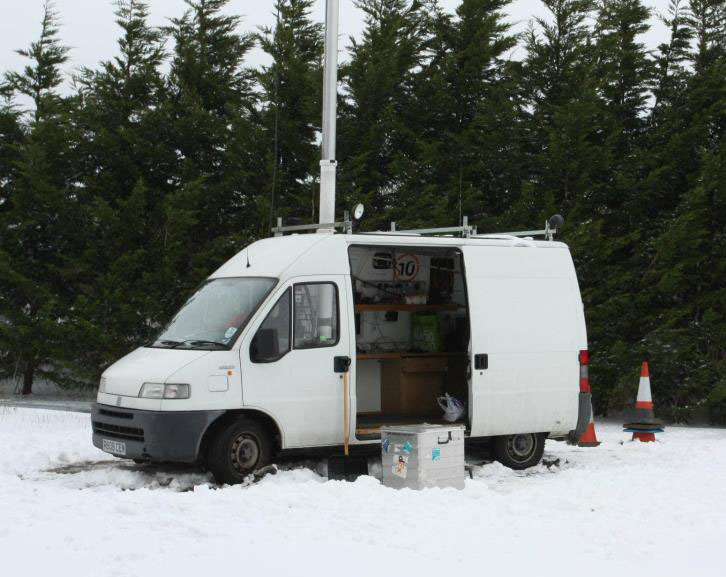
Camb-Hams Amateur Radio Van

Camb-Hams Amateur Radio Van

Members of Camb-Hams will once again activate the Isle of Mull (IOSA NH15, SCOTIA CN10, WLOTA 2485), Inner Hebrides, as GS3PYE/p between May 10-16. The Camb-Hams have been activating the Scottish Isles each year since 2008.

Look for thirteen operators to be active on all bands and many modes from 160-2 meters as well as 472 kHz. The HF bands will be covered by five simultaneous stations, while 6m, 4m and 2m stations will have a great take-off towards the UK and Europ from the island’s south-east coast in IO76 square.

Amateur Radio Satellite FO-29

Amateur Radio Satellite FO-29

They will have an antenna elevation system for 2m EME activity and will also be on many of the VHF/UHF satellite passes. WSPR beacons will be operating on most of the inactive bands to help find the best propagation. Contest operations will take place in 70 MHz CW on May 12th and 432 MHz UKAC on May 14th. The group will be active on the major social networks before, during and after the trip.

You can check on progress or interact with the operators via:

Blog http://dx.camb-hams.com/
Twitter http://twitter.com/g3pye
Facebook http://facebook.com/CambHams
YouTube http://youtube.com/CambHams

Previous trips have generated some great audio and video recordings of the GS3PYE/P signal from around the world. Check their previous blogs and their YouTube channel and see if you can post a better recording.

Please E-mail skeds-2013@camb-hams.com to arrange skeds on the more challenging bands and modes. VHF and EME skeds will also be made via ON4KST and N0UK’s EME Chat. All links are available via http://dx.camb-hams.com/

[Thanks to ANS and Ohio/Penn DX Bulletin No. 1107 for the above information]

UK 434 MHz balloons over Central Europe

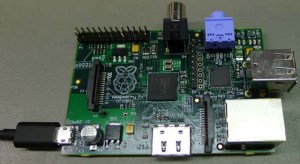
A Raspberry Pi computer board

A Raspberry Pi computer board

On Saturday, April 13 at 1000 UT, two balloons both carrying 434 MHz transmitters were launched from Cambridge, UK . One transmitting video images from a Rapsberry Pi computer board, the other carried a 144.800 MHz APRS beacon M0UPU-11 in addition to the 434 MHz beacon.

The first balloon PIE5 is flying a Raspberry Pi computer board which transmitted live Slow Scan Digital Video (SSDV) images back to the ground by a pair of transmitters to double the bandwidth. The data was RTTY 300 baud 8N2. The frequencies used were 434.070 and 434.074 MHz. The balloon call sign was $$PIE.

The second balloon AVA flew a 70cms tracker on 434.450 MHz 50 baud 7N2. Additionally once it entered air space where the airborne use of APRS is permitted a second APRS transmitter was enabled (the APRS frequency is 144.800 MHz) with the call sign M0UPU-11.

The balloons had been expected to head for Poland and on Saturday evening they were over Germany but by early Sunday morning PIE5 was over Switzerland and AVA was over Austria.

The 434 MHz downlinks  on the balloons are generated using Radiometrix NTX2 transmitter modules, the batteries were expected to last 24 hours.

A third balloon callsign XABEN transmitting on 434.350MHz, 470Hz shift, 7N1 was also launched. Tthis was configured to have a short lifetime, going straight-up until the balloon burst rather than floating at 30km across Europe.

Live video of the launch was streamed by the British Amateur TV Club (BATC) at http://www.batc.tv/

Tracks of both balloons are at http://www.spacenear.us/tracker

Direct link to M0UPU-11 APRS track
http://aprs.fi/#!call=a%2FM0UPU-11&timerange=86400&tail=86400

Images from the PIE5 Raspberry Pi balloon transmitted using SSDV can be seen at http://ssdv.habhub.org/

To get details of upcoming launches subscribe to the UKHAS Mailing List by sending a blank email to this address: ukhas+subscribe@googlegroups.com

Twitter #ukhas https://twitter.com/search?q=%23ukhas

Beginners Guide to Tracking using dl-fldigi http://ukhas.org.uk/guides:tracking_guide

Digital Slow Scan Video http://ukhas.org.uk/guides:ssdv
ESTCube-1 Tether Satellite

Artists impression of ESTCube-1 in space - Image credit University of Tartu

Artists impression of ESTCube-1 in space – Image credit University of Tartu

Estonia’s first CubeSat ESTCube-1, amateur radio callsign ES5E/S, is planning to launch from Kourou in the Caribbean on May 2, 2013 on an ESA VEGA rocket.

Built by students at the University of Tartu ESTCube-1 the main mission of the satellite is to test electric solar wind sail technology, a novel space propulsion technology that could revolutionalize transportation within the solar system. It will deploy a 10 meter conductive electrodynamic tether and the force interacting with the tether will be measured.

The technology is based on the electrostatic interaction between the electric field generated by the satellite and the high-speed particles being ejected from the Sun. A spacecraft utilizing this method would first deploy a set of electrically charged wires, which allow to generate an electric field over a large area. This area effectively forms a “sail” that can be pushed by the charged particles by being diverted by it and therefore transferring momentum to the craft.

The team also aim to capture images of Estonia for outreach purposes.

Continue reading

ArduSat for UK Schools

ArduSatArrowhead Systems Ltd of Stoke-On-Trent has partnered with NanoSatisfi on the ArduSat project. They aim to give UK school children the chance to run experiments in space.

Arrowhead Systems have experimental time on Ardusat, with access to every sensor, from the Geiger counter to an open-source spectrometer (called Spectrino), strain gauges, magnetometers, vibration and shock sensors, gyroscopes and accelerometers, cameras and more.

Further information at http://tiouk.com/

Twitter https://twitter.com/tioukcom

Two ArduSats are planned to launch in 2013, it is understood both will be deployed from the ISS by the JEM Small Satellite Orbital Deployer (J-SSOD) of the Japan Aerospace Exploration Agency (JAXA).

ArduSat’s are open-source arduino-based nanosatellites developed by NanoSatisfi. They will have an extensive sensor-suite onboard and will allow users to upload their own code and run their own experiments.

ArduSat will use a GomSpace NanoCom U482C which is a half-duplex UHF transceiver operating in the 435-438 MHz band. It implements Forward Error Correction (FEC) and Viterbi coding based on the CCSDS standards in order to improve reliability and throughput of the space link.

NanoSatisfi was founded by Austrian-born Peter Platzer a former high-energy physicist (CERN), former Hedge Fund Quantitative Trader, avid HP-41 hacker and Arduino enthusiast, along with Belgian aerospace engineer Jeroen Cappaert KK6BLQ intern at NASA Ames Research Center, Canadian aerospace engineer Joel Spark KK6ANB intern at EADS Astrium and Hungarian Reka Kovacs intern at NASA Ames Research Center working on alternative methods of public outreach for space science. The four founders met at the International Space University in Strasbourg and thought that they could do something to provide affordable, open-source space exploration for everyone.

Read more about ArduSat on Kickstarter
http://www.kickstarter.com/projects/575960623/ardusat-your-arduino-experiment-in-space

Nanosatisfi ArduSat http://www.nanosatisfi.com/

Video of ArduSat NASDAQ interview
https://amsat-uk.org/2012/06/24/video-of-ardusat-nasdaq-interview/

NASA Ames Research Center – Attracting the next generation
https://amsat-uk.org/2013/04/10/attracting-the-next-generation/

Small satellites becoming big deal for CU-Boulder students

Image of a CubeSat in Space

Image of a CubeSat in Space

NASA recently selected CU-Boulder as one of 24 institutions or organizations to fly tiny satellites as auxiliary payloads aboard rockets planned for launch in 2014, 2015 and 2016. The selections are part of NASA’s CubeSat Launch Initiative, an effort that began in 2010 and involves students at institutions like CU-Boulder developing and flying CubeSat satellites, which are about the size of a loaf of bread, have a volume of about a quart and generally weigh less than 3 pounds.

From 2010 to 2013 CU-Boulder was awarded five launch opportunities for CubeSats by NASA, the most of any university in the nation. Each launch is worth the equivalent of roughly $300,000, the going rate for commercial space payloads of that size and weight, said aerospace engineering Professor Scott Palo, whose team was selected by NASA in 2013 to design and build a flight-ready CubeSat satellite.

The CU CubeSat, known as the High Latitude Ionospheric Thermospheric Experiment, or HiLITE, is a collaboration between the aerospace department and two small Boulder-based companies, Blue Canyon Technologies and ASTRA, which are supported in part by the U.S. Air Force to help develop CubeSat hardware, said Palo

Read the full article at
http://www.colorado.edu/news/releases/2013/04/11/small-satellites-becoming-big-deal-cu-boulder-students