Team STRATODEAN High Altitude Balloon Talk

Team STRATODEAN - Cassie Phelps and Mark Ireland

Team STRATODEAN – Cassie Phelps and Mark Ireland

The members of Team STRATODEAN, Cassie Phelps and Mark Ireland, will be giving a web streamed presentation on their High Altitude Balloon project to the AMSAT-UK International Space Colloquium on Saturday, July 20.

The event takes place at the Holiday Inn, Guildford, GU2 7XZ, UK and is open to all.

Image from STRATODEAN Two

Image from STRATODEAN Two

The STRATODEAN team have sent high altitude weather balloons complete with payload from the Forest of Dean up to the edge of space (approx. 34 km up into the Stratosphere). Each balloon was equipped with a camera and video recorder as well as GPS and a 434 MHz telemetry transmitter running 50 bps, 350 Hz shift, ASCII. The transmitter enables the balloon to be tracked during its flight and then located once it has burst and returned to earth with the help of a parachute.

Their first balloon STRATODEAN One launched on April 21, 2013 followed by STRATODEAN Two on May 18, 2013 and they managed to capture some stunning pictures and video.

For those unable to get to the Colloquium all the presentations on the Saturday and Sunday should be broadcast live on the web thanks to dedicated BATC volunteers on their Live Events page at http://batc.tv/ch_live.php?ch=3 The STRATODEAN talk is expected to start at 1:50 PM Saturday.

The times (BST, GMT+1) for all the presentations during the weekend are at http://tinyurl.com/2013ColloquiumSchedule

AMSAT-UK International Space Colloquium July 20-21 https://amsat-uk.org/colloquium/colloquium-2013/

STRATODEAN High Altitude Balloon Project http://www.stratodean.co.uk/

A sample issue of the AMSAT-UK newsletter OSCAR News can be downloaded here.

Registration Needed for SSTL Kepler Visit

SSTL-Kepler-Building

SSTL Kepler Building

As part of the AMSAT-UK International Space Colloquium there will be two opportunities to visit the satellite facilities at the Surrey Satellite Technology Limited (SSTL) Kepler building.

Visit # 1 –  Friday, July 19 at 5 PM

Visit # 2 – Sat, July 20 at 9 AM

In both cases the time refers to the pick up time at the main entrance to the Holiday Inn hotel, Guildford, GU2 7XZ and each visit will last approx 1 hour.

For security reasons SSTL need visitor details in advance

The details they need are first name, last name, nationality, and employer (if you have one)

If you wish to go on one of the tours please contact Jim Heck G3WGM by email g3wgm at amsat.org ASAP with these details, including which tour you wish to go on, Fri or Sat. Responses must be received by 1100 GMT on Thursday, July 18.

 Sorry, but no details in advance, no visit !

CubeSat Workshop Friday, July 19 https://amsat-uk.org/colloquium/cubesat-workshop-2013/

AMSAT-UK International Space Colloquium July 20-21 https://amsat-uk.org/colloquium/colloquium-2013/

New home for SunSpace staff

Sumbandilasat SO-67 before launch

Sumbandilasat SO-67 before launch

The South African Radio League (SARL) has issued the following bulletin about the company SunSpace which developed out of the Stellenbosch University SUNSAT OSCAR-35 project and was responsible for building the SumbandilaSat OSCAR-67 satellite. Both SUNSAT and SumbandilaSat carried amateur radio transponders.

The SARL say:

SunSpace is getting a new home, well at least the company’s intellectual property and 80% of the staff. The Minister of Science and Technology, Derek Hanekom alluded to solution for the ailing company in his budget speech on 21 May 2013.  He announced that the majority of SunSpace’s creditors have accepted the Department’s offer of R55 million for the institutions intellectual property and tangible assets. This decision was recommended in a business rescue plan compiled by a practitioner appointed by the SunSpace Board.

The offer was made on the basis of an independent evaluation of SunSpace’s intellectual property and tangible assets.  The offer is in line with a Cabinet decision that the satellite manufacturing company be absorbed into the South African National Space Agency (SANSA). SANSA has entered into an agreement with Denel Dynamics to house the SunSpace capability.

As part of a process of absorbing SunSpace’s capability within an appropriate entity, the company’s employees have been offered employment in the new business unit, and most of them (more than 80%) have accepted the offer thus ensuring that key capabilities are retained.  In this way, South Africa will retain the critical home-grown capacity developed by SunSpace.

SunSpace is the outflow of the Stellenbosch University SUNSAT project, South Africa’s and Africa’s first satellite launched on 23 February 1999 on Boeing-Delta II rocket from the Vandenberg Airforce base in California.  SunSat was developed and built by post graduate students and lectures. The group built SumbandilaSat for the Department of Science and Technology in record time but it took several years before it was launched. Both SunSat and SumbandilaSat had amateur radio transponders as part of their payload.

Denel is no newcomer to space. The company was involved in the previous programme until 1996 and has maintained its space capability including key staff as well as the Houwteq satellite test facility near Grabouw. “This opportunity will allow Denel to optimise the synergy between the SunSpace capabilities and its own capability for broader national technological benefit,” said the Group CEO of Denel, Mr Riaz Saloojee.

DynaCube – Denel Dynamics Interns make good progress
https://amsat-uk.org/2012/12/11/dynacube-denel-dynamics-interns-make-good-progress/

DynaCube to explore the South Atlantic Anomaly
https://amsat-uk.org/2013/03/30/dynacube-to-explore-the-south-atlantic-anomaly/

South African CubeSat DynaCube
https://amsat-uk.org/2012/07/19/south-african-cubesat-dynacube/

Signal strengths of the two ISS ham radio stations

International Space Station ISS with shuttle Endeavour 2011-05-23

Henk Hamoen PA3GUO used his AMSAT-UK FUNcube Dongle Software Defined Radio (FCD SDR) to show the variations in signal strength between the two amateur radio stations on-board the International Space Station (ISS).

Expedition 5 flight engineer Peggy Whitson KC5ZTD holds one of the two amateur radio antennas in the Unity node on the ISS. The antennas were installed during a spacewalk scheduled on August 22, 2002

Expedition 5 flight engineer Peggy Whitson KC5ZTD holds one of the two ISS amateur radio antennas installed on the Russian Service Module August 22, 2002

The amateur radio station in the Russian Service Module uses a Kenwood D700 transceiver which is understood be on its lowest power setting of 5 watts output and feeds a whip antenna on the Module. When acting as a packet radio digipeater it transmits data on 145.825 MHz.

A second amateur radio station in the European Space Agency (ESA) Columbus Module is usually used for voice communication. It comprises Ericsson handheld transceivers believed to be capable of 5 watts output to a whip antenna on the exterior of the module. When the radio hams on-board the ISS talk to other radio amateurs on Earth they transmit on 145.800 MHz.

Both stations use 5 kHz deviation FM (25 kHz channel spacing).

FUNcube Dongle Software Defined Radio

FUNcube Dongle Software Defined Radio

Henk PA3GUO writes:

FCD SDR recording of ARISS Italy school contact with astronauts onboard the ISS. Purpose is to show the signal strengths of the 2 transceivers onboard ISS: Ericsson Voice transceiver (left) and Kenwood data transceiver (right). At time 11:54z [2013-06-29] my antenna had to turn 180 degrees, signal is lost for a while. Remarkable: at the beginning voice TX signal is strong, even a bit stronger as data TX signal. At the end of the pass data keeps strong, voice fully drops into the noise. Seems the antenna of the Voice [ESA Columbus Module] transceiver is somewhat (more) shielded by the ISS exterior (e.g. solar panels).

29 June 2013, school contact Italy with International Space Station
Frequency: 145.800 + 145.825 MHz
Antenna: 6 elements + 15 meters Aircell coaxial cables
Receiver: FCD SDR + SSB pre-amp (mounted next to the FCD SDR)
Software: HDSDR (SDR receiver) + SatControlFCD (DK3WN freq control)

Watch ARISS Italy ISS SDR recording (speech and data spectrum)

Russian Service Module amateur radio antennas http://knts.tsniimash.ru/shadow/en/FAQ.aspx
Also see http://www.marexmg.org/hardware/antennas.html

Astronaut Radio Amateurs http://www.w5rrr.org/astros.html

PA3GUO website http://www.pa3guo.com/

AMSAT’s FOX-1 Ham Radio CubeSat

AMSAT FOXIn HamRadioNow episode 85 Gary Pearce KN4AQ talks to a pair of AMSAT Vice Presidents – Tony Montiero AA2TX (Engineering) and Mark Hammond N8MH (Education) who tell us about the new Fox-1 Satellite.

They explain why AMSAT must transition from a bunch of hams who put up satellites for us to use, to a provider of the platform and communications for space science experiments for education (that also happen to have repeaters and transponders we can use).

Fox-1 is scheduled to launch from Vandenburg in November 2014 on the NASA ELaNa XII mission into a 470 x 780 km at 64 degrees inclination orbit. It will employ passive magnetic stabilization and carry a 435.180 MHz to 145.980 MHz FM voice transponder and an optional sub audible FSK digital carrier channel.

Watch HamRadioNow Episode 85: AMSAT’s Fox-1 Satellite

IARU Coordinates Frequencies for Fox-1A Ham Radio CubeSat
https://amsat-uk.org/2013/06/04/iaru-fox-1a-cubesat-frequencies/

July 13 Lift-off for LOHAN Balloon Rocket Test

Vulture 2 Spaceplane - Image credit LOHAN

Vulture 2 Spaceplane – Image credit LOHAN

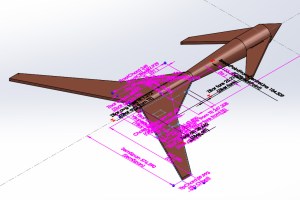
Radio amateurs Dave Akerman M6RPI and Anthony Stirk M0UPU provide an update on a balloon launch planned for this Saturday, July 13 which aims to test the firing mechanism for the LOHAN rocket.

There will be several 434 MHz radio transmitters on-board including one sending Slow Scan Digital Video (SSDV). The radio range is expected to cover most of the British Isles and North-West Europe.

The British Amateur Television Club (BATC) will be providing live coverage of the launch and hopefully also from the two chase vehicles.

Dave and Anthony say:

We will launch a second test of The Register’s LOHAN Project  from Brightwalton around 1000 UT (ISH time is most definitely in effect for this one). If you recall last time due to some problematic predictions the trusty Playmonaut was lost at sea and not recovered despite some valiant efforts by Lester and Neil in a bath tub with an engine on it.

LOHAN_mission_summary_04_bigWe will be repeating the test of the first launch on Saturday under a 2000g Hwoyee balloon. In order to test the firing mechanism for the LOHAN rocket we will be instead using it to detach a payload at a predetermined altitude where the payloads will part ways and land separately.

Each payload will have a primary and backup tracker on it :
Main payload SPEARS : LOHAN Board and a PAVA backup tracker:

Primary : $$SPEARS 434.650 MHz
Secondary : $$REHAB 434.600 MHz

Secondary payload CHAV : Rasp Pi doing SSDV and a PAVA Backup tracker:
Primary : $$CHAV 434.075 MHz
Secondary : $$SHUTIT 434.495 MHz

Transmission format is RTTY speeds please select auto-configure in DL-FLDigi

If we have dubious prediction data we may be launching another payload early in the day to verify that prediction meets reality and we aren’t going to feed another Playmonaut to the fish. This will be on 434.545 MHz and its call sign will be $$PAVA.

The Slow Scan Digital Video (SSDV) on CHAV will change sizes during the flight:
– “launch mode” is small images (320 x 176) till it gets above 3 km
– “flight mode” is larger images (512 x 288) till it drops below 2 km
– “landing mode” takes a single 10-minute video starting at 2 km, then switches back to small images

We will, subject to 3G coverage, be transmitting the preparation, launch and possibly chase live thanks to the nice people at batc.tv. The link is :
http://www.batc.tv/streams/ukhas

There may be a secondary stream (the two chase cars may go separate ways) at :
http://www.batc.tv/streams/ukhas2
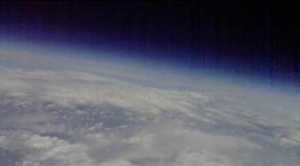
SSDV picture from a PIE balloon - Image credit Dave Akerman M6RPI

SSDV picture from a PIE balloon – Image credit Dave Akerman M6RPI

You can of course follow the position of the balloons live at http://www.spacenear.us/tracker and the live SSDV images from the Pi will be uploaded here : http://ssdv.habhub.org/.

Although batc.tv has a chat function we welcome you to join the #highaltitude channel on Freenode to take part in the conversation throughout the day.

Finally we welcome listeners to track the balloons in flight, tracking can be done with any radio reciever that can recieved USB on 70 cms (434 MHz), i.e some scanners, full amateur radio equipment, FUNcube Dongles or just a RTL Dongle being used as an SDR. There is a guide here on how to track. We expect reception range to cover most of the UK and northern Europe.

Cheers,

Anthony M0UPU / Dave M6RPI

LOHAN hooks up with radio ham and top-flight rocketeer G7ALW
https://amsat-uk.org/2013/03/17/lohan-hooks-up-with-radio-ham-and-top-flight-rocketeer-g7alw/

For up-to-date information on balloon launches subscribe to the UKHAS Mailing List by sending a blank email to this address:
ukhas+subscribe@googlegroups.com