UKube-1 in Radio Frequency International

UKube-1 on display at UK Space Conference in Glasgow

UKube-1 on display at UK Space Conference in Glasgow

The UK Space Agency’s first CubeSat UKube-1, expected to launch in December, will carry AMSAT-UK FUNcube boards. The boards will provide an amateur radio telemetry beacon and a 435/145 MHz linear transponder for SSB/CW communications.

Radio Frequency International interviewed L.A. based artists Amanda White and Jon M. Gibson who run iam8bit and have provided artwork which will be carried on the satellite.

Read the Radio Frequency International story at
http://radiofrequencyinternational.wordpress.com/2013/09/23/the-new-cubists/

AMSAT-UK FUNcube Yahoo Group https://amsat-uk.org/funcube/yahoo-group/

ISS Ham Video launch campaign

Front panel of the HamTV transmitter

Front panel of the HamTV transmitter

The ARISS DATV transmitter, dubbed “Ham Video”, already onboard the International Space Station, will soon be installed in the Columbus module and commissioned.

Commissioning will be done in several steps, each during a full pass of the ISS over the Matera ground station (see Bulletin 2). It is not yet known if these passes will be chosen in close succession, or if they will cover several weeks. ARISS proposes ESA to operate so called “blank” transmissions during the commissioning period. If this is accepted, it means that Ham Video will transmit permanently without camera. The camera will not be used because it is fed on batteries and servicing it would need prohibitive crew time. Transmitting recordings is part of a future project, but not available presently.

New HamTV Antennas for ARISS Telebridge Station IK1SLD at Casale Monferrato, Italy

New HamTV Antennas for ARISS Telebridge Station IK1SLD at Casale Monferrato, Italy

Although ground stations will receive a black image without audio, “blank” transmissions contain all information needed for the setting up and the fine tuning of the station. Moreover, collected data will be used for a performance study of the ARISS L/S-band antennas as well as for an evaluation of the global system.

For this launch campaign, ARISS addresses a call for collaboration to the amateur radio community, especially to the operators interested in space communications. Several satellite operators have shown interest.

Ham Video technical characteristics are available at www.ariss-eu.org  . Look for the “Ham Video” link in the left sidebar. Suggestions and useful addresses  for the setting up of a Ham Video ground station are also provided.

Among the components of  a satellite ground station, the antenna system is the most expensive. High gain antennas are needed, moved by azimuth and elevation motors and driven by an appropriate computer program. For Ham Video reception, a 1.2m dish with precision tracking is recommended. A station compliant with the recommendations provided in the aforementioned reference text should be capable of 3 to 4 minutes of DATV reception during a pass of the ISS. AO-40 operators who still have an S-band dish can now use it for Ham Video.

On the other hand, interesting data can be gathered by stations with a much simpler setup. A dish with a self made helix feed could be used without motors. This antenna could be positioned in a fixed direction, determined before a pass of the ISS, pointing to the position of the ISS at closest approach, which corresponds to the maximum elevation of the space station during the pass. With the setup as described hereunder, 1 to 2 minutes of solid reception of the Ham Video signal should be possible.

Call for participation to the Ham Video launch campaign

ARISS addresses a call to amateur radio experimenters who would like to participate to the Ham Video launch campaign.

Data gathering during the initial “blank” transmissions is important and the help of volunteering operators will be most appreciated. More details to follow.

It is to be noted that builders of the hereunder proposed “Simple Station” could later update their equipment and add tracking motors. Chained stations will be needed for ARISS Ham TV school contacts. Video and audio from the ISS will be web streamed to the schools over the Internet.

We will keep you informed of these developments. For the time being, as a starter, let us concentrate on receiving “blank” transmissions.

73,

Gaston Bertels – ON4WF
ARISS-Europe chairman

PS: All Ham TV Bulletins are available at www.ariss-eu.org

PSK-31 Transponder Needed for Launch Opportunity

PCSAT2 PSK-31 Transponder

PCSAT2 PSK-31 Transponder – Image credit Bob Bruninga WB4APR

On the AMSAT Bulletin Board (AMSAT-BB) Bob Bruninga WB4APR writes:

If someone will build a linear PSK-31 transponder, I have a launch opportunity in 9 months.

All it needs to be is a PSK-31 Linear receiver on 28.120 MHz (3 kHz bandwidth) with AGC coupled to a downlink UHF FM transmitter of about 1 Watt. Should fit on a 3.5″ square card. This is the same as Brno University of Technology has built for prior missions of PCSAT2 on the ISS back in 2006 and the two on the shelf awaiting flights.

Flight delivery by May 2014 (9 months from now).

Brno University, may not have the people to make a third one for this new flight opportunity.

Just a thought for someone looking for a project.

PSK-31 Transponder Concept http://www.usna.edu/Users/aero/bruninga/psk31uplink.html

AMSAT-BB http://www.amsat.org/amsat-new/tools/maillist/

Dutch Amateur Radio Satellite User Day – September 28, 2013

Delfi-n3Xt Satellite

Delfi-n3Xt Satellite

On Saturday, September 28, 2013 the very first Amateur Radio Satellite User Day will be held.

Location
The event will  take place at restaurant ”Binnenhof”, in the small town of Paasloo, in the North of the Netherlands, a 90 minute drive by car from Amsterdam.

Join us!
We invite everyone to come over and join us! For both newbies as well as experienced satellite operators it will be an exciting day with interesting presentations as well as exciting activities!
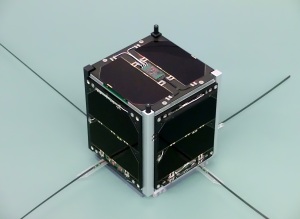
FUNcube-1 flight model - Image credit Wouter Weggelaar PA3WEG

FUNcube-1 flight model – Image credit Wouter Weggelaar PA3WEG

Two Dutch satellite builders will talk about their latest satellites, that both will be launched in November: FUNcube-1 (Wouter Weggelaar – PA3WEG) and Delfi-n3Xt (Jasper Bouwmeester). Both projects will take along with them engineering models: a great opportunity to see yourself how small and advanced Cubesats look like!

Furthermore we have many hands-on sessions planned: take your own radio and antenna to Paasloo, we can help you get started or you can compare yours to that of the others!

Of course this is a fantastic opportunity to ‘meet and great’ each other in person. The OSCAR lunch has a lot of time reserved for that as well. The entire day is free of charge, including coffee and lunch. From those that want to stay for the Barbecue at the end of the day we ask a contribution of 17,50 euro.

HAMSAT VO-52

HAMSAT VO-52

For those that cannot come over to the Netherlands: meet us during one of the on-air hands-on sessions (see the program details below).

Program
10:00     Arrival
Coffee and tea, registration

10:30 – 10:45     Hands-on session VO-52
Listen to, and maybe even make a QSO via, the strongest linear transponder currently in space. We do have a low elevation pass, need to check line-of-sight.  2m/70cm SSB transponder, maximum elevation 11 degrees

10:45 – 11:00     Welcome
Opening of both the “VHF-day” and the “Amateur Radio Satellite User Day”
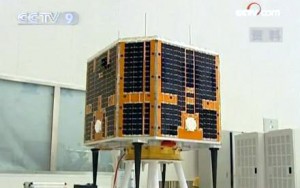
HO-68

HO-68

10:43 – 11:02     Hands-on session HO-68
Listening to the CW downlink signals of this Chinese satellite. Its linear transponder is no longer functional, but its beacon is great fun to experiment with for reception of amateur radio satellites. Examples include testing and comparing different types of antennas. 70 cm CW beacon. Maximum elevation: 49 degrees

11:04 – 11:24     Hands-on session FO-29
Listening to, and maybe make a QSO via, the linear transponder of this satellite. A very distant satellite for portable equipment, but with a little bit of effort and luck we should be able to hear our own signals back on downlink. 2m/70cm SSB transponder. Maximum elevation: 73 degrees.
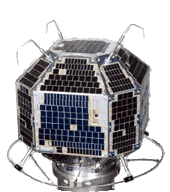
Amateur Radio Satellite FO-29

FO-29

11:30 – 11:35     Welcome Amateur Radio Satellite User Day
Opening of the very first Amateur Radio Satellite User Day in The Netherlands.

11:35 – 12:15     FUNcube-1 – A new satellite revealed (Wouter Weggelaar – PA3WEG)
A presentation by one of the builders, about the technology used in FUNcube-1, a project of a series of organizations, including AMSAT-UK. Due to the delayed launch (now planned for November) FUNcube-1 is not yet in space during the event, but very likely Wouter will bring along the functional engineering-model of FUNcube-1. A presentation you don’t want to miss!

12:15 – 13:00     Amateur Radio Satellites step-by-step, for newbies and experienced operators! (Ivo Klinkert – PA1IVO and Henk Hamoen – PA3GUO)
An introduction into orbits of LEO/HEO-satellites and how to predict their passes. We will also talk about which kind of equipment is needed to transmit via amateur radio satellites. So, a talk on TLE, AOS, LOS, TCA, Kepler and Doppler, RHCP, LHCP, PCs, Antennes, TRX, SDR and Cubesat CW beacons. While this session addresses the basics of satellite communications, we invite the more experienced operators to share their experiences during the presentation as well. For example which software they use, which satellites are favorite, which antennas and rotators are being used… and: which transceivers are most popular.
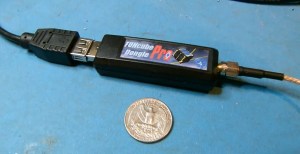
FUNcube Dongle Pro+ Software Defined Radio

FUNcube Dongle Pro+ Software Defined Radio

13:00 – 13:45     Hands-on session FUNcube-1 Engineering model
Most likely it will be possible to make in Paasloo QSO’s via the transponder of the engineering-model of FUNcube-1. A fun exercise or simply a lot of fun with a satellite of which we really control when it is within reach! 2m/70cm SSB transponder.

13:00 – 14:00     OSCAR-lunch
Extended buffet lunch buffet, where the objective is to meet and great your fellow radio amateurs that share the same interest amateur radio satellites. At the same time a demonstration of the famous FUNcube Dongle and equipment like Arrow antennas, LVB-tracker, etc.

13:45 – 14:15     Hands-on session LO-19
Receiving the downlink signals of the satellite. Even though this satellite has gone through some rough situations up there in space, we can still hear a very strong (continues) carrier in the 70cm band. A great opportunity to observe the Doppler-effect and to experience how large this effect is at different stages of a pass. Or: compare again the performance of the different antennas that will be brought by visitors. 70 cm constant carrier. Maximum elevation: 59 degrees

14:15 – 15:00     Delfi-n3Xt (Jasper Bouwmeester – Program Manager TU/d)
An update on the status of the next Dutch satellite of the University of Delft (TU/d), which will be launched in November. Also here a lot of interesting hardware will be shown, including the engineering model of the S-band transmitter, the positioning system and the VHF/UHF antennas.

15:00 – 15:15     Radio Amateurs and scientific satellites (Henk Hamoen – PA3GUO)
How radio amateurs can contribute to scientific research in satellite projects. No QSOs therefore, but rather support of science in space.

15:15 – 15:35     A portable, multi-functional satellite station (Ivo Klinkert – PA1IVO)
A presentation on a portable satellite station for radio communications using low earth orbit (LEO) satellites, multi-mode, including S-band reception.

15:35 – 15:45     How to apply for an ARISS school contact (Bertus Hüsken – PE1KEH)
How to apply for a school contact with the International Space Station (ISS) via ARISS.

15:45 – 16:00     AMSAT-NL (Wouter Weggelaar – PA3WEG, Chairman AMSAT-NL)
How and why AMSAT-NL was founded.

16:00 – 16:15     Future of the “Amateur Radio Satellite User Day” (Ivo – PA1IVO en Henk – PA3GUO)
Evaluation and gathering of ideas for the event next year.

16:15     Closure
BBQ for those that upfront signed up.

18:23 – 18:35     Hands-on session VO-52
For those that can get enough of it! 2m/70cm SSB transponder. Maximum elevation: 30 degrees.

Much more information (for example regarding registration) is available on this website:
http://ivok.home.xs4all.nl/other/SatDay2013.html

See you all in Paasloo!
Ivo Klinkert – PA1IVO and Henk Hamoen – PA3GUO

AMSAT-DL Satellite Symposium October 5

Amateur Radio Facility at Bochum

Amateur Radio Facility at Bochum

The AMSAT-DL satellite symposium and AGM will be held in Bochum, Germany on October 5, 2013.

The AMSAT Deutschland Facebook page says “There will be certainly some exciting news!”

AMSAT-DL Symposium lecture schedule

Saturday 05.10.2013

10:15 – 10:30 Welcome

10:30 – 11:15 Stereo A / B status and Turbo Code introduction, experience report by Mario Lorenz, DL5MLO

11:15 – 11:45 Coffee break

11:45 – 12:15 Asteroid Defense by Wolfgang Wittholt, Fernuni Hagen

12:15 – 12:45 Space Generantion Advisory Council (SGAC) Small Satellite Project Group (SSPG) presentation and objectives by Dennis Mattes

12:45 – 14:00 Lunch break

14:00 Current and new projects / project progress / etc then an official part of the AGM with elections.

AMSAT-DL event announcement
https://www.facebook.com/events/397993230305940/permalink/419259888179274/

AMSAT-SM compares FUNcube Dongle Pro+ and RTL SDR’s

FUNcube Dongle Pro+ Software Defined Radio

FUNcube Dongle Pro+ Software Defined Radio

AMSAT-SM has published a comparison of the FUNcube Dongle Pro+ and the RTL TV dongle based software defined radio.

The FCD Pro+ costs about 10 times the price of the RTL TV Dongle. While the FCD Pro+ has a far wider frequency coverage enabling reception of LF, MF and HF are there any other differences ?

Read the AMSAT-SM comparison in Google English at http://tinyurl.com/FUNcubeDongle-RTL-Comparison

The FUNcube Dongle (FCD) Software Defined Radio (SDR) was originally developed for educational outreach as part of the ground segment for the FUNcube satellite. A proportion of the sales of the FCD goes to support AMSAT-UK’s FUNcube satellite.

You can join the FCDProPlus Yahoo Group by following these steps:
• Send a blank email to fcdproplus-subscribe@yahoogroups.co.uk
• Yahoo will send you an email in response, you may need to check your SPAM folder
• Click on the link in the email, this will bring up a Yahoo page in your browser
• On the Yahoo page ignore the big Join link in the middle and click on the link at the bottom of the page instead, it says: “As an alternate option, you may join the mailing list instead.”
• You should then be a member of the group.

Some of the SDR decoding programs available include:
• SDR Sharp (SDR#) http://sdrsharp.com/
• SDR-Radio http://www.sdr-radio.com/
• HDSDR http://www.hdsdr.de/

FUNcube Dongle Pro+ LF/MF/HF/VHF/UHF Software Defined Radio Video
https://amsat-uk.org/2012/10/03/funcube-dongle-pro-plus-sdr-video/

FUNcube Dongle Pro+ http://www.FUNcubeDongle.com/

RTL TV Dongle SDR http://www.essexham.co.uk/news/realtek-sdr-pc-dongle-for-under-20-pounds.html