Rare Scottish Grid Squares on the Satellites

2E1EUB Portable Satellite Station

2E1EUB Portable Satellite Station

Paul 2E1EUB has traveled to Scotland to activate some rare grid squares on the satellites using the call 2M1EUB.

On Saturday, April 6, he posted on the AMSAT Bulletin Board:

Limited Internet…. .Lots of deep snow….I’m in the middle of the wilds [Grid Square IO87NC]

Hope to be QRV on AO-7 from IO97 latter in the week. I’m driving to this Square by request

Will also be on FO-29 for limited QSO, I’ll keep you posted.

Just driven 500 miles (800 km) so need a kip.

AMSAT Bulletin Board http://www.amsat.org/amsat-new/tools/maillist/

RadCom article Getting started on satellites
https://amsat-uk.org/beginners/radcom-getting-started-on-satellites/

Ted Cooke-Yarborough 1918-2013

Ted Cooke-Yarborough in front of the Harwell Dekatron 61 years after he designed it . Photgraph by john Robertson used with the permission of the The National Museum of Computing http://www.tnmoc.org/

Ted Cooke-Yarborough in front of the Harwell Dekatron 61 years after he designed it. Photograph by John Robertson used with the permission of The National Museum of Computing http://www.tnmoc.org/

Ted Cooke-Yarborough passed away on January 10, 2013 aged 94. He was the lead designer of one of the world’s early computers and a pioneer in radar, transistorisation and electronics.

By the age of eleven he had built his first wireless receiver and at Canford School in Dorset he was a member of the Wireless Society that developed portable short-wave transmitter-receivers for two-way communication in the school grounds – the enterprising society sold two of them to the Yeovil fire brigade.

In 1946 he joined UK Atomic Energy programme to work on nuclear instrumentation and soon after his transfer to Harwell in 1948 supervised the design, construction and commissioning of the Harwell Dekatron computer working with co-designers Dick Barnes and Gurney Thomas.

The obituary published in The Telegraph mentions the Bagful receiver. Graham Shirville G3VZV says “I admit to being biased by having been at Malvern in the 60’s but the development of a scanning radio with built in recording device 70 years before we had FUNcube Dongles, laptops and IQ signals is pretty amazing to me”.

Read the National Museum of Computing obituary
http://www.tnmoc.org/news/notes-museum/ted-cooke-yarborough-1918-2013

Read The Telegraph obituary
http://www.telegraph.co.uk/news/obituaries/technology-obituaries/9972656/Ted-Cooke-Yarborough.html

The National Museum of Computing http://www.tnmoc.org/

First Cuba to EI contact on the amateur radio satellite FO-29

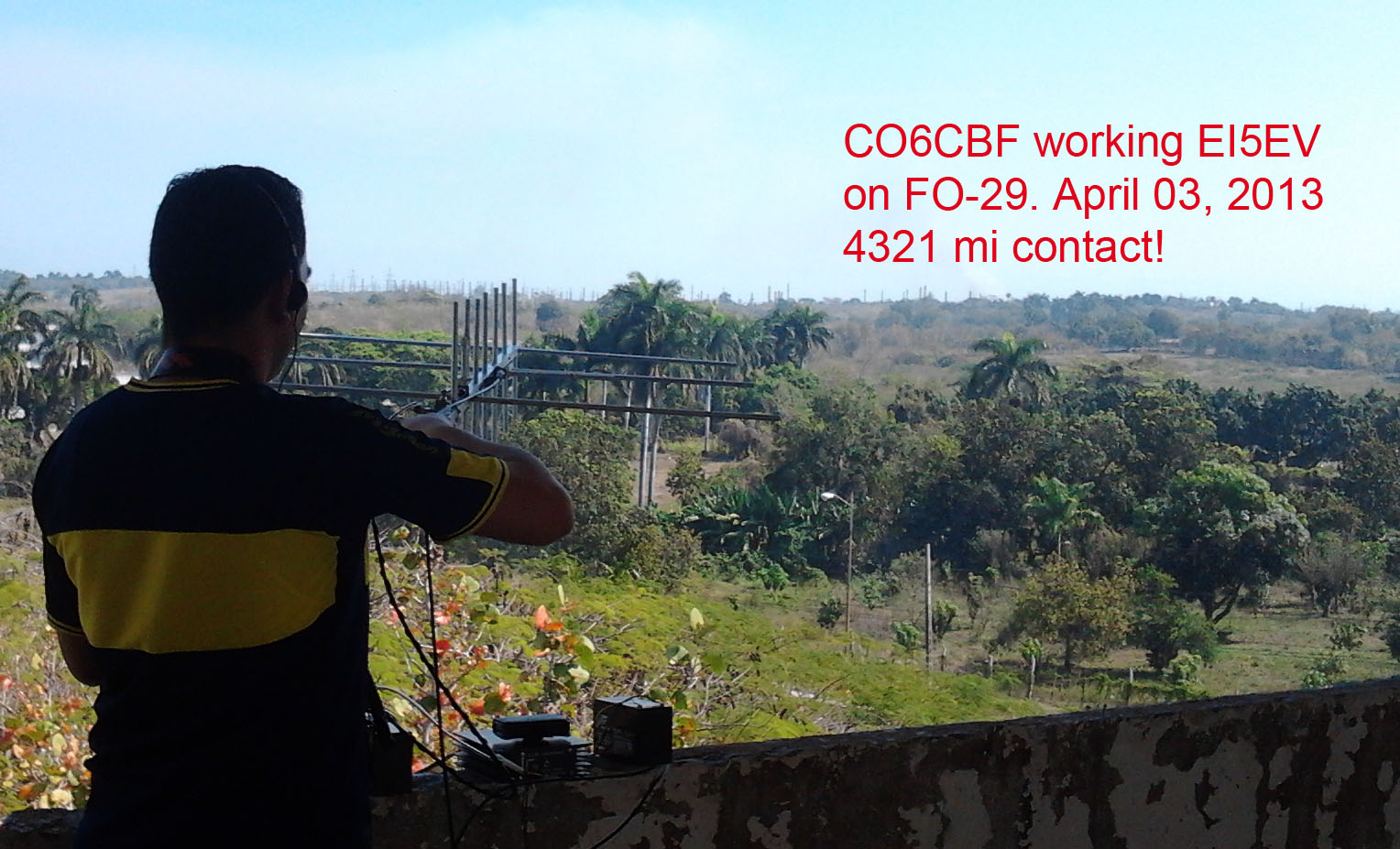
Hector CO6CBF working Joe EI5EV on FO-29  2013-04-03 1440z_6

Hector CO6CBF working Joe EI5EV on FO-29 2013-04-03 1440z_6

Hector Martinez CO6CBF in Cuba has worked Joe Murphy EI5EV in County Kilkenny on FO-29 over a distance of 6955.1 km.

Hector writes:
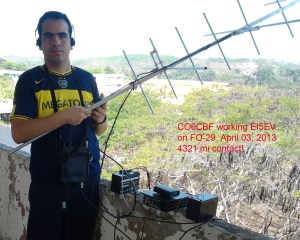
Hector CO6CBF working Joe EI5EV on FO-29  2013-04-03 1440z_4

Hector CO6CBF working Joe EI5EV on FO-29 2013-04-03 1440z_4

I am pleased to report that on Wednesday, April 3 I had my first contact on satellites with Ireland.  Joe, EI5EV and I completed it successfully on FO-29. We had just a 66 seconds window but there was enough time to exchange reports and greetings. I believe that it is the first contact between Ireland and Cuba on FO-29! It is a 4321.7 mi (6955.1 km) contact!

Our first attempt was yesterday but Joe couldn’t find me on the passband. We made a schedule again and we tried to be more accurate on frequencies calculation. Doppler is always in play!

We did the calculations based on the great feature implemented on SatPC32 V12.8b. There is an  option of seeing the frequency you are at the satellite receiver.  This was our common reference point. I was very satisfied when I heard Joe exactly on the frequency I was expecting!

I was operating portable from a tall building `s roof which allows me a great horizon visibility forwarding Europe. I was running my new FT-817nd, a 30W power amplifier and a homebrew ARROW antenna with a homebrew mast mounted preamplifier. Everything was supplied by two 12V 7A Gel batteries.

Right Now, FO-29 has a big footprint. Please, if you are into the footprint and want to try a long distance contact, just drop me an email. I will try until complete a contact with you.

Thanks very much to Joe for this great contact!

73!
Hector, CO6CBF El92sd
Email: co6cbf at frcuba.co.cu

FO-29 information https://amsat-uk.org/satellites/fuji-oscar-29-jas-2/

G100RSGB on the amateur radio satellites

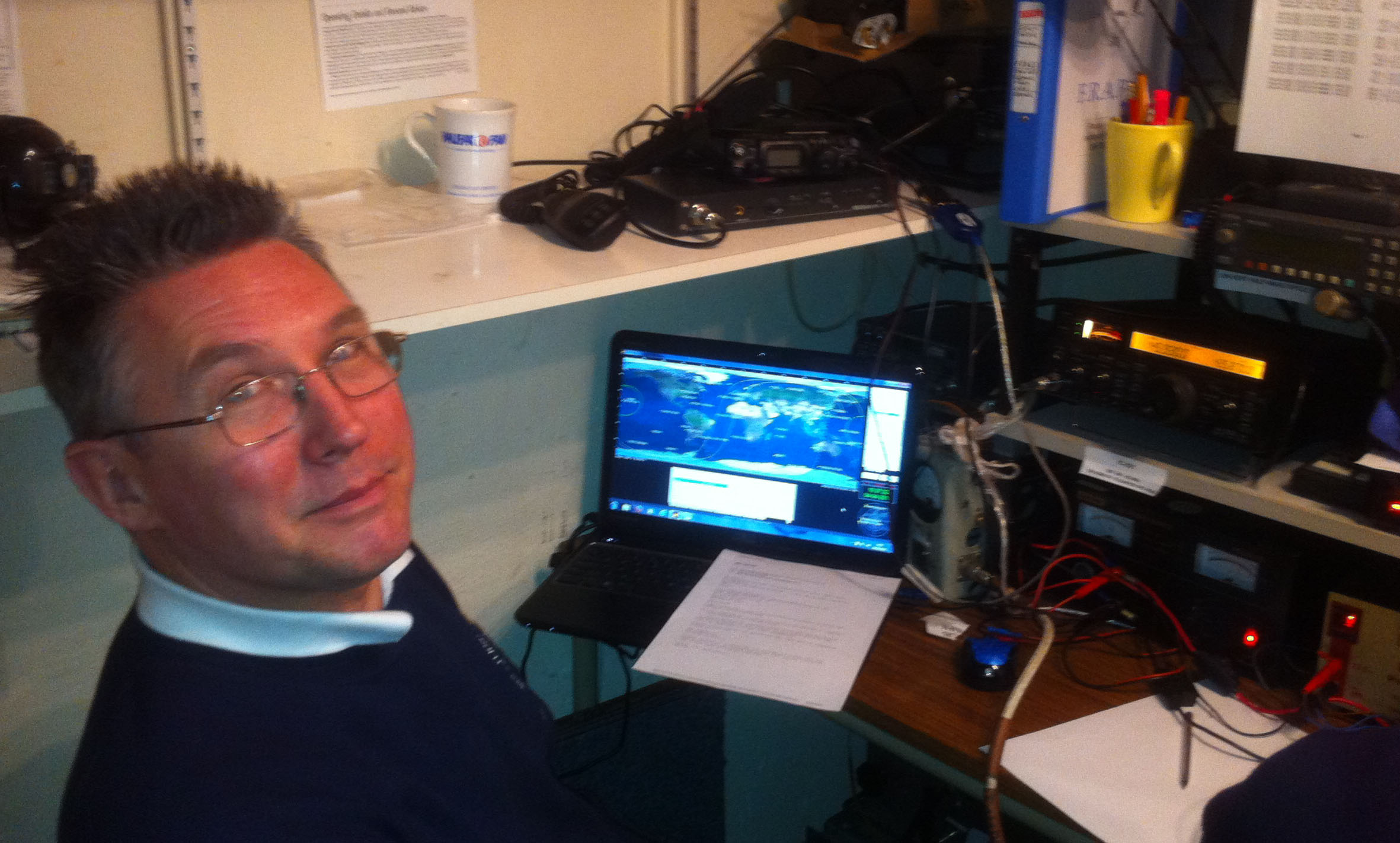
Clive G7SVI operating G100RSGB on the FO-29 satellite

Clive G7SVI operating G100RSGB on the FO-29 satellite

Flight Refueling Amateur Radio Society (FRARS) were active on the amateur radio satellites on Thursday, April 4 using the special event callsign G100RSGB .

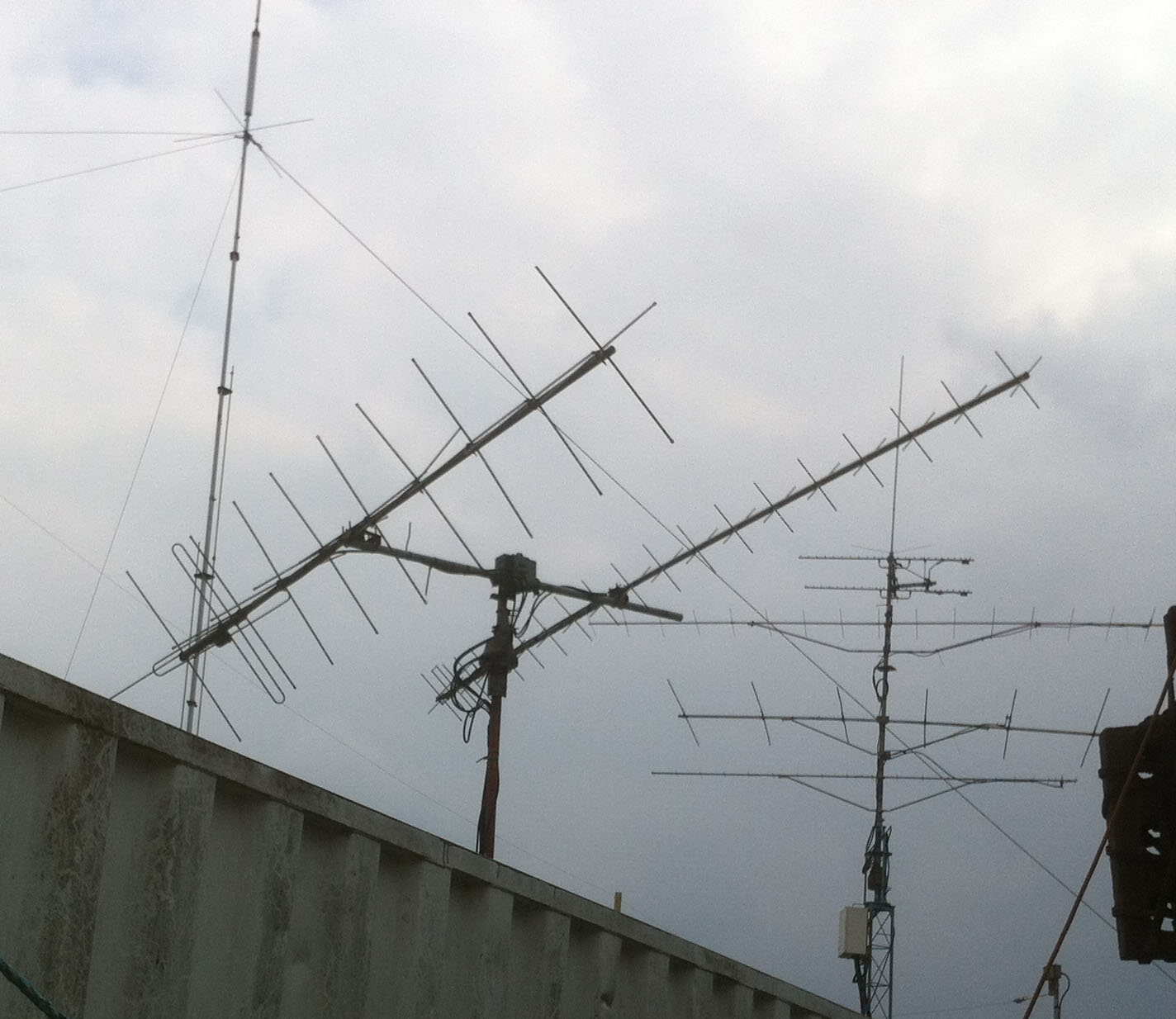
FRARS G100RSGB Satellite Antennas

FRARS G100RSGB Satellite Antennas

On one pass of the satellite FO-29 club member Clive Lambert-Hutchinson G7SVI had arranged a schedule with Hector Martinez CO6CBF in Cuba. This was on the extremes of range for the satellite and there was only a brief window of about 1 minute when the two stations could make contact. A signal believed to be Hector was heard but wasn’t strong enough for a contact.

FRARS hosted the RSGB Centenary Call G100RSGB from their club house at Merley, Wimborne, Dorset, BH21 3DA and were active on all bands from 1.8 – 440 MHz. The day was a great success with the club members operating three separate stations continuously during the day.

FRARS are a friendly club that welcomes newcomers. They are holding another Foundation training course on the weekend of April 13-14.

Flight Refueling Amateur Radio Society (FRARS) http://www.frars.org.uk/

Vietnam CubeSat PicoDragon

PicoDragon CubeSat - Image credit VNSC

PicoDragon CubeSat – Image credit VNSC

PicoDragon is a 1U CubeSat project intended to take low resolution Earth images and to test on-board systems.

It is planning to use two amateur radio downlinks and frequencies for these have been coordinated by the IARU. The 100mW CW beacon will be on 437.250 MHz and a 1k2 bps AFSK 800mW AX.25 telemetry downlink on 437.365 MHz. Commands will be uplinked on VHF.

The Vietnam National Satellite Center VNSC say that Pico-satellite Dragon is expected to launch in mid-2013 on a Japanese rocket.

More info at http://vnsc.org.vn/

NASA Seeks Academic Partners for Smallsat Technology Collaboration

Image NASA - Franklin image credit to Paul D. Stewart

Image NASA – Franklin image credit to Paul D. Stewart

NASA is seeking small spacecraft technology project proposals from U.S. colleges and universities that would like to collaborate with agency researchers.

Small spacecraft, or smallsats, represent a growing field of space research and operations in which universities often have led the way in technology development. Smallsats, some of which are as small as a four-inch cube, are not expected to replace conventional spacecraft, but sometimes can provide an alternative to larger, more costly spacecraft. Smallsats can serve as platforms for rapid technology testing or specialized scientific research and exploration not otherwise possible. Smallsats also can be developed relatively quickly and inexpensively, and can share a ride to orbit with larger spacecraft.

Continue reading