NEXUS CubeSat designated as Fuji-OSCAR 99

NEXUS PosterOn January 18, 2019, NEXUS was launched on an Epsilon launch vehicle from the JAXA Uchinoura Space Center in Japan.

NEXUS (NExt generation X Unique Satellite) is a satellite developed jointly by Nihon University College of Science and Technology and the Japan Amateur Satellite Association (JAMSAT).

NEXUS demonstrates several new amateur satellite communication technologies, and includes a mode V/u linear transponder.

Telemetry has been received and decoded around the world since the launch, and the transponder was successfully tested on January 26th.

More information may be found at
http://sat.aero.cst.nihon-u.ac.jp/nexus/E0_Top.html

At the request of the Nihon University College of Science and Technology and JAMSAT, AMSAT hereby designates NEXUS as Fuji-OSCAR 99 (FO-99). We congratulate the owners and operators of FO-99, thank them for their contribution to the amateur satellite community, and wish them continued success on this and future projects.

73, Drew Glasbrenner, KO4MA
AMSAT VP Operations / OSCAR Number Administrator

Frequencies:
• 437.075 MHz CW Telemetry
• 435.900 MHz FSK AX.25 / π/4 shift QPSK CCSDS
• SSB/CW transponder
– 145.900-145.930 MHz Uplink
– 435.880-435.910 MHz Downlink

NEXUS Blog http://tinyurl.com/NEXUS-Sat-Blog

JAMSAT in Google English http://tinyurl.com/JAMSAT

IARU Frequency Coordination http://www.amsatuk.me.uk/iaru/finished_detail.php?serialnum=535
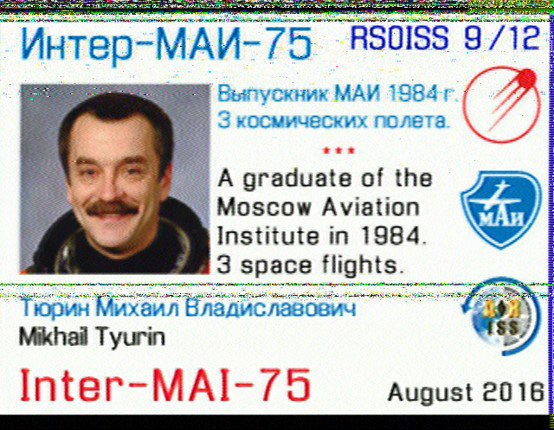
Ham radio SSTV from the Space Station

ISS SSTV MAI-75 image 9/12 received by Chertsey Radio Club on Baofeng handheld

ISS SSTV MAI-75 image 9/12 received by Chertsey Radio Club on Baofeng handheld

The Inter-MAI amateur radio Slow Scan Television experiment in the Russian Service Module of the International Space Station is scheduled to be activated Jan 30 – Feb 1 on 145.800 MHz FM using SSTV mode PD120.

Update January 29: MAI-75 SSTV setup and activation starts Wednesday, January 30 around 13:30 GMT and ends around 18:30 GMT. Similar activation periods for January 31 and February 1.

The ARISS-SSTV Blog says:

Received information that the Moscow Aviation Institute will be conducting their SSTV experiment from January 30 – February 1.

It appears from the scheduling that the experiment will only be active during a couple of orbits that overfly Moscow instead of a continuous operation. Rough time periods of activation appear to fall between the hours of 13:00 – 19:00 UTC. Activity should occur on the traditional 145.800 MHz downlink.

Source: ARISS SSTV Blog https://ariss-sstv.blogspot.com/

You can receive the pictures from the ISS by using the MMSSTV software and an Online Radio (WebSDR). Select a Frequency of 145800.0 kHz and Mode FM:
• Farnham WebSDR when ISS in range of London http://farnham-sdr.com/
• R4UAB WebSDR when ISS is over Russia http://websdr.r4uab.ru/

Check the N2YO site to see when the ISS is in range https://n2yo.com/?s=25544&df=1

ISS Slow Scan TV (SSTV) hints and links https://amsat-uk.org/beginners/iss-sstv/

UWE-4 CubeSat frequency change request approved

After two weeks in orbit, UWE-4 is in very good shape. The batteries are fully charged, the temperatures of the batteries, the outside panels and the MCU are all lying in the expected range.

The temperatures of the outside Panels of UWE‑4 on the first day after launch

The temperatures of the outside Panels of UWE‑4 on the first day after launch

UWE-4 battery temperatures and State-of-charge on the first day after launch

UWE-4 battery temperatures and State-of-charge on the first day after launch

It can be seen, that the battery temperatures are slightly rising around 8:45 am, when the downlink of this measurement took place.

After the early orbit phase, we are looking forward to some interesting experiments with the attitude determination sensors and the propulsion system.

UWE-4 LogoUnfortunately, our uplink success rate is very poor, which currently prevents these experiments. In the precursor mission UWE-3, it was found that the reason for this is very likely a substantial noise floor at the used frequency range. For this reason, we filed a request for the change of our radio frequency to 435.600 MHz with IARU, which has already been approved.

Today, we will start the procedure to change the frequency of UWE‑4. So if you want to track UWE-4, please adjust your center frequency accordingly. We already started the procedure to change the frequency on UWE‑4, so during the next days it may happen that you can also still receive a signal on our old frequency. Additionally, we have been assigned NORAD ID 43880 in the meantime.

A tool in order to upload the received UWE-4 telemetry directly into our groundstation database is at the moment work in progress and will be shared with you as soon as we have tested it thoroughly. Until then, we would be very grateful, if you’d forward your UWE-4 telemetry files to uwe4@informatik.uni-wuerzburg.de.

Kind regards,

The UWE‑4 Team