ARISS contact planned for school in St. Albans

International Space Station - Image Credit NASA

International Space Station – Image Credit NASA

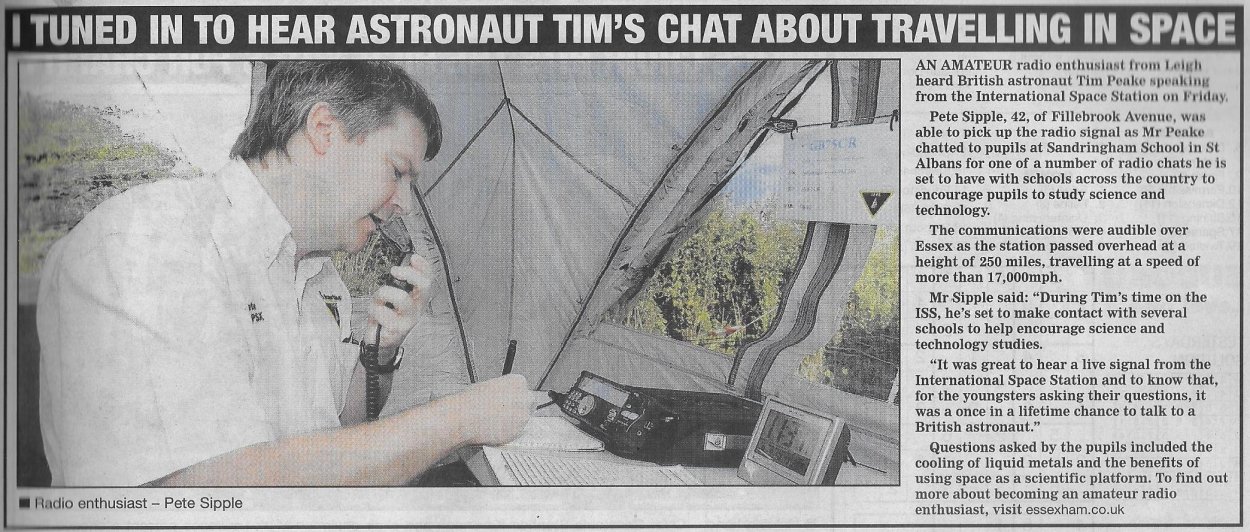
Friday, January 8, 2016 at approximately 08:47 GMT,  an ARISS contact is planned for Sandringham School, St. Albans, Hertfordshire, United Kingdom. Amateur radio station GB1SAN, will operate the contact. The ARISS HAM radio station GB1SS on the board of the International Space Station will be operated by Timothy Peake KG5BVI.

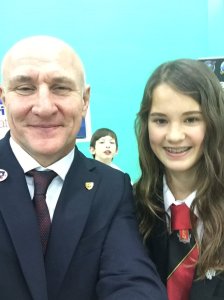
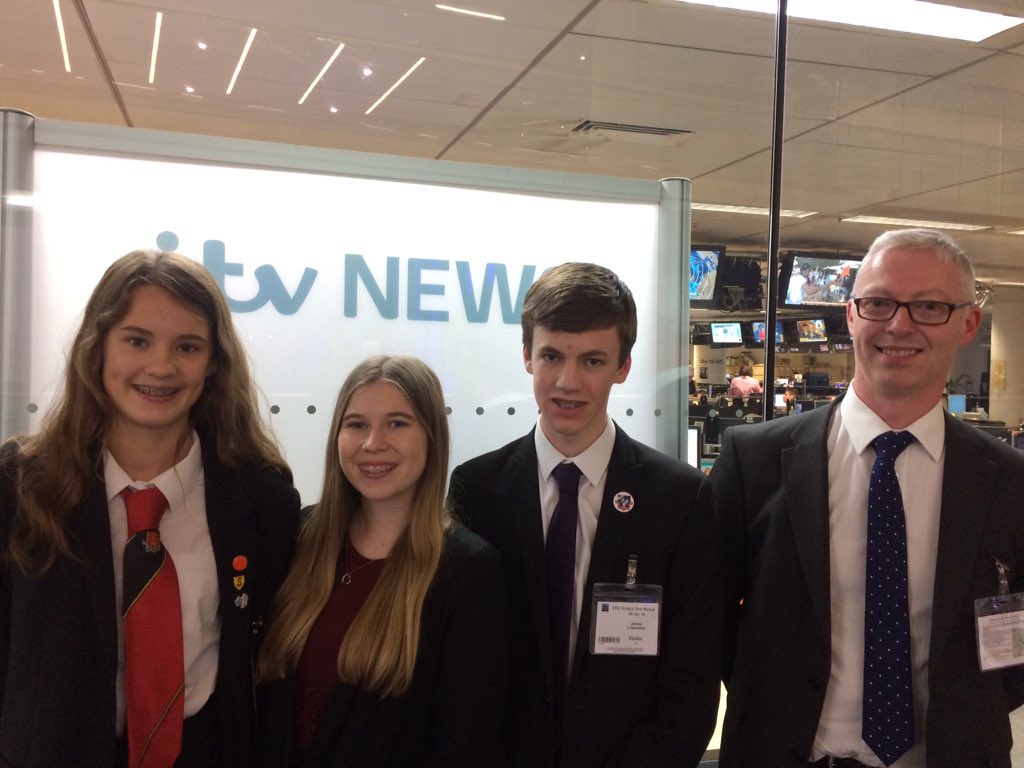
Sandringham School Students - Image Credit Sandringham School @SandringhamSch1

Sandringham School Students – Image Credit Sandringham School @SandringhamSch1

School information:

Sandringham School is a high performing coeducational non-selective and non-denominational secondary school, consistently graded Outstanding by Ofsted and being in the top 100 highest performing non-selective schools in England for the past 3 years.

The school is a specialist science college, arts college and leading edge provider. It is also designated as one of the first ‘World Class Schools’ in the country. The school operates a significant amount of community and outreach activities, is an Initial Teacher Training provider and runs a Teaching School Alliance for Hertfordshire.  Sandringham is also a “Gifted and Talented” lead school and International School, with significant international activities taking place throughout the year. The school also coordinates National Initiatives with the Education Endowment Foundation and has a significant reputation in the country for delivering outstanding comprehensive education.

Principia Mission Patch

Principia Mission Patch

The total number of students on roll is 1300 and expanding, with children from age 11 – 19, including a very large and academic sixth form. The catchment area is local, serving the needs of St. Albans and Wheathampstead although sixth form students join the school from further away if they meet the entrance criteria.

We have over 100 teachers in the school including specialist teachers of computing science and three female physics teachers all of whom have a specialist interest in space and astronomy. In addition, the head teacher, Alan Gray G4DJX, is a very active radio amateur who is extremely supportive of this contact.

The ARISS contact will be conducted in English.

It will be broadcast on EchoLink AMSAT (node 101 377), as well as on IRLP Node 9010 Discovery Reflector.

It will also be webcast on https://principia.ariss.org/ Click on Live Webcast.

Students will ask as many of the following questions as time allows.

1. Hugo (12): What do you think Isaac Newton would say if he knew that the name of your mission was based on his book?

2. Imogen (17): If you had a liquid hydrocarbon in space would the intermolecular forces be strong enough to hold it in a ball of liquid?

3. Philip (15): How is rapid cooling of liquid metals performed in the EML experiment?

4. Jess (12): The EML is being used to study alloy structure and formation. What are the benefits of using space as a scientific platform?

5. Jamie (18): What would happen to a helium balloon aboard the ISS?

6. Aiswarya (15): With the EXPOSE-R2 experiment are, you able to predict if any samples will be able to survive outside in space?

7. Samuel (10): What’s the most exciting thing that’s happened to you so far on the ISS?

8. Josh (12): With your view of earth, is there one thing which stands out visually?

9. Liberty (15): We hear that you are planning on driving the Mars Rover from space, how does that work?

10. Jessica (9): Does gravity affect time and ageing?

11. (Hugo (12): If you could visit any planet in the solar system (which isn’t gas), which planet would you visit and why?

12. Imogen (17): How does your body feel when you are weightless?

13. Philip (15): What did you bring with you to the ISS?

14. Jess (12): Is the sun more powerful in space?

15. Jamie (18): Did you want to be an astronaut when you were a boy and is it like you thought it would be?

16. Aiswarya (15): As you are communicating with us, do you get the chance to communicate with your family?

17. Samuel (10): If you could send any message out into space what would it be?

18. Josh (12): What do you think the hardest adjustment in coming back down to Earth will be?

19. Liberty (15): What is the most amazing thing you have seen in space?

20. Jessica (9): Where do you stand on the theory of a multiverse existence and do you think it is possible to find any evidence for or against this in space?

ARISS offers an opportunity for students to experience the excitement of Amateur Radio by talking directly with crewmembers onboard the International Space Station. Teachers, parents and communities see, first hand, how Amateur Radio and crewmembers on ISS can energize youngsters’ interest in science, technology and learning.

73,

Gaston Bertels, ON4WF
ARISS mentor

Sandringham School Space Festival Events
https://drive.google.com/file/d/0B1uGINiJk1_CczF5YUw2bHd1S28/view

Sandringham School students pass amateur radio exam
https://amsat-uk.org/2015/12/30/tim-peake-sandringham-school/

You can listen to the Sandringham Scoool contact with Tim Peake on the ISS at 0847 GMT on Friday, January 8, either online or by using a ham radio tuned to 145.800 MHz FM.
https://amsat-uk.org/2016/01/05/iss-school-contact-how-to-get-involved/

Huffington Post report: Schoolgirl Is Going To Operate A Radio Station So She Can Call Tim Peake From Earth
http://www.huffingtonpost.co.uk/2016/01/05/this-schoolgirl-is-going-to-operate-a-radio-station-and-call-tim-peake-from-earth_n_8915462.html

What is Amateur Radio? http://www.essexham.co.uk/what-is-amateur-radio

Find an amateur radio training course near you https://thersgb.org/services/coursefinder/

ARISS-Principia-Common-Header

ISS school contact – how to get involved

Tim_Peake_KG5BVI_GB1SS_Thumbs_Up

Astronaut Tim Peake KG5BVI / GB1SS

The first UK school amateur radio contact by astronaut Tim Peake GB1SS from the International Space Station (ISS) will take place on Friday, January 8, 2016 at 0847 GMT with students at Sandringham School, St. Albans. The contact will be Web StreamedSchedule

You will be able to listen to Tim by tuning to 145.800 MHz FM on your handheld. mobile or scanner (select wide deviation FM filter). Alternatively you can Listen Online by using the SUWS WebSDR radio at http://websdr.suws.org.uk/

Audio will also be available via amateur radio Echolink and IRLP nodes
• EchoLink *AMSAT* Server Node 101377
• IRLP Discovery Reflector Node 9010

Most Amateur Radio on the International Space Station (ARISS) operations are split-frequency (each station uses separate receive and transmit frequencies). The downlink is the earth station’s receiving frequency. The uplink is the earth station’s transmitting frequency.

In ITU Region 1 should you be fortunate enough to hear an astronaut calling CQ on the 145.800 MHz downlink you should switch in your -600 kHz repeater shift so your reply is on the 145.200 MHz uplink.

You can follow the path of the space station on the ISS Dashboard https://principia.ariss.org/dashboard/

The contact will be web streamed from the school, watch live at https://principia.ariss.org/live/

Information on ARISS frequencies is at http://www.ariss.org/contact-the-iss.html

Tim Peake Sandringham School Contact

Sandringham School pupils with Foundation certificates - Credit VARC Greg Beacher M0PPG

Sandringham School pupils with Amateur Radio Foundation exam certificates – Credit Verulam ARC

The first UK school amateur radio contact by astronaut Tim Peake GB1SS from the International Space Station (ISS) will take place on Friday, January 8, 2016 at 0847 GMT with students at Sandringham School, St. Albans in Hertfordshire. The school will use the call sign GB1SAN and the contact will be Web StreamedSchedule

The St. Albans based Verulam Amateur Radio Club (VARC) ran an Amateur Radio Foundation Licence course in December. Three of the candidates were pupils from Sandringham School who took the course in preparation for the contact with Tim Peake.

ARISS UK will provide and set up all necessary radio equipment (for example, low earth orbit satellite tracking antennas and radios) to establishing a fully functional, direct radio link with the International Space Station from the school premises. In a ten-minute window when the ISS will be over the UK, an amateur radio contact will be established with Tim, and students will be able to ask him questions about his life and work on board the ISS.

Tim will operating from the Columbus module and his downlink will be audible on 145.800MHz.  This signal should be receivable across most of the British Isles and Europe. Follow the path of the space station on the ISS Dashboard https://principia.ariss.org/dashboard/

The contact will also be webcast live via the ARISS Principia Webstream and the blog at the UK Operations team for ARISS will be updated with details of when the web stream will start early next week.

Amateur Radio on the International Space Station (ARISS) logo

Amateur Radio on the International Space Station (ARISS) logo

What equipment do you need to hear the ISS?

Almost any 144 MHz FM transceiver will receive the ISS; you can even use a general coverage VHF scanner with an external antenna. As far as the antenna is concerned the simpler the better. A ¼ wave ground plane can give good results because it has a high angle of radiation. Large 2m colinears don’t work quite as well because the radiation pattern is concentrated at the horizon.

You can receive the ISS using a 144 MHz hand-held outdoors with its helical antenna but a 1/4 wave whip will give far better results.

In the UK we use narrow 2.5 kHz deviation FM but the ISS transmits on 145.800 MHz with the wider 5 kHz deviation used in much of the world. Most rigs can be switched been wide and narrow deviation FM filters so select the wider filter. Hand-held rigs all seem to have a single wide filter fitted as standard.

The International Space Station is traveling around the Earth at over 28,000 km/h. This high speed makes radio signals appear to shift in frequency, a phenomenon called Doppler Shift. When the ISS is approaching your location the signal may be 3.5 kHz higher in frequency on 145.8035 MHz. During the 10 minute pass the frequency will gradually move lower reaching 145.7965 MHz as the ISS goes out of range. To get maximum signal you ideally need a radio that tunes in 1 kHz or smaller steps to follow the shift but in practice acceptable results are obtained with the radio left on 145.800 MHz.

Tim Peake KG5BVI training on the amateur radio station equipment he will use on the ISS

Tim Peake KG5BVI training on the amateur radio station equipment he will use on the ISS

ISS Amateur Radio Stations

There are two amateur radio stations available to astronauts on the ISS.

The Russian Service Module has a dual-band Kenwood TM-D710 transceiver (this replaced the older TM-D700). Four antennas are available, three of which are identical and each can support both transmit and receive operations on 2m, 70cm, L band and S band. They also support reception for the Russian Glisser TV system, which is used during spacewalks. The fourth antenna is a 2.5 m long vertical whip that can be used to support High Frequency (HF) operations although at the present time there is no amateur HF equipment.

The ESA Columbus Module has two Ericsson M-PA series FM 5 watt handheld radios, one for 145, and the other for 435 MHz, as well as the 2.4 GHz HamTV Digital Amateur Television Transmitter. Antennas are available for 145 and 435 MHz for the Ericsson handhelds; additionally, there are 1260 and 2400 MHz antennas for the HamTV system.

Tim Peake will the using the equipment in the ESA Columbus Module.

The ISS HamTV system will probably not be available for the Sandringham School contact so there will be no live pictures of Tim as he takes part in the contact.  However, the HamTV system should be transmitting albeit with a blank picture.

You’ll be able to listen online to Tim Peake GB1SS on the ISS downlink frequency of  145.800 MHz FM by using the SUWS WebSDR radio at http://websdr.suws.org.uk/

The contact will be web streamed from the school, watch live at https://principia.ariss.org/live/

Contact schedule https://principia.ariss.org/sandringham-school-ariss-contact-details-of-events/

Huffington Post report http://www.huffingtonpost.co.uk/2016/01/05/this-schoolgirl-is-going-to-operate-a-radio-station-and-call-tim-peake-from-earth_n_8915462.html

Tim Peake ISS School Contacts Announced
https://amsat-uk.org/2015/12/15/tim-peake-iss-school-contacts-announced/

Sandringham School http://www.sandringham.herts.sch.uk/
Twitter: https://twitter.com/SandringhamSch1

Verulam Amateur Radio Club http://www.verulam-arc.org.uk/

What is Amateur Radio? http://www.essexham.co.uk/what-is-amateur-radio

Find an amateur radio training course near you https://thersgb.org/services/coursefinder/

ARISS http://www.ariss-eu.org/

Most Amateur Radio on the International Space Station (ARISS) operations are split-frequency (each station uses separate receive and transmit frequencies). The downlink is the earth station’s receiving frequency. The uplink is the earth station’s transmitting frequency.

In ITU Region 1 should you be fortunate enough to hear an astronaut calling CQ on the 145.800 MHz downlink you should switch in your -600 kHz repeater shift so your reply is on the 145.200 MHz uplink.

Further information on ARISS frequencies is at http://www.ariss.org/contact-the-iss.html

Another EO-79 Transponder Activation

EO-79 Passband - Credit Jan van Gils PE0SAT

EO-79 Passband – Credit Jan van Gils PE0SAT

The EO-79 CubeSat SSB/CW transponder will be active from Monday, December 28 until Thursday, December 31.

The first activation has shown the transponder uplink is about 12 kHz higher than expected. The suggested frequencies to try are now:
Uplink: 435.047-435.077 MHz LSB
Downlink: 145.935-145.965 MHz USB

EO-79 and EO-80 - Image Credit ISIS

EO-79 and EO-80 – Image Credit ISIS

The team has seen that activating the transponder makes the satellite power negative, meaning the solar arrays cannot generate enough power to keep the transponder running permanently. This is not unexpected as the satellite is operating in a different mode than originally anticipated during the design phase.

The team are discussing various ways to solve this, including multiple ways of scheduling the transponder operations. With these discussions ongoing we would still like to try the second activation and obtain some more data about the system. The team aim to activate the transponder for as much time as the power budget allows, but please be aware that you may find the transponder to be off while the batteries recharge.

EO-79 has been set to only beacon the normal AX.25 beacon every 30 seconds instead of 10 seconds. The beacon frequency is 145.815 MHz and consists of AX.25 frames on BPSK. More details about the downlink can be found on the ISIS Ham Radio page at http://isispace.nl/HAM/qb50p.html

We kindly request you to share your experiences with the AMSAT Bulletin Board so everyone can benefit from operating tips and tricks, as well as being up-to-date on the status.

We would also welcome any observation related to the transponder behaviour when the AX.25 beacon comes on.

Just like FUNcube-1, the crystal oscillator circuits exhibit drift with temperature. This means manual tuning will probably work best.

Graham Shirville G3VZV says that due to platform sharing considerations the FUNcube transponder on EO-79 uses 1/4 wave monopole antennas rather than the full dipoles used on AO-73. The actual effects of this difference in practice may be interesting to observe.

TLEs:
AMSAT keps name: EO-79
Celestrak keps name: QB50P1
Celestrak file: cubesat.txt
NORAD #  40025
COSPAR designator: 2014-033-R

SatPC32 tracking software Doppler SQF information used by Peter VK4NBL:
EO-79,145950,435063,USB,LSB,REV,0,0
EO-79,145814.8,435070,CW,TELEMETRY,0,0

PE0SAT http://www.pe0sat.vgnet.nl/
https://www.facebook.com/pe0sat/
https://twitter.com/pe0sat

Real-time track of EO-79 (QB50p1) http://www.n2yo.com/?s=40025&df=1

Satellite Tracking https://amsat-uk.org/beginners/satellite-tracking/

AMSAT Bulletin Board (AMSAT-BB) http://www.amsat.org/mailman/listinfo/amsat-bb

ESA – Year in Images

Astronaut Samantha Cristoforetti IZ0UDF points at the Dargon spacecraft she just grappled on April 17, 2015 with the 16m-long ISS robotic arm

Astronaut Samantha Cristoforetti IZ0UDF points at the Dargon spacecraft she just grappled on April 17, 2015 with the 16m-long ISS robotic arm

ESA has released a selection of favourite images from 2015, they include International Space Station astronauts Samantha Cristoforetti IZ0UDF and Tim Peake KG5BVI / GB1SS.

The images can be downloaded in high resolution by clicking on the “Access the image” link at the bottom of each image page.

ESA Year in Images http://www.esa.int/Highlights/Year_in_images

Astronaut Tim Peake KG5BVI / GB1SS giving the thumbs up shortly after his arrival on the ISS

Astronaut Tim Peake KG5BVI / GB1SS giving the thumbs up shortly after his arrival on the ISS

Geosynchronous ham radio payload to aid disaster communications

Millennium Space Systems AQUILA M8 Series Satellite Structure

Millennium Space Systems AQUILA M8 Series Satellite Structure

Phys.org interviews Hume Center Director of Research Bob McGwier N4HY about a geosynchronous satellite amateur radio payload which will aid disaster communications.

Researchers at the Ted and Karyn Hume Center for National Security and Technology are preparing to send an amateur radio transponder into a geosynchronous orbit in 2017.

“Seven days a week, 24 hours a day, 365 days a year, a new ham band will be available for the Americas,” said Robert McGwier, a research professor in the Bradley Department of Electrical and Computer Engineering and the Hume Center’s director of research. “It will allow rapid deployment to disaster areas and support long-haul communications for first responders.”

This would be the first amateur or “ham” radio payload in a geosynchronous orbit, and would significantly enhance communications capabilities for amateur radio operators, in particular following natural disasters or other emergency situations. The Hume Center team met with Federal Emergency Management Agency Administrator Craig Fugate in September to discuss the project.

Read the full story at
http://phys.org/news/2015-12-amateur-radio-geosynchronous-orbit-aid.html

What is a Geosynchronous orbit ?
https://amsat-uk.org/satellites/geosynchronous/na-gso-sat/

Video of Geosynchronous ham radio project presentation
https://amsat-uk.org/2015/11/08/geosynchronous-ham-radio-project-video/