AMSAT-India at National Science Day event

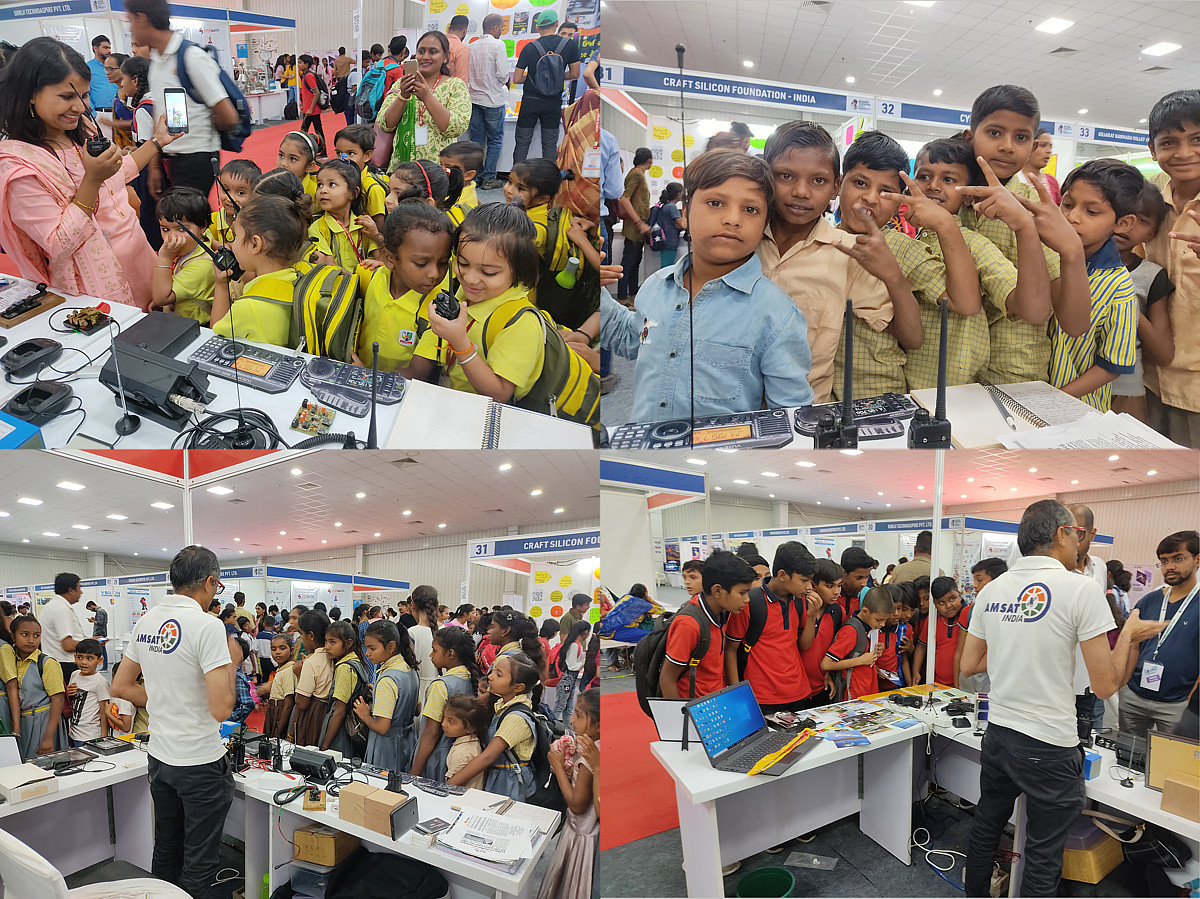
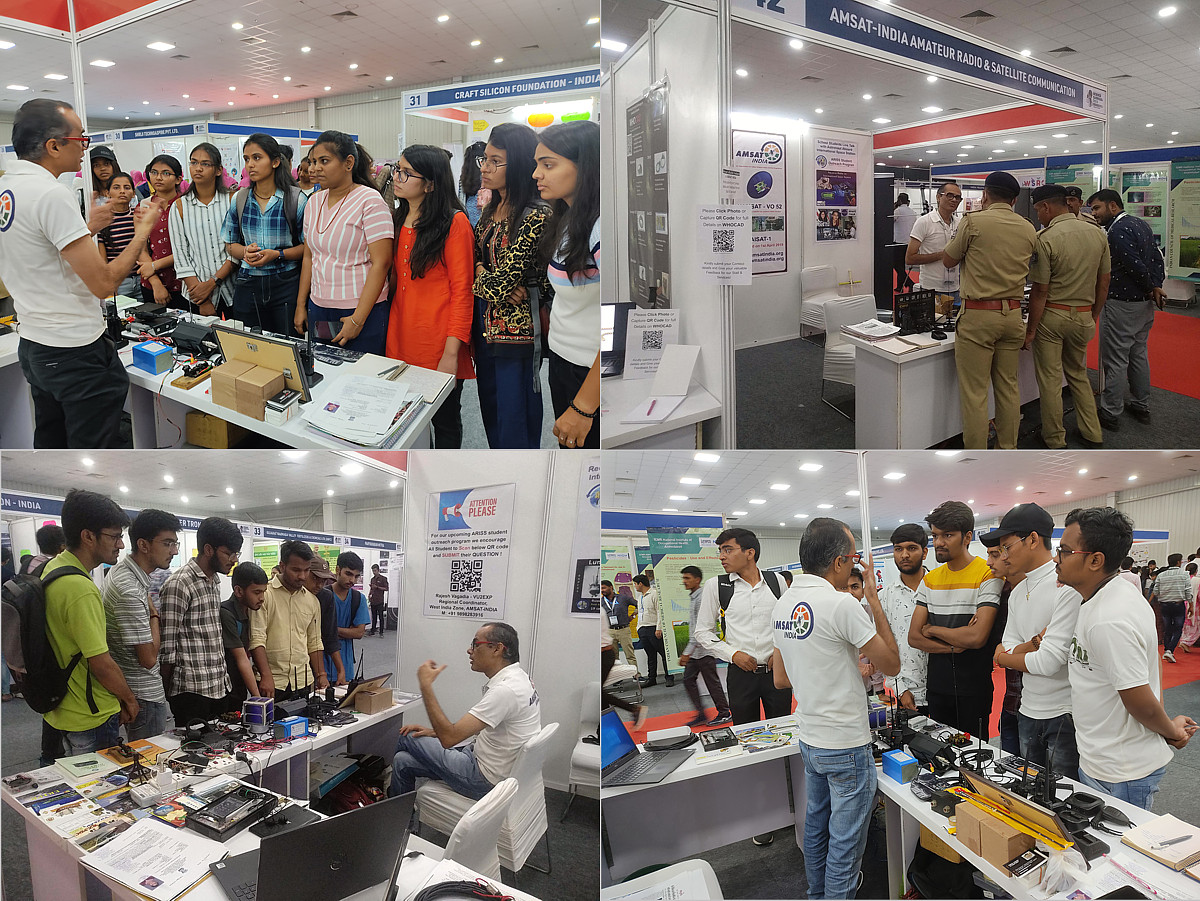
Engineering Students were among the visitors to the stand

Engineering Students were among the visitors to the stand

To celebrate National Science Day of India on February 28 one of the biggest Science Carnival 2023 was organised by Gujarat state – India at prestigious Science City Ahmedabad during 28th February to 4th March 2023.

AMSAT-INDIA was specially invited to participate in this biggest scientific exhibition for mass awareness on Amateur Radio & Satellite Communication!

AMSAT-INDIA Regional Coordinator Rajesh Vagadia VU2EXP & team member Sakshi Vagadia VU3EXP did huge efforts to mass promote AMSAT activities amongst all sort of visitors which includes young kids, school-college students, budding engineers, IT Programmers, general public, professionals from various industries, scientists from renowned organization like ISRO, PRL, IPR, VSSE, ISR, officers from BSF, Police, Fire dept and citizens from every walk of life! More than 100,000 visitors were reported and grabbed the opportunity to visit science carnival 2023 and our Science exhibition during 5 days.

AMSAT-INDIA stall was spacious & decent sized at 3m x 3m, it was a big attraction at the center of the Science Exhibition. With well prepared different informative Banners on AMSAT-INDIA, Various Satellite Activities, Amateur Radio Satellite chronology, ARISS Student outreach program, ARISS SSTV event, Question submission for our upcoming ARISS student outreach program etc was absolutely eye catching from a distance.
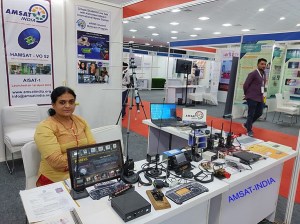
Kiran on the AMSAT-India stand

Kiran on the AMSAT-India stand

For the curious visitors we tried to highlight every aspect of our hobby and exhibited all sorts of Radio stuff, Documents, QSL Cards, Books, Ham Licence, Awards, Project articles, Tracking software, SSTV software, SDR Software, Cube Satellite models etc to give bit idea of our hobby.

Experiencing various amateur radio gears, satellite antenna & test instruments were highly appreciated by visiting budding engineers from a number of colleges at AMSAT-INDIA stall. Some of the stuff we displayed include; Dual band Arrow-II antenna, dual band Yagi, tape measure antenna, GP, Telescopic antenna for SDR, Radios includes Icom IC-705 with LiFePO4 battery pack, Kenwood VHF base, half dozen of VHF/UHF HTs, RTL-SDR setup, LDG ATU, NanoVNA, Morse Key, cw oscillator, Paddle, electronic keyer, SWR/Power meter, Cable, Connectors etc. It made our task easy to explain the use of each stuff according to the visitors’ query.

We came across various types of queries like how to be a Ham, Procedure to get license, Types of Amateur Radio satellites, operating modes, setting up ground station, how to receive ISS SSTV images, how to establish satellite contact etc. We made a humble attempt to answer & satisfy all of those queries. We enjoyed a very detailed discussion with students/groups who already know about Amateur Radio and always need to learn more on Satellite Communication.

We also highlighted contributions of worldwide AMSAT organizations, IARU, ARISS, RSGB, ARRL and our ARSI & GIAR. I also mark a note on an author and my teacher Mr. Nagendra Vijay of popular Gujarati Science magazine named ‘Scope’ who did tremendous efforts to introduce Ham Radio in Gujarat (India) 40 years back and still continue to create awareness via it’s leading Science magazine ‘Safari’, his stall was just after a row.

Our AMSAT-INDIA stall were visited by many well-wisher GIAR Ham friends including VU2CPV Pravinbhai, VU2JGI Jagdishbhai, VU2MJP Manojbhai, VU2SPF Bhatnagarji, VU3APY Asheshbhai, VU3VDC Vitthhalbhai, VU3GLY Priyesh, VU3WHO Snehal etc.

It was a great experience for us to spend the whole 5 days enjoying talking & explaining our favorite hobby Amateur Radio & Satellite Communication!

We were happy to present amateur radio as a scientific hobby & experimenting platform for diversified fields and not just emergency communication tools!

Lots of positive & appreciating feedback we received in the visitor feedback book.

We are thankful to Science Carnival 2023 Organiser Dr. Vrajesh Parikh, Pulkesh Prajapati, Dr. Narotam Sahoo & team for inviting us for this prestigious Science Carnival Exhibition. I also thank our AMSAT-INDIA Secretary Mr Nitin Muttin VU3TYG, Director Educational B. A. Subramani VU2WMY, President Ramesh Ramsubbu VU2RMS & committee for complete guidance and support extended to us.

I specially thank team member Sakshi Vagadia VU3EXP & my XYL Kiran Vagadia for supporting and assisting me all the time during the 5 day exhibition.

I am optimistic to see the next generation taking keen interest in Amateur Radio & Satellites from VU Land.

Thank you
73 Rajesh Vagadia VU2EXP
Rajkot – Gujarat
Regional Coordinator West India Zone, AMSAT-INDIA
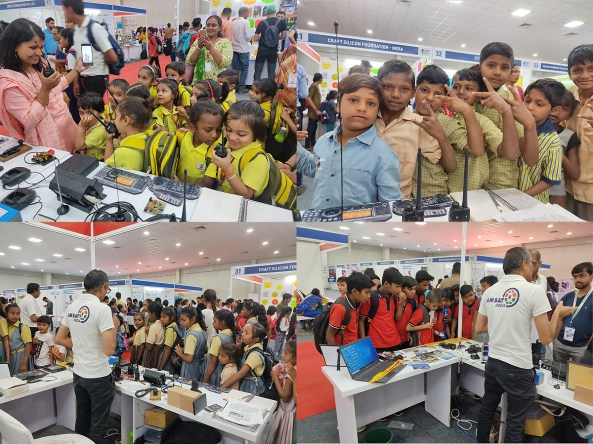
Many youngsters visited the stand
Many youngsters visited the stand
Space Station contact with students in Malta

Josh Cassada KI5CRH

Josh Cassada KI5CRH

An ARISS contact between students at Stella Maris College, Gzira, Malta, callsign 9H1MRL and the International Space Station (ISS) is scheduled for 12:34 GMT on Wednesday, February 15.

Update March 26: Report on the contact in the Times of Malta newspaper https://timesofmalta.com/articles/view/ariss-mt-direct-contact-iss-via-amateur-radio.1021213

The ISS crew member will be astronaut Josh Cassada KI5CRH who will be using the ISS callsign OR4ISS. The downlink frequency is 145.800 MHz and the signal should be receivable in the British Isles and Europe.

A little bit of information about the school follows. Stella Maris College is a Lasallian school. It takes its inspiration from its founder John Baptist de la Salle. In the Christian faith, John De La Salle is venerated as the Patron Saint of Teachers.

Basically, a Lasallian School has the following characteristics:
A) respect for each student as a unique person.
B) A strong spirit of Community.
C) A school of Quality.
D) A school that embraces everyone.
E) Shows special preference for persons who are considered poor financially, morally, physically, psychologically.

Mission statement:
Our school is a place where everyone strives to create and nurture a holistic, inclusive and well-ordered learning climate thereby ensuring a high-quality, values-based academic preparation.

The school has an astronomical observatory and electronics forms part of the school curriculum.

The contact is being conducted by five local radio amateurs and we call ourselves ARISS team Malta; Dominic 9H1M, Manuel 9H1GW, Andrew 9H2AV, Trevor 9H5TS and Anthony 9H2AS. We have set up a station at the school’s auditorium and a 10 element crossed Yagi and rotator on the roof.

The whole event will be streamed live on YouTube on the following URL:

73s Manuel 9H1GW

User manual for CAS-10 satellite

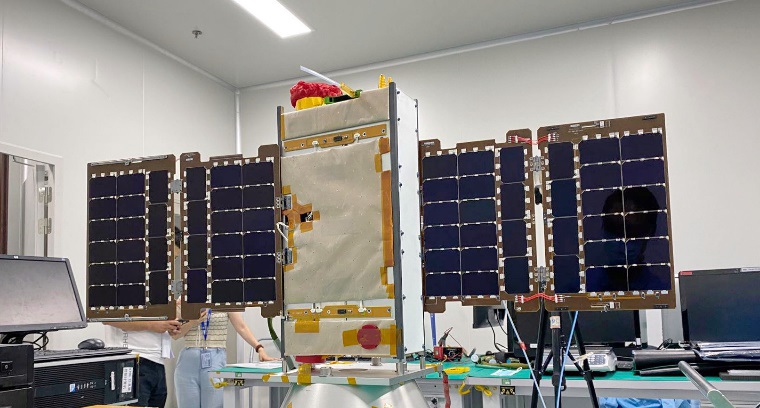
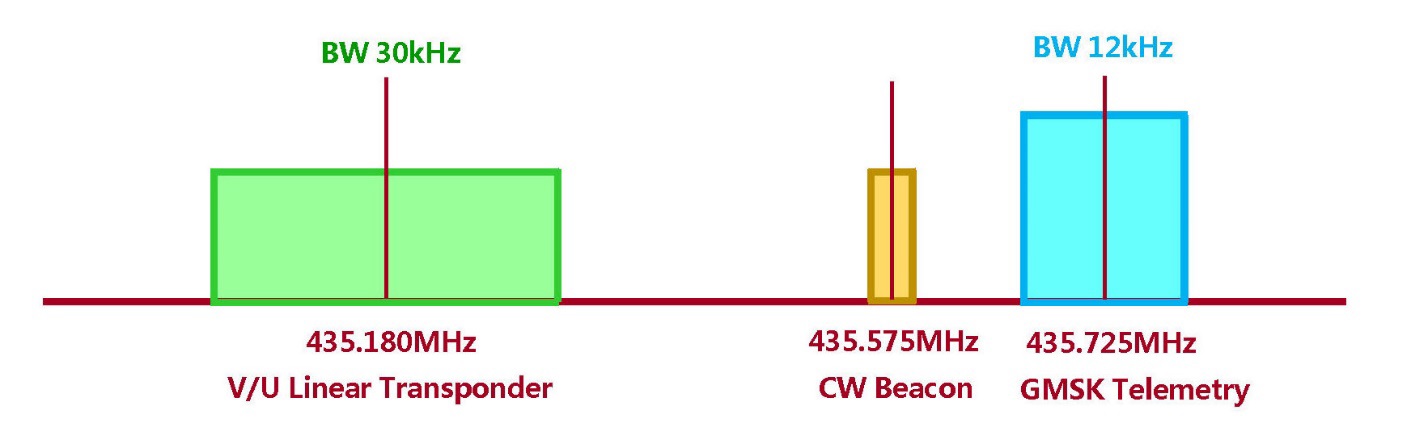
CAS-10 XW-4 SatelliteOn December 18, 2022, CAMSAT’s satellite XW-4 (CAS-10) was deployed from the Tianzhou-5 cargo ship that was docked to the Tiangong space station. CAS-10 carries a linear amateur radio transponder.

The satellite user manual can be downloaded here: CAMSAT XW-4 (CAS-10) Amateur Radio Satellite User’s Manual V2.0

CAS-10 Downlinks

User manual released for Fengtai OSCAR-118

Some of the students and teachers who participated in the CAS-5A project

Some of the students and teachers who participated in the CAS-5A project

CAMSAT’s transponder satellite CAS-5A (Fengtai OSCAR-118) launched on December 9, 2022, carrying three amateur radio transponders.

The satellite user manual can be downloaded here: CAMSAT CAS-5A Amateur Radio Satellite User’s Manual V2.0

Students participated in CAS-5A projectCAS-5A Frequencies:

CW Beacon: 435.570MHz CW 22wpm

U/V Linear Transponder: Uplink 145.820MHz, Downlink 435.540MHz, Bandwidth 30kHz

U/V FM Transponder: Uplink 145.925MHz,Downlink 435.600MHz Bandwidth 15kHz

H/U linear Transponder: Uplink 21.435MHz,Downlink 435.505MHz Bandwidth 15kHz

Telemetry: 435.650MHz GMSK 4800bps

ARISS contact with students in Malta

Astronaut Koichi Wakata KI5TMN

Astronaut Koichi Wakata KI5TMN

Update Dec 9 : Contact POSTPONED An ARISS contact between students at Stella Maris College, Gzira, Malta, callsign 9H1MRL and the International Space Station (ISS) is scheduled for TBD.

The ISS crew member will be astronaut Koichi Wakata KI5TMN who will be using the ISS callsign OR4ISS. The downlink frequency is 145.800 MHz and the signal should be receivable in the British Isles and Europe.

A little bit of information about the school follows. Stella Maris College is a Lasallian school. It takes its inspiration from its founder John Baptist de la Salle. In the Christian faith, John De La Salle is venerated as the Patron Saint of Teachers.

Basically, a Lasallian School has the following characteristics:
A) respect for each student as a unique person.
B) A strong spirit of Community.
C) A school of Quality.
D) A school that embraces everyone.
E) Shows special preference for persons who are considered poor financially, morally, physically, psychologically.

Mission statement:
Our school is a place where everyone strives to create and nurture a holistic, inclusive and well-ordered learning climate thereby ensuring a high-quality, values-based academic preparation.

The school has an astronomical observatory and electronics forms part of the school curriculum.

The contact is being conducted by five local radio amateurs and we call ourselves ARISS team Malta; Dominic 9H1M, Manuel 9H1GW, Andrew 9H2AV, Trevor 9H5TS and Anthony 9H2AS. We have set up a station at the school’s auditorium and a 10 element crossed Yagi and rotator on the roof.

The whole event will be streamed live on YouTube on the following URL:
https://www.youtube.com/@trevorsammut/streams

73s Manuel 9H1GW

FUNcube-1 (AO73) Now celebrating nine years in orbit!

FUNcube-1 (AO73) Battery Voltage Telemetry Nov 21, 2022

FUNcube-1 (AO73) Battery Voltage Telemetry Nov 21, 2022

Another year has passed and FUNcube 1 has continued to operate from its orbit around 600km above the earth. To start with some statistics. The spacecraft creates and downlinks data in frames that run for two minute periods. It has now transmitted more that 16 million of these frames or “Sequence Numbers”. Another big statistic is that more than 10 million data packets have been received by stations that have forwarded them to our Data Warehouse.

You can see the leading ground stations here http://warehouse.funcube.org.uk/ui/fc1-fm/satellite_ranking – special congratulations to those at the top scorers…many of them have individually forwarded more than 1 million packets. Thanks to all contributors around the world. Having this network of ground stations has enabled us to easily monitor the status of the spacecraft easily.

Back here on earth, as mentioned, we have continued to monitor the health of the spacecraft as these illumination levels and spin/tumble rates have changed over the months.

Whilst mentioning big numbers, we are now approaching 48500 orbits and this equates to a distance travelled of 2174091840000000000000000000 fermis since launch. That’s 2.1 ronnafermis. Yes these are genuine SI Units of Measure and are equivalent to 14.16 AU or almost half way to Neptune.

After some time in full sun, the spacecraft is now experiencing “normal” eclipse periods of around 25 minutes each orbit. This will reduce the on board temperatures and may influence the tumble rate which has been between 2 and 5 seconds for some time. The is quite fast and is not helping telemetry reception with our 5 second data frame mentioned above.

The present operational schedule is for high power telemetry when in sunlight and receive only when in eclipse. This seems to suit the EPS quite well and the battery bus voltages have been quite stable.

At least that was correct until early morning on Friday 11th November when the indicated bus voltage appeared to “drop off a cliff” over the period of just four orbits. Further analysis showed that the 3.3V bus consumption had suddenly jumped four times normal. As can be seen by the graph above this problem then disappeared just as suddenly and the bus voltage recovered quite quickly. Investigations are continuing!

Please keep the telemetry reports coming in and let us know if you would like a Fitter message uploaded for any educational or outreach events.