
17th – 18th July 2012
Click here to register to attend the Workshop
 Workshop Details
Title: 6U CubeSat Low Cost Space Missions Workshop
Date: 17th – 18th July 2012
Abstracts Due: 26th June 2012
Time:
Venue: The Duffield Theatre, Advanced Instrumentation and Technology Centre, Mt Stromlo Observatory, Canberra Australia
Cost: Free
Download the workshop poster here.
Background
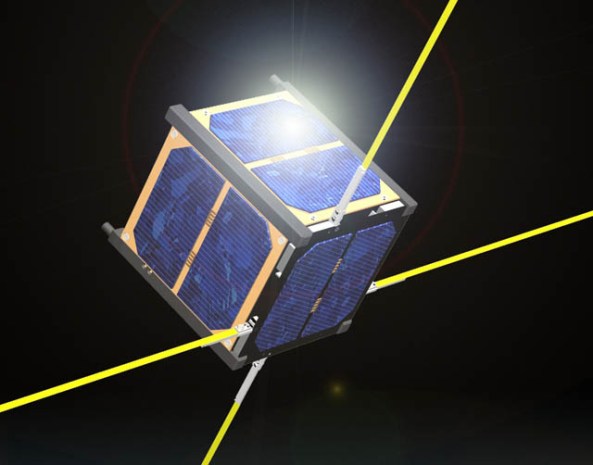
For 2012 the NASA CubeSat Launch Initiative includes 6U CubeSat satellites. An 8 kg 6U CubeSat can be designed to perform some of the Earth observation missions of 100 kg microsatellites. A 6U CubeSat (~33 x 10 x 22 cm, ≤ 8kg) has 4 times the payload capacity of a 3U CubeSat (33 x 10 x 10 cm, ≤ 4 kg) which uses two thirds of its volume for system components.
This workshop, the first in the world dedicated to the 6U CubeSat, will explore the range of missions possible with a 6U CubeSat in the areas of:
- Astronomy
- Atmospheric Science and other Planetary Science
- Space Physics
- Earth Observation
- Biology
- Other
Program
| Day 1 – Tuesday 17th July 2012 |
| Time |
Presentation Title |
Speaker |
| 10:00-10:30AM |
Morning tea |
|
| 10:30-10:35AM |
Welcome |
Andrew Dempster (ACSER) |
| 10:35-10:45AM |
Workshop Introduction |
Steven Tsitas (ACSER) |
| 10:45-11:10AM |
6U CubeSat Design for Earth Observation with 6.5 m GSD, 5 Spectral Bands and 14 Mbps downlink |
Steven Tsitas (ACSER) |
| 11:10-11:35AM |
Scheduling multi-spectral collection of the Australian landmass using a 6U cubesat constellation |
Leon Stepan (DSTO) |
| 11:35-12:00PM |
From SmallSat to 6U CubeSat: A Case Study in size and mass reduction |
Jeremy Straub (University of North Dakota) |
| 12:00-01:00PM |
Lunch |
|
| 01:00-01:25PM |
6U CubeSat as the basis for a sustainable Australian space program |
Steven Tsitas (ACSER) |
| 01:25-01:50PM |
TBC |
Roger Franzen, Mike Petkovic (ANU, Mt Stromlo Observatory) |
| 01:50-02:50PM |
KEYNOTE: Research and Technology Implications and Applications for Very Small (MesoScale) Spacecraft |
John Hines (NASA-Ames) |
| 02:50-03:15PM |
Synergy between 6U, fractionated and adaptable systems |
Gordon Roesler |
| 03:15-03:45PM |
Afternoon tea |
|
| 03:45PM |
Panel Discussion: Can the 6U CubeSat form the basis of a sustainable Australian space program? |
|
| Day 2 – Wednesday 18th July 2012 |
| Time |
Presentation Title |
Speaker |
| 09:05-09:10AM |
Workshop introduction final day |
Steven Tsitas (ACSER) |
| 09:10-09:40AM |
TBC |
Stephanie Thomas (Princeton Satellite Systems) |
| 09:40-10:05AM |
Satellite-borne impact detectors for small meteoroids, interplanetary dust and space debris |
Duncan Steel (UNSW) |
| 10:05-10:35AM |
Morning tea |
|
| 10:35-11:00AM |
A CubeSat Mission for Exoplanet Transit Detection and Asteroseismology |
Jeremy Bailey (UNSW) |
| 11:00-12:00PM |
KEYNOTE: Astrophysics with 6U platforms |
Harvey Butcher (ANU) |
| 12:00-01:00PM |
Lunch |
|
| 01:00-01:25PM |
6U CubeSat Commercial Applications |
Steven Tsitas (ACSER) |
| 01:25-01:50PM |
40 kg to LEO; a low cost launcher for Australia |
Nicholas Jamieson (UNSW) |
| 01:50-02:15PM |
6U Radar Altimeter Concept Design |
Nick Stacy (DSTO) |
| 02:15-02:40PM |
GNSS Remote Sensing in a 6U Cubesat |
Andrew Dempster (UNSW) |
| 02:40-03:05PM |
Preliminary parameters for an experimental payload for Trospospheric CO2 measurement using a space-born lidar 6U cubesat platform |
Manny Fabiao Dionizio (UNSW) |
| 03:05-03:35PM |
Afternoon tea |
|
| 03:35-04:05PM |
6U CubeSat Systems (TBC) |
TBC |
| 04:05-04:35PM |
CubeSat deorbit devices (TBC) |
TBC |
| 04:35-04:45PM |
Workshop conclusion and next steps |
Steven Tsitas (ACSER) |
Keynotes
Technology Keynote – John W. Hines, Chief Technologist, NASA-Ames Research Center
Science Keynote – Professor Harvey Butcher , Director Research School of Astronomy and Astrophysics
Chair
Dr Steven Tsitas, Senior Research Associate, Australian Centre for Space Engineering Research, University of New South Wales
Who Should Attend
Scientists and engineers interested in payload and mission concepts that take advantage of the greater payload capacity of the 6U CubeSat. For examples of 6U CubeSat designs and payloads that could perform some of the Earth observation missions of 100 kg microsatellites please see “6U CubeSat Design for Earth Observation with 6.5 m GSD, 5 Spectral Bands and 14 Mbps downlink” and “6U CubeSat Commercial Applications”. Reprints available upon request.
Presentations are invited describing payloads and mission concepts for the 6U CubeSat. Presentations are also invited regarding 6U launch opportunities and 6U CubeSat standards.
- SESSION 1: Earth Observation Missions
- SESSION 2: Astronomy Missions
- SESSION 3: Planetary Science and Space Physics Missions
- SESSION 4: Biology and other missions
- SESSION 5: 6U CubeSat launch opportunities
- SESSION 6: 6U CubeSat standards
Abstracts
If you wish to submit an abstract for the 6U CubeSat Low Cost Space Missions Workshop please email them to Stanija Buvac before the 3rd July 2012.
Australian Centre for Space Engineering Research




 AMSAT-UK
You must be logged in to post a comment.