Student's Project Could Go Into Space

Go Erie reports on the work of students from Penn State Behrend who have been building part of a satellite for AMSAT.

The report says:

The trio speaks the language of supercapacitors and charges cycles, and they offer informed views on how circuit boards can shed excess heat.

When David Jesberger, Kathleen Nicholas and Jacob Sherk graduated May 4 from Penn State Behrend, they left speaking the language of engineers. But they also left behind a finished senior project that could soon be headed into outer space.

Senior engineering students at Behrend pitch ideas each year for projects they would like to tackle in their final year. Nicholas said she, Jesberger and Sherk all bid for a chance to be part of a project for the Radio Amateur Satellite Corporation (AMSAT).

The super-capacitor based energy storage device developed by the students is designed to replace the silver–zinc battery on ARISSat type satellites.

Read the full story by Jim Martin at
http://www.goerie.com/article/20120512/NEWS02/305129968/Behrend-engineers%27-project-could-go-into-space

Aalto-1 Mission Animation

Finnish students working on the Aalto-1 CubeSat

Finnish students working on the Aalto-1 CubeSat

Students working on the Aalto-1 CubeSat have released two new videos. In the first video Systems Engineer Antti Kestilä gives a brief introduction to the amateur radio VHF/UHF ground station on the roof of ELEC building at Aalto University Otaniemi campus.

The second video is an animation showing most of the Aalto-1 mission phases.

Aalto-1 is a student satellite project of Aalto University, Finland. When launched, it will be Finland’s first satellite. It is planned to operate at VHF-UHF and there will also be an S-band transmitter. Up to 8 watts of power will be available from the solar panels.

The main payload of the satellite is a novel tiny Fabry-Perot imaging spectrometer, developed by VTT, Finland. The primary scientific goal of the mission is to demonstrate the feasibility of MEMS Fabry-Perot spectrometers for space applications. This miniature technology can be used in nanosatellites for large a variety of remote sensing applications in the future.

High spectral resolution images can be used for water quality monitoring and land use classification.

Watch Aalto-1 // Quick Look on Ground Station

Watch Aalto-1 // Mission Loop for MoA

Aalto-1 on Facebook https://www.facebook.com/pages/Aalto-1/122101441174192

Aalto-1 Discussion Forum https://wiki.aalto.fi/display/SatForum/Aalto-1+Discussion+Forum

Aalto-1 https://wiki.aalto.fi/display/SuomiSAT/Summary

How a Pocket-Size Satellite Could Find Another Earth

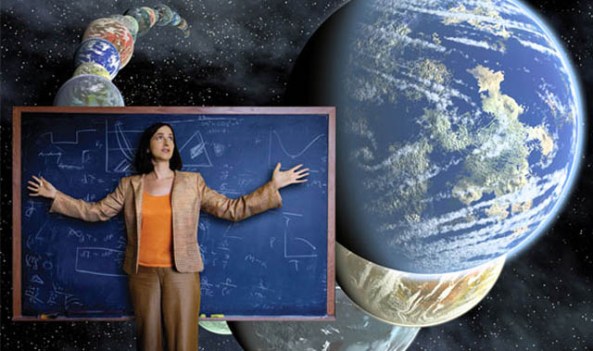
Radio Amateur Sara Seager KB1WTW - Image Credit PlanetQuest

Time Magazine reports that unlike the massive NASA Kepler probe the next mission to search for new planets will be a tiny CubeSat called ExoplanetSat.

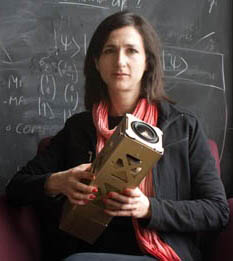
Sara Seager KB1WTW with ExoplanetSat

Sara Seager KB1WTW with model of ExoplanetSat - Image Credit MIT

Time says: What makes ExoplanetSat even more un-NASA-like is that it began as a class project — although admittedly, the class was at MIT. It was a design-and-build course, which the university’s engineering students have to take in order to graduate. In a recent semester, the class was co-taught by Sara Seager [KB1WTW] an astrophysicist who has done groundbreaking research studying how the atmospheres of planets orbiting distant stars might look like from earthly telescopes. Seager recruited five science undergrads to join her engineers, on the theory that out in the real world, they’d eventually have to work with engineers anyway.

The group lead by Sara KB1WTW is developing a prototype ExoplanetSat capable of monitoring a single, bright, sun-like star for two years. Planned to launch late 2012 or 2013 it is hoped it will open the gates for ExoplanetSat interest and funding. Once the funding doors are opened, then the fleet of ExoplanetSats can be launched. The fleet may contain as many as a hundred of these small satellites, each focused on its own star.

In a 2011 visit to Cambridge, UK, Sara said “The reason why we’re excited is because we think that this is a really huge thing. Hundreds and thousands of years from now, people will look back and ask, what are the significant accomplishments of our society in the early twenty-first century? One of them will be that we were the first to discover other worlds and other worlds that might be like Earth. When you think back four hundred years, what do you remember? You think about Christopher Columbus and Lewis and Clark. It’s the exploration—finding things that were new to our culture. And that’s why we’re excited.

Read the Times Magazine article at http://www.time.com/time/health/article/0,8599,2114158,00.html

MIT paper on ExoplanetSat http://dspace.mit.edu/openaccess-disseminate/1721.1/61644

Presentation Slides http://mstl.atl.calpoly.edu/~bklofas/Presentations/DevelopersWorkshop2011/5_Smith_ExoplanetSat.pdf

PlanetQuest http://planetquest.jpl.nasa.gov/

Hackers In Space: Hackerspace Global Grid Interview

An interview given to Tom Nardi by Gregor Jehle (Hadez) of the Stuttgart Hackerspace was recently published on The Powerbase site.

In the interview Hadez discusses his ideas for distributed satellite ground station network and the creation of a Hackerspace Global Grid.

Read The Powerbase interview at
http://www.thepowerbase.com/2012/02/hackers-in-space-hackerspace-global-grid-interview/

Hackerspace Global Grid on Twitter
https://twitter.com/hxglobalgrid

Hadez took part in a presentation to the Chaos Computer Camp 2011 that can be seen at
http://www.uk.amsat.org/3892

Vote For Your Favorite Space App

Global voting started yesterday, May 9, for the International Space Apps Challenge! The Space Apps Challenge fosters innovation by providing a platform for citizens from around the world to work together to solve current challenges relevant to both space exploration and social need. The Innovation Endeavors and Talenthouse community of investors, entrepreneurs and advisors are here to support and celebrate these teams and their innovations to the fifty challenges – and invite you to vote for your favorite App. The final winners will be determined with your votes and along with an internationally recognized jury of investors and entrepreneurs from Innovation Endeavors.

Among the many Apps is one that visualizes near-real time aurora data, a solution to visualize Kepler data, such as changing star intensity, using an Arduino and a prototype web app aimed at school children that makes the Kepler exoplanet data more accessible by displayingᅠit in a visual and fun way, making comparisons with each planetᅠto our own.

Voting closes May 15, see the contenders and cast your vote at
http://open.nasa.gov/blog/2012/05/09/spaceapps-global-judging-open-now/

Three More Radio Hams Venture to ISS Next Week

ISS Expedition 31 Crew 640

The six radio hams comprising the ISS Expedition 31 crew. In the front row are Russian cosmonauts Oleg Kononenko RN3DX (right), commander; and Gennady Padalka RN3DT, flight engineer. Pictured from the left (back row) are NASA astronaut Joe Acaba KE5DAR, Russian cosmonaut Sergei Revin RN3BS, European Space Agency astronaut Andre Kuipers PI9ISS and NASA astronaut Don Pettit KD5MDT, all flight engineers. Photo credit: NASA

The ARRL report that NASA will televise the launch and docking of the next mission, carrying three radio amateurs to the International Space Station (ISS), scheduled for May 14.

NASA Flight Engineer Joseph Acaba, KE5DAR, and his two Russian crewmates, Soyuz Commander Gennady Padalka, RN3DT, and Flight Engineer Sergei Revin, RN3BS, are completing their training as they undergo Soyuz spacecraft fit.

Live NASA TV coverage of the Soyuz TMA-04M spacecraft launch from the Baikonur Cosmodrome in Kazakhstan begins at 9 PM CDT on Monday, May 14 (0200 UTC May 15), with the launch scheduled for 10:01 PM CDT (0301 UTC).

The trio will arrive at the station May 16, joining Expedition 31 Commander Oleg Kononenko, RN3DX, of the Russian Federal Space Agency, Flight Engineer Don Pettit, KD5MDT, of NASA and Flight Engineer Andrei Kuipers, PI9ISS, of the European Space Agency, who have been aboard the ISS since December 2011. Padalka, Acaba and Revin will transition to the Expedition 32 crew in July and return to Earth in mid-September.

For NASA TV’s scheduled coverage see the full ARRL story at http://www.arrl.org/news/three-hams-venture-to-iss-next-week

You can watch NASA TV online at http://www.nasa.gov/multimedia/nasatv/index.html

Listening to the International Space Station http://www.uk.amsat.org/3491