K1D to Operate Satellites on Field Day

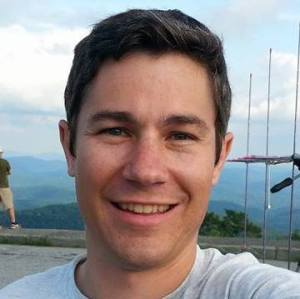
Drew Glasbrenner M-KO4MA AUK Colloquium 2015

Drew Glasbrenner M/KO4MA working FO-29 at the AMSAT-UK Colloquium 2015

Field Day is always the fourth full weekend of June, beginning at 1800 UT Saturday and running through 2059 UTC Sunday. Field Day 2016 is June 25-26.

In an effort to encourage more kids and their families to get involved in the hobby, the kids at Ham Radio (dot) World are working to put an all-kids Special Event ARRL Field Day station on the air in 2016. This station will have the special event call sign of K1D and it will be set-up, operated, and put away by kids who are ham radio operators.

Kids of all ages and their parents (both licensed hams and non-hams alike) are encouraged to come out and participate in this exciting event.  New hams and even non-hams can experience the excitement of talking to people around the world with the Get On the Air (GOTA) station, which will have the callsign K4G. Both stations will operate from grid EL99IA in Deland, Florida, USA.

The kids will be on the HF bands and on the Amateur Radio satellites.

K1D will be joined by AMSAT’s Vice-President Operations, Drew Glasbrenner, KO4MA, who will be a kid-for-a-day to help get the kids on the linear satellites.  Look for them and give them a shout!

Field Day http://www.arrl.org/field-day

Ham Radio World http://hamradio.world/

Source ANS http://www.amsat.org/?page_id=443

Data modes on ham radio satellites

Tony Bombardiere K2MO has released a video showing operation of PSK31, PSK63 and Hellshreiber on the amateur radio satellites.

He demonstrates WinPSK and IZ8BLY’s Hellschreiber which both have satellite capabilities. Essentially, the applications make it easy for the operator to monitor digital signals on the satellites downlink while simultaneously transmitting on the satellites uplink; it’s accomplished by utilizing the sound cards full-duplex operation.

Watch Digital Modes Via Satellite

DopplerPSK software http://www.frontiernet.net/~aflowers/dopplerpsk/dopplerpsk.html

Ham Radio – A golden age of opportunity

Rupert Goodwins G6HVY

Rupert Goodwins G6HVY

Broadcaster and technology journalist Rupert Goodwins G6HVY writes about amateur radio on the Technology and Gadget website ARS Technica. He highlights the STEM work carried out by the Amateur Radio on the International Space Station (ARISS) program.

Rupert says: It’s a good time to be technical. Maker communities are thriving around the world, tools and materials to create and adapt are cheaper and more powerful now than ever, and open source hardware, software, and information mean that if you can think it, you can learn how to do it and then make it happen.

For one group of technological explorers, this is more than just a golden age of opportunity: it’s providing the means to save one of the oldest traditions in electronic invention and self-education, one that helped shape the modern world: amateur radio.

Read the article at http://arstechnica.co.uk/gadgets/2016/06/when-everything-else-fails-amateur-radio-will-still-be-there-and-thriving/

Rupert Goodwins G6HVY
http://twitter.com/rupertg
http://www.zdnet.com/blog/ruperts-diary/

What is Amateur Radio? http://www.essexham.co.uk/what-is-amateur-radio

Find an amateur radio training course near you https://thersgb.org/services/coursefinder/

A free booklet is available aimed at introducing newcomers to the hobby that can also be used as a handy reference while getting started, see
http://rsgb.org/main/get-started-in-amateur-radio/alex-discovers-amateur-radio-2/

AMSAT-UK https://amsat-uk.org/
Twitter https://twitter.com/AmsatUK
Facebook https://facebook.com/AmsatUK
YouTube https://youtube.com/AmsatUK

MAI-75 ISS SSTV Video

John Brier KG4AKV

John Brier KG4AKV

John Brier KG4AKV has released a video showing reception of the MAI-75 experiment Slow Scan TV transmissions from the International Space Station.

This is one of two rare MAI-75 passes over North America. The other is in Video #3 in this series (see link below). It’s rare because the MAI-75 event only took place for a few hours of Thursday and Friday during the week long event, and almost all of the passes didn’t go over North America, so getting it was really special. This was a great way to round out the April 2016 ISS SSTV week long event! I love this SuitSat image!

Oh yeah! This was shot partially with a GoPro! Enjoy the views.

Eventually I hope to make a time lapse of all the ISS SSTV images I received during this event, but my next video will be of an SO-50 pass where I made six contacts, five of which were back to back.

Watch Spacesuit MAI-75 Image! – Last Pass of April 2016 ISS SSTV Event – Video #4

New videos every Wednesday!
https://www.youtube.com/channel/UCJDdMdjxwFsjdzhXQFHVk2g/videos
https://twitter.com/johnbrier

ISS Slow Scan TV https://amsat-uk.org/beginners/iss-sstv/

GB1SS: schools speaking to Tim Peake

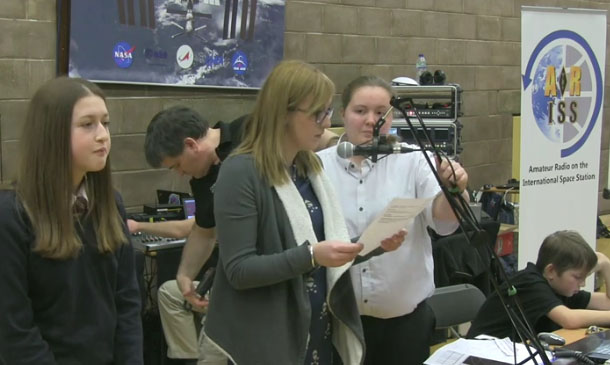
Sandringham students talk to Tim Peake GB1SS using amateur radio

Sandringham students talk to Tim Peake GB1SS using amateur radio – BBC TV screenshot

The ten school contacts with Tim Peake on the ISS during his Principia mission have inspired thousands of young people and introduced them to amateur radio in a new and exciting way. A new RSGB video celebrates these historic events and the range of linked activities the schools have enjoyed.

Students at Derby High School Bury use amateur radio to link up with Tim Peake

Students at Derby High School Bury used amateur radio to link up with Tim Peake

Beginning with the exhilaration of the launch, it follows the competition for schools to host the ARISS contacts, and showcases the variety of science, technology, engineering, maths (STEM) and arts activities that helped pupils to understand more about space and amateur radio.

The contacts themselves, often led by newly-licensed pupils, were the successful culmination of many months of work and anticipation. We congratulate everyone involved and hope you enjoy our celebration.

Watch GB1SS: schools speaking to Tim Peake

ARISS UK videos https://www.youtube.com/channel/UCQS-yDk7PdE9cRv4MNu8pCw/videos

Amateur Radio on the International Space Station http://ariss.org/
Twitter https://twitter.com/ARISS_status

ARISS Principia site https://principia.ariss.org/

What is Amateur Radio? http://www.essexham.co.uk/what-is-amateur-radio

Find an amateur radio training course near you https://thersgb.org/services/coursefinder/

A free booklet is available aimed at introducing newcomers to the hobby that can also be used as a handy reference while getting started, see
http://rsgb.org/main/get-started-in-amateur-radio/alex-discovers-amateur-radio-2/

AMSAT-UK https://amsat-uk.org/
Twitter https://twitter.com/AmsatUK
Facebook https://facebook.com/AmsatUK
YouTube https://youtube.com/AmsatUK

Beccy Bowen 2W0YLL led the contact between Powys school students and Tim Peake GB1SS

Beccy Bowen 2W0YLL (right) led the contact between Powys school students and Tim Peake GB1SS

LightSail-2 to send Morse code

LightSail-2 - Credit The Planetary Society

LightSail-2 – Credit The Planetary Society

The Planetary Society CubeSat LightSail-2 will transmit Morse code from space, and you can make the sound your ringtone

Jason Davis @jasonrdavis reports that during last year’s LightSail-1 mission (call sign KK6HIT), dozens of radio enthusiasts around the world wrote in to tell us they heard our solar sailing CubeSat chattering away in low-Earth orbit.

Every few seconds, LightSail automatically transmits a beacon packet. These packets can be picked up by ground stations and decoded into 238 lines of text telemetry that describe the spacecraft’s health and status. Everything from battery current to solar sail deployment motor state is included. We still plan to better support the worldwide radio community’s efforts to help us capture those packets; that work is temporarily on the back burner while the engineering team focuses on getting the spacecraft ready for delivery.

Many off-the-shelf CubeSat software packages also have an option to transmit Morse code beacons, and for the LightSail 2 mission, we’re activating this feature. Every 45 seconds, the spacecraft will transmit “L-S-2,” and radio operators tuned in to the spacecraft’s 437.325 megahertz frequency should be able to hear it.

Read the full The Planetary Society story at
http://www.planetary.org/blogs/jason-davis/2016/20160609-lightsail-2-morse-code.html