Helen Sharman and Amateur Radio

Helen Sharman GB1MIR

Helen Sharman GB1MIR

The UK’s first astronaut Helen Sharman was asked about Amateur Radio on the BBC Radio 4 show Saturday Live broadcast December 12.

When asked by a listener, Brian, whether she still uses her amateur radio licence, she said:

“My amateur radio license was given to me very specially. I didn’t pass the tests in order to get it and I was only allowed to use it while I was in space, but I made friends all over the world. You can’t talk to a lot of people in Europe because there’s so many people trying to communicate with the space station but in parts of the world we’re it’s less populated, for instance in Australia, the astronauts do make friends that they’ve only ever met through the radio… it’s lovely.”

Read the full Essex Ham story and listen to the show at
http://www.essexham.co.uk/news/helen-sharman-amateur-radio-in-space.html

Read about Helen Sharman’s amateur radio operation from the Mir Space Station at
https://amsat-uk.org/about/history/first-uk-astronaut-helen-sharman-gb1mir/

AO-85 Slow Scan TV

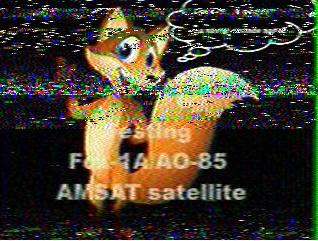
Fox-1A / AO-85 SSTV image received by Roland PY4ZBZ

Fox-1A / AO-85 SSTV image received by Roland PY4ZBZ

On Sunday, December 13, Roland Zurmely PY4ZBZ received a Slow Scan TV (SSTV) image which had been uplinked to the amateur radio CubeSat Fox-1A / AO-85.

Roland says he was not prepared and the antenna was misguided but even so he managed to receive a recognizable image.

AO-85 was launched October 8, 2015 and transmits 5 kHz deviation FM on around 145.980/.975 MHz.

In the UK amateur radio transceivers are set to default to narrow FM filters (2.5 kHz deviation). If possible you should select your radio’s wider FM filter designed for 25 kHz channel spacing.

AO-85 information https://amsat-uk.org/satellites/communications/ao-85-fox-1a/

Hints on how to receive Slow Scan TV from space are at
https://amsat-uk.org/beginners/iss-sstv/

Roland PZ4ZBZ http://www.qsl.net/py4zbz/fox.htmhttp://www.qsl.net/py4zbz/fox.htm

Tim Peake KG5BVI Principia Mission – Are you ready for launch ?

Principia Mission Patch

Principia Mission Patch

UK astronaut Tim Peake KG5BVI has finished his training and has now entered the quarantine period before his launch, on Tuesday, December 15.

Have you decided how you will celebrate the launch? You can join in at events around the country or tune in at home, in school or at work.

There are four national launches in Belfast, Cardiff, Edinburgh and London with 16 local Science and Discovery centres holding launch events around the UK.

BBC One will be televising the launch starting at 10.30 with a special one off Blast Off Live: A Stargazing Special programme presented by Professor Brian Cox and Dara Ó Briain from the Science Museum London. The hatch opening and Tim’s first moments on the International Space Station will be shown on BBC Two from 7pm.

You can watch also all the key moments throughout day online at Livestream, ESA TV, NASA TV and BBC.

UK students to have direct contact with astronaut Tim Peake KG5BVI during Principia mission
https://amsat-uk.org/2015/12/09/uk-students-tim-peake-amateur-radio/

UK students to have direct contact with astronaut Tim Peake during Principia mission

Blue Peter Principia Mission Patch

Blue Peter presenter Lindsey, Principia mission patch competition winner Troy and UK astronaut Tim Peake KG5BVI

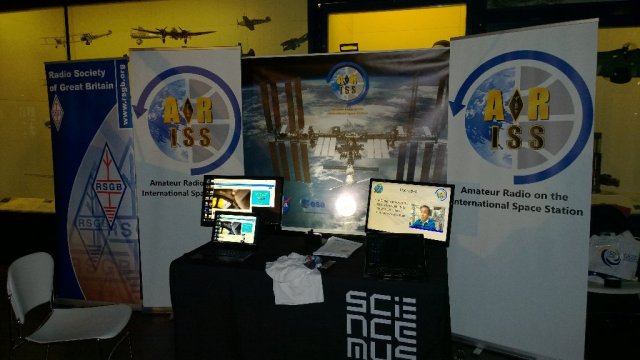
Working with the UK Space Agency, ARISS (Amateur Radio on the International Space Station) is giving a number of UK schools the opportunity to speak directly to Tim Peake, the first British ESA astronaut, during his mission on board the International Space Station (ISS). This will enable live interaction between pupils and Tim and is anticipated to be one of the highlights of the Principia STEM outreach programme.

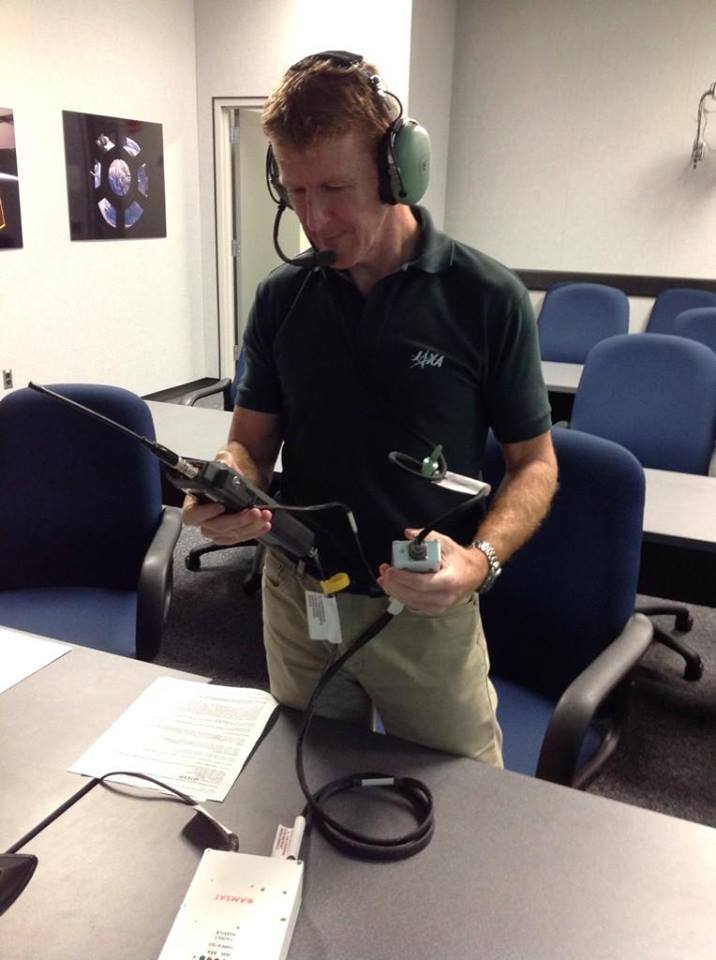
Tim Peake KG5BVI training on ISS amateur radio station equipment

Tim Peake KG5BVI training on ISS amateur radio station equipment

During his 6 month mission to the ISS, starting in December 2015, Tim will be undertaking a wide range of science experiments, some of which have been designed by students from around the UK. Additionally he has committed to take part in a large range of educational outreach activities with schools and colleges around the country.

Jeremy Curtis, Head of Education at the UK Space Agency, said:

“Both Tim’s space mission and amateur radio have the power to inspire young people and encourage them into STEM subjects. By bringing them together we can boost their reach and give young people around the UK the chance to be involved in a space mission and a hands-on project that will teach them new skills.”

The pre-arranged schools contacts will take place between January and April 2016 and students will be able to put a number of questions directly to Tim using amateur radio VHF and UHF radio equipment specially installed at the school for the occasion.

HamTV dish antenna at Goonhilly - Credit Frank Heritage M0AEU

HamTV dish antenna at Goonhilly – Credit Frank Heritage M0AEU

The 3.8 metre dish owned by Satellite Applications Catapult is being loaned to the project to track the ISS and will ensure real time video will be available during the schools’ contacts scheduled for early next year. The dish is almost in the shadow of the 29 metre dish “Arthur” built in 1962 to receive the first transatlantic television signals from the Telstar-1 spacecraft.

For Tim Peake’s mission, the ARISS team of licensed UK Radio Amateurs is planning a world first by also receiving live video from the ISS during the contact. Using the HamTV transmitter, which has recently been commissioned on board the ISS, Tim will be the first astronaut to use this equipment during a two way schools contact.

As well as building a vehicle based receive system, which will be installed at the school on the day of the contact, the team recently visited Goonhilly Earth Station in Cornwall to commission a dish to receive the 2.4 GHz HamTV transmissions from the ISS.

During the contact at the schools the ARISS team will be providing information displays on the ISS position and have webcams showing both the local and Goonhilly dishes as they track the ISS.

The hosting schools will be organising presentations and displays before and after the contact and the ARISS team will be providing a live web cast of all the day’s events including the actual contact with Tim Peake.

The live event webcast will be hosted by the British Amateur Television Club (BATC) on their web streaming service at https://principia.ariss.org/live/

The ARISS programme is designed to maximise the impact of the Principia Mission outreach activities. It will directly engage students with media and communication technologies with the goal of inspiring them to pursue careers in Science, Technology, Engineering and Maths.

UK Space Agency Principia site https://principia.org.uk/

School Shortlist for Tim Peake Space Station Contact
https://amsat-uk.org/2015/07/14/school-shortlist-tim-peake-iss/

NASA TV to cover launch of Tim Peake KG5BVI
https://amsat-uk.org/2015/12/08/nasa-tv-to-cover-launch-of-tim-peake-kg5bvi/

AMSAT-UK https://amsat-uk.org/
Twitter https://twitter.com/AmsatUK
Facebook https://facebook.com/AmsatUK
YouTube https://youtube.com/AmsatUK
Join AMSAT-UK https://amsat-uk.org/new-members/join-now/

ISS Display 2015-12-11


OSCAR News Issue 212

OSCAR News front page 212 Dec 2015Issue 212 of the AMSAT-UK amateur radio satellite publication OSCAR News was released on December 9, 2015. E-members can download it here.

The paper edition is usually posted 2-3 weeks after publication of the electronic issue.

In this issue:
• Second Birthday of FUNcube-1
• More FUNcube Fitter Message activity
• Fun with the FUNcube
• Students to have direct contact with Tim Peake during the Principia mission
• Supporting the Principia Mission
• The HamTV antennas on the Columbus module on the ISS
• Spectrum Forum Meeting – Saturday 7th November 2015
• Low Cost TVSat LNB Disciplined to a 10 MHz Reference
• Fox-1A Update
• A Homemade Portable Antenna Rotator
• Letter from America
• Shorts
• Is your licence at risk?

AMSAT-UK FUNcube Mission Patch

AMSAT-UK FUNcube Mission Patch

Membership of AMSAT-UK is open to anyone who has an interest in amateur radio satellites or space activities, including the International Space Station (ISS).

E-members of AMSAT-UK are able to download OSCAR News as a convenient PDF that can be read on laptops, tablets or smartphones anytime, anyplace, anywhere. Join as an E-member at Electronic (PDF) E-membership

There are two rates for the paper edition to cover the extra postage costs:
UK
Rest of the World (Overseas)

PDF sample copy of “Oscar News” here.

Join AMSAT-UK using PayPal, Debit or Credit card at
http://shop.amsat.org.uk/

E-members can download their copies of OSCAR News here.

WRC-15: Amateur Bands Unsuitable for Non-Amateur Satellites

Logo WRC RA 2015The World Radiocommunication Conference (WRC) held in Geneva during November 2015 has recommended an agenda for the next WRC, to be held in 2019, to the Council of the International Telecommunication Union (ITU). One of the agenda items is of particular interest to the small-satellite community.

Agenda item 1.7 for WRC-19 reads: “to study the spectrum needs for telemetry, tracking and command in the space operation service for non-GSO satellites with short duration missions, to assess the suitability of existing allocations to the space operation service and, if necessary, to consider new allocations, in accordance with Resolution COM6/19 (WRC-15).”

Resolution COM6/19, which eventually will be given a new number, specifies the frequency ranges that may be considered for possible new allocations. They are 150.05-174 MHz and 400.15-420 MHz.

One of the factors that the conference considered in deciding on these particular frequency ranges was “that some non-amateur satellites have used frequencies for telemetry, tracking and command in the frequency bands 144-146 MHz and 435-438 MHz which are allocated to the amateur-satellite service, and that such use is not in accordance with Nos. 1.56 and 1.57.” Those two provisions of the ITU Radio Regulations define the amateur and amateur-satellite services respectively.

The International Amateur Radio Union welcomed the exclusion from consideration of all existing frequency allocations to the amateur and amateur-satellite services. IARU President Tim Ellam, VE6SH, observed: “This is an excellent result for the amateur services and clearly shows that non-amateur satellite constructors need to consider spectrum other than the very limited and congested segments that are available for amateur satellites at 144 MHz and 435 MHz.”

Dave Sumner K1ZZ
International Amateur Radio Union