Ham Radio Balloon to Commemorate Sputnik

A replica of Sputnik 1 satellite

A replica of the Sputnik 1 satellite

The Secunda Amateur Radio Club will launch two balloons carrying amateur radio equipment from the Vryburg airstrip FAVB on October 4, 2014 at 0600 to 0800 CAT (0400-0600 UT).

This date marks the start of World Space Week 2014. They will commemorate the launch of the Sputnik satellite on October 4, 1957 by attaching an active model replica of Sputnik to one of the balloons. The replica will transmit a Morse code message on 144.076 MHz.

Please e-mail(christo.kriek@live.co.za) a screen print of the decoded message with date, time, GPS location, radio and antenna used to receive a special certificate from the launch team, if you are one of the lucky ones that can “decode” by ear please mail above info without the screen print. The transmitter used is a flea power transmitter.

The South African National Space Agency (SANSA) and eight High Schools (80 children) form part of the program. Each school programmed their own data logger with 2 sensors. The 8 data loggers with sensors will be part of the payload of the balloon payload. Each of the school children had to write a Radio Amateur test (10 Questions) as part of their registration and the results will be used to allocated to their final presentation.

There will be a web link with cameras from the launch site atVryburg airport, one camera at Hartbeeshoek and one at Secunda High School. Please send your e-mail info to christo.kriek@live.co.za to get access to the webcams on the internet.

The first balloon will be launched anytime from 0600 CAT (0400 UT) onwards.

The ground stations will use HF on 3.650 MHz or 7.080 MHz or 20m 14.280 MHz between the ground control, chase cars, Secunda High School and Hartbeeshoek. The bands/frequencies may change due to propagation. If your hear the ground stations operate please keep the frequency clear for ground control operations. If you have any feedback in tracking the balloons specifically on descent please report it on the mentioned HF frequencies.

Due to the low APRS Digipeater and IGate density in the Vryburg area radio hams in the adjacent areas are requested to also help track the payloads as well.

It is vitally important to retrieve the payloads since there are data loggers on-board from several schools in the Secunda area. They need the data to complete their assignments.

A High Altitude Glider will also be launched the same morning as the High Altitude Balloon Experiment, HABEX on 4 October 2014.

On the same day at Secunda High School, Secunda, Unisa University will also have a ROBTICS exhibition. SANSA will also have a presentation via the webcam about GPS’s the same day.

Below are the payload frequencies:
Main balloon: APRS Tracking RX 144.800 FM
CW Telemetry RX 432.075 FM
Sputnik CW RX 144.075 FM
Crew Comms HF 40/80M
Webcam

2nd Balloon: APRS Tracking RX 144.8 FM
RTTY 433.92 USB/ 50 baud 500 shift ascii7,n,1
Crew Comms HF 40/80M
Webcam

3rd Balloon: Remote Glider
Webcam

Skype/Web Camera: Please register at http://www.anymeeting.com/ and send your email address to: christo.kriek@live.co.za to get access to live webcams.

Celebrate UN-declared World Space Week October 4-10. The biggest public space science #STEM event in the world – Use hashtag #WSW2014
Twitter https://twitter.com/WorldSpaceWeek
Web http://www.worldspaceweek.org/

Secunda Amateur Radio Club http://secradio.org.za/

Source SARL http://www.sarl.org.za/

G3BJ elected IARU Region 1 President

IARU_Region_1_logoDon Beattie, G3BJ, former President of the RSGB, has been elected as IARU Region 1 President at the General Conference in Varna-Albena, Bulgaria.

During the Final Plenary of the 23rd IARU Region 1 General Conference, the following members were elected to serve on the Executive Committee:

President: Don Beattie, G3BJ

Vice President: Faisal Al-Ajmi, 9K2RR

Treasurer: Eva Thieman, HB9FPM / OK3QE

Secretary: Dennis Green, ZS4BS

Members:

Thilo Kootz, DL9KCE

David Court EI3IO

Oliver Tabakovski, Z32TO

Ivan Stauning, OZ7IS

Ranko Boca, 4O3A

The 24th IARU Region 1 General Conference will be held in Wildbad Kreuth, near Munich in Germany an hosted by the DARC.

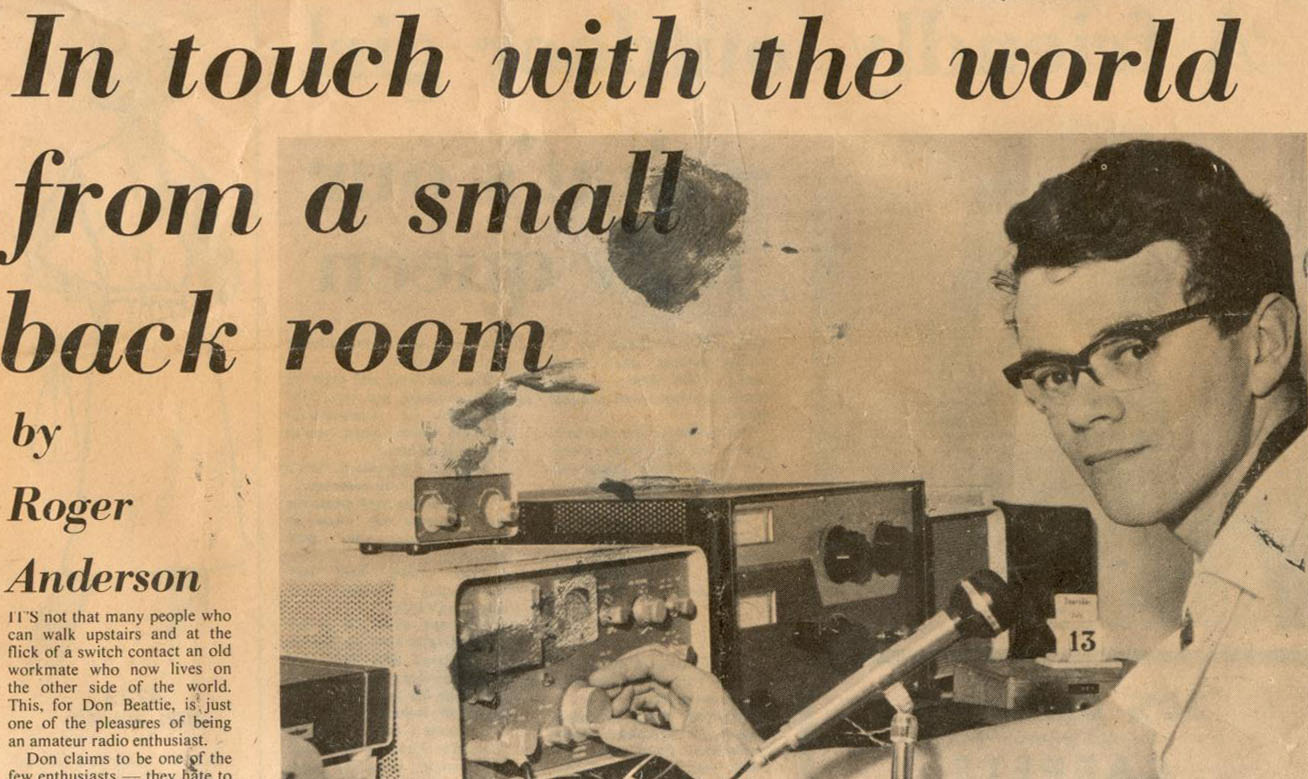
Don Beattie G3OZF (now G3BJ) in Essex Chronicle newspaper July 21, 1972

Don Beattie G3OZF (now G3BJ) in Essex Chronicle newspaper July 21, 1972

In the 1970’s Don Beattie, then G3OZF, lived at East Hanningfield in Essex. He was a member of the Chelmsford Amateur Radio Society (CARS) and was subsequently made an Honorary Member. He was featured several times in the Chelmsford press promoting amateur radio and defending the right to antenna masts.

CARS Amateur Radio Training http://g0mwt.org.uk/training

IARU Region 1 http://iaru-r1.org/

AMSAT-UK Colloquium in TX Factor Show

In this episode of the TX Factor Show Bob McCreadie G0FGX reports from the recent AMSAT-UK Colloquium in Guildford, and finds time to test out the SuperAntenna Superstick delux package. Nick Bennett 2E0FGQ travels north and discovers a rather remarkable radio club.

Among those interviewed at the Colloquium are AMSAT-NA VP Operations Drew Glasbrenner KO4MA, Tom Harle from VR2Space, Graham Shirville G3VZV, Wouter Weggelaar PA3WEG and Carlos Eavis G0AKI.

Watch TX Factor – Episode 5 (TXF005)

View recordings of the talks given at the Colloquium
https://amsat-uk.org/colloquium/colloquium-2014/presentation-videos/

Previous editions of TX Factor are at https://www.youtube.com/user/txfactorshows/videos

TX Factor http://www.txfilms.co.uk/txfactor/

IARU R1 VHF/UHF/uW C5 meeting has started work

Delegates of the key IARU Region 1 C5 VHF, UHF and Microwaves C5 Committee

The key IARU Region 1 VHF, UHF and Microwave C5 Committee

The VHF, UHF and Microwave C5 Committee meeting has started work at the IARU Region 1 General Conference in Varna-Albena, Bulgaria.

The meeting discussed the 70 MHz IARU Region 1 initiative to obtain regulatory recognition in Europe for a secondary frequency allocation to the amateur service at 70 MHz. Also covered were the challenges to Amateur and Amateur-Satellite allocations in the UHF and Microwave bands.

24th IARU Region 1 General Conference opens
https://amsat-uk.org/2014/09/22/24th-iaru-region-1-general-conference-opens/

IARU Region 1 Conference documents and pictures http://iarur1con2014.bfra.bg/

23 cm band and WRC-2018 https://amsat-uk.org/2014/08/13/23-cm-band-and-wrc-2018/

24th IARU Region 1 General Conference opens

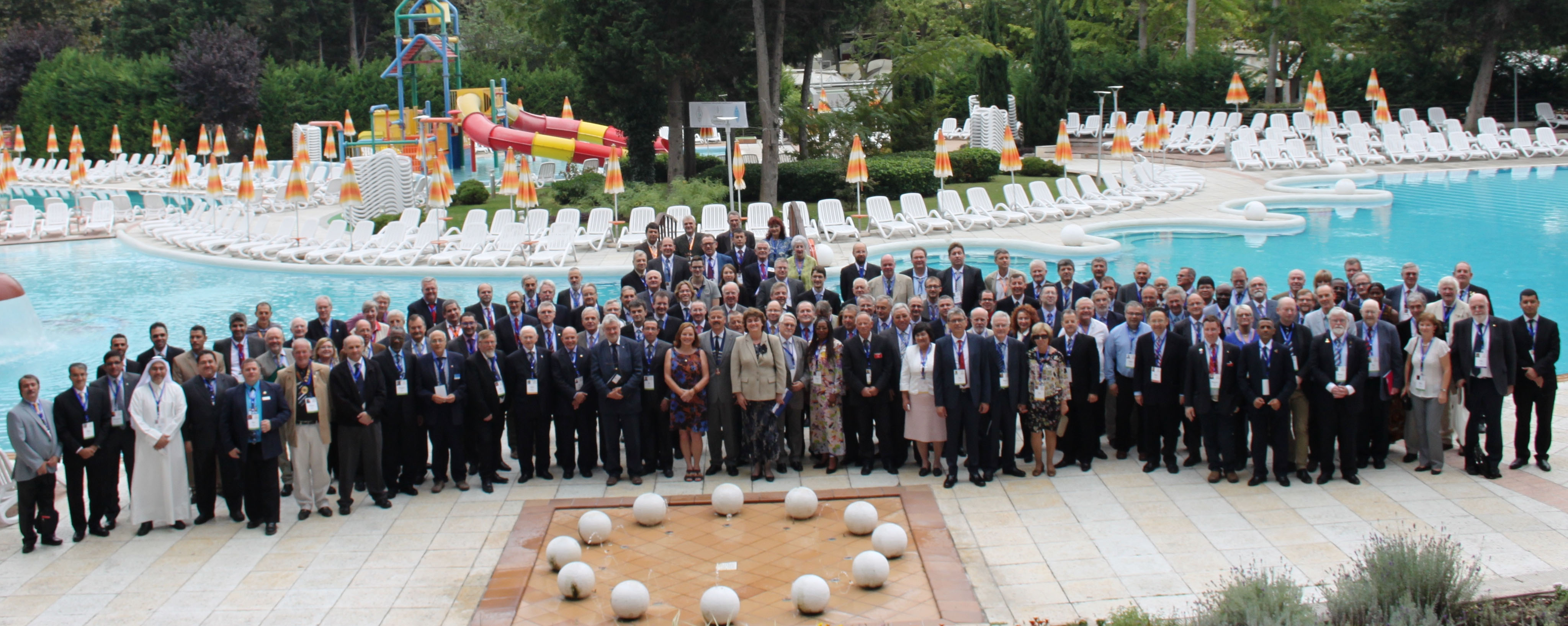
Delegates at IARU Region 1 Conference 2014

Delegates at IARU Region 1 Conference 2014

The First Plenary of the 24th IARU Region 1 General Conference was opened at 10:30 on Sunday, September 21, 2014 in the Grand Hall of the Flamingo Grand Hotel, Albena, Bulgaria.

The message of Dr Kristalina Georgieva, European Union Commissioner for International Cooperation, Humanitarian Aid and Crisis Response was read by Mr Encho Gospodinov.
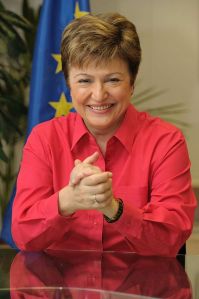
Dr Kristalina Georgieva

Dr Kristalina Georgieva

“Dear IARU Conference participants,

Dear radio messengers in times of trouble and hope

Friends, ladies and gentlemen,

It is my pleasure and privilege to address your General Conference. The timing for your gathering could not be more indicative for the world we live in and the challenges we all face today.

The lives of millions of people is impacted by troubling events: conflicts in Africa and the Middle East (and sadly, in Europe); natural disasters all over the world with all the un-predictabilities of the mother Nature and the responsibilities of the human beings for the Climate Change; human waves of migrants and refugees moving from one place to another, and assorted diseases often trailing the disasters and conflicts. In short, this is a world, which does not stop to surprise us every morning when we open the TV screen or a newspaper.

At the same time, the world has never been better connected and wired. Today\’s communications are a real miracle once considered a fantasy coming from the novels of Arthur Clarke or Rey Bradbury. Never before, we had this privilege to transmit or exchange information with such accuracy, speed and scope of distribution. And never before so many people from all corners of the world and all layers of the society had access to this information. The arrival of internet really made our planet a Global village and ever since our live changed forever in the way we deal with information. Politics, diplomacy, journalism, technology, science, research, banking, literally all changed overnight with this powerful instrument.

However, there are moments in life when a good, stable, reliable and independent information tool is the only one we can use to save lives. And this is the one we call simply the RADIO.
IARU_Region_1_logoImagine a major natural disaster, which knocks down all modern information tools in the affected area: with no electricity, no internet, no telephone and fax connections, not even the old telex machines. No trains and ships moving, no roads to use or airports functioning. Nothing. We know a tragedy has happened, we know many are dead, and even more still alive, but trapped and helpless. And no one can help them as nobody knows what has happened. Because there is no information.

Luckily, there is a last resort: the radio amateurs; the people who are the eyes and the ears of the world in time when all other information channels are silent. “Amateurs” is actually not the right word in this case: these are professional communicators who are listening to the heartbeat of the planet and registering the emotional vibrations of people who may be in danger. In short, you are the last technical miracle, which is independent, reliable information channel, which can transmit an important piece of news from any place in the world, any time, by anyone who knows how to operate this wonderful creature, called radio.

Your advantage is that you are independent. A well-trained radioman with good equipment and ever-charged batteries can be a fantastic link between two villages, two countries or two continents. When organized in a Union, you are a communication superpower in time of total electronic darkness. But the most important part of your equipment is the people you have; the Bravehearts of men and women listening to people who may be in danger and may need help; the professional live-savers called strangely amateurs, who nevertheless act as volunteers when and where they are needed.

IARU Region 1 VHF, UHF and Microwaves C5 Committee

IARU Region 1 VHF, UHF and Microwaves C5 Committee

In your history, you have many examples of lives being saved because some of your members caught a signal from a village, a region or un-accessible place that someone needs help. We need your skills and services because we will have more and more disasters in the future. The dry statistics reveal troubling trends: during the last 20 – 30 years, the number and the intensity of the natural disasters have increased dramatically. So did the number of people killed or affected. The earthquake in Haiti in 2010 killed 230 000 people alone ….  Between 2003 and 2012, some 6 700 disasters hit the planet with 2005 being the darkest one – 810 disasters in one year. Typhoons in the Philippines, floods in Pakistan, China or Europe, droughts and famine in Africa, garnished with conflicts, are now almost daily events. The economic losses from these disasters went up from $ 50 billion to $ 200 billion a year since the 80s.

Every Red Cross volunteer will tell you that during a disaster the most needed and precious live saving element is not food, water or medicines. It is the timely, accurate information that is the most needed. As timely and accurate information saves lives, prevents major tragedies, stops rumours, which create panic and leads to even more casualties. This is how solid information flow becomes the backbone of a successful communication strategy. In short, everything, which you do and helps your societies to organise themselves better, is vital. Local and national authorities count on you as the last bastion of reliable information channel. Your professional skills and your humanitarian duties make you more than radio amateurs; you are truly needed guardians in time of troubles and I hope you will always stay as a pillar of hope and courage for all who are in danger.

Thank you for your noble work. I wish you every success in this Conference.”

Kristalina Georgieva

Source IARU Region 1 http://iaru-r1.org/

IARU Region 1 Conference documents and pictures http://iarur1con2014.bfra.bg/

23 cm band and WRC-2018 https://amsat-uk.org/2014/08/13/23-cm-band-and-wrc-2018/

Ofcom WRC-15 Consultation Responses

Logo WRC RA 2015The RSGB report responses to the Ofcom consultation on WRC-15 prepared by the Society and affiliated groups including AMSAT-UK are now available in the WRC-15 Special Focus section.

In addition to supporting Agenda Item 1.4 for a 5MHz allocation, the detailed responses cover amateur radio interests across several VHF and Microwave allocations. This includes amateur bands affected by other agenda items, ITU procedures for nano- and pico-satellites, and preferences for future agenda items that may be proposed for WRC-18.

AMSAT-UK response

WRC-15 Special Focus section
http://rsgb.org/main/news/special-focus/wrc-15/wrc-15-papers/

For background see the parent RSGB WRC-15 page
http://rsgb.org/main/news/special-focus/wrc-15/