Antarctica: DP0GVN QO-100 antenna destroyed, rebuild planned for 2022

AWI Neumayer Station III Antarctica - image from AMSAT-DL

AWI Neumayer Station III Antarctica – image from AMSAT-DL

AMSAT-DL reports the antenna used by DP0GVN in Antarctica for the QO-100 geostationary satellite amateur radio transponder is completely destroyed.

According to the Alfred-Wegener-Institute (AWI), a severe winter storm hit Atka Bay (Antarctica) at the end of last week. At Neumayer Station III, about 20 kilometres away, wind speeds of max. 94.9 knots (175.7 km/h) were recorded as a minute average during the night from 13 to 14 August. The strongest gust was 112 knots (207 km/h). This is by far the highest wind speed in recent years.

Unfortunately, the satellite antenna for the geostationary QO-100 amateur radio satellite was also completely destroyed during the storm, despite the weatherproof radome, so no school contacts with DP0GVN can take place until further notice. AMSAT-DL and AWI hope to erect a new antenna early next year, in particular to continue the very successful contacts with schools.

Source AMSAT-DL
https://amsat-dl.org/en/dp0gvn-antenna-destroyed-rebuilding-planned-2022/
https://twitter.com/amsatdl

ISS SSTV Aug 6-7 145.800 MHz FM

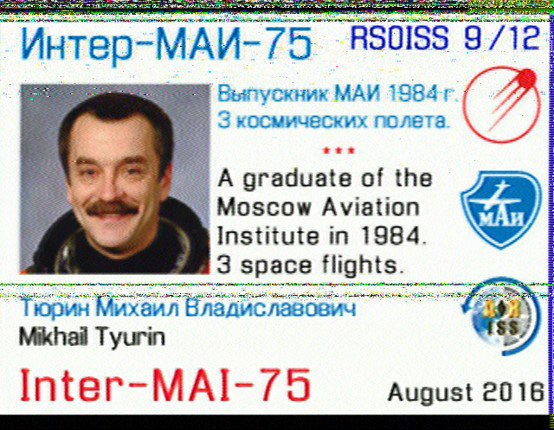
ISS SSTV MAI-75 image 9/12 received by Chertsey Radio Club on Baofeng handheld

ISS SSTV MAI-75 image 9/12 received by Chertsey Radio Club on Baofeng handheld

Russian cosmonauts on the International Space Station (ISS) are planning to transmit Slow Scan TV images on 145.800 MHz FM using the SSTV mode PD-120.

The transmissions are part of the Moscow Aviation Institute SSTV experiment (MAI-75) and will be made from the amateur radio station RS0ISS in the Russian ISS Service module (Zvezda) using a Kenwood TM-D710 transceiver.

August 6, 2021 (Friday) from 10:50 GMT until 19:10 GMT*

August 7, 2021 (Saturday) from 09:50 GMT until 15:55 GMT*

*Dates and times subject to change.

The signal should be receivable on a handheld with a 1/4 wave whip. If your rig has selectable FM filters try the wider filter for 25 kHz channel spacing.

You can get predictions for the ISS pass times at https://www.amsat.org/track/

ARISS SSTV Blog https://ariss-sstv.blogspot.com/

Useful SSTV info and links https://amsat-uk.org/beginners/iss-sstv/

23cm band: Amateur radio coexistence with Sat-Nav

Galileo LogoThe Chair of IARU Region 1 Spectrum Affairs, Barry Lewis G4SJH, reports on the meeting of the ITU-R Working Party 4C (WP4C) July 5-13 which discussed the amateur radio 1240 MHz band.

On the IARU-R1 site he writes:

During the period 5 – 13 July 2021, the preparatory work for WRC-23 agenda item 9.1b continued in ITU‑R Working Party 4C (WP4C). (See Region 1 Feb 23rd news item for further background). The IARU member representatives from Australia, Brazil, Canada, Germany, Japan, Norway, UK and USA, participated in the meeting and delivered additional information on amateur activities in this key microwave band

Preliminary studies came from France based on the ongoing CEPT work to provide initial estimates of separation distances required between RNSS GALILEO receivers and a sample of amateur emissions. The European Commission GALILEO team provided a set of observations pertaining to a RNSS interference event in northern Italy.

The work contributed by France, although needing refinement, is going in a good direction, using ITU‑R recommended propagation models and assumptions based on operating scenarios provided by the amateur community. Further work is needed to take account of the large disparity between the RNSS service receiver bandwidths and the frequency band offsets of the amateur applications based on the measurements carried out by Germany.

The RNSS community have updated their RNSS receiver protection criteria with an update to ITU‑R Recommendation M.1902 that now includes parameters relevant to the GALILEO E6 signal block. However these criteria only distinguish between a narrow band and wide band interferer level at the receiver and take no account of offset frequency in the receiver bandwidth or any time variance.

The IARU is working to ensure the amateur services are realistically represented in the studies as they move forward. It remains vital that national amateur communities present their views on the importance of this band to their national regulators in a consolidated and consistent manner. The work will continue throughout the year and beyond both in ITU‑R and in the regional telecommunications organisations and the IARU is committed to ensure every group hears the amateur position on this important microwave band.

Read Barry’s full post at
https://www.iaru-r1.org/2021/23cm-band-and-sat-nav-coexistence-preliminary-studies-considered-in-itu-r-wp4c/

Read the IARU Summary Meeting Report at
https://www.iaru-r1.org/wp-content/uploads/2021/07/Report-from-WP4C_Jul-2021Rev1.pdf

ISS SSTV 145.800 MHz FM June 21-26

Amateur Radio on the International Space Station (ARISS) logoARISS report there will be an “Amateur Radio on Shuttle, Mir and ISS” Slow Scan TV (SSTV) event from June 21-26. Transmissions from the International Space Station will be on 145.800 MHz FM using PD120.

The ARISS team will be transmitting SSTV images continuously from June 21 until June 26. The images will be related to some of the amateur radio activities that have occurred on the Space Shuttle, Mir space station and the International Space Station.

The schedule start and stop times are:

Monday, June 21 – Setup is scheduled to begin at 09:40 UTC (transmissions should start a little later).

Saturday, June 26 – Transmissions are scheduled to end by 18:30 UTC.
Downlink frequency will be 145.800 MHz and the mode should be PD120.

Those that recently missed the opportunity during the limited period of MAI transmissions should have numerous chances over the 6 day period to capture many (if not all 12) of the images.

Check the ARISS SSTV blog for the latest information http://ariss-sstv.blogspot.com/

ARISS SSTV Award https://ariss.pzk.org.pl/sstv/

The signal should be receivable on a handheld with a 1/4 wave whip. If your rig has selectable FM filters try the wider filter for 25 kHz channel spacing.

You can get predictions for the ISS pass times at https://www.amsat.org/track/

Useful SSTV info and links https://amsat-uk.org/beginners/iss-sstv/

MIR-SAT1 to deploy from ISS

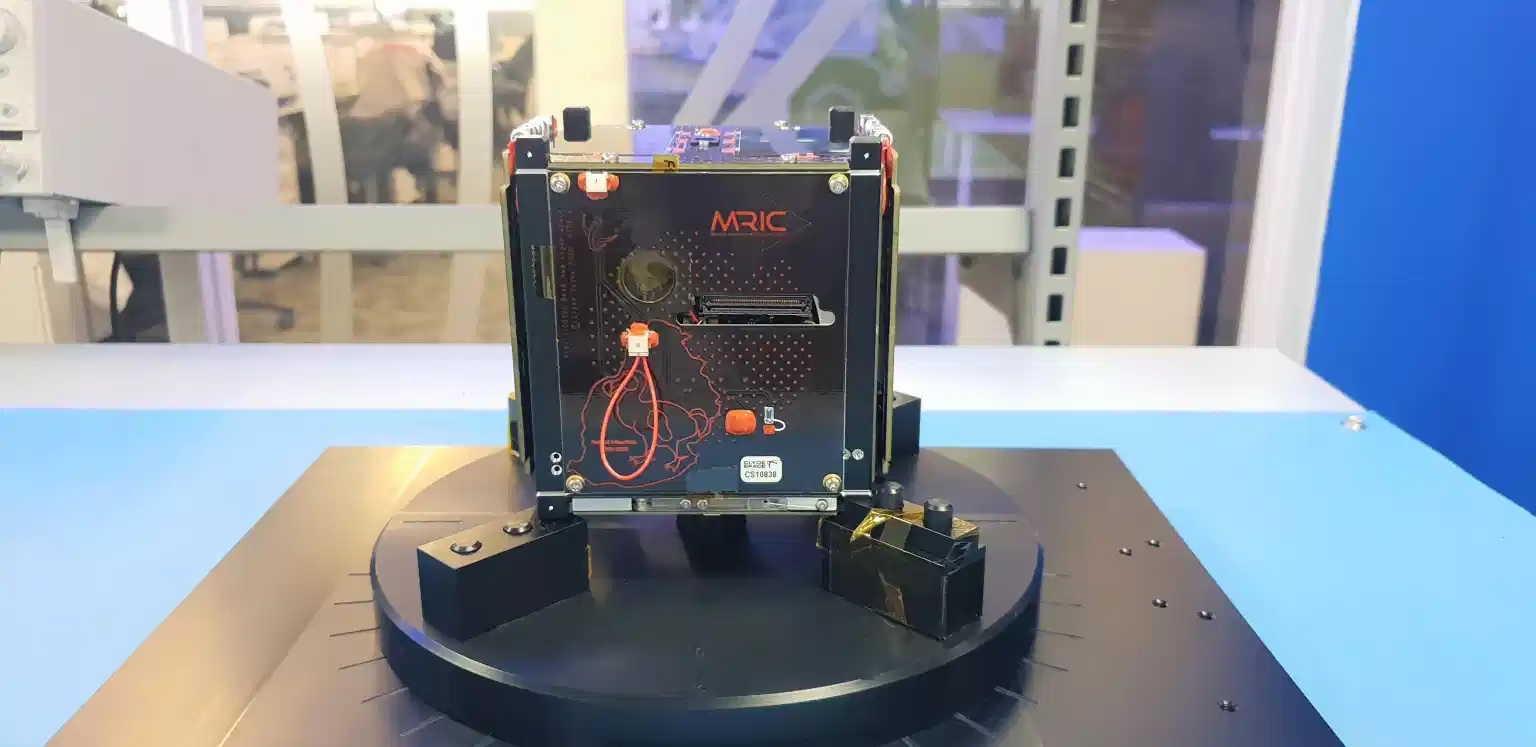
MIR-SAT1 CubeSat

MIR-SAT1 CubeSat

The Mauritius Amateur Radio Society (MARS), is offering an Award to commemorate the deployment of the MIR-SAT1 CubeSat from the ISS, planned for June 22 at 10:55 GMT.

The award is open to all participating Radio Amateurs/SWLs worldwide and will be issued to those decoding MIR-SAT1 telemetry (TLM) and forwarding it to SatNogs.

Full details of the award and links to telemetry decoders are at
https://mars3b8.wordpress.com/2021/06/19/mir-sat1-special-award/

The deployment will be shown live on JAXA YouTube channel, the broadcast starts at 10:35 GMT on Tuesday, June 22.

The IARU Satellite Frequency Coordination page reports:

MIR-SAT1 is a 1U CubeSat mission with the following objectives:

1. Verify the performance of the on-board subsystems by receiving telemetry from the satellite and establish communication to and from the satellite (command and control).
2. Collect images of Mauritius and the Mauritian EEZ for capacity, building, experiment and research.
3. Experimental communication with other islands via the satellite (for scientific and/or emergency purposes), through a Radio Amateur digipeater payload.
4. V/U 9600bps GMSK digipeater may be open for Radio Amateur communication worldwide when the satellite not used for all above.

A downlink on 436.925 MHz has been coordinated. Decoders for the amateur radio community and schools have been developed by Chris AC2CZ and Daniel EA4GPZ and will be available in the public domain on their WEB sites/Github, Links will be provided before launch on Tweeter, AMSAT-BB and Space Mauritius, see
https://spacemauritius.com/#telemetry

For the digipeater operation it will be necessary to evaluate the power available after deployment to decide on opening same 24/7 or on scheduled time.

IARU Satellite Frequency Coordination pages http://amsat.org.uk/iaru/

Follow 3B8DU on Twiiter at https://twitter.com/3b8du

IARU in the CEPT Working Groups

CEPT LogoIARU volunteers have been participating in the CEPT FM and SE Working Groups looking after the amateur and amateur satellite service interests. CEPT WG-SE #88 took place during April and WG-FM #99 took place at the end of May.

The report from the IARU Region 1 site says:

WG-FM’s project teams tackle a wide range of civil spectrum applications and are developing important regulatory deliverables relating to wireless power transfer and the 23cm band RNSS coexistence topic amongst other things. Work on both these topics is ongoing.

The CEPT Radio Amateur Forum Group (RAFG) is hosted by WG-FM and is chaired by the IARU for the time being. Its main task is maintenance of the CEPT Recommendations TR61-01 and TR61-02. A proposal to merge the activities of the RAFG into project team FM58 (Maritime) has been made but the final decision has been held over until the next WG-FM meeting. The RAFG was tasked at this meeting with a new work item to consider the feasibility of developing an electronic database of CEPT wide amateur licensing documentation. This was supported by six administrations.
https://cept.org/ecc/groups/ecc/wg-fm/fm-radio-amateur-fg/client/introduction/

In WG-SE technical spectrum sharing studies are taking place covering;

• Wireless power transfer including consideration of electric vehicle charging (WPT- EV).
• UWB radiodetermination in 116 – 250 GHz.
• Vehicular radar systems in 77 – 81 GHz.
• Security Scanners in the range 60 – 90 GHz.
• 23cm band RNSS coexistence (related to the WRC item and reported in detail elsewhere)
https://www.iaru.org/spectrum/iaru-and-itu/wrc-23/agenda-item-9-1-topic-b/

Amateur service frequency bands are within the scope of all these studies and fall under the remit of the IARU R1 SRLC
https://www.iaru-r1.org/about-us/committees-and-working-groups/srlc/

A summary report of the WG-SE meeting is at
https://www.iaru-r1.org/wp-content/uploads/2021/06/CEPT-WGSE88-April-2021-report.pdf

The WG-FM meeting is at
https://www.iaru-r1.org/wp-content/uploads/2021/06/WGFM-99-May2021-Report.pdf

Working Group FM Meeting 99 documents
https://cept.org/ecc/groups/ecc/wg-fm/client/meeting-documents/?flid=28918