Italian radio ham in quarantine prior to launch to ISS

Abby Harrison with astronaut Luca Parmitano KF5KDP who is in quarantine - Credit Astronaut Abby

Abby Harrison with astronaut Luca Parmitano KF5KDP who is in quarantine – Credit Astronaut Abby

15-year-old Abby Harrison is in Baikonur, Kazakhstan to watch the launch of her mentor, Italian astronaut Luca Parmitano KF5KDP, on a Soyuz TMA-09M to the International Space Station (ISS) on Tuesday, May 28 at 2031 UT. She again met Luca but this time he was in quarantine prior to the launch.

Abby Harrison

Abby Harrison

Abby intends to be an astronaut and has set herself the goal of being the first person to reach Mars. She used her social media prowess to spearhead a successful RocketHub crowdfunding campaign, raising more than $30,000 to help pay for the trip.

Flying with Luca KF5KDP to the ISS will be Karen Nyberg and Fyodor Yurchikhin RN3FI, all three will stay on the ISS until mid-November.

NASA TV coverage of the launch will begin on May 28 at 1930 UT, and will include video of all pre-launch activities that day leading to the crew boarding its spacecraft. Watch the launch at NASA TV http://www.nasa.gov/ntv or at the Center for Operation of Space Ground-Based Infrastructure http://www.tsenki.com/en/broadcast/broadcast/live1.php

A list of astronauts who are also licensed radio amateurs can be seen at http://www.w5rrr.org/astros.html

Luca Parmitano KF5KDP on Twitter https://twitter.com/astro_luca

Karen Nyberg on Twitter https://twitter.com/AstroKarenN/

BBC News: US Teenager’s Space Ambitions
https://amsat-uk.org/2013/05/21/us-teenagers-space-ambitions/

High School Student’s RocketHub Project
https://amsat-uk.org/2013/05/11/high-school-students-rockethub-project/

Further information on “Astronaut Abby” at

Near-Space Amateur Radio Balloon Flight 29.494 MHz

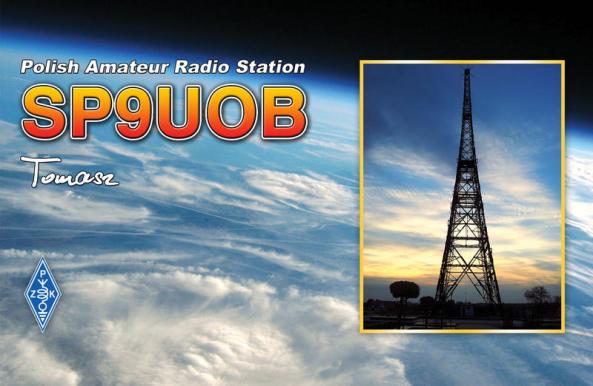
sp9uob_frontThe SEBA-3 high-altitude amateur radio balloon, with a 29.494 MHz RTTY transmitter, launches Saturday, May 25. Other balloons carrying 434 MHz transmitters are also launching this weekend.

One of the 434 MHz balloons PIE will have live video streaming of the launch and from the chase car via the British Amateur TV Club website at http://www.batc.tv/ (select “Live Events” then UKHAS Balloon Launches)

The IARU Region 1 website announcement regarding SEBA-3 says:

On Saturday May 25 at 1000 UT (1100 BST), the team from the club SP9PDF – directed by Tomasz, SP9UOB – will conduct another experiment of flight of an unmanned stratospheric balloon.

The balloon, with the code name SEBA-3, will start from the place of the nationwide amateur radio picnic named “ŁOŚ” (long.: 18.6689 E, lat.: 51.0399 N, QTH locator: JO91IA).

A telemetry transmitter with 500mW power, placed in the capsule of the balloon, will operate on RTTY 50 baud on 29.494 MHz USB with the shift 240 Hz, 7N2. ATV transmission from the camera in the capsule of the balloon is also planned.

Detailed instructions in English for configuring the software are available on the website: http://ukhas.org.uk/guides:tracking_guide

We invite everyone to follow the flight through listening to the tracker, or to visit the website: http://spacenear.us/

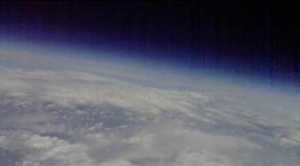
SSDV picture from a previous PIE balloon - Image credit Dave Akerman M6RPI

SSDV picture from a previous PIE balloon – Image credit Dave Akerman M6RPI

Among the 434 MHz balloons launching this weekend are:

– PIE built by Dave Ackerman M6RPI on Sunday from Brightwalton with live streaming of launch and from the chase car at http://www.batc.tv/
The PIE balloon will be transmitting images using Slow Scan Digital Video (SSDV)
Callsign: PIE
Frequency: 434.075 MHz and 434.650 MHz 600Hz shift 600 Baud 8 bits no parity 2 stop bits

– BABSHAB from Great Tew, Oxfordshire
Exact location: Within 500m radius around latitude 51.956468, Longitude -1.416999
Callsign: BABSHAB
Frequency: 434.075 MHz RTTY 450 shift 50 Baud 7 ascii bpc No parity and 2 stop bits.

– XABEN50 launches about 11:30 BST on Sunday, May 26
Callsign: uXABEN Frequency 434.350MHz 7N1 ASCII FSK RTTY

Tracking site: http://spacenear.us/

Slow Scan Digital Video (SSDV) Guide http://ukhas.org.uk/guides:ssdv

The free balloon software dl-fldigi can decode many different amateur radio digital modes, download Windows, Mac or Ubuntu Linux versions at
http://wiki.ukhas.org.uk/projects:dl-fldigi

World-wide Amateur Radio High Altitude Balloon announcements
http://www.arhab.org/hab_launch_list.php?daysBack=30

To get details of upcoming UK balloon launches subscribe to the UKHAS Mailing List by sending a blank email to this address:
ukhas+subscribe@googlegroups.com

Small Satellite Workshop features Ham Radio

India Chennai - Small Satellite WorkshopA Small Satellite Developer Workshop featuring Amateur Radio is taking place July 8-13 in Chennai, India.

The amateur radio segment is being conducted by the National Institute of Amateur Radio (NIAR).

Other topics include
• Software Designed Receiver
• Basics of Spacecraft Technology
• Team Design Project

Further details at http://www.spaceschool.co.in/

Dhruva Space on Facebook https://www.facebook.com/DhruvaSpace

Harwell – Apps-in-Space Hackathon

Apps-in-Space-Hackathon-June-8-9The Satellite Applications Catapult is hosting a Satellite Applications Hackathon event on the weekend of June 8-9, 2013. It will take place at the Harwell Science and Innovation Campus.

The two-day ‘technology development’ event is part of a series of activities to help generate innovative ideas and solutions in response to several challenges set by the Catapult or its associated partners. Hackathons offer an innovation platform to enable people to work together to solve challenges using space technologies, and exploit the benefits for both space and other markets sectors, eg. transport, healthcare, natural resources, etc.

The Hackathon is open to anyone who would like to participate – software developers, engineers, technologists, scientists, designers, artists, educators, students and entrepreneurs – anyone who has a passion to help change the world.

• Free registration
• Free shuttle-bus service between venue and Didcot Parkway train station
• Free food, snacks and drinks throughout
• Sleep over at the high-tech, world-leading facility!… So bring a sleeping bag, pillow and anything else to make yourself comfortable
• Prizes include potential funding and mentoring to help take your idea to market

To register for the Hackathon, please go to catapulthackathon.eventbrite.co.uk or email hackathons@sa.catapult.org.uk

Satellite Applications Catapult Hackathon http://sa.catapult.org.uk/event/catapult-hackathon/

BBC: Ecuador Pegasus CubeSat fears over space debris crash

CubeSat NEE-01 Pegasus

CubeSat NEE-01 Pegasus

BBC News is reporting that at 0538 UT on Thursday, May 23 Ecuador’s new NEE-01 Pegasus 910 MHz CubeSat collided with debris from a S14 Soviet rocket launched in 1985.

The satellite was some 1,500 km east of Madagascar at the time. Pegasus, launched less than a month ago, is the first 1U CubeSat to carry a HD TV transmitter and deployable solar panels. The basic satellite is just 10 by 10 by 10 cm but, when deployed, the solar panels have a span of 70 cm.

Ronnie Nader with Elisse Nader and CubeSat

Ronnie Nader with Elisse Nader and CubeSat

Ecuador’s first Astronaut Ronnie Nader is quoted as saying “Pegasus could be damaged or spinning out of control, but because it’s still in orbit, we have hope“.

He had said earlier that it could take up to 48 hours to ascertain possible damage using radar.

Read the original BBC News story Ecuador Pegasus satellite fears over space debris crash at http://www.bbc.co.uk/news/world-latin-america-22635671

May 23, 0700 UT: Ronnie Nader posted “Survived the event, but we are almost sure of side impact with particles, tomorrow [May 23 ECT?] we will see the state of Pegasus, but we are still in the sky, still have Pegasus”.

May 23, 1600 UT: Ronnie Nader tweeted Now we are sure that there [was] particle impact.

BBC News Monday, May 27: Ecuador tries to fix satellite after space debris crash at http://www.bbc.co.uk/news/world-latin-america-22678919

Educational outreach is an important part of the project. The Ecuadorian Space Agency EXA is partnering with schools in Ecuador as part of the ASTERIA Program, in which students will use the satellite in their curricular and extra curricular activities.

The BBC report that the Ecuadorian Government contributed $700,000 towards the launch costs of the 1U CubeSat. It was launched on April 26, 2013 into a 660 km orbit on a CZ-2D rocket from the Jiuquan Space Center along with CubeBug-1 and TURKSAT-3USAT. It was reported by EXA that the Argentine CubeBug-1 had a particle impact, however, Colin Hurst VK5HI has tweeted @AMSATUK @CubeBug1 CubeBug-1 still beaconing at 1257utc 24th May 2013 @VK5HI

902 – 928 MHz is an amateur radio allocation in some countries.

EXA has indicated that the successor to Pegasus, NEE-02 Krysaor, is expected to launch on a Dnepr rocket from Dombarovsky near Yasny. This is expected to take place in November 2013 https://amsat-uk.org/2013/02/14/two-tv-cubesats-from-ecuador/

EXA report on the incident in Spanish http://www.exa.ec/bp52/
Google English version of the report http://tinyurl.com/q8wdql2

NEE-01 Pegasus 910 MHz TV Camera in Action
https://amsat-uk.org/2013/05/20/nee-01-pegasus-910-mhz-tv-camera-in-action/

NEE-01 Pegaus HD TV CubeSat
https://amsat-uk.org/2013/04/25/nee-01-pegasus-hd-tv-cubesat/

January 2014 Ecuadorian Civil Space Company (EXA)—Imagery Involvement + An Important Recovery (Satellites) http://www.satnews.com/story.php?number=1323163133

Amateur Radio Satellites for Emergency Communications

Raydel Espinet CM2ESP - 640

Raydel Espinet CM2ESP

Grupo de Radioaficionados para Operaciones Satelitales (GROS) Coordinator Raydel Espinet CM2ESP comments on the use of amateur radio satellites for emergency communications and describes how an amateur satellite was used in a Civil Defense exercise on May 18-19, 2013.

About the topic of satellites and emergencies I think satellites are an option very important to consider when there is no more available. In case of HF propagation blackouts or poor conditions and when local VHF and UHF repeaters fails, satellites can bring help, specially from light weight battery run portable stations.

FRC_CubaHere in Cuba we do every year an emergency rehearsal exercise named “Meteoro” which is organized by Cuba’s Civil Defense to simulate catastrophes and other actions relevant to the upcoming hurricane season.

This weekend (May 18th and 19th) was held the 2013 Exercise, like always Cuban Ham Radio Operators are invited to participate as an important asset during emergencies. But by first time ever on the Civil Defense National Headquarters were is installed amateur station CO9DCN we do a short and simple satellite demonstration to the Civil Defense authorities.

The short demo was just a simple “hello” exchanged between CO6CBF (Hector) in Cienfuegos Province and CM2ESP/Portable (Raydel) in the Headquarter’s backyard. Hector had done previous years demos for his province’s civil defense authorities, but this was the first time a demo was done at the National Civil Defense Headquarters. As HF propagation was terribly bad that day due to the recent solar flares the Civil Defense Authorities were very pleased with our short demo proving that satellites can be an alternative when ground and ionospheric propagation are disrupted.

The Press publish a short report about the amateur radio importance on emergencies and there is also a short mention in paragraph three of the very first satellite contact.

The news report can be found here
http://www.ain.cu/2013/mayo/19ya-meteoro_reduccion_desastres.htm

It is in Spanish only, but Google translator works fine http://translate.google.com.cu/translate?hl=es&sl=es&tl=en&u=www.ain.cu%2F2013%2Fmayo%2F19ya-meteoro_reduccion_desastres.htm

On the picture featured on the news report from the Cuban News Agency you can see CO9DCN Club Station (Defensa Civil Nacional – National Civil Defense) being operated by CO2OT in digital modes and CO2JC in voice communications. The satellite demo was done portable on the backyard on Sunday at 14:10 UTC during a SO-50 pass, the press arrived one hour after the satellite pass so unfortunately there is no photo available.

73,

Raydel, CM2ESP
GROS Coordinator

AMSAT Bulletin Board (AMSAT-BB) http://www.amsat.org/amsat-new/tools/maillist/