Ground Station Survey

STRaND-1 Ground Station AntennasAs we have done in the past, we are surveying the community for ground station capabilities.  The goal is to estimate how much capacity the community has and our ability to support a variety of missions.

The survey is located online at:  http://gs.engin.umich.edu/gs_survey/

Some of our initial results are published there from a few years ago.   If you have a ground station, we would love to hear from you!

Thanks for your help.

–Jamie, KF6RFX

James W. Cutler, Assistant Professor
University of Michigan
Department of Aerospace Engineering
1320 Beal Avenue
3013 FXB Building
Ann Arbor, MI 48109-2140
Ph: 734-615-7238
Fax: 734-763-0578
http://www.umich.edu/~jwcutler/

New Version of STRaND-1 Telemetry Decoder

The STRaND-1 build and test phase took just 3 months

Mike Rupprecht DK3WN has released a new version of the STRaND-1 telemetry decoder that incorporates the recent telemetry changes from the STRaND team.

Download Version 1.50 [27.03.2013] BETA from http://tinyurl.com/SatSoftwareDK3WN/

STRaND-1 https://amsat-uk.org/satellites/strand-1/

STRaND-1 telemetry https://amsat-uk.org/satellites/strand-1/strand-1-telemetry/

STRaND-1 videos https://amsat-uk.org/satellites/strand-1/strand-1-videos/

New STRaND-1 telemetry spreadsheet and DK3WN magnetic field vector analysis

STRaND-1_20130326_magThe STRaND-1 team have released a new version of the Excel Spreadsheet for the STRaND-1 Telemetry which is now updated with switch details.

Dr Susan Jason working on STRaND-1

Dr Susan Jason working on STRaND-1

Download the new spreadsheet from https://amsat-uk.org/satellites/strand-1/strand-1-telemetry/

Mike Rupprecht DK3WN has been working on new software which compares the magnetometer values sent by STRaND-1 in comparison to the NOAA World Magnetic Mode (WMM2010). Further information at http://www.dk3wn.info/p/?p=31826

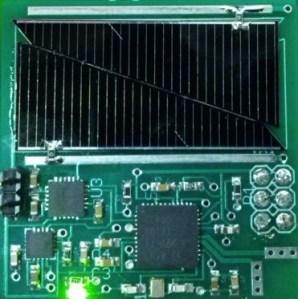
Surrey Space Centre report that the STRAND-1 satellite is healthy and in the coming weeks they hope to be able to switch-on the Google Nexus One smartphone carried by the CubeSat.

STRaND-1 page https://amsat-uk.org/satellites/strand-1/

Dnepr Launch Animation Video

A Dnepr launch

A Dnepr launch

The Dnepr rocket is a converted ICBM used for launching satellites into orbit, operated by launch service provider ISC Kosmotras. The first launch, on April 21, 1999, successfully placed UoSAT-12, a 350 kg demonstration mini-satellite, into a 650 km circular Low Earth Orbit (LEO).

It is based on the R-36MUTTH ICBM designed by the Yuzhnoe Design Bureau in Dnipropetrovsk, Ukraine. Its control system was developed and produced by the JSC “Khartron”, Kharkiv. The Dnepr is a three-stage rocket using storable hypergolic liquid propellants. The launch vehicles used for satellite launches are withdrawn from service with the Russian Strategic Rocket Forces and stored for commercial use. A group of 150 ICBMs can be converted for use and are available until 2020. The Dnepr can be launched from Baikonur in Kazakhstan and a newly created Cosmodrome at the Dombarovsky launch base, near Yasny, in the Orenburg region of Russia.

Continue reading

British Interplanetary Society KickSat Sprite programming and planning day

KickSat 437 MHz Sprite Satellite

KickSat 437 MHz Sprite Satellite

Members and non-members are invited to a BIS KickSat 437 MHz Sprite satellite programming and planning day.

The event takes place on March 30, 2013, 11am-4pm at 27/29 South Lambeth Road, London, SW8 1SZ and has these aims:
• Developer kit: setup and programming tests
• Souvenir Sprite: soldering and programming tests
• Radio testing: receive test signals
• Other: agree next steps, owners and dates

Participation is encouraged, but not required.

The following equipment will be available on the day:
• KickSat Sprite developer kit
• Souvenir sprite, wires, soldering equipment and a launchpad
• FUNcube dongle and aerial (tbc – they are in the post)
• Laptop, projector and Wi-Fi

Bringing a laptop will be helpful. Also, if anyone can bring portable equipment to receive the test signals, this will also be much appreciated.

Further information at
http://www.bis-space.com/2013/03/24/9482/kicksat-programming-and-planning-day

KickSat Sprite Technical Summary
http://www.bis-space.com/2013/03/09/9301/kicksat-technical-summary

The KickSat Sprites from both the BIS and London Hackspace are planned to launch, with 198 others, on the ELaNa 5 / CRS 3 mission in mid to late Summer.

KickSat to deploy 200 Sprite satellites
https://amsat-uk.org/2012/09/21/kicksat-to-deploy-200-sprite-satellites/

FUNcube Yahoo Group http://uk.groups.yahoo.com/group/FUNcube

WD9EWK working FO-29 using QRP from Scottsdale (Arizona) Hamfest

Amateur Radio Satellite FO-29

Amateur Radio Satellite FO-29

In this video Patrick Stoddard WD9EWK shows that high power isn’t needed to work the satellites.

On Saturday, March 9. 2013, at 1636 UT at the Scottsdale Amateur Radio Club Hamfest in Tempe, Arizona (grid DM43al)  he showed you can work F)-29 using just 5 watts from a FT-817ND to a handheld Elk 2m/70cm antenna. In fact he used two FT-817ND’s, one for transmit on 2m the other for receive on 70cm.

FO-29 was launched from the Tanegashima Space Center on August 17, 1996 into a 1,330 by 808 km orbit.

Continue reading