 LU7AA brings news that on Saturday May 19 from 11hs-LU on (GMT-3), a free Balloon UV Repeater will fly from the city of General Pico (Airport), Province of La Pampa, Argentina, 571 Km west of Buenos Aires City. See details and photos http://www.amsat.org.ar/globo19.htm
Given administrations requests by Amsat Argentina, launch is authorized and appropiate NOTAM (NOTification to AirMen) had been issued and granted by National Civil Aviation Administration.
Contest & Prices: first 10 station making the most distance & contacts will receive special certificate, top winner will receive a UHF/VHF handy.
Payload will operate as an UHF to VHF crossband repeater, with CW tlm, APRS location and SSTV emissions in local and space frequencies.
 According estimates Balloon could reach 100,000 feet height, traveling from 50 to 100 miles towards east.
Thus allowing contacts between stations located in provinces of Buenos Aires, Santa Fe, Entre Rios, Cordoba, Catamarca, Santiago del Estero, La Pampa, San Luis, Mendoza, San Juan, Rio Negro, Neuquen, Uruguay & Chile. (Launch is from Argentina Geo-Center to permit higher participation). See coverage map on
http://www.amsat.org.ar/picocubr.jpg and estimated trajectory in
http://www.amsat.org.ar/pico120519.jpg .
For these experiences, Amsat-LU works with and it is thankful to hams of Radio Clubs of Gral.Pico, QRM Belgrano, APRS Group and amsat-LU members development team as well as those who have actively participated and sent their reports in previous events.
More information at
http://www.amsat.org.ar/lu4aao/experimento_globo_y_parapente.htm.
 Several flown experiments have been successfully operated during 2011/12 in manned-gliders, airplanes, captive and free Balloons allowing operational & practice for hams contributing to platform validaton of LUSEX satellite (LU Satellite EXperiment) on development by Amsat Argentina. More on http://lusex.org.ar
In order to monitor the payload (if you are within 400 miles of launch area) you need just an FM receiver either handy or base, in 145.950 for repeater and/or 144.930 for APRS. The repeater, that is activated via 123 Hertz subtone, operates receiving voice FM in 435.950 kHz (-112dbm, 0,56 uV) and emits with 2W the received audio live on 145.950 kHz.
Simultaneously APRS data will be sent in Packet at 1200 bauds in 144.930, and also in 145.950.
The DTI APRS symbol would change from a Balloon (/O) during the ascent to a glider (/g) during parachute descent.
Payload would operate as voice repeater activated by 123 Hz subtone during 1 minute, a warning bip at 40 seconds will indicate telemetry is coming, which is emitted if the repeater is not in use, if in 20 seconds more voice repeater still in use a two bips will be heard signaling that short APRS packages will begin in the different frequencies, also every 5 minutes CW (telegraphy with tones of audio) with CQ + callsign (LU7AA), sequence#, ext. and int. centigrade temperatures and voltage of batteries, after which the cycle will repeat.
Experiment will also emit SSTV pictures in ROBOT-36 (36 seconds) in real time, showing what glider/Balloon sees. Every 5 minutes during ascent/descent and more spaced at high altitudes. (It can be received among others with MIXW, MMSTV & RX-SSTV ).
To study propagation and allow DX station to listen, balloon will also carry a 150 mW CW 7021 Khz transmitter, emiting callsign, sequence, external and internal temperatures and battery voltage.
Payload would also carry on board two TV cameras (one towards earth and another towards horizon) recording video and sound during the flight. These captured videos could be recovered when payload is recovered.
APRS trajectory could be seen every minute, including speed, height, external and internal temperatures and 7.2v battery voltage using UI-View (download from the UI-View official site on http://www.ui-view.org/) and/or to see/follow from Internet connecting to http://aprs.fi/?call=lu7aa-11 or locally via Packet at specified frequencies.
There are georeferenced Maps for UI-View in
http://www.amsat.org.ar/pico.jpg, http://www.amsat.org.ar/pico.txt.
Download and place them in directory Program Files/Peak Systems/UI-View32/MAPS and rename .txt file to .inf.
The experiment in 435.950 KHz besides voice, receives and accepts DTMF sequences commands on demand, I.E. sending B* (DTMF with handy keyboard on UHF) will return S5 … ….. in 145,950 VHF CW, reporting in CW signal strength received from your station, if S9+10 will returns P10.
There are also DTMF commands qualifying emission of CW tlm or APRS beacon or SSTV emission, commands that allows remote release of payload, mode changes, timers control, energy, power, etc.
Frequencies for previous coordination, announcements and flights will be 7090 Khz LSB +/-10 Khz and local repeaters.
During the flights will remain active wide coverage AMSAT-LU APRS Igate LU7AA-10 on 144.930 and 430.930 KHz, operating from the Constituyentes Investigation Center transferring whatever is received towards Internet.
For being an experiment oriented to a next satellite, the contacts made between stations via this payload will be considered valid for the recently announced permanent, gratuitous and applicable Satellite Certificate that AMSAT-LU and RClub QRM Belgrano grants, more info on http://www.amsat.org.ar/certsat.html.
During the Balloon flight, amateur groups will chase the payload, aiming to locate and recover. Trapping ventures holds on this activity, as in the case of the Pampero 15 Balloon sent from San Miguel del Monte which landed in the middle of the Magdalena’s state prison … See http://www.lu5egy.com/Proyecto_pampero/vuelo_15/n_1esk.htm
All reports welcome. If you wish or can organize or want be part of control, or like to pursuit and recovery, or like operating and capturing data as an independent station, and/or wishes to join us personally in this adventure from the launching places email us to parapente at amsat.org.ar.
We appreciate reading of this information and thankful if distribution possible.
73, LU7AA, Amsat-LU, aiming at the future by making the present funny.
Web: http://www.amsat.org.ar/
Email: info at amsat.org.ar
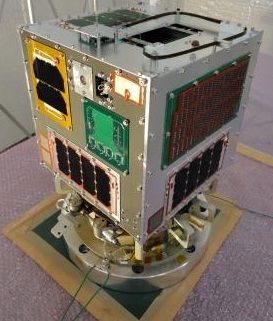 Andrei YO8SSQ and Cezar YO8TLC have made available a web based receiver to enable listeners to hear the new amateur radio satellite HORYU-2 when it’s within range of Romania.



 AMSAT-UK
You must be logged in to post a comment.