Ofcom Consultation: World Radiocommunication Conference 2019

Ofcom has published a consultation on the UK’s preparations for the World Radiocommunication Conference 2019 (WRC-19) of the International Telecommunication Union.

WRCs are held approximately every four years, and take decisions concerning the identification and international harmonisation of spectrum bands. Ofcom represents the UK at WRCs.

The next conference will take place between October 28 and November 22, 2019. It will consider a wide range of issues across a number of sector interests including mobile broadband, maritime, aeronautical, satellite and scientific use of spectrum.

The public consultation closes on September 13, 2018, details at
https://www.ofcom.org.uk/consultations-and-statements/category-1/uk-preparations-wrc-19

Oscar News – Your input will be very welcome

OSCAR News 221 Spring 2018 Front CoverThe editors of the quarterly OSCAR NEWS magazine are now starting their hard work to put together the next edition. This will be published around the end of June.

Your news, views and articles for Oscar News are always very welcome. These really are the most exciting times to be involved win the amateur satellite world with so many unique new projects underway. The magazine continues to provide interesting details about these various space missions and the groundstations needed to communicate with them.

We are able to accept your input in almost any of the usual formats but please keep the images separate or put them at the end of the document.

Please contact us at ON-editor@amsat.org with your information or if you have any questions.

Thanks and 73 Graham – G3VZV

Russian SiriusSat CubeSats to be deployed during spacewalk

SiriusSat-1 RS13S and SiriusSat-2 RS14S CubeSats

SiriusSat-1 (RS13S) and SiriusSat-2 (RS14S) CubeSats

Two Russian CubeSats are expected be deployed from the International Space Station on Wednesday, August 15 during a spacewalk (EVA).

SiriusSat-1 (SXC1-181) call sign RS13S beacon 435.570 MHz
SiriusSat-2 (SXC1-182) call sign RS14S beacon 435.670 MHz

The satellites are at RSC Energia, where they are undergoing additional checks before being sent to the International Space Station. A launch is planned for July 10 on a Progress cargo vehicle to the ISS with deployment in August during a spacewalk.

Sputnix Facebook post https://www.facebook.com/Sputnixru/posts/1589717307807600

Amateur radio satellites in TX Factor Show episode 21

In episode 21 of the TX Factor show Bob McCreadie G0FGX and Mike Marsh G1IAR discuss the linear (SSB/CW) amateur radio satellites and give a demonstration with the CAMSAT XW-2F satellite.

They also review the new Icom IC-7610 transceiver, and look at programming your SDR handie and running a SharkRF openSPOT digital radio IP gateway.

As always, in their free-to-enter draw, there’s a chance to win two great amateur radio-related items – a Prism dust cover for your rig, and a copy of the book “Amsats and HamSats”.

Bob and Mike discuss satellites near the start of the show and towards the end at 48:08 they give a live demonstration of the CAMSAT XW-2F SSB transponder satellite.

Watch TX Factor – Episode 21 (TXF021)

CAMSAT XW-2 Satellites https://amsat-uk.org/satellites/communications/camsat-xw-2/

AMSAT-UK: https://amsat-uk.org/
Twitter: https://twitter.com/AmsatUK
Facebook: https://facebook.com/AmsatUK
YouTube: https://youtube.com/AmsatUK

Bulgarian CubeSat EnduroSat on ISS awaiting deployment

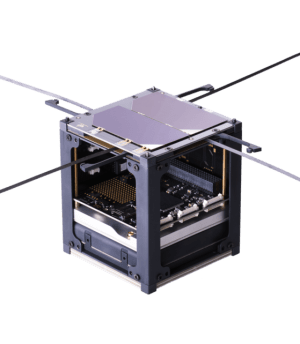
EnduroSat One

EnduroSat One

Bulgaria’s first CubeSat, EnduroSat One, was launched to the International Space Station on the cargo resupply OA-9 mission on May 21, 2018 from the Mid-Atlantic Regional Spaceport in Virginia, USA. On May 24 the Cygnus capsule docked to the Station and the satellite was taken onboard the ISS.

The satellite will be deployed from the ISS in the coming weeks.

The mission aims to popularize the Radio Amateur activities in Bulgaria and it will include cooperation with Bulgarian Federation of Radio Amateurs (BFRA), including workshops and additional educational activities.

The spacecraft has been completely built in Bulgaria. This first educational mission aims to inspire young Bulgarians and give them the chance to participate in a real space program!

The Space Challenges and EnduroSat teams have invested considerable resources, time and effort in preparing the Bulgarian CubeSat. In order to support the Radio Amateur community, the satellite emits in frequencies which are readily available for receiving by anyone with basic communication skills and radio equipment.

It is hoped the mission will help more young Bulgarians learn the basics of satellite communications through practical exercises empowered by the orbiting satellite.

Radio amateurs from around the Globe will be able to listen to the satellite beacon and to receive telemetry data from the satellite on a regular basis. They will be able to connect to the satellite, receive detailed telemetry information and receive a confirmation from the satellite for every established connection which will serve as QSL card.

Beacon: 437.050 MHz CW and 9600 bps GMSK AX.25

See the EnduroSat site for further information http://one.endurosat.com/

Bulgarian Federation of Radio Amateurs (BFRA) http://bfra.bg/
Google English site translation http://tinyurl.com/BulgariaBFRA

IARU R1 highlights threat to higher ham radio bands

In issue 77 of the free IARU Region 1 VHF newsletter the Chair of VHF-UHF-uW committee Jacques Verleijen ON4AVJ highlights the threats to vital amateur radio spectrum at VHF, UHF and Microwaves.

In less than a year we will have our interim meeting about the use of the spectrum above 30 MHz. We have to face some challenges. I want to invite all Member Societies to think about how to promote, defend and use our frequencies.

They are wanted by others, both government and commercial, users. So this is a wake-up call to be aware that if we not are using those bands we will lose them. Such a setback will not be the responsibility of IARU(R1), if we lose them, but from the amateur community who often have more commitment to HF, than VHF&up.

I know that this statement will shock some of you, but it is true. Our survey on the use of VHF&up made this clear. So I want to invite all Member Societies to think creatively (out of the box, as we say now) to think how to improve activity on our dear bands.

Like some have said: “use them or lose them” and “HF is not the only bands for ham radio, but they are the easiest to use”.

Download the May 2018 newsletter from http://www.iaru-r1.org/index.php/vhfuhsshf/newsletters