RAC Attends Canadian CubeSat Meeting

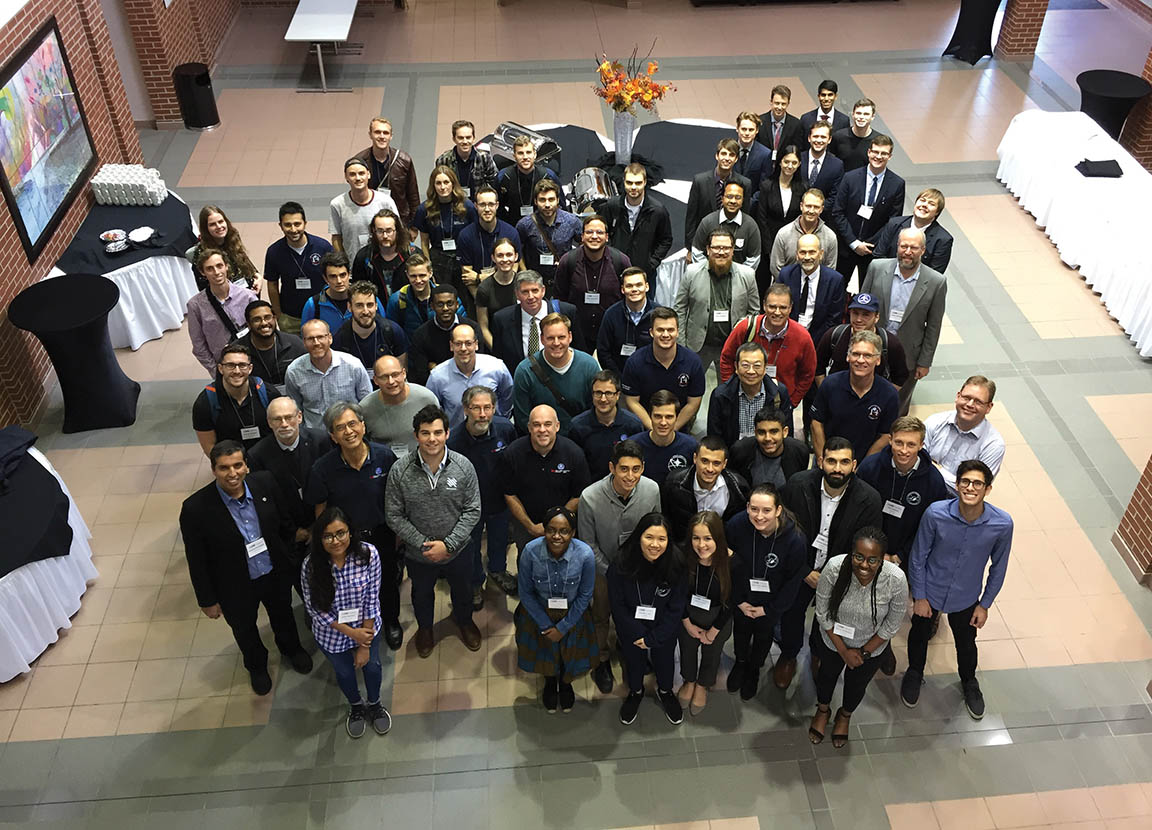
UNB CubeSats Group photo by Annette Wetmore

UNB CubeSats Group photo by Annette Wetmore

On October 7, 8 and 9, 2019, the University of New Brunswick’s (UNB) Department of Electrical and Computer Engineering and CubeSat NB hosted the first of three Preliminary Design Review (PDR) meetings for the Canadian CubeSat Project initiated by the Canadian Space Agency (CSA).

The Canadian Space Agency is providing support and guidance to 15 teams of university and college students across Canada who are building satellites. These satellites are in the “CubeSat” format, based on a standardized architecture of 10 cm cubes. All 15 proposed satellites will be deployed from the International Space Station (ISS), possibly starting in 2021.

Radio Amateurs of Canada was present because many of the CubeSat projects are proposing to use Amateur Radio frequencies. RAC Atlantic Director Dave Goodwin, VE9CB, attended the PDR to offer RAC’s insight into these projects and to discuss the processes required to secure frequency coordination for these projects through the International Amateur Radio Union (IARU).

At the meeting at UNB, six teams led by students from UNB, the Université de Moncton, New Brunswick Community College, the University of Prince Edward Island, Dalhousie University (NS), Memorial University of Newfoundland with C-CORE, the Université de Sherbrooke (QC) and Concordia University (QC), presented their work to date on designing six satellites. They sought feedback and suggestions from other teams as well as the federal government agencies – the Canadian Space Agency (CSA), Global Affairs Canada (GAC), Innovation, Science and Economic Development Canada (ISED) – and NanoRacks, the US-based company that provides launch services for the Canadian CubeSat Project.

Following the Fredericton event, similar meetings were also held in London, Ontario and Victoria, British Columbia for Preliminary Design Reviews of the nine other CubeSats in the Canadian CubeSat Project in Ontario, western Canada, and northern Canada.

Designing and constructing CubeSats is a complicated, multi-year process. These projects will develop these students’ skills in many facets of engineering, science, technology, business and project management. Once in orbit, these satellites will assist pure and applied scientific research. Some of these satellites may offer facilities that Radio Amateurs across Canada and around the world can use.

– Dave Goodwin, VE9CB and Brent Petersen, VE9EX.

Source Radio Amateurs of Canada (RAC) Bulletin
PocketQube Workshop videos available

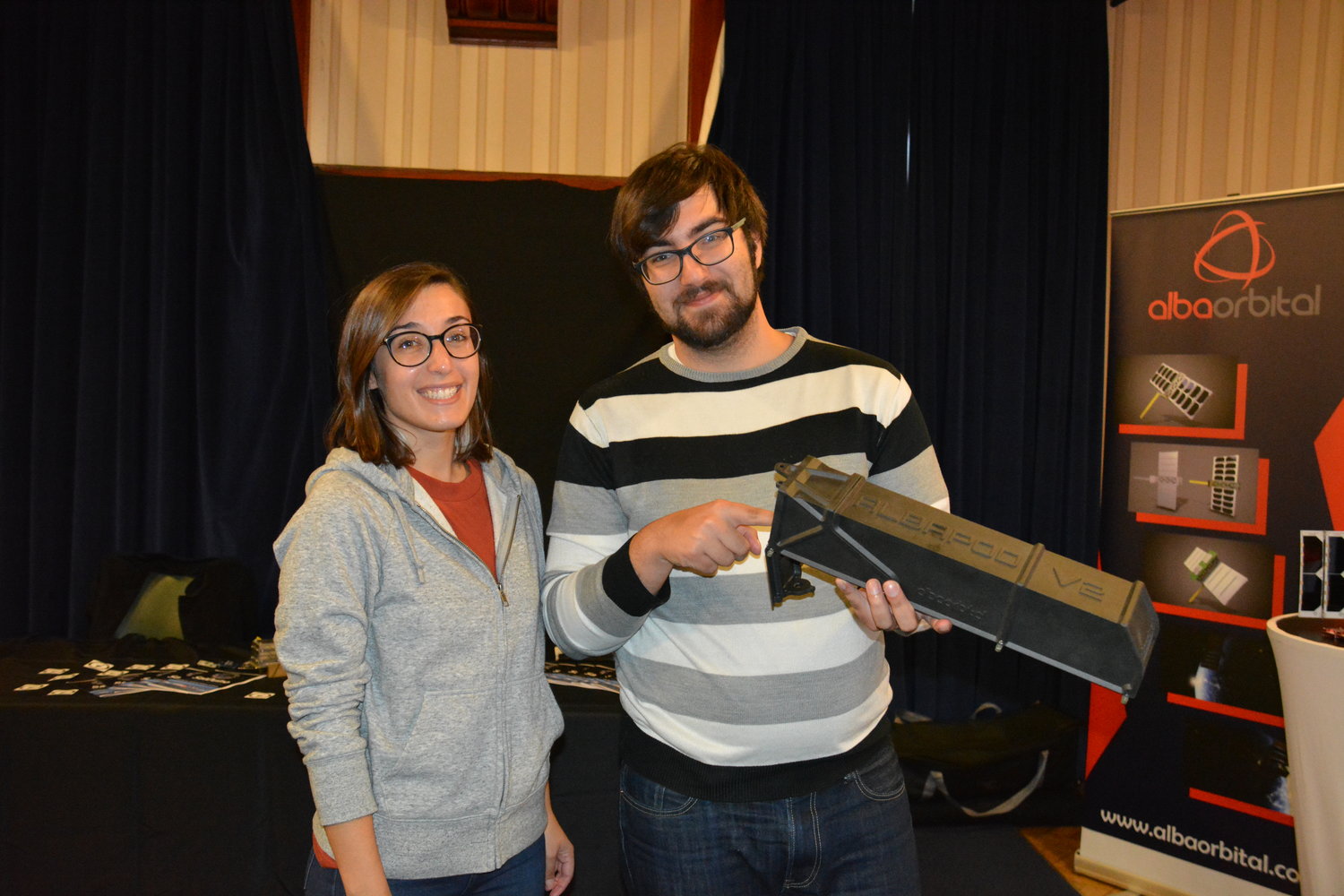
3rd PocketQube Workshop GlasgowThe 3rd PocketQube Satellite Workshop, hosted by Alba Orbital, was held September 5-6, 2019, in Glasgow. Talks given at the event are now available on YouTube.

Among the presenters were:
• Stuart Robinson GW7HPW, $50SAT Team
• Julian Fernandez EA4HCD, Fossasat-1
• Zac Manchester KD2BHC, Chipsats
• Constantin Constantinides MM6XOM, Unicorn-2

Talk schedule and PDF slides at http://www.albaorbital.com/3rd-pocketqube-workshop

Watch the videos at https://www.youtube.com/playlist?list=PL7qrB8LwUKBhszyEVAUuL8kvgoA8eu4JG

Alba Orbital https://twitter.com/AlbaOrbital

Brazil: High school students shown amateur radio

Gonçalves Dias School Students

Gonçalves Dias School Students

Brazilian radio amateurs participated in a Science Fair at Gonçalves Dias School, Boa Vista on October 16, 2019.

Paulo PV8DX used basic concepts of physics and geography when explaining amateur radio to the students. As well as theory they there were also practicals involving the students in antenna construction and contacts using the transponder on the amateur radio satellite LAPAN IO-86.

Paulo had asked AMSAT-UK FUNcube team if a special ‘Fitter‘ message could be transmitted from the FUNcube-1 (AO-73) satellite. This was arranged and the message from space was received at the school.

Watch Atividade Escolar – Ham Radio – By PV8DX

Further information on FUNcube-1 ‘Fitter’ messages and how to request one is available at https://funcube.org.uk/ground-segment/fitter-messages/

AMSAT-UK https://twitter.com/AmsatUK

AMSAT-UK Colloquium Talks on YouTube

Professor Julia Hunter-Anderson talking about WUSAT-3

Professor Julia Hunter-Anderson talking about WUSAT-3

Videos of the presentations given at the AMSAT-UK International Space Colloquium, which was held as part of the RSGB Convention in Milton Keynes, October 12-13, 2019, are being made available on YouTube.

The first of the videos is the fascinating presentation on the WUSAT-3 CubeSat project given by Professor Julia Hunter-Anderson of the University of Warwick which highlights the potential use of CubeSats for wildlife tracking.

Other presentations are expected to be uploaded in the coming weeks.

Watch University of Warwick WUSAT-3

AMSAT-UK videos on YouTube https://www.youtube.com/user/AMSATUK/videos

Our thanks to the British Amateur Television Club and Wouter Weggelaar PA3WEG for their work in recording, editing and uploading these videos.

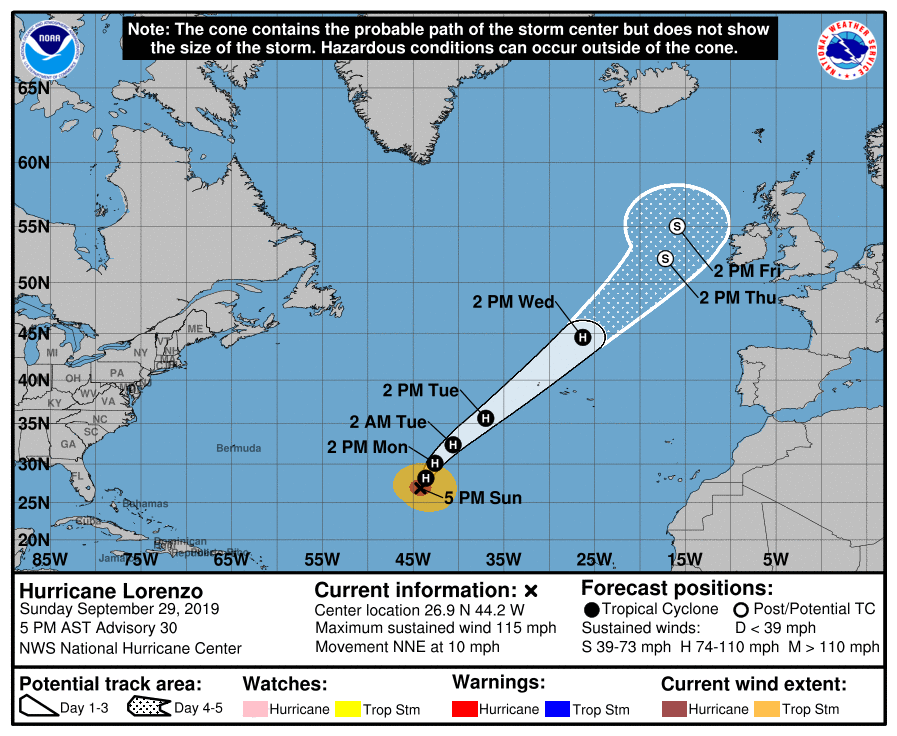
Hurricane Lorenzo: Amateur satellite AO-92 will be available in U/v mode

Hurricane Lorenzo estimated track

Hurricane Lorenzo estimated track

Drew Glasbrenner, KO4MA, AMSAT VP Operations has received a request from amateurs involved with emergency communications in the Azores, requesting we forego L/v operation on AO-92 this week.

AO-92 / Fox-1D CubeSat

AO-92 / Fox-1D CubeSat

AMSAT News Service reports:

Hurricane Lorenzo is expected to pass through the Azores as a Category 4 storm Tuesday and Wednesday, and they are requesting AO-92 remain in U/v for potential emergency traffic.

Please be aware of and yield to any emergency traffic, on any satellite, coming from the area during this time. Passes covering the Azores and Portugal are the most critical.

We realize that there have been a few moves and cancellations for this mode recently, and I ask for understanding and cooperation.

Emergency use is always first priority, and AMSAT is happy to assist in any way we can.

[ANS thanks Drew Glasbrenner, KO4MA, AMSAT VP Operations for the above information]

Source AMSAT News Service https://www.amsat.org/pipermail/ans/2019/001134.html

University CubeSat Club members get ham radio licenses

Dawson Duckworth KC3NNB, Lauren Hurley KD2RHC, Kaixuan Ji AC3EN and Dr. Alan Johnston KU2Y staffed the AMSAT / Villanova CubeSat Club table at the Robotstock/STEM event in August

Dawson Duckworth KC3NNB, Lauren Hurley KD2RHC, Kaixuan Ji AC3EN and Dr. Alan Johnston KU2Y staffed the AMSAT / Villanova CubeSat Club table at the Robotstock/STEM event in August

Students at the Villanova University College of Engineering started a CubeSat Club in the fall of 2018 and have since got their amateur radio licenses.

The university website reports:

A CubeSat is a nanosatellite—a small, lightweight satellite that is cheaper to build than a conventional satellite. They can be launched from rockets, or occasionally from the International Space Station by astronauts. CubeSats send telemetry information—measurements communicated at remote points by automated processes—over radio signals received on earth by a ground station.

The CubeSat club’s 2018-2019 year was packed with a variety of workshops and projects, including:

• Setting up temporary ground stations called SatNOGS (Satellite Network Operators Group)
• Building Yagi-Uda antennas from tape measurers and scrap wood and using them to track low earth orbit satellites as they flew over Villanova
• Building an AMSAT CubeSat Simulator, a functional satellite model
• Assisting with the freshman CubeSat mini-design projects
• Earning amateur radio licenses and ham radio callsigns
• Assembling and selling electronic transceiver boards used in CubeSats as a fundraiser
• Attending the 2019 Hamvention conference and running the AMSAT education table
• Received and decoded a special message sent from the AO-73 FUNcube Satellite especially for Villanova

Read the full story at
https://www1.villanova.edu/villanova/engineering/newsevents/newsarchives/2019/community/CubeSat-Club.html

The students emailed a request to the FUNcube Operations Team to get their special message transmitted from space by the AO-73 satellite. Further information on these ‘Fitter’ messages is available at https://funcube.org.uk/ground-segment/fitter-messages/