5 GHz to 10 GHz Lunar Transponder Mission

View of Earth from the Moon AdobeStock_77398324AMSAT-NA plans 5 GHz to 10 GHz transponders on a spacecraft expected to launch in September 2018 into a Lunar orbit.

Heimdallr is a 3 axis stabilized 6U CubeSat with a mass of approximately 8 kg. It will have a Cold Gas Thruster for inertia dump and a star tracker for navigation. Deployable, gimbled solar panels will produce up to 100 watts of DC power, electric propulsion will be used to achieve lunar orbit.

There will be a combination of omni and directional patch antennas on one side of spacecraft.

The first part of mission is to provide Telemetry, Tracking, and Command (TT&C) to obtain lunar orbit. The second part is to perform the data downlink experiment while the final part is to provide a two way regenerative repeater and analog repeater in lunar orbit for lifetime of satellite.

Proposing these downlinks:
• Omni transponder: 10.451 GHz +/- 0.5 MHz
• Directional transponder: 10.4575 GHz. +/- 3.5 MHz
• Analog transponder: 10.4665 GHz. +/- 2.0 MHz

For the first part of the mission (TT&C) using 300 bps BPSK 1/2 rate viterbi Ranging 1.5 Mbps BPSK DSSS. For the  second part of mission 4.5 Mbps QPSK ½ rate DVB-S2. For the final part of mission 25 kbps BPSK 1/5 rate DVB-S2.

Proposing these Uplinks
• Omni transponder: 5.651 GHz +/- 0.5 MHz
• Directional transponder: 5.6575 GHz. +/- 3.5 MHz
• Analog transponder: 5.665 GHz. +/- 2.0 MHz

A link budget is available at
https://drive.google.com/folderview?id=0B3u-mSOWBMISYnZyZGJpeThKeU0&usp=sharing

It is anticipated that a 1 or 2 metre dish will be required using the AMSAT designed ground station equipment.

Source IARU Satellite Frequency Coordination Status pages http://www.amsat.org.uk/iaru/

Heimdallr satellite – 5 Teams Share First Round of NASA CubeSat Prizes
http://spacenews.com/5-teams-share-first-round-of-nasa-cubesat-prizes/
 

UK CubeSat Forum – Lunar opportunity

View of Earth from the Moon AdobeStock_77398324Surrey Satellite Technology Ltd (SSTL) and Goonhilly Earth Station (GES) are looking for CubeSat passenger payloads on a Lunar mission.

SSTL and GES are teaming up with ESA to create the world’s first commercial deep space mission. They plan to carry customer payload in the form of CubeSats into lunar orbit and provide the relay link back to Earth via Goonhilly. The launch is planned for 2019.

Orbital passengers e.g. nanosatellites and CubeSats will be deployed from the Mothership and will operate in lunar orbit.

The UK CubeSat Forum can help in creating new contacts for joint proposals, so do post on their site should you want to be involved!
http://www.cubesatforum.org.uk/wordpress/2016/08/30/call-for-lunar-missions-payloads/

Twitter: https://twitter.com/UKCubeSatForum

Download the related documents from http://www.goonhilly.org/lunar

First contact via ham radio satellite AO-85

getting-started-with-amateur-satellites-2016-front-coverOn Saturday, August 13, 2016, Christian Jacobs 2E0ICL made his first contact via the amateur radio FM CubeSat AO-85, it was with Peter Goodhall 2E0SQL.

On YouTube Christian writes:

First contact over AO-85 with Peter 2E0SQL using a new Elk antenna, a Comet CF-4160 diplexer, and two handheld transceivers. This video also features a portable SO-50 contact with Abdel M0NPT at Cow Drove Hill in Hampshire, UK.

Watch First contact via AO-85, and operating /P from Cow Drove Hill

AO-85 information https://amsat-uk.org/satellites/communications/ao-85-fox-1a/

The book – Getting Started with Amateur Satellites – is now available from the AMSAT-UK shop at http://shop.amsat-uk.org/

A popular antenna for satellite working is the Elk 2m/70cms Log Periodic available in the AMSAT-UK shop at http://shop.amsat-uk.org/ELK_2m70cms_Log_Periodic_Antenna/p3815740_15628555.aspx

Amateur Radio BIRDS-1 CubeSat Constellation

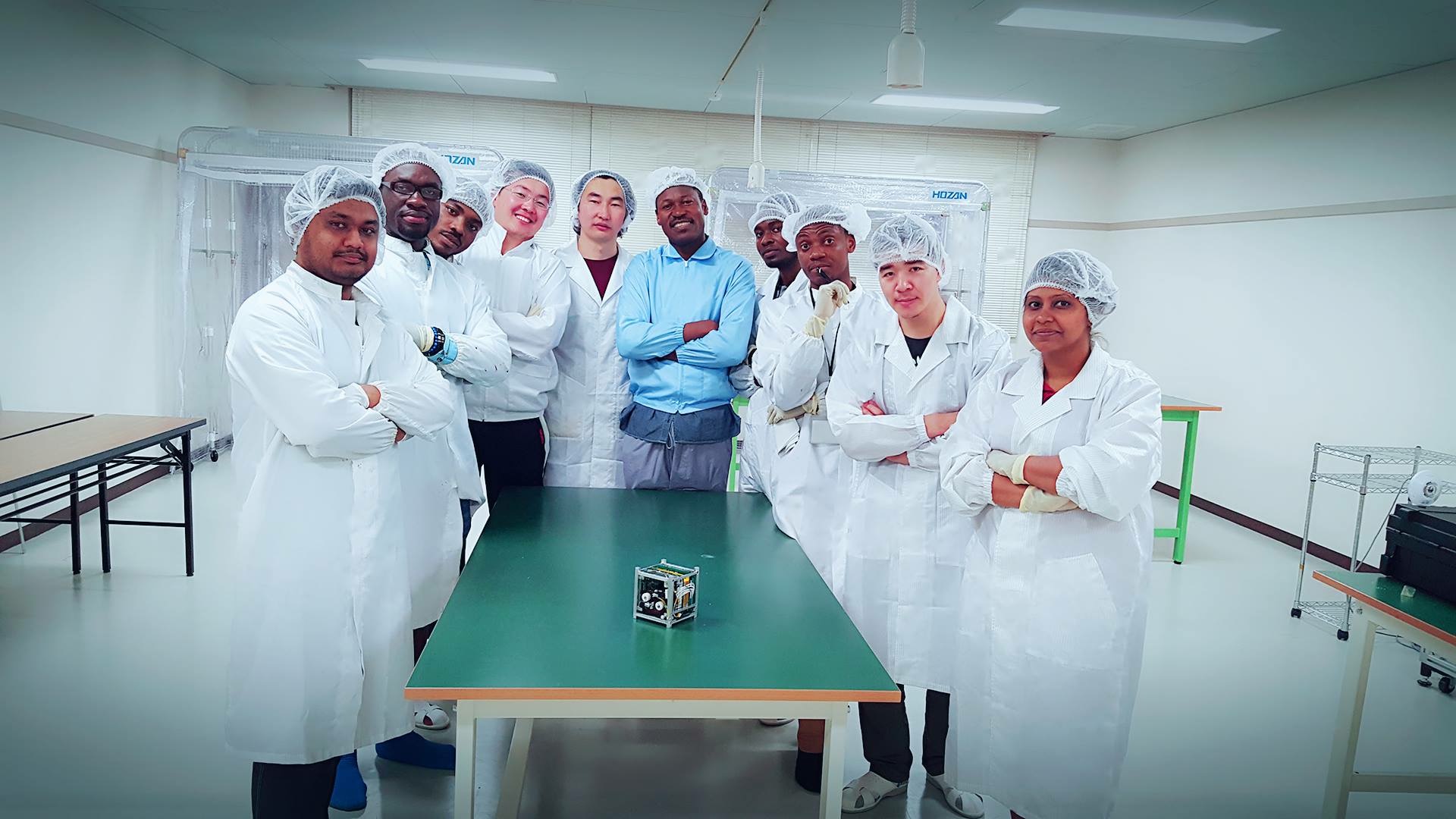
BIRDS CubeSat Engineering Model integration test

BIRDS CubeSat Engineering Model integration test

The BIRDS-1 constellation consists of five 1U CubeSats (BIRD-B, BIRD-J, BIRD-G, BIRD-M and BIRD-N). They launched to the ISS on a SpaceX Falcon 9 CRS-11 on June 3, 2017. The satellites are made of the exactly same design including the radio frequencies to be used and will be deployed from the ISS later in the year.

BIRDS CubeSat Project LogoThe main mission of the constellation is to do experiments on radio communication with a CubeSat constellation via a network of UHF/VHF amateur radio ground stations all over the world.

The challenge is to distinguish each satellite from the four satellites transmitting with the same frequency, hand over operation of a satellite from one ground station to another and assemble the satellite data, such as housekeeping telemetry, music and the Earth images, obtained at different ground stations.

Amateur radio enthusiasts are asked to join the network to assist in the data downlink and reconstruction of the patchy satellite data into one meaningful data. Orbit information and operational plan of each satellite will be made available to the amateur radio community in the world. Software to decode the satellite data will be also made available.

The respective amateur ground stations that can successfully decode the telemetry data, music and the Earth images, shall receive a QSL card from the BIRDS team. The data reconstructed by the effort of the amateur ground station network will be made public to share the sense of satisfaction and achievement.

BIRDS CubeSat NationsA particularly interesting mission of BIRDS project is the SNG mission that exchanges music via a digi-singer. It is an outreach-oriented mission. First, music in MIDI format is uploaded from ground. Then the MIDI file is processed on-board using a vocal synthesizer. Finally, the processed music is sent back to Earth using UHF antenna as voice FM data.

During organized events on space utilization with schools or general public, music could be heard using a common hand-held receiver and hand-made Yagi antenna positioned to track the satellite at each given pass over the region. This has a tremendous effect on awareness of radio communication among school children and general public, especially in the countries participating in the BIRDS project, Japan, Ghana, Mongolia, Nigeria and Bangladesh.

Proposing to use CW, 1k2 AFSK FM, audio FM and 9k6 GMSK downlinks. The IARU has coordinated a downlink frequency of 437.375 MHz.

BIRDS project information:
http://birds.ele.kyutech.ac.jp/
http://birds.ele.kyutech.ac.jp/amateur.html
http://birds.ele.kyutech.ac.jp/newsletter.html
https://www.facebook.com/Joint-Global-Multi-Nation-Birds-BIRDS-project-171403156542445/

Download the Paper – IAA-CU-15-01-16 Five-nations CubeSat constellation; An inexpensive test case for learning and capacity building
https://www.researchgate.net/publication/289868265_IAA-CU-15-01-16_Five-nations_CubeSat_constellation_An_inexpensive_test_case_for_learning_and_capaci-_ty_building

The IARU Satellite Frequency Coordination pages are hosted by AMSAT-UK at
http://www.amsat.org.uk/iaru/

Live Streaming for International Space Colloquium

BATC Logo SmallThanks to volunteers from the British Amateur Television Club (BATC) the presentations at this weekend’s AMSAT-UK International Space Colloquium in Guildford will be streamed live to a global audience.

This year to provide an enhanced streaming experience, the webstream will be available at this new location:

https://beta.batc.tv/live/amsatuk

The Live Stream will begin on Saturday morning, July 30 at 10:15 BST with the Official Opening by Professor Sir Martin Sweeting G3YJO.

Download the programme PDF Schedule Here

Recordings of all talks will be posted on the AMSAT-UK YouTube Channel following the event
https://www.youtube.com/user/AMSATUK

British Amateur Television Club http://www.batc.org.uk/

UAE satellite will have Amateur Radio transponder

Nayif-1 was developed by UAE students - Image credit The Mohammed bin Rashid Space Centre

Nayif-1 was developed by UAE students – Image credit The Mohammed bin Rashid Space Centre

The United Arab Emirates newspaper The National reports on the Nayif-1 spacecraft developed by Emirati students from the American University of Sharjah in partnership with The Mohammed bin Rashid Space Centre.

Nayif-1 carries a 435/145 MHz transponder (FUNcube-5) for amateur radio SSB/CW communications. It is expected to launch along with other amateur radio satellites such as Fox-1C and Fox-1D on a SpaceX rocket between September and November 2016.

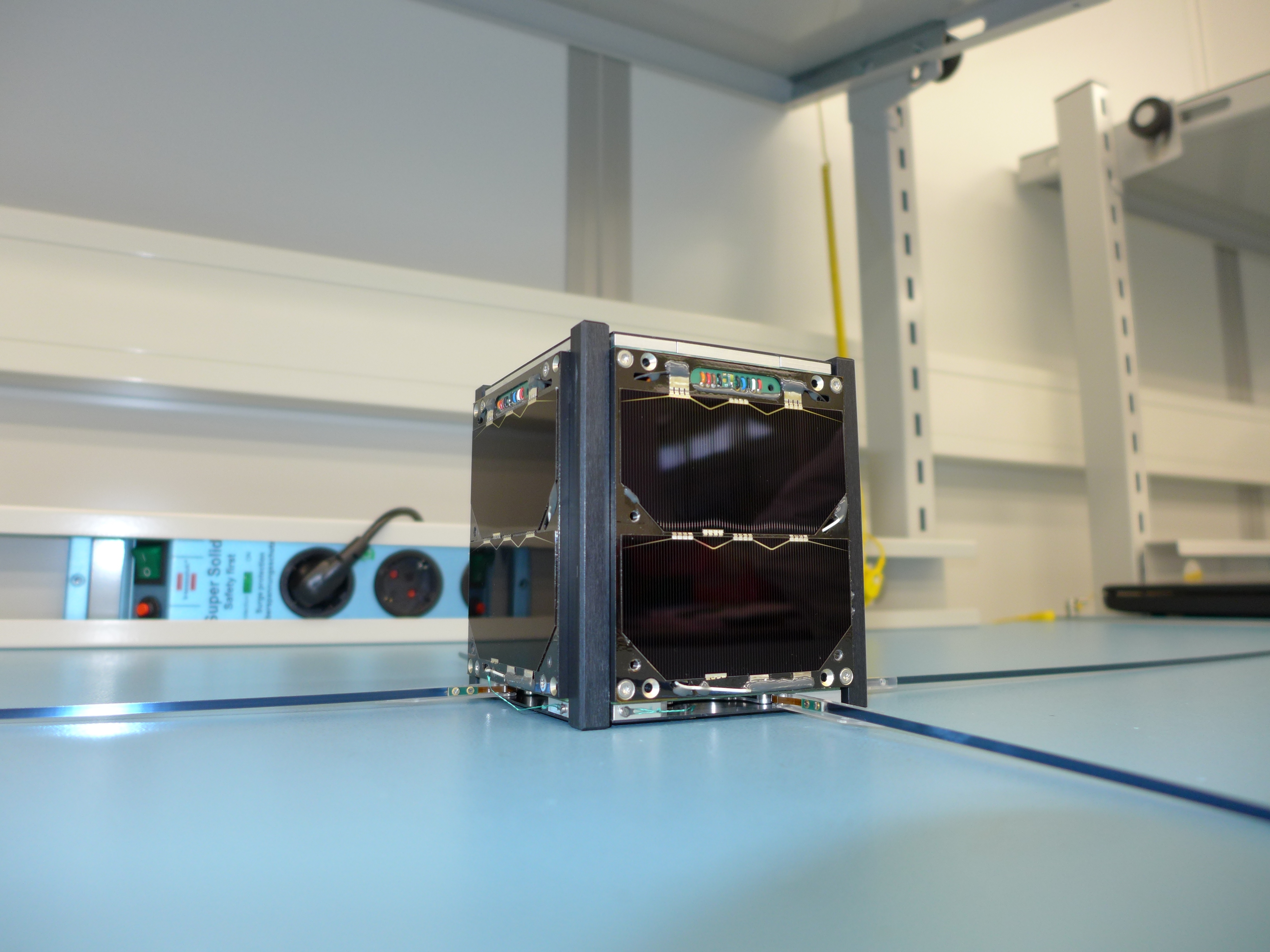
Nayif-1 CubeSat - Credit Wouter Weggelaar PA3WEG

Nayif-1 CubeSat – Credit Wouter Weggelaar PA3WEG

The National says:

Yousuf Al Shaibani, director general of The Mohammed bin Rashid Space Centre, said the satellite’s development was a testament to its commitment to develop Emirati talent.

“There is no doubt that the field of satellite design and manufacturing is a new industry to UAE universities and students,” Mr Al Shaibani said.

“The Emirati students possess the skills and capabilities to design and build a CubeSat as a result of a knowledge-transfer strategy and cooperation between academic and professional institutions that are launching real space projects, enabling students to see the product of their work as a reality in space.”

The satellite is about 10 cubic centimetres and weighs about 1 kilogram. One of its most notable features is that it is programmed to transfer messages in Arabic.

“This is a great achievement and a source of pride for all of us,” said Dr Bjorn Kjerfve, chancellor of American University of Sharjah.

Watch the insertion of Nayif-1 into the QuadPack deployer

Read the National story at
http://www.thenational.ae/uae/science/first-satellite-developed-by-emirati-students-ready-for-launching

Nayif-1 CubeSat https://amsat-uk.org/satellites/communications/nayif-1/