FUNcube-1 Transponder Test March 22

FUNcube-1 (AO-73) - Image credit Wouter Weggelaar PA3WEG

FUNcube-1 (AO-73) – Image credit Wouter Weggelaar PA3WEG

When in sunlight FUNcube-1 is normally in “Educational Mode” (transponder off with high power beacon) but on Saturday, March 22, 2014 at approximately 0930 UT the FUNcube team are planning to switch to “Amateur Mode” (transponder on with low power beacon) for at least one whole orbit.

The aim of the switch on March 22 is to check the effect on the satellite of continuous “Amateur Mode”, especially battery temperature.

FUNcube website http://www.funcube.org.uk/

FUNcube Yahoo Group https://amsat-uk.org/funcube/yahoo-group/

FUNcube Forum http://forum.funcube.org.uk/

LituanicaSAT-1 CubeSat Update

LituanicaSAT-1 Camera and FM Voice Transponder

LituanicaSAT-1 Camera and FM Voice Transponder

Laurynas Maciulis LY1LM provides this update on the Lithuanian CubeSat LituanicaSAT-1 which was deployed from the International Space Station (ISS) on February 28, 2014.

LituanicaSAT-1

LituanicaSAT-1

Thanks to numerous beacon reports from W7KKE and DK3WN we established that periodic brown outs of our satellite that started to appear early last week are most probably caused by EPS falling to critical mode after battery voltage falls down to 6.5 V. This is most probably associated to some technical problem of solar panels, consequently generating less power than we planned. The satellite returns to safe mode when battery charges again to 7.2 V. This is indicated by appearance of the strong FM beacon signal at 437.275 MHz.

We are trying to turn off the beacon temporarily to charge battery to nominal level and resume nominal operations. During today’s 05:00 UTC pass over Lithuania we seem to have succeeded in switching off the beacon so You might not hear it for some time. If everything goes according to plan, system should resume to nominal mode when 7.4 V battery voltage is reached. You will notice that when You can hear periodic 9k6 FSK packets at 437.550 MHz.

LituanicaSAT-1 Stack

LituanicaSAT-1 Stack

Your further reports will be very appreciated.

We still have strong hopes to turn on the FM transponder when things get better, for all you guys to try it.

73!
Laurynas Maciulis LY1LM
LituanicaSAT-1 systems engineer

The tiny satellite is just 10x10x10 cm with a mass of 1.090 kg yet it has a VGA camera and a 145/435 MHz FM voice transponder, designed and built by Lithuanian radio amateurs.

The prototype of the FM repeater has been operating in the home of its designer Žilvinas Batisa LY3H in Elektrėnai, Lithuania. Further information at
http://ly3h.epalete.com/?p=303

The communications payload comprises:
• FM Morse Code Beacon 437.275 MHz LY5N
• FM Voice Repeater 145.950 MHz uplink (PL 67 Hz CTCSS) 435.180 MHz downlink
• AX.25 Packet Radio 145.850 MHz uplink 437.550 MHz downlink 9600 baud FSK, FM

Links
• Submit reports at http://www.kosmonautai.lt/en/data-submission/
• Web Google English http://tinyurl.com/KosmonautaiLituanicaSAT-1
• Wiki Google English http://tinyurl.com/WikiLituanicaSAT-1
• Facebook https://www.facebook.com/Lituanicasat1

KickSat Sprites set for launch March 30

KickSat Sprite satellites deployed - Image by Ben Bishop VK2FBRB

KickSat Sprite satellites deployed – Image by Ben Bishop VK2FBRB

Zac Manchester KD2BHC has released this update on KickSat which will carry 104 tiny Sprite satellites into a 325×315 km 51.5 degree inclination orbit. The launch of the SpaceX Falcon 9 CRS 3 mission is planned for somewhere between March 30 and April 2.

KickSat 437 MHz Sprite Satellite

KickSat 437 MHz Sprite Satellite

The launch will be from Kennedy Space Center in Florida and you can watch it live on NASA TV, which will also be streaming online on Ustream.

Here’s a rough sequence of events:

  • Falcon 9 launch (0:00)
  • Falcon 9 upper stage separation (+0:03)
  • Dragon capsule separation (+0:10)
  • KickSat deployment from Falcon 9 upper stage (+0:16)
  • KickSat powers on and begins transmitting telemetry (+1:06)
  • Sprite deployment (+16 days and 16 minutes after launch)

The Sprites will be deployed by a timer exactly 16 days after KickSat is deployed from the launch vehicle. The timing was arranged with NASA to avoid interference with ISS operations.

Once KickSat turns on its radio, you should be able to pick it up with very basic Ham radio gear. It will be transmitting telemetry packets in AX.25 format on 437.505 MHz with 1200 baud AFSK modulation. I’ll post KickSat’s orbital elements here and on the project wiki, which will also have more information on setting up a receiving station. As always, don’t hesitate to contact me if you have any questions.

Thanks for your support!

Zac Manchester KD2BHC

This video by Ben Bishop VK2FBRB shows the Sprite deployment

Each Sprite has a microcontroller, radio, and solar cells and is capable of carrying single-chip sensors, such as thermometers, magnetometers, gyroscopes, and accelerometers.

CRS-3 Dragon spacecraft is mounted on the Falcon 9 rocket

CRS-3 Dragon spacecraft is mounted on the Falcon 9 rocket

All the Sprites satellites operate on a single frequency of 437.240 MHz and use Code Division Multiple Access (CDMA). The transmitter runs 10 mW output of Minimum Shift Keying (MSK) modulated binary data with each data bit modulated as a 511 bit Pseudo-Random Number (PRN) sequence. The ITU emission designator is 50K0G1D. The KickSat CubeSat has downlinks on 437.505 MHz and 2401-2436.2 MHz.

Mass Launch of 437 MHz Satellites https://amsat-uk.org/2014/03/03/mass-launch-of-437-mhz-satellites/

KickSat Sprite Ground Station by Andy Thomas G0SFJ
http://kicksat.wordpress.com/support/kicksat-ground-station/

British Interplanetary Society: Sprite Technical Summary
http://www.bis-space.com/2013/03/09/9301/kicksat-technical-summary

KickSat on KickStarter
https://www.kickstarter.com/projects/zacinaction/kicksat-your-personal-spacecraft-in-space/

New Satellite Telemetry Decoder Apps Released

LitSat-1 Telemetry Decoder

LitSat-1 Telemetry Decoder

Mike Rupprecht DK3WN has released four new satellite telemetry decoders Apps.

They are for:
• LitSat-1, 145.845 MHz, 9k6 FSK, beacon, KISS file
• LituanicaSat-1, 437.550 MHz, 9k6 FSK, KISS file
• STARS-2, 437.245 MHz, CW as text
• TeikyoSat-3, 437.450 MHz, CW as text

The download page in Google English is at http://tinyurl.com/SatSoftwareDK3WN/

In German http://www.dk3wn.info/software.shtml

CubeSat Propulsion at George Washington University

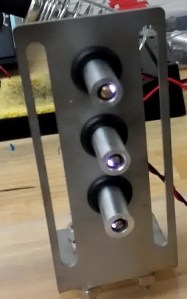
First firing of synchronized 3-channel Micro-Cathode Arc Thruster subsystem at NASA Ames Research Center Spaceshop, August 2013

First firing of synchronized 3-channel Micro-Cathode Arc Thruster subsystem at NASA Ames Research Center Spaceshop, August 2013

Samudra Haque N3RDX is involved in developing a Micro-Cathode Arc Thruster (μCAT) propulsion system for CubeSats.

The Micropropulsion and Nanotechnology Laboratory (MpNL, http://www.mpnl.seas.gwu.edu/), of the Department of Mechanical and Aerospace Engineering, of George Washington University (Washington, DC), announced at the 2014 IEEE Aerospace Conference (Big Sky, MT), a ground breaking electric propulsion application opportunity for the global Small Satellite community: the On-orbit Micro-propulsion eXperiment Program (OMXP) started on March 1, 2014.

The program is initially targeted to educational institutions with pico/nano/micro-satellites who are seeking propulsion systems for their space missions. The MpNL has ongoing research activity in scalable, small, efficient and safer electric propulsion systems, and is preparing flight hardware for the first on-orbit demonstration mission, of a 4-channel Micro-Cathode Arc Thruster (μCAT) subsystem, in 2015 onboard a 1.5U CubeSat that is fully funded. μCAT subsystems were tested and evaluated at Technology Readiness Level (TRL) 5 in August, 2013.

GWU-ARC Mapers Micro-Cathode Arc Thruster PhoneSat Experiment

GWU-ARC Mapers Micro-Cathode Arc Thruster PhoneSat Experiment

The OMXP program is intended to support further technology readiness level raising exercises of the current subsystem and its more capable next generation derivatives that will continue to be researched and prototyped at MpNL, by partnering with experimental spacecraft designers, as early adopters, seeking to add capabilities to their space missions such as: station keeping, orbit maintenance, orbit adjustment, attitude control, orbit transfer, in-space propulsion, deorbit system and proximity operations, or other uses. The program will actively support the co-development of microthruster subsystems compatible with the emerging 3U-6U CubeSat standards, and where practical, for larger bus designs up to 50 Kg mass.

Academic institutions/affiliated groups are invited to propose, as Joint Research Partner, collaborative projects where μCAT or its next generation derivatives can be utilized on a Space mission, in lieu of an affordable cost-recovery agreement for parts, and through the execution of collaborative joint agreements for intellectual property rights, data collection, reporting, publication, and any other issues of mutual interest.
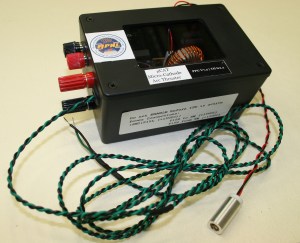
1-ch uCAT subsystem by Micropropulsion and Nanotechnology Lab (c) 2013 Samudra Haque N3RDX

1-ch uCAT subsystem by Micropropulsion and Nanotechnology Lab (c) 2013 Samudra Haque N3RDX

All academic institutions/affiliated groups are welcome to apply. International institutions may be subject to compliance with requirements of applicable U.S. export laws.

The MpNL sincerely appreciates support by industry partners for the On-orbit Micro-propulsion eXperiment Program, and welcomes interested participants, subject to compliance with University regulations on sponsorship.

Samudra Haque N3RDX
Ph.D Candidate
Department of Mechanical and Aerospace Engineering
The George Washington University
samudra@gwu.edu
(202) 812-3325

UK CubeSat Weekend: March 29-30, 2014

A  Typical CubeSat

A Typical CubeSat

The UK CubeSat Weekend, taking place at Satellite Applications Catapult in Harwell Didcot, will allow members of the public to work together to design, build and balloon launch a flight ready CubeSat engineering model, and a flight model suitable for launch into low earth orbit.

The purpose of the weekend is to demonstrate that amateur groups with no experience of spacecraft design or assembly can design, build and fly. Participants are invited to register teams of two to five members each, to build and test the CubeSat.

Objectives:
– Assemble and program a PocketSpacecraft.com ScoutArray
– Test and optionally improve its functionality on the bench
– Integrate into a CubeSat
– Test the functionality on a tethered balloon

The event takes place at the Satellite Applications Catapult, Electron Building, Fermi Avenue, Harwell Didcot, Oxfordshire, OX11 0QR. Registration details at https://sa.catapult.org.uk/cubesat-weekend