Triton-1 Update November 24

Triton-1 in orbit

Triton-1 in orbit

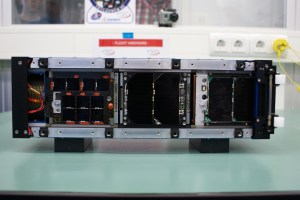
Triton-1 is a 3U CubeSat from ISIS-BV (Innovative Solutions In Space BV) that carries a 435/145 FM to DSB transponder which is expected to be available for amateur radio use 3 months after launch.

This update was issued at 22:23 on November 24, 2013.

Hi all,

We have put an AX.25 mode beacon content decoding document on the Triton-1 amateur radio information page. This document contains the conversions from raw nominal mode beacon telemetry to engineering values.

See http://www.isispace.nl/HAM/

Best regards on behalf of the team,

Wouter Jan Ubbels PE4WJ

Triton missions http://www.isispace.nl/cms/index.php/projects/triton-missions

Dnepr Yasny launch https://amsat-uk.org/satellites/dnepr-november-2013/

Listening to FUNcube-1 with the RTL-SDR

FUNcube-1 flight model - Image credit Wouter Weggelaar PA3WEG

FUNcube-1 flight model – Image credit Wouter Weggelaar PA3WEG

Jason Charles N4JTC has posted an inexpensive way to listen and decode the FUNcube-1 (AO-73) telemetry beacon on 145.935 MHz using the cheap RTL-SDR dongle.

See the post on Jason’s website at http://www.n4jtc.com/?p=579

Download the Dashboard App to receive the telemetry and upload it to the Data Warehouse.

FUNcube-1 (AO-73) Update Nov 24

FUNcube-1 flight model - Image credit Wouter Weggelaar PA3WEG

FUNcube-1 flight model – Image credit Wouter Weggelaar PA3WEG

The FUNcube-1 (AO-73) spacecraft was switched to its nominal “Autonomous” operating schedule around midday November 23.

This schedule has:

High power telemetry beacon only when in sunlight (also known as “Educational” Mode) and  linear transponder for SSB/CW communications with low power telemetry when in eclipse (also known as “Transponder” Mode).

This switching is controlled automatically by the CCT (Command, Control and Telemetry) subsystem on board.

It is not planned to change this operating schedule in the immediate future.

On Sunday, November 24, the team enabled some new Fitter messages and monitored, with great interest, the telemetry that has been contributed by more than 100 stations around the world and is now displayed and stored in the Data Warehouse.

FUNcube-1 transponder spectrum - Mike Rupprecht DK3WN

FUNcube-1 transponder spectrum – Mike Rupprecht DK3WN

The FUNcube Team say:

We cannot over-emphasize just how important this data is to us in helping build up a good knowledge of the operating status of the spacecraft as it orbits the Earth.

Please, please keep it coming in and if you know of anyone who could set up some simple, automated, groundstations in some of the more remote locations then please encourage them to do so for us.

We only have “Whole Orbit Data” for a few channels so we will be relying on all the remote data we can gather.

From reports received there have been many successful QSO’s using AO-73. In the last 24 hours there have been many reports of good signals and smooth sounding audio. We are very grateful for your observations.

Thank you for all your support!

Download the Dashboard App to receive the telemetry and upload it to the Data Warehouse.

The team have not received any new TLEs/Keps and are still using 2013-066B although these appear to be a little late. They hope to get more news on this from the space tracking experts shortly.

FUNcube-1 Radio Communications Subsystem:
• 145.935 MHz BPSK Telemetry 300 mW or 30 mW when the transponder has been activated
• Inverting SSB/CW transponder 300 mW PEP
– 435.150 – 435.130 MHz Uplink LSB
– 145.950 – 145.970 MHz Downlink USB

Satellite TLE Challenge Begins https://amsat-uk.org/2013/11/23/tle-challenge-begins

FUNcube website http://www.funcube.org.uk/

First Transponder Test https://amsat-uk.org/2013/11/22/funcube-1-ao-73-transponder-tested/

FUNcube-1 Deployed !!! https://amsat-uk.org/2013/11/21/funcube-1-deployed/

BBC TV visit FUNcube station at RSGB National Radio Centre
https://amsat-uk.org/2013/11/22/bbc-visit-funcube-station-at-rsgb-national-radio-centre/

Foundation radio amateur first to receive ICUBE-1

ICUBE-1 - Image credit Institute of Space Technology in Pakistan

ICUBE-1 – Image credit Institute of Space Technology in Pakistan

UK Foundation holder Andrew Garratt M6GTG was the first person to report reception of signals from the ICUBE-1 satellite launched by a Dnepr from Dombarovsky near Yasny.

ICUBE-1 was carried within the UNISAT-5 microsatellite which launched at 07:10:11 UT on November 21. At 07:25:48 UT the Dnepr deployed UNISAT-5 into a near Sun Synchronous Orbit (SSO) with an altitude of 634 km. UNISAT-5 later deployed ICUBE-1 and the other satellites it was carrying.

Andrew was capturing telemetry from FUNcube-1 on 145.935 MHz during the 10:21 pass when he noticed a CW signal near the edge of the listed FUNCube-1 transponder downlink (145.950 MHz) although the transponder wasn’t operational on launch day.

He had captured the pass as an IQ file, and so set about trying to decode the CW and managed to get ***ISTAN. On the next pass he got the word CUBESAT several times.

The signal had the same Doppler shift as FUNCube-1 so was from the same launch constellation. Andrew checked the satellites on the launch and spotted ICUBE-1 from the Institute of Space Technology in Pakistan which was listed as using 145.947 MHz with 1200 bps data rather than CW.

Andrew sent a message to the ICUBE-1 team on their Facebook page and they confirmed that at this stage of the mission they were indeed transmitting a CW beacon and what he decoded was part of the message.

Dr. Khurram Project Manager of ICube-1 said “Thanx Andrew … your message was a great relief for us”

Read the full story by Andrew Garratt M6GTG at
http://nerdsville.blogspot.co.uk/2013/11/did-i-make-icube-1s-first-signal-report.html

The 145.947 MHz downlink will operate as a 1200 bps BPSK beacon but has the capability of being configured as a 435/145 MHz FM-DSB transponder.

ICUBE-1 on Facebook https://www.facebook.com/ICUBE1

ICUBE-1 website http://www.icube.org.pk/

ICUBE-1 https://amsat-uk.org/2012/01/13/icube-1-cubesat/

Watch the video iCUBE-1 The first cube satellite of Pakistan by Usama BinTariq
http://www.dailymotion.com/video/x17lk4v_icube-1-the-first-cube-satellite-of-pakistan_news

Pakistan launches first Varsity-level satellite
http://www.samaa.tv/Pakistan-launches-first-Varsity-level-satellite-74226-1.html

Pakistan’s first CubeSat satellite, iCUBE-1 launched
http://www.app.com.pk/en_/index.php?option=com_content&task=view&id=250462&Itemid=2

Dnepr Yasny launch https://amsat-uk.org/satellites/dnepr-november-2013/

Launch success for TshepisoSat (ZACube-1)

ZACUBE-1, FUNcube-1 and HiNCube in the deployment pod - Image credit Wouter Weggelaar PA3WEG

ZACUBE-1, FUNcube-1 and HiNCube in the deployment pod – Image credit Wouter Weggelaar PA3WEG

On Thursday, November 21, 2013 the French South African Institute of Technology (F’SATI), at the Cape Peninsula University of Technology, made history by being the first in South Africa, and indeed the first in Africa, to launch a locally built nano satellite into orbit from a site in Russia.

Deon Coetzee, ZR1DE, who represented SA AMSAT at a ceremony held in the auditorium at the university campus reports that Vice Chancellor, Prof. Vuyisa Mazwi-Tonga, paid tribute to all at the university who made this achievement possible, and said she was immensely proud of being part of it all.

CPUT ZACUBE-1 TshepisoSat

CPUT ZACUBE-1 TshepisoSat

Original known as ZACube-1, the satellite has been named TshepisoSat, after a competition held for Grade 9 learners. Tshepiso is the seSotho word meaning promise.

The launch was the culmination of five years’ work after the first proposal to build a small satellite as part of the engineering curriculum was put forward by Professor Robert van Zyl in February 2008. Co-operation of the French Government made possible the forming of F’SATI and the French Ambassador in South Africa, Elizabeth Barbier, during a video address, promised continued support by France for the programme.
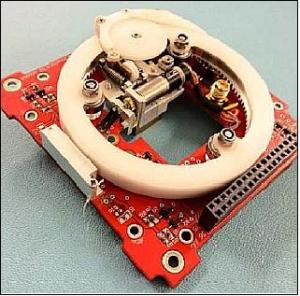
ZACUBE-1 TshepisoSat HF beacon antenna deployment unit - Image credit CPUT

ZACUBE-1 TshepisoSat HF beacon antenna deployment unit – Image credit CPUT

ZACUBE-1 was one of fourteen cubesats aboard the thirty metre tall, three stage rocket. All the cubesats were successfully released at a height of 600 km above the Earth. TshepisoSat will circle the Earth up to fifteen times per day in a polar orbit.

“At 11h13 the first signals from ZACUBE-1 were received amongst loud cheers”, Deon said. According to Francois Visser, ZS1CED, who was the principal engineer and student mentor, the satellite was functioning well. The satellite also includes a small camera which will be used to monitor the releases of the 20 metre beacon antenna. The beacon will operate on 14099 kHz and will be used to characterise the Superdarn antennas at the Antarctic which are used to study the ionosphere. A UHF beacon operates on 437.345 MHz.
Follow progress at http://www.cput.ac.za/fsati and http://www.amsatsa.org.za/

The second of the 14 CubeSats of interest to radio amateurs is FUNcube. The satellite is an AMSAT-UK project built in conjunction with ISIS. The first signals from FUNcube were received by Alan Soal, ZS1LS, about 10 minutes after separation, telemetry was successfully decoded, and uploaded to the FUNcube data warehouse. All main parameters on FUNcube look nominal; temp, battery voltage, and solar panel charging rate.

FUNcube carries several interesting payloads and has already been given an OSCAR designation, AMSAT-Oscar-73. Follow FUNcube on http://www.funcube.org.uk/

Source: South African Radio League (SARL)

Assistance requested in receiving UNISAT-5 payloads

UniSat-5 with labelsThe Group of Astrodynamics for the Use of Space Systems (GAUSS) has asked for assistance in receiving some of the satellites deployed by the UNISAT-5 mini-satellite which was launched on a Dnepr from Yasny on November 21.

Dear All,
 
The Dnepr Cluster Launch 2013 has just been successfully accomplished:
if anyone of the CubeSat community has the chance, please support GAUSS team in receiving some of the US5 payloads.
Try to get:
PUCPSAT (from Perù): beacon @ 145.840 MHz (transmitting call sign OA0PUCP)
WREN: 437.405 MHz
 
Thank you for your support!
 
GAUSSteam

Gruppo di Astrodinamica per l’Uso dei Sistemi Spaziali – Group of Astrodynamics for the Use of Space Systems
Via Lariana, 5
00199 Roma

Dnepr Yasny launch https://amsat-uk.org/satellites/dnepr-november-2013/