23cm Restrictions in Europe

Galileo LogoThe 67th CEPT Electronic Communications Committee (ECC) Plenary Meeting, held June 24-27, approved ECC Decision (25)01 imposing restrictions on both Amateur and Amateur-Satellite operation in the 23cm band (1258-1300 MHz). It entered into force on June 27, 2025, with a preferred date for implementation of December 27, 2025.

In order to account for amateur service installations that are authorized and operational in the frequency range 1258-1296 MHz in many CEPT countries, administrations may, on national level, define a transitional period to comply, with the expectation this could take up to three years according to national circumstances.

The meeting minutes record:

6.2 APPROVAL FOR PUBLICATION OF DRAFT ECC DECISION (25)01 ON GALILEO AND ITS PROTECTION IN 1258-1300 MHZ FROM RADIO AMATEUR

The WG FM Chairman introduced the draft ECC Decision (25)01 on Galileo and protection measures in 1258-1300 MHz in Annex 06 to 026, which was endorsed by WG FM for publication by the ECC.

24 administrations indicated their intention to implement this Decision, while 1 administration indicated their intention to implement it partially.

Germany stated that they have to determine how to implement this Decision at national level.

The United Kingdom informed the meeting that it will implement decides 1 (designation of the frequency bands for Galileo) but will not apply the technical conditions on amateur and amateur-satellite in decides 2.

Meeting minutes https://cept.org/documents/ecc/89968/ecc-25-042_minutes-67th-ecc-meeting

Amateur-Satellite Service restrictions (bandwidth must be ≤ 150 kHz):

i) 1260-1262 MHz Maximum permitted EIRP:

  •   −3 dBW (500 milliwatts) for 0° ≤ θ < 15°
  • 17 dBW (50 watts) for 15° ≤ θ < 55°
  • 26.8 dBW (478 watts) for 55° ≤ θ < 90°

where θ = elevation angle of amateur station antenna

ii) 1262-1270 MHz: Maximum permitted EIRP = −17 dBW (20 milliwatts)

Read the full CEPT ECC Decision (25)01 to see the restrictions on the rest of the 23cm band https://docdb.cept.org/download/4782

The 24 administrations currently studying the implementation of ECC/DEC/(25)01 appear on the Status page at https://docdb.cept.org/implementation/28651

IARU Region 1 paper on ECC/DEC/(25)01 published July 21, 2025 https://www.iaru-r1.org/wp-content/uploads/2025/07/ECC-Decision2501-support-paper.pdf

WRC-23 saw the publication of ITU-R Recommendation M.2164-0

Follow AMSAT-UK on X

23cm band report ITU‑R M.2532 published

ITU LogoIARU Region 1 reports as a part of the preparatory process for WRC-23 agenda item 9.1 topic b) involving the 23cm band (1240-1300 MHz), ITU‑R Report M.2532 has been published.

This report encapsulates the outcome of resolves 1 of ITU‑R Resolution 774 that requires a detailed review of the different systems and applications used by the amateur and amateur satellite services in the 23cm band. The review forms a part of the basis for the studies required by resolves 2 to address the amateur and amateur satellite services coexistence with the radio navigation satellite service (RNSS).

The publication represents a positive outcome from a great deal of work and committment by the IARU volunteer team that has been central to its development since 2019 in ITU‑R Study Group 5.

Download ITU‑R Report M.2532 https://www.iaru-r1.org/wp-content/uploads/2023/11/R-REP-M.2532-2023-PDF-E.pdf

The information paper ZL23_C5_19 1.3 GHz Band – Additional Information was submitted by the RSGB to the IARU Region 1 Conference held Novemebr 1-4, 2023. It provides information on the situation in the 1240-1300 MHz and 13001350 MHz spectrum. It can be downloaded from ZL23_C5_19 1300MHz INFO

Extract from CPM report 2023-10-11-Extract CPM-Report-to-WRC-23 _2_

1240-1300 MHz – ITU-R WP5A fails to achieve consensus

ITU LogoThe Chair of IARU Region 1 Spectrum and Regulatory Liaison Committee, Barry Lewis G4SJH, writes on the IARU-R1 site that ITU‑R WP5A meeting #30 could not achieve consensus on the measures needed to protect the RNSS in the amateur 23cm band (1240-1300 MHz), (Relating to WRC-23 AI 9.1b)

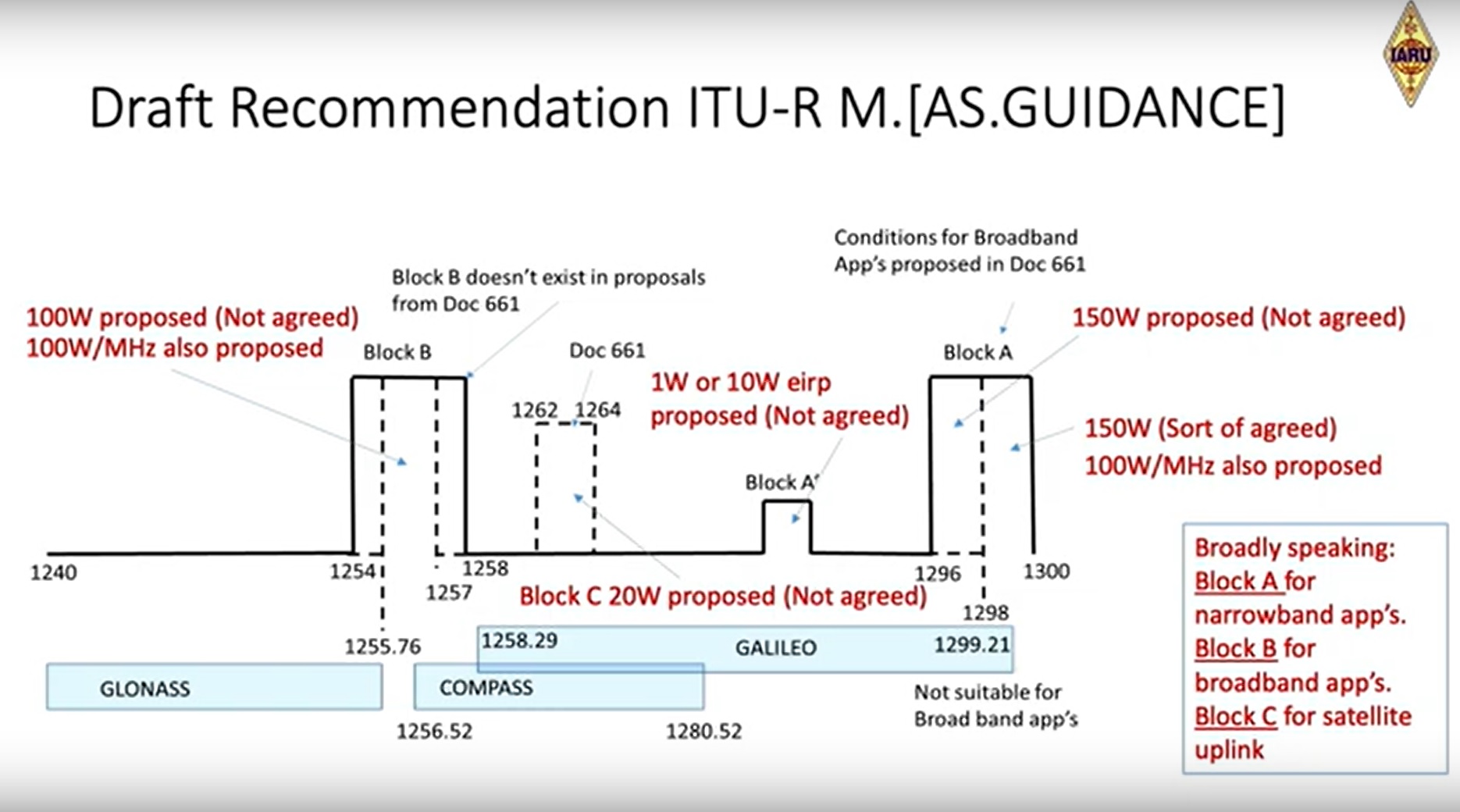
Working Party 5A meeting #30 met over the period 13th to 22nd September 2023 and despite extra meeting time allocated specifically to the development of the ITU‑R Recommendation M.[AS_GUIDANCE] the meeting did not reach a consensus on the technical and operational measures required to ensure the protection of the RNSS (radio navigation satellite service) in the amateur 23cm band. The measures aim to identify parts of the frequency band with associated amateur transmitter power limits that can help protect the RNSS operations. By the close of the meeting three alternative solutions remained unresolved in the draft document.

This outcome was reported to the WP5A plenary meeting and the subsequent parent Study Group 5 meeting but despite further efforts still no outcome could be achieved. Since the recommendation will be important for WRC-23 discussions it is expected that further efforts will continue to try to find a solution.

On a positive note the Draft New Report ITU‑R M. [AS_CHARACTERISTICS] was finalised by WP5A an approved in Study Group 5.

The IARU report from the WP5A meeting can be downloaded here
https://www.iaru.org/wp-content/uploads/2023/10/Report-from-WP5A_Sept-2023.pdf

The ITU-R WP5A Meeting Report can be downloaded from
https://itu.int/md/R19-WP5A/new/en
Word Doc https://www.itu.int/dms_pub/itu-r/md/19/wp5a/c/R19-WP5A-C-0837!!MSW-E.docx

IARU Region 1 2023 conference information paper ZL23_C5_19 from RSGB ZL23_C5_19 1300MHz INFO

WRC23: 23cm (1240-1300 MHz) Amateur/RNSS Coexistence

2023-04 WRC-23 AI9.1b Draft Recommendation ITU-RITU-R WRC-23 Agenda Item 9.1b: Measures to be applied in the frequency band 1240-1300 MHz to ensure the protection of the radionavigation-satellite service (RNSS) in accordance with Resolution-774.

This presentation on 23cm Amateur/RNSS Coexistence was given by the IARU Region 1 Spectrum Regulation and Liaison Committee (SRLC) Chair Barry Lewis G4SJH to the Martlesham Microwave Round Table on April 16, 2023.

Watch 23cm Amateur/RNSS Coexistence – Barry Lewis G4SJH

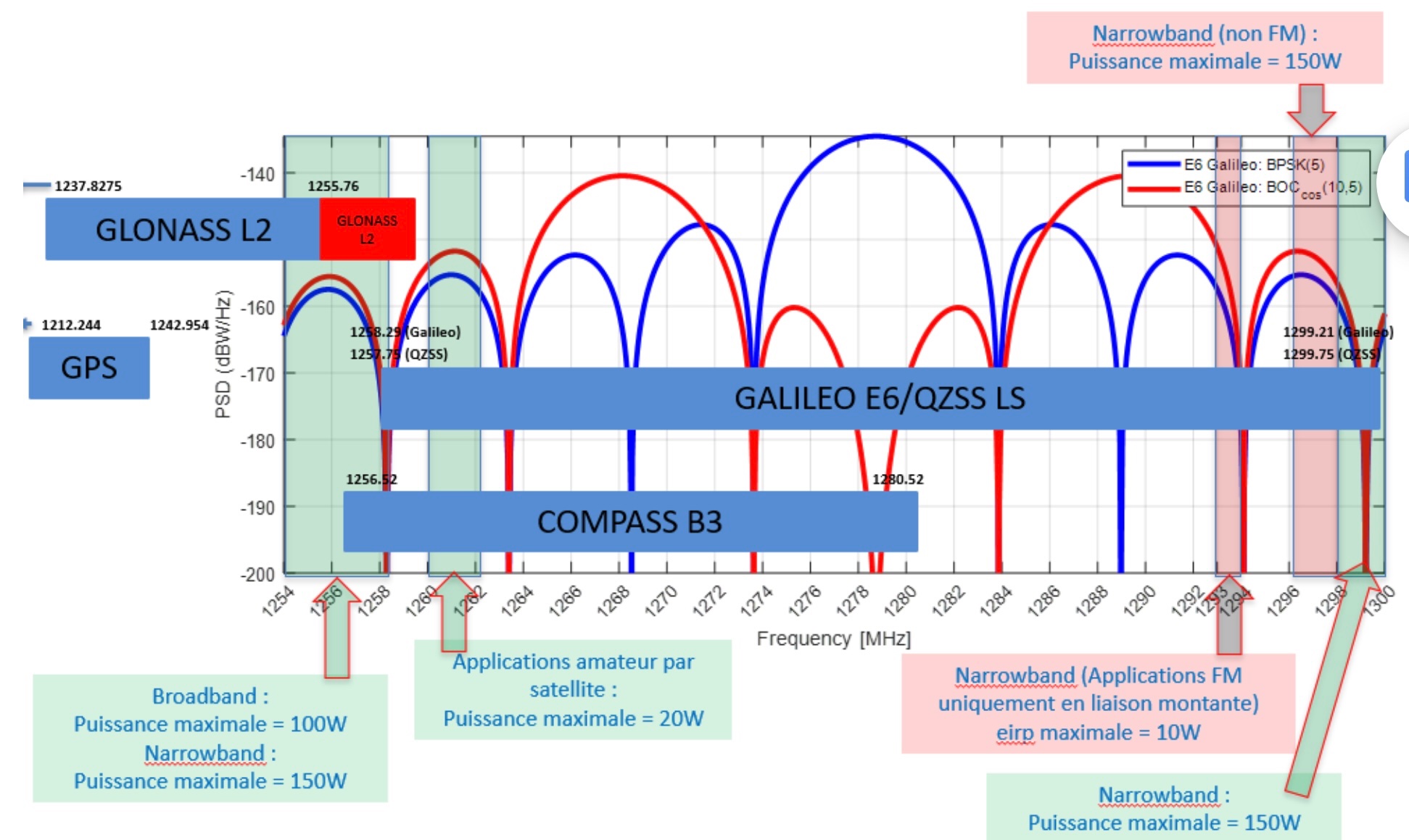
The French National Frequency Agency (ANFR) has posted the following on their website titled – Protection of Galileo against Amateur use.
“Some bands, in red in the figure, are the subject of heated debate because their use by amateur stations is likely to have a significant impact on Galileo”, see
https://www-anfr-fr.translate.goog/liste-actualites/actualite/saga-cmr-23-point-91b-la-protection-de-galileo-vis-a-vis-des-usages-amateur?_x_tr_sl=auto&_x_tr_tl=en&_x_tr_hl=en-US&_x_tr_pto=wapp

ANFR 23cm 1240-1300 MHz Band

ANFR 23cm 1240-1300 MHz Band

Austria restricts 23cm band operation

Galileo LogoAustria has become the latest country to impose restrictions on Amateur Radio operation in the 23 cm band (1240-1300 MHz) to protect to protect ground-based receivers for the Galileo RNSS satellite constellation.

Austria’s national amateur radio society ÖVSV say:

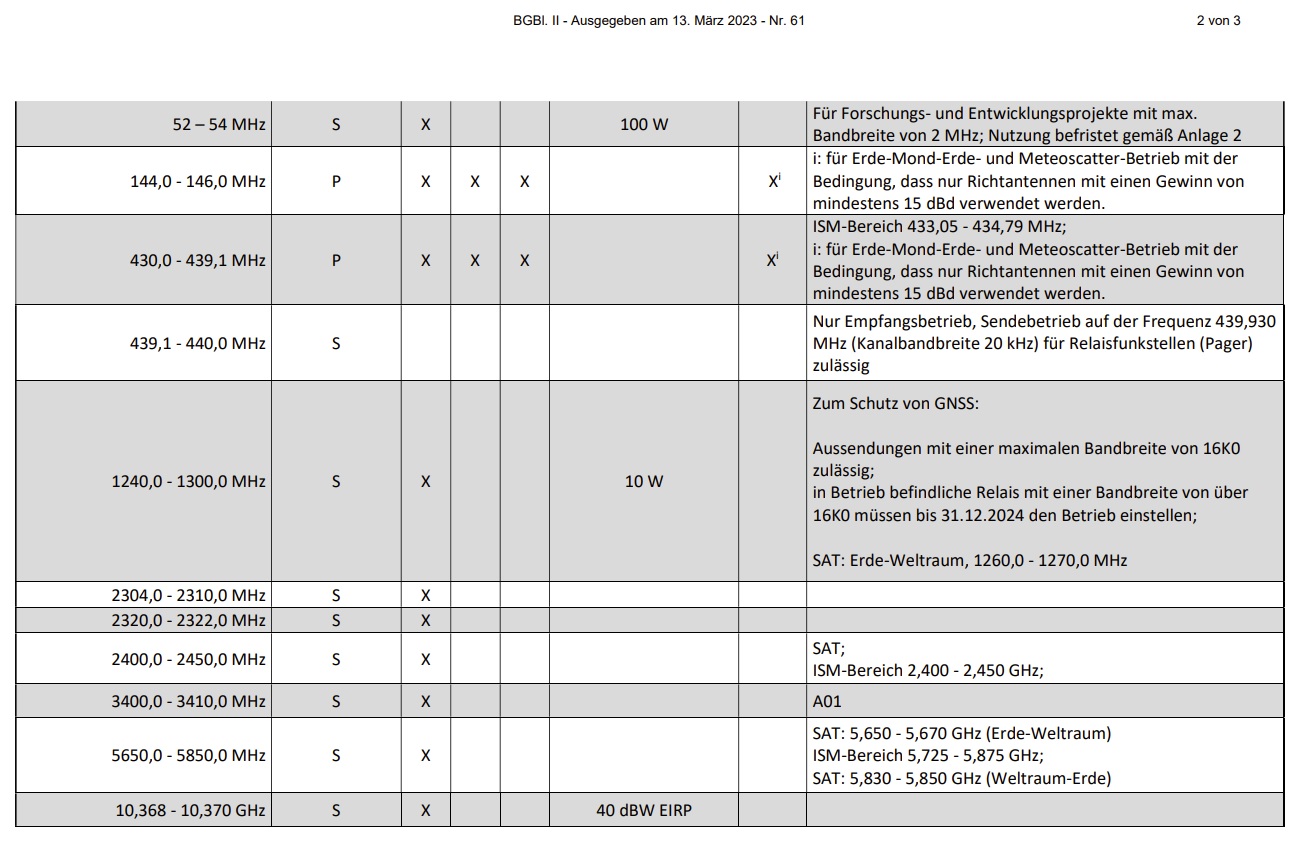
Changes to the legal conditions in the AFU area from 03/13/2023:

Annex 2 of the Amateur Radio Ordinance is omitted and is now regulated in the Frequency Use Ordinance Annex 4.

This results in some changes in the frequency ranges and powers.

For the KW bands 80m, 40m, 20m, 17m, 15m, 12m and 10m, 1KW (High-Power) can now be approved for Class 1 FA after 1 year of trouble-free operation.

  • Thus, the power limitation of 7100-7200 kHz (previously only 200W) in the 40m band is eliminated and AFU has primary status.
  • 30m band still only max. 200W if power level B or C approved (no change)
  • 160m band from 1810-1850 kHz now max. 200W if power level B or C approved and AFU has primary status.
  • 160m band from 1850-2000 kHz only max. 100W (now instead of 1950 kHz up to 2000 kHz)

2023-03-13 Austrian Regulations

  • The 6m band has been extended from 52-54MHz. (Limited until 31.12.2030, for research WRAN)
    • from 50-52 MHz now max. 200W if power level B or C approved and AFU has primary status.
    • from 52-54MHz only max. 100W
  • On the 70cm band now also allowed as already on 2m high-power (up to 1KW), if power level B or C approved (but only EME and MS with Yagis from at least 15dBd gain)
  • The 23cm band was kept, but the performance was severely limited
    • only 10W allowed (previously max. 200W were allowed)
    • Repeaters with more than 16kHz bandwidth must cease operation by December 31, 2024.
  • On all higher FM bands (except 10 GHz, since only 40dbW EIRB) now also max. 200W (previously only 100W) allowed.
  • on 24GHz AFU has only secondary status

Please note the new conditions.

Kurt OE1KBC

Amateur Frequencies: https://ris.bka.gv.at/Dokumente/BgblAuth/BGBLA_2023_II_61/Anlagen_0004_CAC10589_910D_4FFE_9A8D_3839DC110654.pdfsig

ÖVSV post: https://www-oevsv-at.translate.goog/oevsv/aktuelles/Neue-Frequenznutzungs-Verordnung-in-Kraft/?_x_tr_sl=auto&_x_tr_tl=en&_x_tr_hl=en-US&_x_tr_pto=nui

23cm Band and RNSS Coexistence September Update

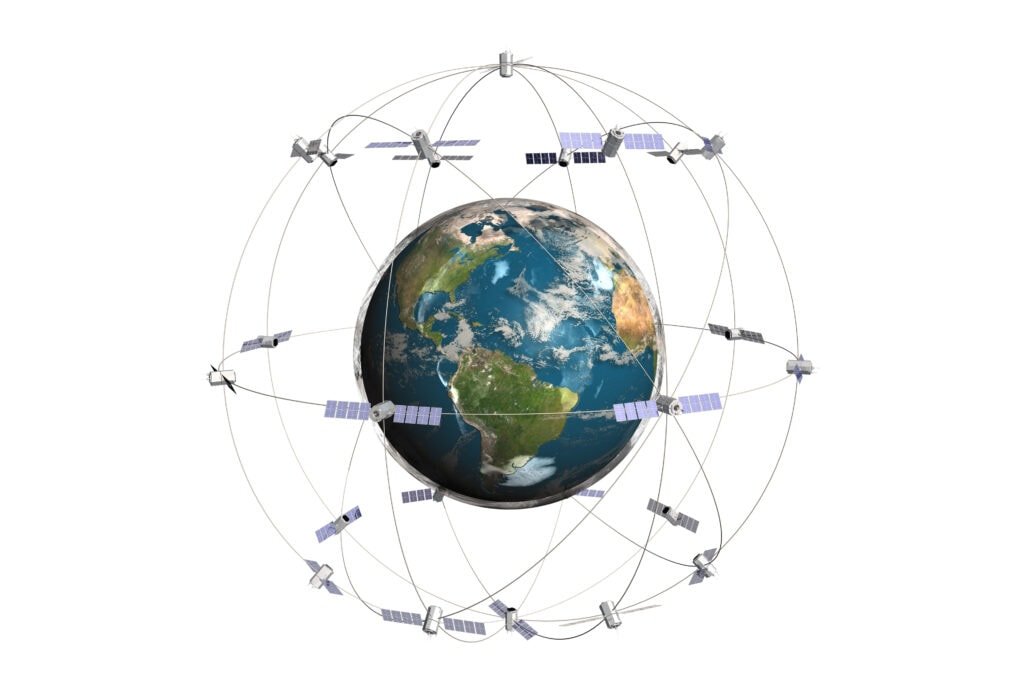
RNSS Satellites Oribiting EarthAs the WRC-23 approaches so the studies regarding AI9.1b (23cm and RNSS) are working towards conclusions. However the IARU is not content that all the operational aspects of the amateur service usage of the 1240-1300 MHz band are being properly considered to develop an acceptable compromise for all concerned parties.

Having been deeply involved in the regulatory work described below it is the opinion of the IARU that for many national authorities the 23cm band WRC23 agenda item 9.1b topic has a very low priority. Many are taking a “generic” stance stating their support for studies without considering the detail of the work or how it is moving forward. Therefore the IARU requests that Member Societies urgently put this issue on the agenda with their national authorities to discuss the views laid out below.

The IARU view is that the potential for widespread or persistent interference to the radio-navigation satellite service (RNSS) from amateur service transmitters is over-stated. However, recognising the regulatory situation, the IARU and the amateur community are ready to accommodate any technical or operational measures deemed necessary on the amateur services so long as they are proportionate, reasonable and evidence based.

The IARU believes that a careful compromise needs to be found in the outcome of the work and the execution of WRC-23 agenda item 9.1b, that properly takes account of the low likelihood of interference events occurring whilst allowing both the amateur services and the RNSS to develop in the band.

The IARU stresses the opportunity that the higher frequency amateur service bands enable for technical skills development for researching and experiencing radio propagation effects. The 1240 – 1300 MHz band is important for the amateur radio service, being the lowest allocation for radio amateurs on which typical microwave propagation can be experienced. Access to these frequencies is facilitated by commercially available equipment and provides a ‘bridge’ building motivation to become involved in more specialized higher frequency microwave and millimeter wave operations providing the self-training which is at the heart of amateur radio.

Read the paper IARU Perspective on the AI9.1b Progress — September 2022
https://www.iaru.org/wp-content/uploads/2022/09/Sept22-23cm-RNSS-Update-.pdf

Source IARU 23cm Band and RNSS Coexistence
https://www.iaru.org/spectrum/iaru-and-itu/wrc-23/agenda-item-9-1-topic-b/23cm-band-and-rnss-coexistence/