MAI-75 ISS SSTV Video

John Brier KG4AKV

John Brier KG4AKV

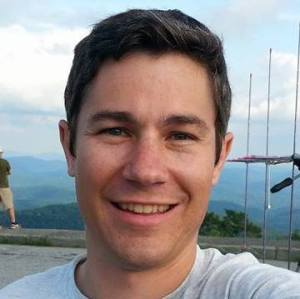
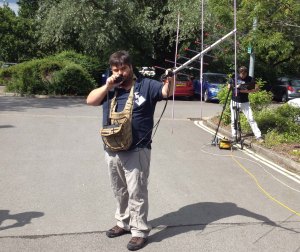
John Brier KG4AKV has released a video showing reception of the MAI-75 experiment Slow Scan TV transmissions from the International Space Station.

This is one of two rare MAI-75 passes over North America. The other is in Video #3 in this series (see link below). It’s rare because the MAI-75 event only took place for a few hours of Thursday and Friday during the week long event, and almost all of the passes didn’t go over North America, so getting it was really special. This was a great way to round out the April 2016 ISS SSTV week long event! I love this SuitSat image!

Oh yeah! This was shot partially with a GoPro! Enjoy the views.

Eventually I hope to make a time lapse of all the ISS SSTV images I received during this event, but my next video will be of an SO-50 pass where I made six contacts, five of which were back to back.

Watch Spacesuit MAI-75 Image! – Last Pass of April 2016 ISS SSTV Event – Video #4

New videos every Wednesday!
https://www.youtube.com/channel/UCJDdMdjxwFsjdzhXQFHVk2g/videos
https://twitter.com/johnbrier

ISS Slow Scan TV https://amsat-uk.org/beginners/iss-sstv/

GB1SS: schools speaking to Tim Peake

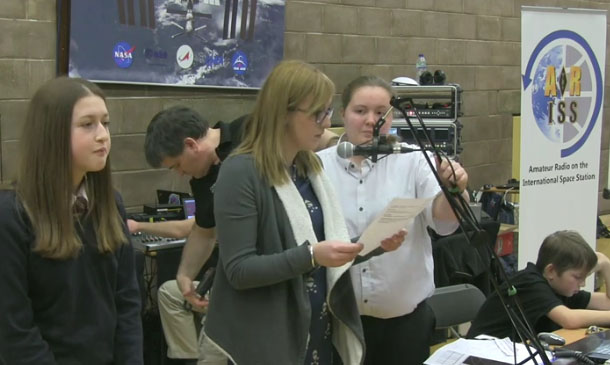
Sandringham students talk to Tim Peake GB1SS using amateur radio

Sandringham students talk to Tim Peake GB1SS using amateur radio – BBC TV screenshot

The ten school contacts with Tim Peake on the ISS during his Principia mission have inspired thousands of young people and introduced them to amateur radio in a new and exciting way. A new RSGB video celebrates these historic events and the range of linked activities the schools have enjoyed.

Students at Derby High School Bury use amateur radio to link up with Tim Peake

Students at Derby High School Bury used amateur radio to link up with Tim Peake

Beginning with the exhilaration of the launch, it follows the competition for schools to host the ARISS contacts, and showcases the variety of science, technology, engineering, maths (STEM) and arts activities that helped pupils to understand more about space and amateur radio.

The contacts themselves, often led by newly-licensed pupils, were the successful culmination of many months of work and anticipation. We congratulate everyone involved and hope you enjoy our celebration.

Watch GB1SS: schools speaking to Tim Peake

ARISS UK videos https://www.youtube.com/channel/UCQS-yDk7PdE9cRv4MNu8pCw/videos

Amateur Radio on the International Space Station http://ariss.org/
Twitter https://twitter.com/ARISS_status

ARISS Principia site https://principia.ariss.org/

What is Amateur Radio? http://www.essexham.co.uk/what-is-amateur-radio

Find an amateur radio training course near you https://thersgb.org/services/coursefinder/

A free booklet is available aimed at introducing newcomers to the hobby that can also be used as a handy reference while getting started, see
http://rsgb.org/main/get-started-in-amateur-radio/alex-discovers-amateur-radio-2/

AMSAT-UK https://amsat-uk.org/
Twitter https://twitter.com/AmsatUK
Facebook https://facebook.com/AmsatUK
YouTube https://youtube.com/AmsatUK

Beccy Bowen 2W0YLL led the contact between Powys school students and Tim Peake GB1SS

Beccy Bowen 2W0YLL (right) led the contact between Powys school students and Tim Peake GB1SS

LightSail-2 to send Morse code

LightSail-2 - Credit The Planetary Society

LightSail-2 – Credit The Planetary Society

The Planetary Society CubeSat LightSail-2 will transmit Morse code from space, and you can make the sound your ringtone

Jason Davis @jasonrdavis reports that during last year’s LightSail-1 mission (call sign KK6HIT), dozens of radio enthusiasts around the world wrote in to tell us they heard our solar sailing CubeSat chattering away in low-Earth orbit.

Every few seconds, LightSail automatically transmits a beacon packet. These packets can be picked up by ground stations and decoded into 238 lines of text telemetry that describe the spacecraft’s health and status. Everything from battery current to solar sail deployment motor state is included. We still plan to better support the worldwide radio community’s efforts to help us capture those packets; that work is temporarily on the back burner while the engineering team focuses on getting the spacecraft ready for delivery.

Many off-the-shelf CubeSat software packages also have an option to transmit Morse code beacons, and for the LightSail 2 mission, we’re activating this feature. Every 45 seconds, the spacecraft will transmit “L-S-2,” and radio operators tuned in to the spacecraft’s 437.325 megahertz frequency should be able to hear it.

Read the full The Planetary Society story at
http://www.planetary.org/blogs/jason-davis/2016/20160609-lightsail-2-morse-code.html

UKHAS Conference Cambridge Sept 10

SSDV picture from a PIE balloon – Image credit Dave Akerman M0RPI

SSDV picture from a PIE balloon – Image credit Dave Akerman M0RPI

The UKHAS Conference will be held at the Institute of Astronomy, University of Cambridge, on Saturday, September 10, 2016. There will be an opportunity to take the amateur radio Foundation Practical Assessments and Exam.

The conference attracts those interested in learning about building and flying High Altitude Balloons or in tracking their 434 MHz signals.

Tickets can be purchased from the wiki page and cost just £10 each.

This is our first year away from London but the change in location also comes with a greatly reduced ticket price, with thanks to Andy Batey G7LBL for offering up the facilities. Hopefully this will offset any increased difficulties in travel and Cambridge is still well connected to the major transport hubs.

For those who haven’t attended before, the conference is a great opportunity to learn more about the hobby and meet new faces. There will be a series of structured talks, workshops and discussions.

If you would like to speak or run a workshop, please do get in touch with either Daniel Saul M6DSA or Steve Randall G8KHW. Contributions don’t need to be directly linked to ballooning and we look forward to all suggestions.

As in previous years, there will also be the opportunity to take RSGB amateur radio exams on the day. Please contact Phil Crump M0DNY if you are interested email: phil <at> philcrump.co.uk

We look forward to seeing you all in September!

Cheers,

Daniel & Steve

UKHAS Conference Booking https://ukhas.org.uk/general:ukhasconference2016

Those intending to take the amateur radio Foundation exam may find this free Online Foundation course useful http://www.essexham.co.uk/foundation-online

Last year’s conference had an impressive line of of radio amateurs giving presentations
https://amsat-uk.org/2015/08/17/2015-ukhas-conference/

Australian radio ham helps schools link to ISS

Shane Lynd VK4KHZ at Glenmore State High School - Credit ABC News

Shane Lynd VK4KHZ at Glenmore State High School – Credit ABC News

ABC News reports chance encounters of the space kind give radio amateur Shane Lynd VK4KHZ a chance to help NASA.

Experimenting with amateur radio equipment had led to a rare position as a NASA volunteer for a central Queensland man.

Mackay man Shane Lynd was tinkering with his radio equipment 18 years ago when a chance encounter with space changed everything.

Mr Lynd made radio contact with Andy Thomas VK5JAT / VK5MIR, the first Australian member of NASA’s astronaut corps, who was on board the Russian Space Station Mir at the time.

“That sparked my interest,” Mr Lynd said.

He soon began thinking of opportunities for schools to link with space.

It was another series of chance encounters that took Mr Lynd a step closer to his goal.

He was invited to join Amateur Radio on the International Space Station (ARISS), a project that helps students engage with amateur radio and make contact with the International Space Station (ISS).

Read the full ABC News story at
http://www.abc.net.au/news/2016-06-07/australian-radio-buff-helps-out-nasa/7485540

Glenmore State High School students had a successful amateur radio contact with astronaut Tim Kopra KE5UDN / NA1SS
http://www.abc.net.au/news/2016-06-07/central-qld-school-students-call-international-space-station/7485140

TX Factor video: The King’s School Tim Peake contact

UK astronaut Tim Peake KG5BVI GB1SS in the ISS Jan 2016

UK astronaut Tim Peake KG5BVI / GB1SS

In this special edition, the TX Factor team of Nick Bennett 2E0FGQ, Bob McCreadie G0FGX and Mike Marsh G1IAR, follow the progress of The King’s School GB1OSM, Ottery St Mary, Devon in their attempt to be one of the ten lucky UK schools to use amateur radio to link up with Tim Peake GB1SS aboard the International Space Station.

The team go behind the scenes with the ARISS team to meet the members and see the technology that helped to make the UK schools’ link-ups such a great success.

Among those interviewed are the RSGB Youth Committee Chair Mike Jones 2K0MLJ and the RSGB Communications Manager Heather Parsons.

TX Factor sincerely hope you enjoy their latest feature that has taken over 18 months to make!

Watch TX Factor – Episode 11 (TXF011)

The King’s School Tim Peake contact https://amsat-uk.org/2016/05/02/the-kings-school-tim-peake/

ISS HamTV at Goonhilly in TX Factor Show
https://amsat-uk.org/2016/02/27/hamtv-at-goonhilly-in-tx-factor-show/

What is Amateur Radio? http://www.essexham.co.uk/what-is-amateur-radio

Find an amateur radio training course near you https://thersgb.org/services/coursefinder/

A free booklet is available aimed at introducing newcomers to the hobby that can also be used as a handy reference while getting started, see
http://rsgb.org/main/get-started-in-amateur-radio/alex-discovers-amateur-radio-2/

Amateur Radio on the International Space Station (ARISS) logoARISS is an international educational outreach program partnering the volunteer support and leadership from AMSAT and IARU societies around the world with the ISS space agencies partners: NASA, Russian Space Agency, ESA, CNES, JAXA, and CSA.

ARISS offers an opportunity for students to experience the excitement of Amateur Radio by talking directly with crew members on-board the International Space Station. Teachers, parents and communities see, first hand, how Amateur Radio and crew members on ISS can energize youngsters’ interest in science, technology, and learning.

ARISS Principia https://principia.ariss.org/