Press coverage of 4M ham radio lunar payload

LX0OHB-4M amateur radio lunar payload - Credit LuxSpace

LX0OHB-4M amateur radio lunar payload – Credit LuxSpace

The successful amateur radio lunar payload 4M launched on October 23 has generated a number of articles, the latest is in The Daily Beast.

Read The Daily Beast article about the first privately-funded spacecraft to travel the Moon at http://www.thedailybeast.com/articles/2014/10/26/luxembourg-and-china-team-up-on-private-mission-to-the-moon.html

Since its launch 4M has been transmitting the digital mode JT65B on 145.980 MHz. The signal was first picked up 79 minutes after launch by Roland Zurmely PY4ZBZ in Brazil. The signal was very weak as 4M flew around the Moon but radio amateurs still managed to copy it. 4M is now heading back toward Earth.

4M reception by Berend PA3ARK signal level -8 dB

4M reception by Berend PA3ARK

Ghislain Ruy LX2RG has provided some additional information on the 4M project:

This project is entirely funded by our company [Luxspace], with strictly no commercial purpose. It means also that it had to be cheap, fast, efficient. In the partner page, you will find all those partner companies that have provided their services for free or at reduced cost. http://moon.luxspace.lu/partners/

I had only 6 months to set it all up, starting from blank page or quite so. I mean all really. And on top of that a mission from my boss: take the youngest by the hand and lead them to success. Done. I have repaid what I have been given by the elders when I was a beginner.

Here are at Luxspace, we are quite a lot of skilled high level engineers, and to say the truth, we do not object having fun on top of that.

LSE space offered for free to deal with all the data handling and setup all the website, data base, and so on. They did it in a very few months, and choose the most practical way for them in order to be in time and operational. And we are. As simple as it is.

We have learned a lot during these 6 months, and the last 6 days have been quite an education also.

The next mission will integrate all what was discovered and learned. My homework this week is to write it all down. Now, it is Java, and that’s it. Could have been better, but it works as expected or so, and that’s what counts. Fine tuning will come later.

Believe or not, I knew nothing of JT65B 7 months ago. We have put it all in a small microprocessor, including SDR !

Read the 4M blog at http://moon.luxspace.lu/blog/

For tracking information just enter your latitude and longitude at http://moon.luxspace.lu/tracking/

Lunar Ham Radio Payload Launched https://amsat-uk.org/2014/10/23/lunar-ham-radio-payload-launched/

ARRL – Radio Amateurs Report Hearing 4M Moon Orbiter JT65B Signal
http://www.arrl.org/news/radio-amateurs-report-hearing-4m-moon-orbiter-jt65b-signal

AMSAT-UK
Facebook https://www.facebook.com/amsatuk
Twitter https://twitter.com/AMSATUK
Bandplan released for 146 MHz

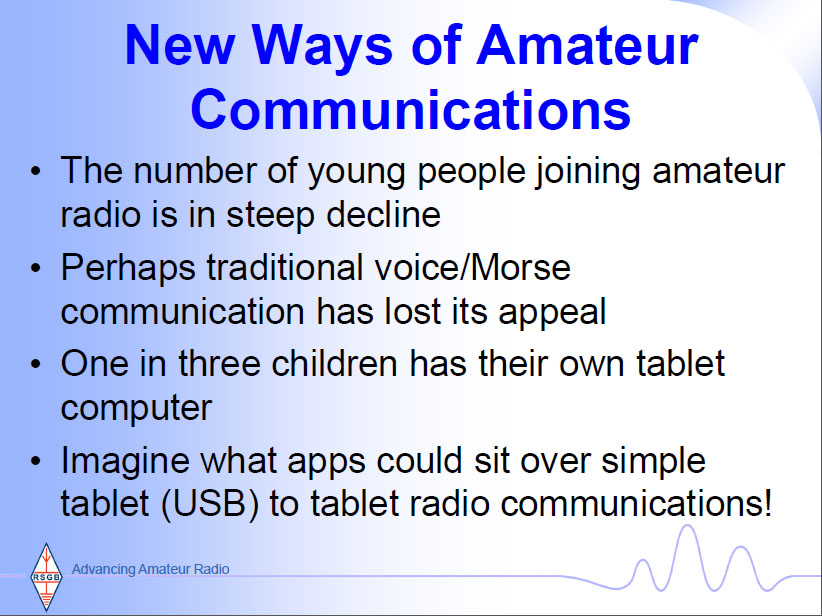
New Ways of Amateur CommunicationsFriday, October 31 is the formal start of the 146-147 MHz ‘experiment’ for Full licence holders with NoV’s and the RSGB has released a bandplan.

The bandplan has an allocation for digital modes with up to 500 kHz bandwidth and 12.5 kHz channels for narrowband digital modes including digital voice.

Users of wideband modes may need to use bandwidth tailoring to ensure no RF extends into the weak signal satellite segment at 145.8-146.0 MHz (the Lunar 4M JT65B beacon uses 145.980 MHz) or goes above 147.0 (or 146.93750 where applicable).

146 MHz Spectral CompatibilityDownload the bandplan from http://rsgb.org/main/files/2014/10/146-147-Initial-Bandplan.pdf

Some amateurs will be active in the early hours of Friday with the digital voice mode FreeDV which uses Codec2, download FreeDV from http://freedv.org/tiki-index.php

Apply now for your NoV at http://rsgb.org/main/operating/licensing-novs-visitors/online-nov-application/146mhz-147mhz-nov/

146-147 MHz Usage and Band Planning FAQ
https://amsat-uk.org/2014/10/28/146-147-mhz-usage-and-band-planning-faqs/

RSGB 146 MHz Information
http://rsgb.org/main/operating/band-plans/vhf-uhf/vhf-spectrum-release/

Join AMSAT-UK

AMSAT-UK_Bevelled_Logo

AMSAT-UK Logo

Founded in 1975 AMSAT-UK is a voluntary organisation that supports the design and building of equipment for amateur radio satellites.

AMSAT-UK initially produced a short bulletin called OSCAR News to give members advice on amateur satellite communications. Since those early days OSCAR News has grown in size and the print quality has improved beyond recognition. Today, OSCAR News is produced as a high-quality quarterly colour A4 magazine consisting of up to 40 pages of news, information and comment about amateur radio space communications.

The new lower-cost E-membership provides OSCAR News as a downloadable PDF file giving members the freedom to read it on their Tablets or Smartphones anytime, anyplace, anywhere.

An additional advantage is that the PDF should be available for download up to 2 weeks before the paper copy is posted.

AMSAT-UK FUNcube Mission Patch Rev4 20100609

AMSAT-UK FUNcube Mission Patch

The Membership year lasts for 12 months starting on January 1 each year.

If you join after July 31 of any particular year, then you will receive complimentary membership for the whole of the following year, i.e. join on August 10, 2014, and you have nothing more to pay until Dec 31, 2015.

Take out an Electronic membership here http://shop.amsat.org.uk/shop/category_9/Join-Amsat-UK.html

E-members can download their copies of OSCAR News from http://www.amsatuk.me.uk/on

A sample issue of OSCAR News can be downloaded here.

146-147 MHz Usage and Band Planning FAQ

New Ways of Amateur CommunicationsThe new 146-147 MHz allocation is available to UK Full licence holders from October 31, 2014. The RSGB have issued a FAQ document which answers some of the common questions about the new allocation.

They say in terms of enabling innovation and experimentation it might have been preferable if Ofcom was prepared to grant 146 MHz NoVs to holders of all classes of UK amateur licence. However, the Ofcom view was that because Full licensees have demonstrated a greater comprehension of the interference aspects, NoVs will only be available for holders of full amateur licences.

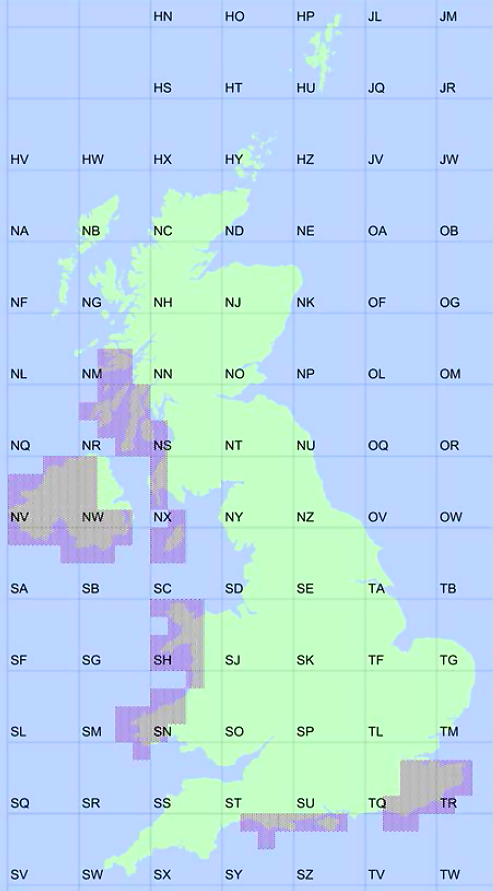
Map illustrating where 146 MHz cannot be used

Map illustrating where 146 MHz cannot be used

It is expected the allocation will be used for wideband digital transmissions. Bandwidth tailoring will be imperative to ensure no RF extends into the weak signal satellite segment at 145.8-146.0 MHz (the Lunar 4M JT65B beacon uses 145.980 MHz). Narrow band users in 147 MHz must also be protected from any increase in the noise floor.

The FAQ says:

The 146‐147 MHz band is ideal for testing new forms of medium bandwidth data transmission that can surpass traditional methods such as amateur AX25 packet data. Some higher speed data modes used by amateurs on microwave frequencies produce a very wide transmitted spectrum and are clearly not suitable for the 146‐147 MHz band. Even the 128kbps medium data rate D‐Star ‘DD Mode’ used on the 1296 MHz band fills up over 500 kHz of bandwidth at 60dB down on the peak transmitted power. However we do expect that amateurs will be able to develop solutions compatible with the spectral constraints of the 146‐147 MHz band.

146 MHz Spectral CompatibilityIn the initial 146‐147 MHz band plan there is a recommendation that wider bandwidth data modes should be centred at 146.500 MHz to make sure that all of the sidebands are contained within the 146‐147 MHz band. For initial experiments the recommendation is to use data rates of no more than 350 kbps and measure the total bandwidth at the transmitter output in order to ensure maximum protection of other users at the 147 MHz band edges and amateur satellite users below 146 MHz. As amateur radio access to the 146‐147 MHz band has been granted on a non‐interference basis, it is important that all amateurs adhere to these guidelines in order to ensure that there is no interference with users of adjacent bands. In the longer term it might be possible with bandwidth tailoring and pre‐distortion techniques to produce cleaner transmitters to permit greater data rates with sharper spectral slopes.

Apply now for your NoV at http://rsgb.org/main/operating/licensing-novs-visitors/online-nov-application/146mhz-147mhz-nov/

The application asks you for your Licence Number which appears on page 1 of your licence. If you don’t have it simply login to the Ofcom licencing page and download a new licence PDF at https://services.ofcom.org.uk/

RSGB 146 MHz http://rsgb.org/main/operating/band-plans/vhf-uhf/vhf-spectrum-release/

FAQ PDF http://rsgb.org/main/files/2014/03/146-147MHz_FAQ.pdf

146 MHz talk slides http://rsgb.org/main/files/2014/03/RSGB_146-147MHz.pdf

UK radio hams start 146 MHz development
http://www.southgatearc.org/news/2014/october/uk_radio_hams_start_146_mhz_development.htm

New UK Amateur Radio 146 MHz allocation
https://amsat-uk.org/2014/10/13/new-uk-amateur-radio-146-mhz-allocation/

FUNcube-1 Telemetry Statistics

AO-73 (FUNcube-1) - Image credit Wouter Weggelaar PA3WEG

AO-73 (FUNcube-1) – Image credit Wouter Weggelaar PA3WEG

FUNcube-1 was launched on November 21, 2013 and since then radio amateurs and schools have been collecting the telemetry which has been stored in the Data Warehouse.

The Data Warehouse statistics as of 21:49 GMT on October 25, 2014 were:

Number of registered users: 1286
Number of active users (data received in last two weeks): 195
Number of active users since launch: 757

Number of packets transmitted by satellite since deployment: 5865120 (1.5GB)
Number of packets uploaded by users before deduplication: 6370976 (1.63 GB)

Number of packets stored in warehouse: 1466239 (376.9 MB) which also
represents the same number of realtime data points (collected once every
5 seconds),

Whole orbit Data: 276.3 days of data (collected once every minute)
High Resolution Data: 806 hours of data (collected once every second, for a period of a minute, every other minute)

Whole orbit Data: 276.3 days of data (collected once every minute)
High Resolution Data: 806 hours of data (collected once every second, for a period of a minute, every other minute)

Recovery rates:
Realtime  (25%)
WOD (81%)
HiRes (22%)

As always, many thanks to all those who have and continue to send data.

Data Warehouse – Telemetry Archive http://warehouse.funcube.org.uk/
Dashboard App – Telemetry Decoder http://funcube.org.uk/working-documents/funcube-telemetry-dashboard/

Facebook https://www.facebook.com/amsatuk
Twitter https://twitter.com/AmsatUK

4M Lunar Payload Update

LX0OHB-4M amateur radio lunar payload - Credit LuxSpace

LX0OHB-4M amateur radio lunar payload – Credit LuxSpace

On October 25 Ghislain Ruy LX2RG provided this update on the 4M lunar amateur radio payload.

Signals from 4M are quite weak. This is not due to a loss of power as telemetry shows normal parameters, but to the attitude of the last stage that places a deep of the radiation pattern in the direction of the Earth. I hope that Earth’s movement with respect to the inertial attitude of the last stage will give better results in the coming days.

The 4M is becoming a real challenge now, and receiving the signals during flyby will be quite an achievement. A little bit away from the original goal though, but this risk was known.

One sure result is the radiation measurement that showed what was to be expected, and the graphs will soon be pubished on the blog.

I hope you will be able to receive during the AMSAT-DL AGM this weekend, but you will have to put 16+dB [antenna] gain at least.

Radio amateurs are encouraged to receive and report the signals http://moon.luxspace.lu/receiving-4m/

For tracking information just enter your latitude and longitude at http://moon.luxspace.lu/tracking/

See the 4M payload Blog at http://moon.luxspace.lu/blog/

Lunar Ham Radio Payload Launched https://amsat-uk.org/2014/10/23/lunar-ham-radio-payload-launched/

4M Lunar Payload https://amsat-uk.org/2014/10/15/4m-lunar-payload-integrated-keps-released/

AMSAT-UK
Facebook https://www.facebook.com/amsatuk
Twitter https://twitter.com/AMSAT_UK