434 MHz balloons to launch for JOTA

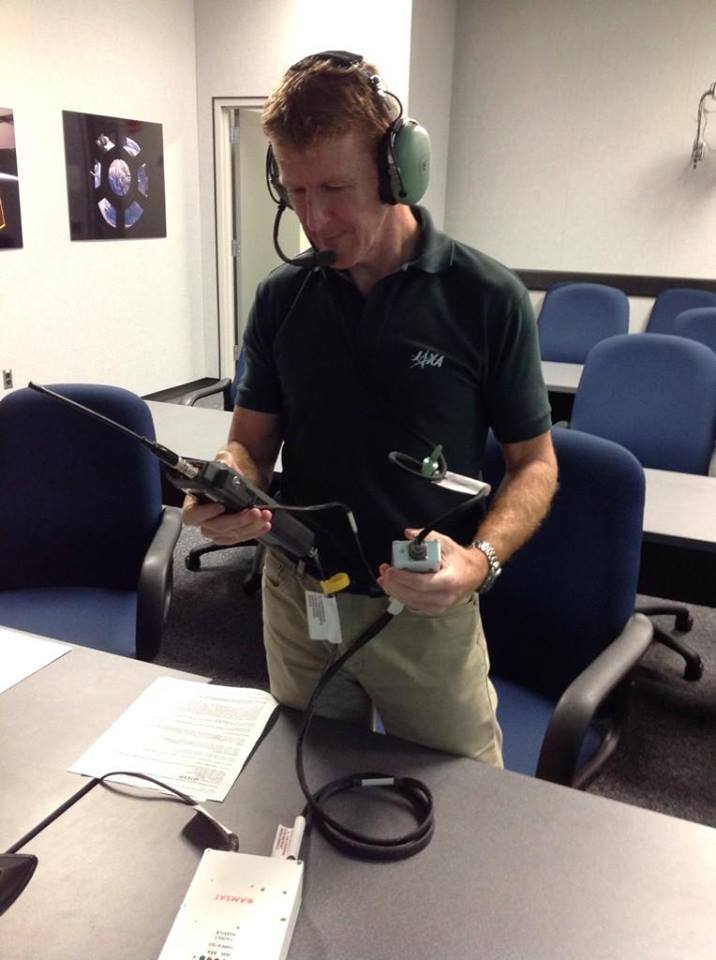
Chris Stubbs M6EDF with 434 MHz trackers

Chris Stubbs M6EDF with 434 MHz trackers

Radio amateurs Chris M6EDF and Steve G0TDJ will each be launching 434 MHz balloons from Essex for Jamboree On The Air (JOTA) this weekend.

The balloons should be launched from Kingston Ridge Campsite in Essex on the Saturday and Sunday, Lat/Lon: 51.559144, 0.435010 http://www.kingstonridgecampsite.co.uk/index2.html

Chris Stubbs M6EDF posted on the UKHAS Google Group:
I will be launching JOTA1 at about 12:30 on Saturday 18/10/2014.
Using either a foil or 100g pawan depending on the conditions.
434.300 MHz SSB,RTTY, 50 baud, 7n2, 450Hz shift.

Steve G0TDJ posted:
Callsign: JOTA2
Date-Time: 19/10/2014 – 12:30pm
Frequency: 434.450 MHz SSB
Mode: RTTY 50n7 with 450Hz shift.
My launch will be at around 12:30pm (+/- ish) Tracking stations will be appreciated. This time, I’m going to try for a float since I will hopefully have plenty of time to prepare. The payload will be running on a Maplin AAA Lithium so expected Tx time will be >24hrs.

The balloon’s FSK (SSB) 434 MHz signals should be receiveable across much of the UK but for those out of range or who lack 70 cm SSB the online SUWS WebSDR can be used instead, see https://amsat-uk.org/2014/08/15/suws-websdr-moves-to-new-site/

Useful links for tracking and receiving 434 MHz balloons https://amsat-uk.org/beginners/balloons/

UKSA announces CubeSat payload opportunity

UKSA - UK Space Agency LogoThe UK Space Agency (UKSA) has announced an opportunity to fly payloads on the 3U CubeSat AlSat-1N.

AlSat-Nano is primarily an education programme, its top level objective is to teach Algerian students how to design, build and operate a 3U CubeSat. The programme involves a number of Algerian graduate students who will be hosted at the Surrey Space Centre (University of Surrey) and focuses on the development of the CubeSat as a hands-on learning exercise for the students, to demonstrate the practical implementation of this type of low cost space technology.

As well as the practical element of the programme there will be a focus on research modules around the use of low cost nano-satellite technologies and applications in developing nations such as Algeria, which would help to create sustainable growth and have practical uses such as earthresource management (agriculture, water), atmospheric monitoring, and disaster management.

The design and build of the nano-satellite will take place at Surrey Space Centre. Final assembly, integration and verification will take place at the ASAL satellite development facility in Oran, Algeria. Operations will be carried out from Oran also.

The bus will be built using hardware sourced from UK suppliers and the CubeSat will also carry payloads which will be supplied by the UK CubeSat community. These payloads will be selected in a competitive process following an Announcement of Flight Opportunity which will be issued in December 2014.

The precise interface specifications will be developed during the first trimester of the project to be integrated in the Announcement of Opportunity, however it is foreseen that a maximum volume of 1U (10cm x 10cm x 10cm) and maximum mass of 1kg will be available for payloads. The selection of the payloads will be carried out in early 2015 via a selection panel.

Payloads must be ready for functional testing and integration by September 2015. Launch will be in Q2 2016. Because of the educational and collaborative nature of the programme there are two further specific points that should be noted:
• Payload providers must be actively engaged in all programme reviews and an active participant in the consortium
• Payload providers must be willing to share payload data with the programme for research purposes, and to receive interpreted payload data via the ASAL ground segment in Oran, Algeria

Submissions should be sent to Ryan King, UK Space Agency – ryan.king@ukspaceagency.bis.gsi.gov.uk with ‘AlSat-Nano RFI’ as the subject line. The deadline for responses is 12 noon, November 14th 2014. Submissions received after this time will not be read.

RFI PDF https://www.gov.uk/government/uploads/system/uploads/attachment_data/file/362794/AlSat-Nano_Request_for_Information.pdf

UK Space Agency Announcement
https://www.gov.uk/government/publications/request-for-information-alsat-nano-payload

Ham radio EME for JOTA

PI9CAM Dwingeloo 25 meter dish antenna

PI9CAM Dwingeloo 25 meter dish antenna

Geert Jan de Groot PE1HZG reports  that radio amateurs will be using the PI9CAM Dwingeloo 25 meter dish during Jamboree On The Air (JOTA) this weekend. On the AMSAT-BB he writes:

In the Netherlands, the CAMRAS foundation took over the large radio telescope of Dwingeloo. This year during upcoming JOTA weekend, several stations will try to make QSO’s using QRP EME via the moon using WSJT and the telescope (accessible via WebSDR) as Receiver With Large Ears.

Information, in Dutch alas, can be found at
http://www.camras.nl/index.php?option=com_content&view=category&layout=blog&id=85&Itemid=109&lang=nl

You should be able to listen in using the same WebSDR station.

Please join me to congratulate the volunteers of CAMRAS, and especially
Frans PE1RXJ, for organizing and facilitating this impressive feat.

Geert Jan PE1HZG

CAMRAS JOTA Moon in Google English http://tinyurl.com/CAMRAS-JOTA-2014

CAMRAS WebSDR Google English http://tinyurl.com/CAMRAS-WebSDR

4M lunar payload integrated – Keps released

LX0OHB-4M amateur radio lunar payload - Credit LuxSpace

LX0OHB-4M amateur radio lunar payload – Credit LuxSpace

The integration of the LX0OHB-4M amateur radio payload was completed on Sunday night, October 12 and is now ready to launch.

The onboard clock has been adjusted to start JT65B (145.980 MHz) at the UTC minute +/-1 second. It is likely to drift during the mission, and manual offset introduction will be required after a week or so. The launch date is October 23 at 1759 UTC.

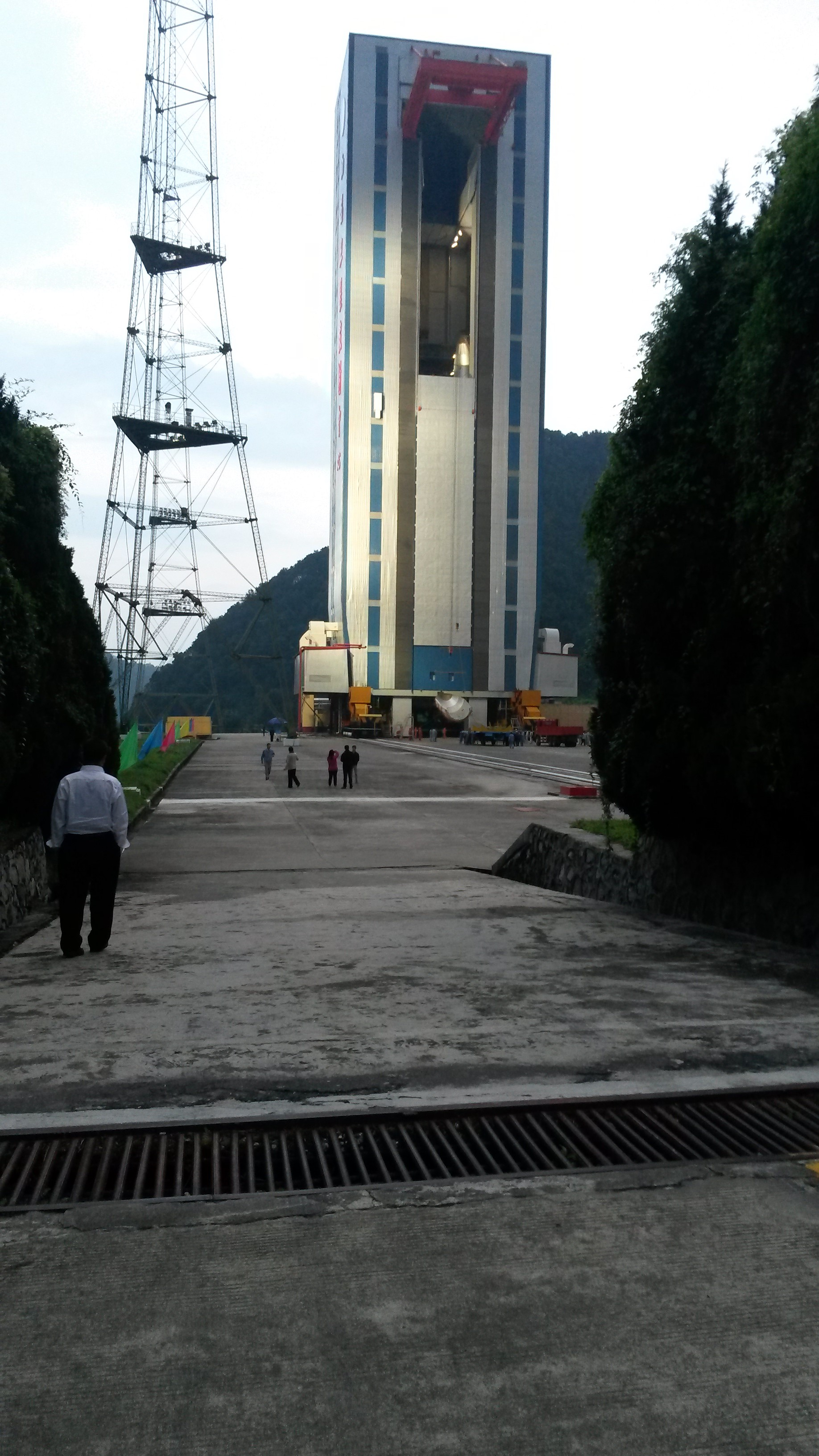
Chang Zheng CZ-3C/G2 launch vehicle  at Xichang carrying the 4M payload - Image LuxSpace

Chang Zheng CZ-3C/G2 launch vehicle at Xichang carrying the 4M payload – Credit LuxSpace

Beginning of transmission of 4M will start between 1917 UTC and 1927 UTC. Refer to the provided maps and animations links in the blog section (see also older messages) to determine your visibility. Alternatively, use the ‘tracking’ section where you can compute your tracking elements by introducing your geographic coordinates. The table can be copied/pasted into a text file. As the apparent movement will be close (and closer) to the one one of the Moon, manual pointing is easy but for the largest arrays. We’ll try to publish equivalent TLE’s to input in usual tracking software.

The link budget is quite tight, but the first hours should give comfortable signals. QSB is to be expected.

As JT65B is used: please remind those not yet too familiar with it that the receiver must not be tuned during the transmission. A dedicated webpage is being written to detail the procedure.

A dedicated java application is also available to automatically transmit the decoded messages to the 4M website and ease the data collection. (Thanks to LSE Space). Alternatively, you can also send the decoded messages by eMail, sending the ALL.txt file.

For those not wishing to use JT65B, please record the signals (11025s/s, 8or 16 bits, mono), taking care not to saturate the recording and NO MP3 please.

SpectrumLab is an excellent choice, although some may wish to use simpler recording software.

You can imagine that the team is quite eager to receive the first reports, so, do not hesitate to mail immediately, send decoded messages or even phone or text me at +352 661 678 986.

Our friends of IC CMalaga are also quite eager to receive the results of their radiation dosimeter experiment.

Basic rules of the contest have been delineated in the blog section. Complete rules will be published soon.

Stay tuned on our website or Facebook page.

The following is a tentative set of orbital elements that should remain valid from the launch to at least up to the October 27 when using usual classical and simple tracking software that do not integrate Moon.
1 99999U          14298.79728009  .00000066  00000-0  00000-0 0 00006
2 99999 030.6553 295.6956 9746689 147.2577 071.9585 00.10600338000010
The following set is to be used after the flyby from October 28 onwards
1 99999U          14301.79728009  .00000000   00000-0 00000-0 0 00009
2 99999 049.9434 067.2017 6639865 045.9865 124.5019 00.06612018000010

.
Ghislain Ruy LX2RG
Email: ruy@luxspace.lu with “4M Amateur” in the subject

Manfred Memorial Moon Mission (4M) http://moon.luxspace.lu/
Facebook https://www.facebook.com/LuxSpaceSarl

The launch will be broadcast by CNTV/CCTV: http://www.cntv.cn/ or http://english.cntv.cn/ or http://english.cntv.cn/live/p2p/index.shtml

Information animations and some JT65B test files at
https://cloud.luxspace.lu/public.php?service=files&t=33c4a21c09ba3736a55fc09896e463f6

Read the paper 4M Mission: a Lunar FlyBy experiment
http://tinyurl.com/4M-Mission-V3

EME 2014 slides: 4M, A Moon Flyby Mission
http://tinyurl.com/4M-slides-eme2014

4M lunar ham radio payload shipped
https://amsat-uk.org/2014/10/04/4m-lunar-ham-radio-payload-shipped/

AMSAT-UK upload JOTA greetings message to satellite

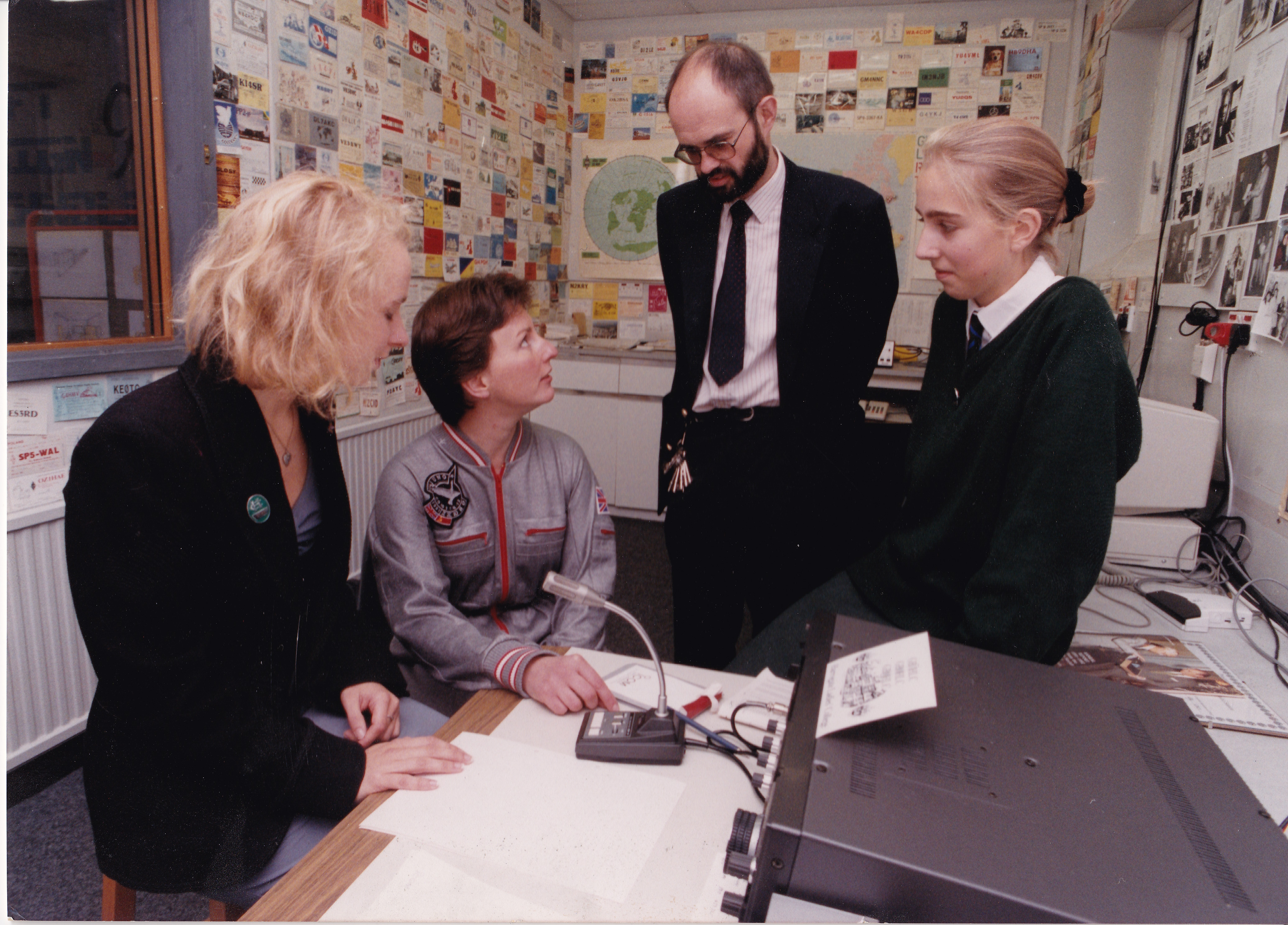
Wouter Weggelaar PA3WEG talking about FUNcube-1 to students at Abbeys Primary School in Bletchley

Wouter Weggelaar PA3WEG talking about FUNcube-1 to students at Abbeys Primary School in Bletchley

AMSAT-UK have uploaded a special Jamboree On The Air (JOTA) Greetings Fitter Message to the amateur satellite AO-73 (FUNcube-1).

Scouts and others can receive the message by downloading the Dashboard App software and listening to the beacon on 145.935 MHz (+/- Doppler) SSB.

What is a Fitter Message ?

‘Fitter’ is derived from ‘Twitter’. So it’s like a tweet, but via FUNcube.

It is a short (200 characters maximum) text-like message which can be uploaded to the satellite (by authorised ground stations), and transmitted several times every five minutes or so. It will continue to be retransmitted until such time as it is replaced by a new Fitter Message.
Links for tracking, downloads and other information can be found in the FUNcube-1 / AO-73 panel on the right-hand side of the AMSAT-UK homepage at https://amsat-uk.org/

Data Warehouse – Telemetry Archive http://warehouse.funcube.org.uk/
Dashboard App – Telemetry Decoder http://funcube.org.uk/working-documents/funcube-telemetry-dashboard/

AMSAT-UK on Facebook https://www.facebook.com/amsatuk
AMSAT-UK on Twitter https://twitter.com/AMSAT_UK

FUNcube Whole Orbit Data available for download

AO-73 (FUNcube-1) - Image credit Wouter Weggelaar PA3WEG

AO-73 (FUNcube-1) – Image credit Wouter Weggelaar PA3WEG

From the early planning stage of the project we decided that we would make telemetry information from the AO-73 (FUNcube-1) CubeSat available to end users.

Since deployment the FUNcube Data Warehouse has displayed the latest data:
• Reatime
• Whole Orbit
• High Precision
• Fitter Messages
and of course the upload rankings. Additionally we have made available small csv files for WOD and HiRes.

Starting October 14, we will be making all captured WOD available as weekly csv files.

Please see: http://warehouse.funcube.org.uk/wod.html?satelliteId=2 for the link to the downloads page. It currently up to 26/6/2014 (32 files)

The files are on average:
• 9706 lines (expected 10080) ~ 96.3% capture
• 905 KB

We will play catch up over the next few days and then automate the process.

It it really intended for consumption by an analytical suite such as MatLab, or a DIY one, in a language of your choosing. However, it can be simply graphed in Excel or Open Office Calc.

Feedback would be appreciated.

Enjoy!

73 Dave, G4DPZ

Data Warehouse – Telemetry Archive http://warehouse.funcube.org.uk/

Dashboard App – Telemetry Decoder http://funcube.org.uk/working-documents/funcube-telemetry-dashboard/