Vega launch of three satellites with ham radio payloads

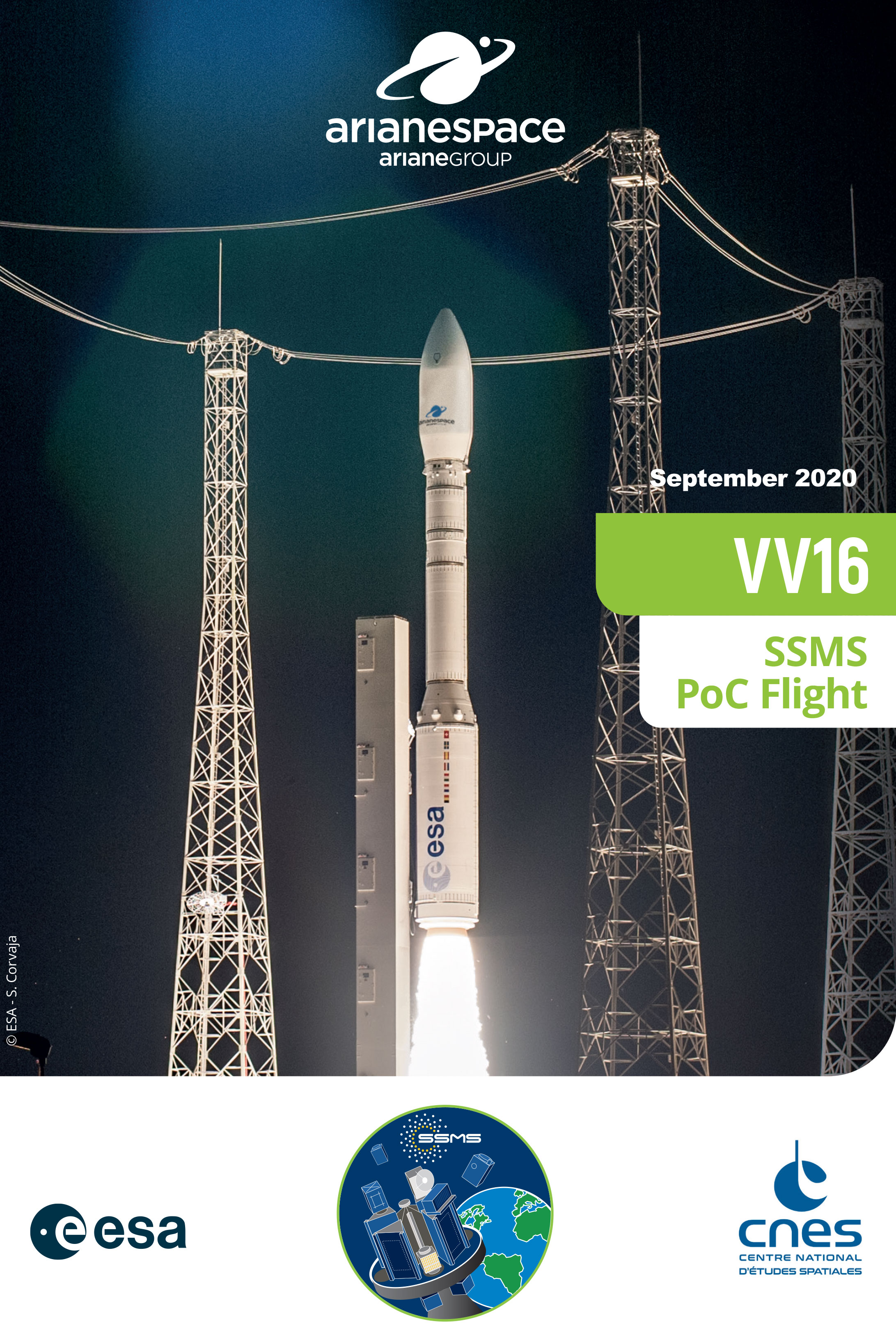
Vega VV16 launch

Vega VV16 launch

Three satellites with amateur radio payloads were on the Vega VV16 launch that took place at 01:51:10 GMT on Thursday, September 3, 2020.

Earlier on the AMSAT Bulletin Board Christophe Mercier had posted:

The Vega rocket (VV16) is scheduled to leave Kourou on 02 September 2020 at 3h36 CEST [launch was postponed until 01:51 GMT on Sept 3] with 53 satellites on board.

One of the satellites that will be leaving is the Amicalsat satellite built by the CSUG (Centre Spatial Universitaire Grenoblois). The measurements made by the satellite will be available to all. They will allow radio amateurs to use them for propagation predictions.

The project’s website (in English) has just been put online http://amicalsat.univ-grenoble-alpes.fr/

The Amsat-Francophone supported this project http://site.amsat-f.org/amicalsat/

A software (Linux & Windows) is provided for decoding the telemetry and sending it to the database (SatNogs). The user manual is available (in English) https://code.electrolab.fr/xtof/josast/-/blob/master/ApplicationAmicalsat/src/site/markdown/UserManual.md

UHF 436.1 MHz AFSK 1200 RS17S
S band 2,415.3 MHz GFSK 1000 kb/s
http://amsat-f.org/AMSATLIST/SatellitePage/UK/0Amicalsat.html

Reports are welcome. Thank you for your help.

The first 5 people who receive a frame from AmicalSat will receive a gift.
To submit your frame uses the satnogs SIDS or email satellite@adri38.fr

Two other satellites :

UPMSat-2
UHF 437.405 MHz AFSK 1200 UPMST2
http://amsat-f.org/AMSATLIST/SatellitePage/UK/0UPMSat-2%20.html

TTU100
Primary 435.450 MHz 1k2 and 9k6 and CW
Secondary 10465.000 MHz OPSK 62.5 kbs and 20 Mbs
http://amsat-f.org/AMSATLIST/SatellitePage/UK/0TT%C3%9C100%20(TT%C3%9CSat,%20MektorySAT%201,%20H%C3%A4marik)%20.html

73

Christophe Mercier
Amsat-F chairman

AMSAT Bulletin Board http://www.amsat.org/mailman/listinfo/amsat-bb

Vega Flight VV16 https://www.arianespace.com/mission/vega-flight-vv16/

Watch the Vega VV16 launch live at https://www.youtube.com/watch?v=IveCBs-cCTw

Jeanette Epps KF5QNU joins Starliner mission to ISS

Astronaut Jeanette Epps KF5QNU

Astronaut Jeanette Epps KF5QNU

Astronaut and radio amateur Jeanette Epps KF5QNU has joined the Boeing CST-100 Starliner-1 crew for a mission to the International Space Station.

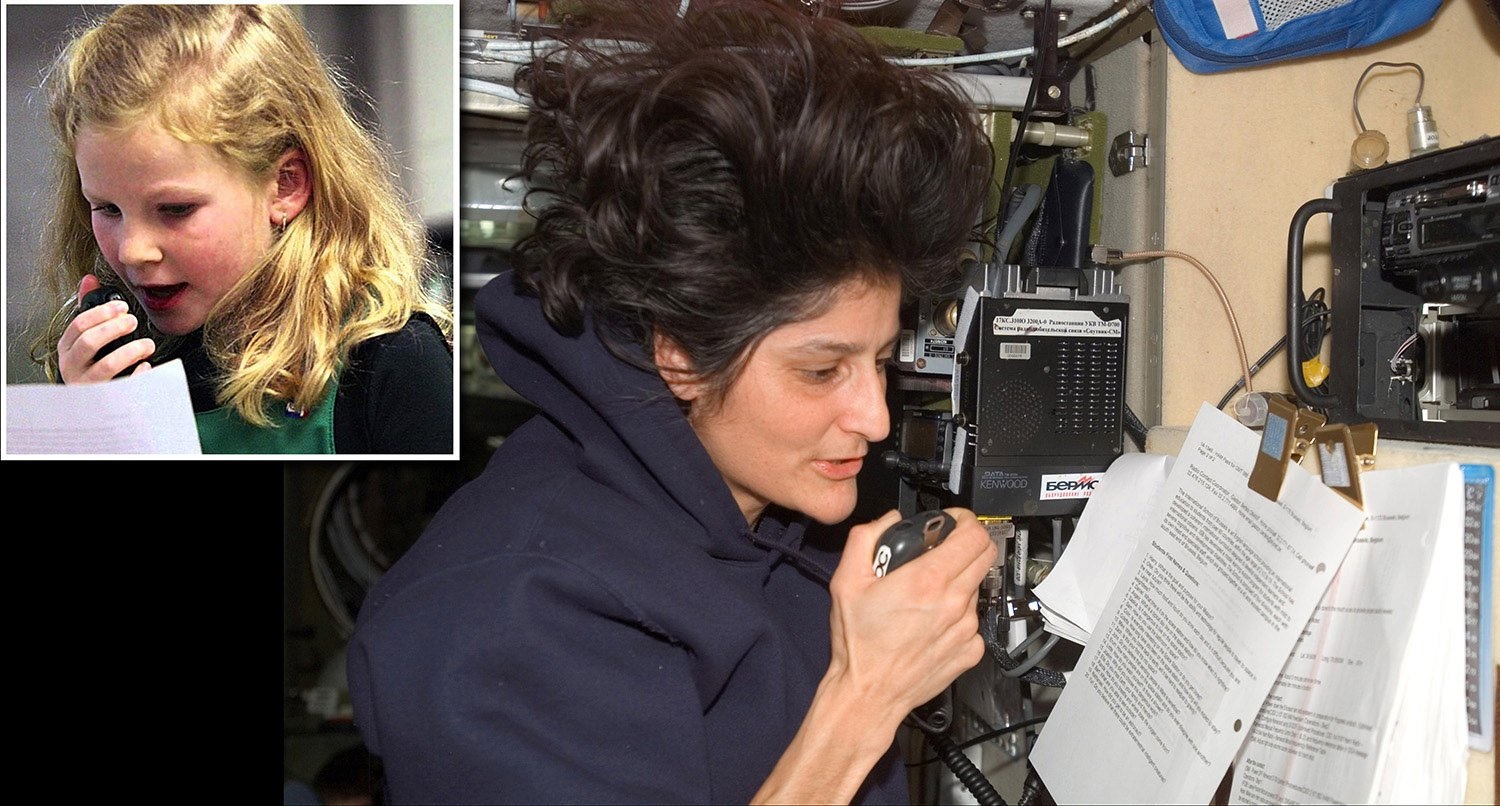
ISS astronaut Sunita Williams KD5PLB answers questions from a student using amateur radio

ISS astronaut Sunita Williams KD5PLB answers questions from a student using amateur radio

She joins fellow crew members Sunita Williams KD5PLB and Josh Cassada KI5CRH on the first operational crewed flight of Starliner. The six-month expedition is planned to launch to the ISS in 2021 following NASA certification after a successful uncrewed Orbital Flight Test-2 and Crew Flight Test with astronauts.

While earning her doctorate, Epps was a NASA Graduate Student Researchers Project fellow, authoring several journal and conference articles on her research. After completing graduate school, she worked in a research laboratory for more than two years, co-authoring several patents, before the Central Intelligence Agency (CIA) recruited her. She spent seven years as a CIA technical intelligence officer before her selection as a member of the 2009 astronaut class.

NASA assigned Williams and Cassada to the Starliner-1 mission in August 2018. The spaceflight will be the first for Cassada and third for Williams, who spent long-duration stays aboard the space station on Expeditions 14/15 and 32/33.

NASA press release
https://www.nasa.gov/press-release/nasa-astronaut-jeanette-epps-joins-first-operational-boeing-crew-mission-to-space

What is Amateur Radio? http://www.essexham.co.uk/what-is-amateur-radio

Free online amateur radio training course https://www.essexham.co.uk/train/foundation-online/

RSGB Tonight @ 8 Video – Getting started on QO-100

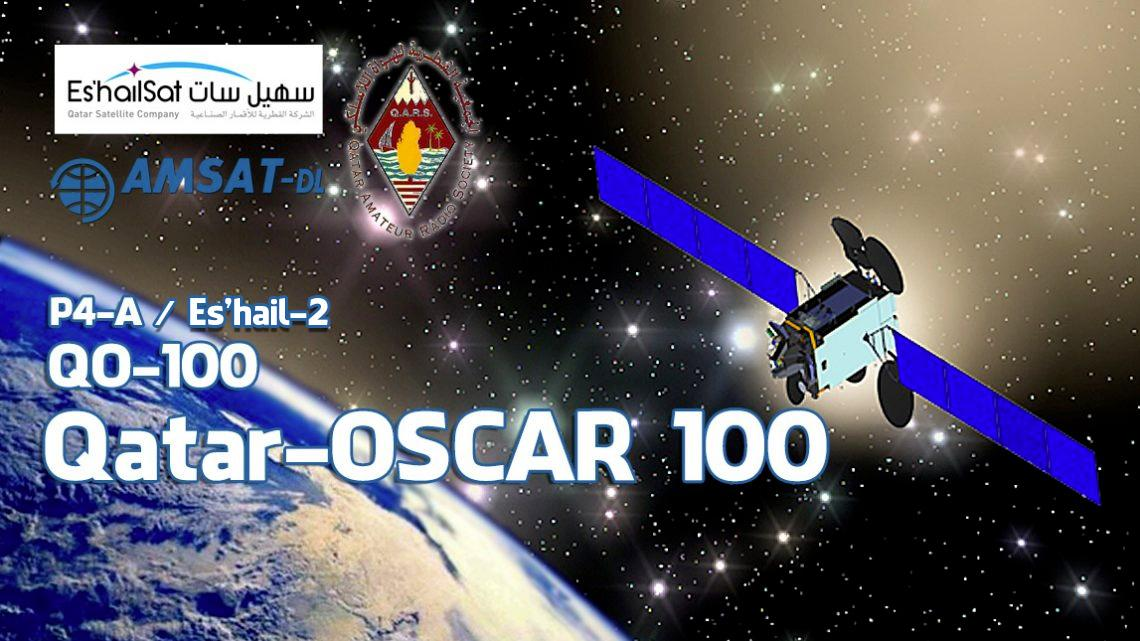
Es'hail-2 Qatar-OSCAR-100On Monday, July 27 Dom Smith M0BLF gave an online talk – Getting started on QO-100as part of the RSGB Tonight @ 8 live webinar series.

Dom’s lockdown project was to complete a set up for the QO-100 amateur radio transponders that are hosted on the geostationary satellite Es’hail-2. This was the first amateur radio payload to be put into a geostationary orbit and provides constant and reliable coverage for amateur voice, data and television contacts over the whole of Africa, Europe and the Middle East and even as far as Brazil in the west, and Thailand in the east.

Getting started on QO-100 is a talk in two halves: first we’ll watch the video, showing the particular set-up chosen—and there are many!—and then there will be chance for a Q&A. The equipment list can be see at https://www.domsmith.co.uk/blog/2020/07/27/rsgb-webinar-on-qo-100/

Watch Getting Started on QO-100 by Dom Smith, M0BLF

Dom Smith, M0BLF has been a radio amateur for nearly 25 years since being licensed at the age of 14 in 1996. He is an active member of the Camb-Hams and Cambridge University Wireless Society (CUWS), and may often be heard contesting, climbing hills for Summits on the Air, and assisting Cambridgeshire RAYNET. He also enjoys travelling for DXPeditions, most recently as JW/M0BLF, VP2MUW and ZC4UW, and he manages QSL cards for most CUWS trips. On top of all that, he volunteers with Cambridge 105 Radio, the local community broadcast station, on the engineering team.

Professionally, Dom works as a Cloud Solutions Architect in the software team at the Royal Society of Chemistry and he holds a PhD in Hispanic Studies.

Watch other RSGB Tonight @ 8 videos at https://www.youtube.com/user/TheRSGB/videos

QO-100 information https://amsat-uk.org/satellites/geo/eshail-2/

QO-100 products in the AMSAT-UK shop https://amsat-uk.org/

ISS MAI-75 SSTV activity planned for Aug 4-5

It is planned Russian cosmonauts will transmit amateur radio Slow Scan Television (SSTV) images from the International Space Station (ISS) during August 4-5 on 145.800 MHz FM (likely using PD-120). It should be receivable across the British Isles and Europe.

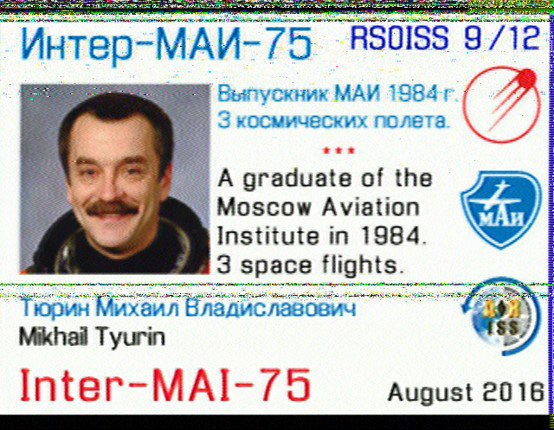
ISS SSTV MAI-75 image 9/12 received by Chertsey Radio Club on Baofeng handheld

ISS SSTV MAI-75 image 9/12 received by Chertsey Radio Club on Baofeng handheld

An announcement made July 27 on the ARISS SSTV Blog says:

The final crew schedule for the week of Aug 3-9 was released recently and it showed a MAI-75 activity scheduled for Aug 4 and 5. This is soon after the Space X Demo-2 undock so changes to that event could impact the schedule.

The current dates and times of the planned activity are as follows:
Aug 4 (12:25-18:10 UTC) is setup and day 1 operations.
Aug 5 (08:15-18:25 UTC) is day 2 operations and close out.

This is the Moscow Aviation Institute SSTV experiment that is active for orbital passes over Moscow, Russia.

Mode is likely to be PD-120

Source ARISS STV Blog http://ariss-sstv.blogspot.com/

The ISS puts out a strong signal on 145.800 MHz FM and a 2m handheld with a 1/4 wave antenna will be enough to receive it. Many FM mobile and base station rigs can be switched been wide and narrow deviation FM filters. For best results you should select the filter for wider deviation FM (25 kHz channel spacing). Handhelds all seem to have a single wide filter fitted as standard.

The space agency ESA has released a video ‘How to get pictures from the International Space Station via Amateur Radio’ along with a collection of Tutorial videos explaining how to receive ISS Slow Scan TV (SSTV) pictures for different computers and mobile devices
https://amsat-uk.org/2020/07/08/esa-promote-amateur-radio-iss-sstv/

Read the Raspberry Pi article Pictures from space via ham radio
https://www.raspberrypi.org/magpi/pictures-from-space-via-ham-radio/

ISS SSTV info and links https://amsat-uk.org/beginners/iss-sstv/

What is Amateur Radio? http://www.essexham.co.uk/what-is-amateur-radio

Free UK amateur radio online training course https://www.essexham.co.uk/train/foundation-online/

Ofcom statement on 5725-5850 MHz

On Friday, July 24, Ofcom released their statement on 5725-5850 MHz and 5925-6425 MHz.

The main points are:
• Make 5925-6425 MHz available for Wi-Fi and other RLAN technologies
• The release of this spectrum will also enable very low power (VLP) outdoor use
• Remove the Dynamic Frequency Selection (DFS) requirements from channels used by Wi-Fi in the 5725-5850 MHz Amateur and Amateur Satellite Service allocation

The Amateur Satellite Service weak-signal downlink band, 5830-5850 MHz, is used by amateur payloads on Deep-Space and Interplanetary spacecraft as well as by satellites in Low Earth Orbit (LEO). Increased use of Wi-Fi across these frequencies could obliterate the weak amateur satellite signals.

Ofcom statement
https://www.ofcom.org.uk/consultations-and-statements/category-2/improving-spectrum-access-for-wi-fi

In 2013 CEPT looked at increased use of 5725-5850 MHz
https://amsat-uk.org/2013/08/29/cept-considers-use-of-5830-5850-mhz-satellite-band/

Wi-Fi Channels in the 5 GHz Band

AMSAT Partners with UMaine’s WiSe-Net Lab to Develop MESAT1 CubeSat

CubeSat in Space - Image Credit University of Maine WiSe-Lab

CubeSat in Space – Image Credit University of Maine WiSe-Lab

The University of Maine Wireless Sensing Laboratory (WiSe-Net Lab) and AMSAT have signed an agreement to collaborate on building and operating MESAT1, Maine’s first small satellite, to be launched in space in the next three years.

MESAT1 is Maine’s first CubeSat — one of 18 small research satellites selected by NASA to carry auxiliary payloads into space between 2021–23. It is part of NASA’s CubeSat Launch Initiative that provides opportunities for nanosatellite science and technology payloads built by universities, schools and nonprofit organizations to ride share on space launches.

UMaine’s WiSe-Net Lab, established in 2005, is involved in aerospace and space research. The lab was founded by Ali Abedi, KB1VJV, assistant vice president for research and director of the Center for Undergraduate Research. Lab researchers have developed the first wireless sensor network for NASA’s lunar habitation project and launched wireless leak-detection to the International Space station.

The MESAT1 initiative will enable K–12 students and teachers in Maine to access space data for educational and research purposes, and encourage students to pursue STEM careers.

AMSAT will provide a Linear Transponder Module (LTM) along with integration and operational support for MESAT1. AMSAT’s LTM incorporates a VHF/UHF telemetry beacon, command receiver, and linear transponder. It will be available for radio amateurs worldwide to use when the satellite is commissioned.

AMSAT President Clayton Coleman, W5PFG, celebrated the announcement.
“This is a great day for AMSAT and UMaine’s Wise-Net Lab. This partnership is a true win-win for both education and the amateur radio community. The collaborative effort under AMSAT’s engineering and operations teams has once again succeeded to bring another opportunity to AMSAT.”

[ANS thanks AMSAT and UMaine’s WiSe-Net Lab for the above information]

AMSAT News Service https://www.amsat.org/mailman/listinfo/ans

NASA selects Maine’s first small research satellite for launch in next three years
https://umaine.edu/news/blog/2020/02/24/nasa-selects-maines-first-small-research-satellite-for-launch-in-next-three-years/

Maine’s CubeSat research satellite mission
https://mainecampus.com/2020/03/maines-cubesat-research-satellite-mission-scheduled-for-launch-in-2021/