ICSEDS 434 MHz balloon launch

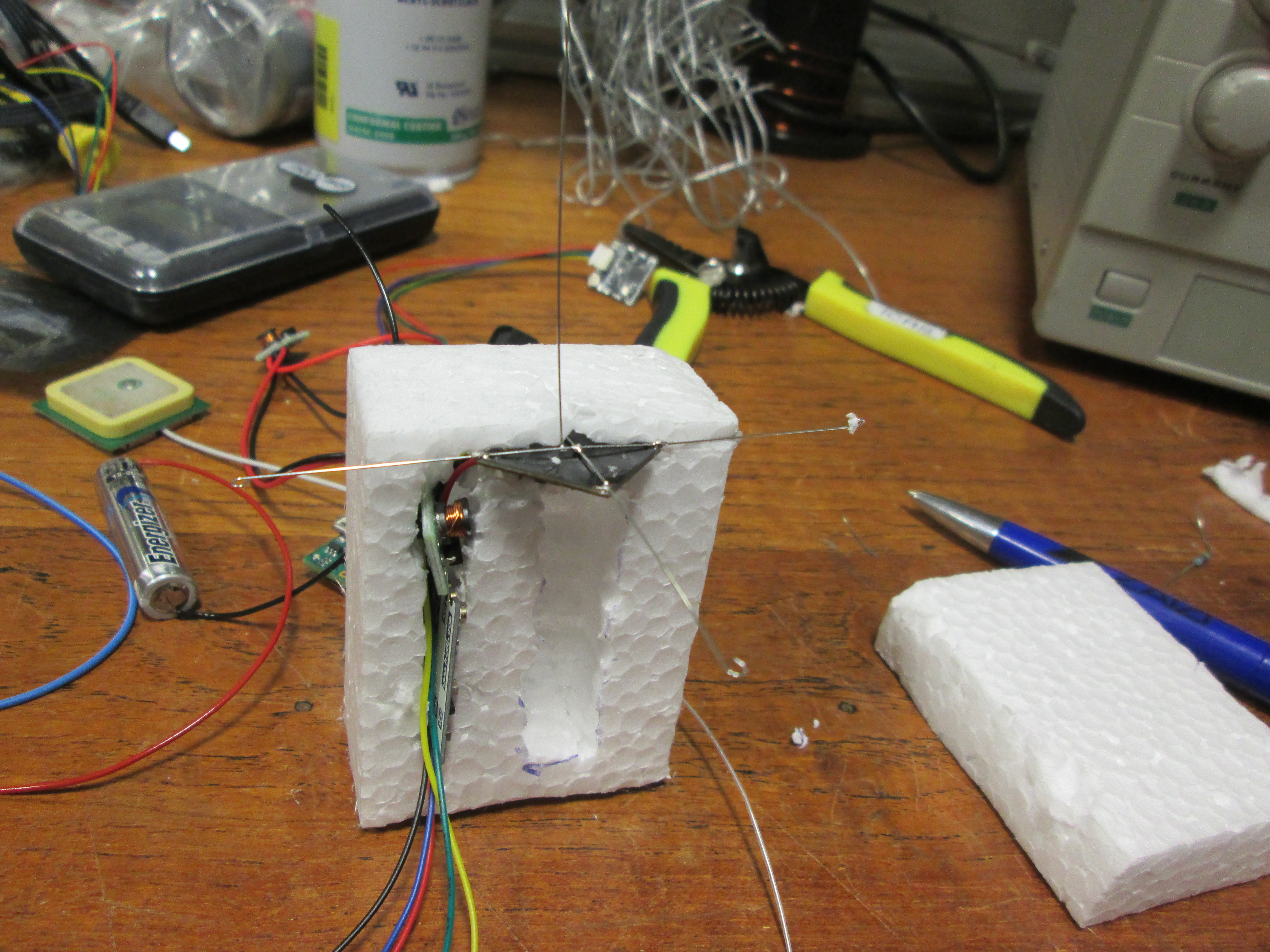
GPS module with Guitar wire antenna and HC12 module - credit ICSEDS

GPS module with Guitar wire antenna and HC12 module – credit ICSEDS

Medad Rufus reports two balloons with 434 MHz transmitters built by Imperial College Students for the Exploration and Development of Space (ICSEDS) will launch from Wormwood Scrubs, London on Saturday, March 9.

On the UK High Altitude Society reflector Medad posted:

This is a launch announcement for the launch of ICSPACE6 & 7 from Wormwood Scrubs, London, UK. We have had some success with the launches of our previous pico balloons and we hope it works 100% this time.

The hardware is nearly identical to the previous launch; only software changes made. The winds are expected to take it towards the Netherlands/Belgium and further east into Germany.

Here is the information about the balloons to be launched tomorrow:

Callsign: ICSPACE6
RTTY: 434.600 MHz USB
50 baud 745 Hz shift ASCII-8 no parity 2 stop bits
Launch time aim: 10:40 am on March 9
Transmits 10 pips before transmitting message. 30s gap between each transmission

Callsign: ICSPACE7
RTTY: 434.250 MHz USB
50 baud 745 Hz shift ASCII-8 no parity 2 stop bits
Launch time aim: 11:40 am on March 9
Transmits 10 pips before transmitting message. 30s gap between each transmission when below 3000m. Above 3000m, it will transmit with a gap of 60 seconds.

We appreciate all listeners for our flights. I hope this flight goes well.

Here is information about the launch of ICSPACE4 & 5 four weeks ago.
https://www.union.ic.ac.uk/guilds/icseds/2019/02/high-altitude-ballooning-group-launch-a-balloon-that-again-landed-in-the-netherlands/

Source UKHAS Groups IO https://groups.google.com/d/msg/ukhas/2GCKl5uiNJQ/473DfDsiBgAJ

Real-time balloon track can be seen at https://tracker.habhub.org/

Listen to the signals online with the Farnham WebSDR http://farnham-sdr.com/

Useful High-Altitude Balloon links https://amsat-uk.org/beginners/balloons/

Space meeting to be streamed via ham radio geostationary transponder

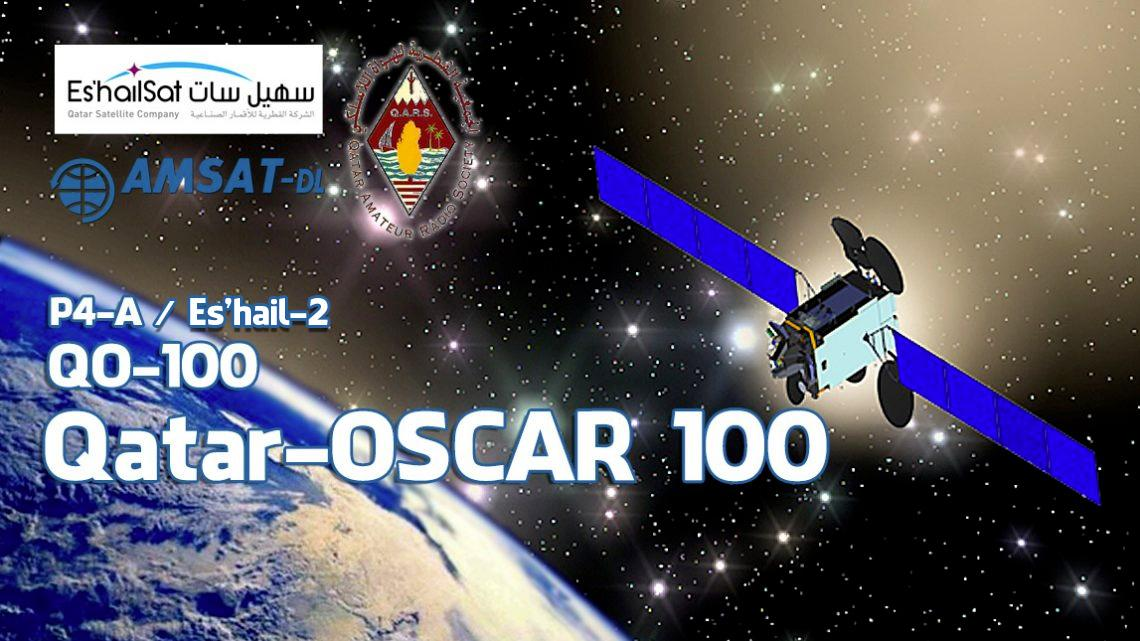
Es'hail-2 Qatar-OSCAR-100The 2nd Amateur Radio Space Meeting, taking place in Nanterre, Paris, March 9-10, will be streamed live via the Digital Amateur TV transponder on Es’hail-2 / QO-100 geostationary satellite.

A Google translation of the AMSAT-Francophone post says:

AMSAT-Francophone and Electrolab have deployed a ground station to operate the QO100 transponder in DATV.

The “broadcast DATV” team led by Yannick Avelino and with the support of Evariste F5OEO has developed the station that will broadcast live the conferences of the second amateur radio space meeting March 9-10, 2019. The team was in contact with AMSAT-DL and AMSAT-UK for permission to operate the satellite during these days.

Source http://site.amsat-f.org/2019/03/07/rencontre-spatiale-du-9-10-mars-2019-conferences-diffusees-en-direct-via-le-transpondeur-qo100/

Meeting information and Schedule of talks
http://site.amsat-f.org/2019/02/16/deuxieme-rencontre-spatiale-radioamateur-9-et-10-mars-2019-agenda-des-deux-journees-mis-a-jours-reservez-vos-places/

2.5 milliwatt OPERA signal via Es’hail-2 geostationary satellite

Es'hail-2 Qatar-OSCAR-100Markus Vester DF6NM successfully used the digital mode OPERA to send a 2.5 milliwatt signal on 2.4 GHz through the amateur radio transponder on the Es’hail-2 / QO-100 geostationary satellite.

Graham G0NBD writes about the contact on Digital Radio Groupsio.

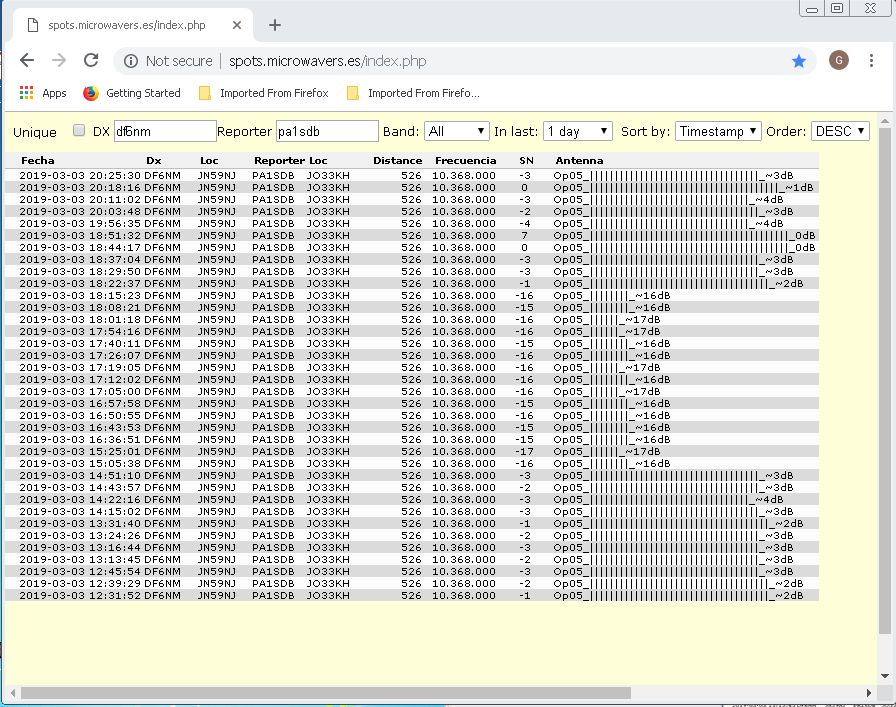
On March 3, 2019, Markus started using 250 milliwatts on 2.4 GHz into a 60 cm dish pointing at Es’hail-2. The downlink signal was received via the AMSAT-UK and BATC 10 GHz WebSDR at Goonhilly in Cornwall by Peter Knol PA1SDB.

Markus then reduced power to just 2.5 milliwatts and the signal was still receiveable.

See Digital Radio Groupsio post at
https://digitalradio.groups.io/g/main/message/50861

OPERA was developed by Jose EA5HVK and can be downloaded from
https://rosmodem.wordpress.com/

Es’hail-2 / Qatar OSCAR-100 web receiver now live
https://amsat-uk.org/2019/02/10/qatar-oscar-100-web-receiver-now-live/

DF6NM to PA1SDB using OPERA via Es'hail-2 on March 3, 2019

DF6NM to PA1SDB using OPERA via Es’hail-2 on March 3, 2019. Note Microwavers spots site doesn’t display satellite frequencies correctly

UWE-4: First NanoFEEP thruster ignition

UWE-4 LogoAt 09:59:00 UT on February 26, one of the UWE-4 CubeSat NanoFEEP thrusters, developed by TU Dresden and Morpheus Space, was successfully ignited.

This is the first time an electric propulsion system has been activated on board of a 1U CubeSat in space.

A voltage of more than 5kV has been produced by the power processing unit causing a thruster emitter current of 40µA. For this very first firing a duration of 30s was intended.

Primary mission: accomplished!

Within the next days experiments with the propulsion system for a characterization of the thrusters will be conducted.

Thank you very much for your support! Especially the directly injected messages into our server using the decoding tool by Mike DK3WN help us a lot with our daily operations!

Kind regards,
The UWE‑4 Team

UWE-4 435.600 MHz
http://www7.informatik.uni-wuerzburg.de/forschung/space-exploration/projects/uwe-4/

UWE-4 Thruster Firing Voltage (kV)

UWE-4 Thruster Firing Voltage (kV)

Digital ATV co-ordination on Es’hail-2

Narrowband DATV image (150 kHz bandwidth) via QO-100 Noel G8GTZ Feb 14, 2019 at 0950 GMT

Narrowband DATV (150 kHz bandwidth) via QO-100 sent by Noel G8GTZ Feb 14, 2019 at 0950 GMT

AMSAT-DL has agreed to a proposal by the British Amateur Television Club (BATC) for the use of the bottom 100 kHz of the wideband transponder (10491 – 10491.1 MHz) for ATV co-ordination purposes.

The announcement on the BATC Forum says:

This is on an experimental only basis and stations must keep their power levels to a minimum and certainly not exceed power levels greater than 15dB above the noise floor as shown on the Goonhilly spectrum monitor.

This is sanctioned on an experimental only basis and AMSAT-DL reserve the right to move the WB beacon towards the band edge or implement DVB-S with a wider rolloff which would render the frequencies unsuitable for this purpose.

So another challenge but should be manageable and prove a useful facility although we do see the chat being the major tool for reports and contacts.

73 Noel G8GTZ

BATC Forum Announcement https://forum.batc.org.uk/viewtopic.php?f=101&t=5923

Es’hail-2 WebSDR https://eshail.batc.org.uk/

Es’hail-2 Wideband amateur radio transponder operating guidelines
https://amsat-dl.org/en/p4-a-wb-transponder-bandplan-and-operating-guidelines

Es’hail-2 amateur radio information
https://amsat-dl.org/en/eshail-2-amsat-phase-4-a

See the Satellite Forum for additional information https://forum.amsat-dl.org/

Tate Gallery features ISS and Amateur Radio as Art

Ten Minute Transmission - image credit Henry Cooke @prehensile

Ten Minute Transmission – image credit Henry Cooke @prehensile (click for larger image)

The impressive artwork “Ten Minute Transmission”, featuring the amateur radio Kenwood TS-2000 transceiver and the International Space Station, is once again on display at the Tate Gallery in London.

The Tate Gallery says:

Ten Minute Transmission is a sculpture by Jennifer Allora and Guillermo Calzadilla modeled after the International Space Station. Made of wire and attached to a ham radio transmitter, this sculpture receives radio signals from the airwaves and transmits them into the gallery space.

This work was inspired by artist Alexander Calder’s suspended sculptures, or mobiles. Another influence was Russian artist and architect Vladimir Tatlin’s unrealised design, Monument to the Third International 1919, a tower with a rotating radio station at the top.

The title of this work, Ten Minute Transmission refers to the period of time when the International Space Station (ISS) can be contacted via radio as it flies past. The ISS orbits the Earth once every 90 minutes, but passes close enough to the antenna just twice a day. Usually the radio only picks up sounds of encrypted data packets sent back to Earth from the station. Two-way voice communication with the astronauts is now rare and needs to be requested in advance.

Kenwood TS-2000 used in Ten Minute Transmission at Tate Gallery - image credit Matthew Rose 2E0LJZ

Kenwood TS-2000 used in Ten Minute Transmission at Tate Gallery – image credit Matthew Rose 2E0LJZ

Collaborative artists Jennifer Allora (born 1974 Philadelphia, US) and Guillermo Calzadilla (born 1971 Havana, Cuba) are based in the United States and Puerto Rico. Their work examines the ‘space of encounter between people…whether it’s psychological territory or a physical terrain.’

Tate 2019 – Ten Minute Transmission
https://www.tate.org.uk/art/artworks/allora-calzadilla-ten-minute-transmission-t13698

Ten Minute Transmission also featured in “Common Wealth” in 2003
https://www.tate.org.uk/press/press-releases/common-wealth